- Immigration courts require specific, credible evidence before judges will suppress evidence or terminate removal proceedings.
- Matter of Barcenas establishes that respondents must make a prima facie showing of unlawful evidence acquisition.
- Operation Midway Blitz in Evanston focuses on highly visible landscaping corridors, raising significant Fourth Amendment concerns.
(EVANSTON, ILLINOIS) — A key lesson for immigrants and employers watching Operation Midway Blitz is that—even when enforcement tactics are publicly disputed—immigration courts typically require a tightly documented, case-specific record before a judge will suppress evidence or terminate removal proceedings.
That practical reality is captured in Matter of Barcenas, 19 I&N Dec. 609 (BIA 1988). There, the Board of Immigration Appeals (BIA) held that a respondent seeking to suppress evidence must first make a prima facie showing that the evidence was unlawfully obtained; only then does the burden shift to the government to justify how it obtained the evidence.

In high-visibility operations like the Evanston surge, Barcenas often determines whether litigation about alleged unconstitutional stops becomes a real evidentiary fight—or ends as an unproven allegation.
Below is a case-analysis lens on how Barcenas (and related suppression rules) may shape outcomes for people arrested or questioned in and around Evanston’s landscaping corridors during the DHS operation.
1. Overview of Operation Midway Blitz in Evanston
Operation Midway Blitz has been described by the Department of Homeland Security (DHS) as a focused immigration enforcement surge that began in September 2025 and placed special emphasis on the Chicago area, including Evanston.
In practical terms, “surge” enforcement typically means more visible federal presence near workplaces and travel routes, more questioning in public-facing settings, and coordination across federal components.
Evanston’s landscaping industry sits at the center of the local story for a straightforward reason: landscaping work is seasonal, highly visible, and concentrated in predictable job-site patterns. Those features can increase the chance that workers encounter immigration agents in the course of ordinary routines.
This matters for three groups at once: (1) immigrants who may face arrest and detention, (2) employers trying to comply with federal work authorization rules while keeping operations running, and (3) residents seeing spillover into schools, commerce, and public trust.
This guide walks through: the government’s stated narrative, the most repeated data claims and how to read them, the policy backdrop in Evanston and Illinois, community impacts, and—most importantly—the immigration-law “nuts and bolts” that often decide these cases in court.
2. Official DHS & USCIS statements—and how to read them critically
DHS publicly framed Operation Midway Blitz as a public-safety initiative tied to a fatal DUI incident. It also argued the operation addressed “criminal” enforcement priorities and responded to state and local policy choices.
After clashes near the end of October 2025, DHS messaging shifted toward defending tactics and condemning interference with agents. Separately, reporting indicates the Illinois Attorney General filed suit challenging alleged tactics, with a DHS official publicly characterizing the lawsuit as meritless and invoking federal-state constitutional framing, including references to the Tenth Amendment.
In federal-state disputes, “Tenth Amendment” language often appears as shorthand for arguments about the limits of state interference with federal functions. It does not, by itself, decide whether a specific street encounter complied with the Fourth Amendment.
Two practical cautions for readers:
- DHS is an enforcement agency. Its public statements often emphasize deterrence and operational legitimacy.
- USCIS is primarily a benefits agency. USCIS adjudicates applications like adjustment of status, asylum (affirmative), and naturalization. It does not run street operations like the ones described in Evanston.
When evaluating claims, prioritize primary sources: DHS press releases, sworn declarations in court filings, and official briefings. Secondary summaries can miss crucial qualifiers about location, legal authority asserted, or what “arrest” means in the agency’s metrics.
If you or a family member had an encounter with federal agents, write down the date, time, exact location, names/badge numbers if known, and identify any witnesses. Save videos, receipts, and texts. These details often matter more than general allegations in immigration court.
3. Key facts and statistics—what the numbers can (and can’t) prove
Public discussion of Operation Midway Blitz frequently cites three quantitative themes: overall volume, criminal-history characterizations, and claimed public-safety effects.
First, DHS has promoted a large overall enforcement total by late October 2025—described as just over three thousand arrests. Readers should treat that figure as a measure of enforcement activity, not necessarily a measure of final removals, convictions, or sustained charges.
In immigration law, “arrest,” “detainer,” “charge,” and “conviction” are not interchangeable concepts.
Second, local analyses discussed a very small share—low single digits—of released names as having “significant” criminal histories. That kind of figure can be hard to evaluate without the underlying methodology.
“Criminal history” can mean many things: arrests without convictions, old convictions, minor offenses, or entries that are incomplete or sealed.
Third, DHS has attributed meaningful crime drops in the region to the operation, including a decline in homicides described in the mid-teens and a decline in carjackings described as close to half. Crime trend claims raise classic causation questions.
Timeframes can mismatch. Geographic boundaries can differ. Many factors can influence year-to-year change.
For immigration-court purposes, these statistics usually do not decide an individual case. The judge typically focuses on (1) alienage and removability, (2) eligibility for bond, and (3) eligibility for relief.
Legally, the most repeated question is more basic: was the stop or arrest lawful, and if not, can the respondent prove it in a way that triggers suppression under governing standards?
4. Policy details and significant context (and what local rules can’t do)
Evanston’s local policy responses—reported as including a temporary leaf blower moratorium tied to enforcement visibility concerns, “ICE-Free Zones” on city property, and documentation/transparency practices—illustrate how cities try to reduce fear and improve oversight without claiming they can halt federal action.
Here is the key legal distinction. Cities may set rules for city property, city employees, and how city police respond to reports. But those municipal rules typically do not prevent federal officers from enforcing federal law off city property.
Illinois’ reported lawsuit against DHS raises issues that often recur in enforcement litigation: warrantless stops, use of force, and whether federal agents exceeded lawful authority. In many cases, realistic outcomes include targeted injunctions, policy adjustments, or disclosure requirements—rather than a broad judicial shutdown of all enforcement activity.
From the immigrant defense perspective, the most immediate “policy” effect is informational. If oversight increases reporting, it may create better evidence for later motions in immigration court.
People can assert rights and document encounters, but interfering with officers or encouraging others to do so can create criminal exposure and harm immigration options. Ask for counsel and remain calm.
5. Case analysis: why Matter of Barcenas shapes Evanston enforcement litigation
The holding and its real-world impact
In Matter of Barcenas, 19 I&N Dec. 609 (BIA 1988), the BIA held that a respondent seeking to suppress evidence must present specific, credible evidence establishing a prima facie case that the evidence was unlawfully obtained.
Only then does the burden shift to the government to explain the manner of acquisition. This is pivotal in enforcement-surge contexts.
Many people have strong beliefs about what happened, and communities may have video clips. Yet immigration judges often require granular facts tied to the individual respondent: why the person was stopped, what questions were asked, whether the person felt free to leave, and how identity information was obtained.
How it connects to constitutional suppression limits
Suppression in removal proceedings is also shaped by the Supreme Court’s general rule that the exclusionary rule is limited in immigration court. See INS v. Lopez-Mendoza, 468 U.S. 1032 (1984) (recognizing suppression may apply in cases of “egregious” violations, but rejecting routine application).
Because Evanston sits in the Seventh Circuit, practitioners must pay close attention to circuit-specific suppression doctrine. Some circuits are more receptive to suppression arguments than others, particularly where racial profiling or home-entry issues are alleged.
For example, the Ninth Circuit has long recognized suppression for egregious violations. See Gonzalez-Rivera v. INS, 22 F.3d 1441 (9th Cir. 1994). Other circuits apply stricter showings or different tests.
Related BIA framework for regulatory violations
Even where the argument is framed as a violation of immigration regulations, the BIA generally looks for prejudice. See Matter of Garcia-Flores, 17 I&N Dec. 325 (BIA 1980) (addressing when regulatory violations warrant remedies, often requiring a showing that the violation prejudiced the respondent).
Applying the doctrine to reported Evanston incidents
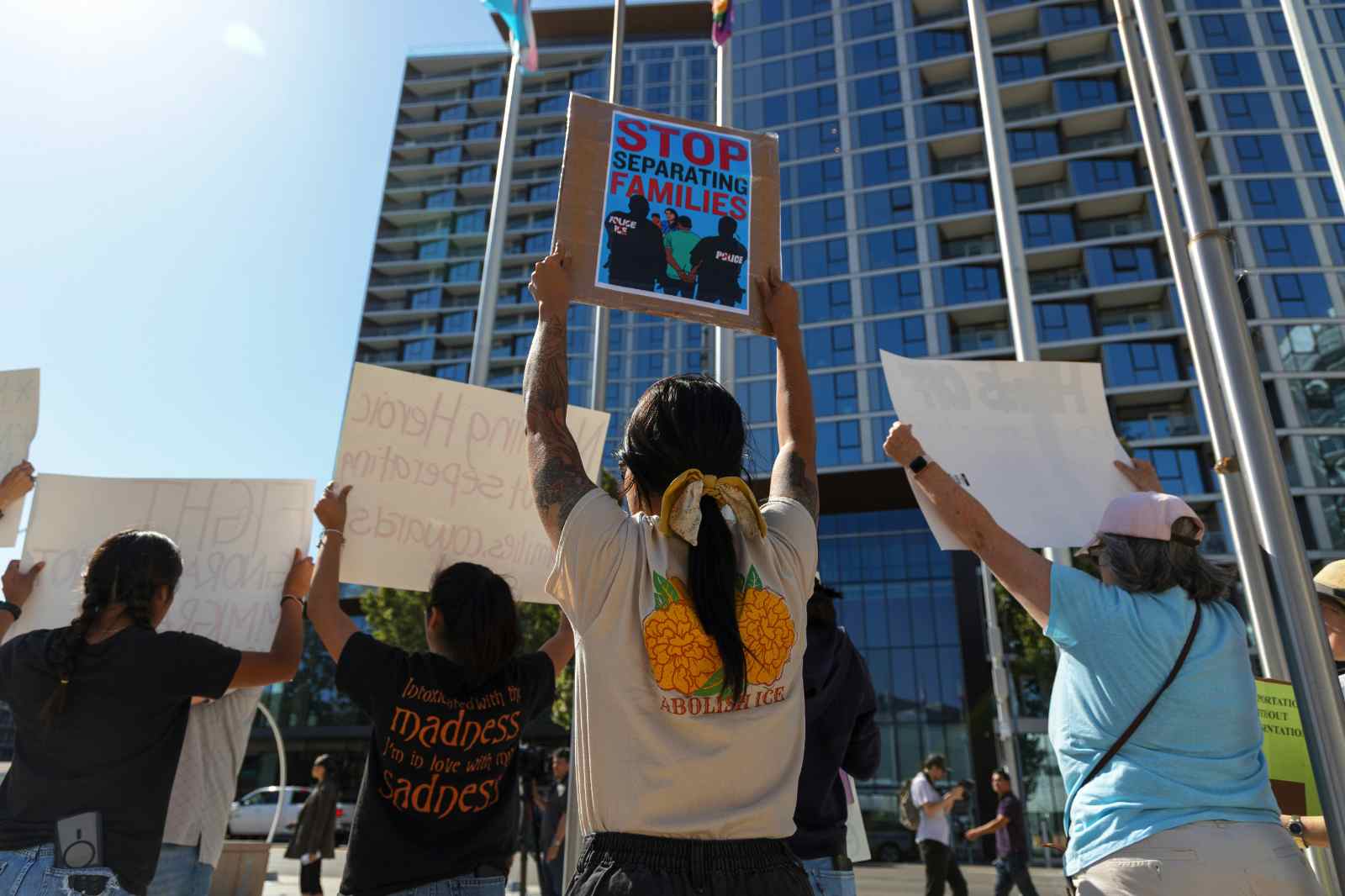
Public accounts describe stops of landscapers, clashes near a school, and a confrontation involving local leadership. Those narratives may support several common motions—depending on individual facts.
- Motion to suppress (if evidence of alienage was gathered through an unlawful stop or interrogation).
- Motion to terminate (less common, fact-dependent, sometimes tied to suppression or charging defects).
- Bond strategy (separate from suppression; focuses on flight risk and danger).
- Relief screening (asylum, withholding, CAT, cancellation), depending on personal history.
Importantly, none of those remedies is automatic. Under Barcenas, generalized allegations about “an operation” usually are not enough.
Defense counsel typically seeks body-worn camera footage (if any), dispatch logs, contemporaneous videos, medical records if force is alleged, and sworn declarations from witnesses.
Removal cases can move quickly. Immigration judge filing deadlines vary by court and by the judge’s scheduling order. Missing a motion deadline can waive arguments. Talk to counsel immediately if an NTA has been issued.
6. Official sources and further reading (and how to use them)
For readers tracking Operation Midway Blitz and related litigation, start with sources that separate enforcement from benefits adjudication.
- DHS Newsroom is best for official enforcement announcements, agency framing, and operational updates.
- USCIS Newsroom is best for benefits policy changes, processing announcements, and program updates that may affect eligibility after an arrest (or after release).
- Illinois Attorney General materials can provide the state’s legal theories and attachments. A complaint alleges facts; it is not a judicial finding. Look for later court orders for what a judge actually required.
- City of Evanston postings and records portals (including council agendas) can clarify what local policies were passed, what city staff were directed to do, and what documentation practices exist.
Official sources to monitor:
USCIS Newsroom: https://www.uscis.gov/newsroom
Practical takeaways: If you were questioned, detained, or arrested during Operation Midway Blitz, assume that suppression litigation will turn on details. Preserve evidence, request your records through counsel, and get a defense screening for all possible relief.
Employers should also review I-9 compliance, but should not overreact with discriminatory reverification practices.
Strongly consider consulting a qualified immigration attorney, especially in contested-stop cases where Matter of Barcenas makes the quality of the evidentiary record decisive.
This section will be supplemented with links to primary documents and official filings; prioritize primary documents (press releases, sworn declarations, court orders) when verifying claims.
⚖️ Legal Disclaimer: This article provides general information about immigration law and is not legal advice. Immigration cases are highly fact-specific, and laws vary by jurisdiction. Consult a qualified immigration attorney for advice about your specific situation.
Resources:
This analysis explores how Matter of Barcenas dictates the outcome of immigration cases resulting from Operation Midway Blitz in Evanston. It highlights the necessity of documented, case-specific records to challenge federal arrests. The article contrasts DHS’s public safety narrative with local resistance and litigation from the Illinois Attorney General, emphasizing that individual relief in court depends on meeting strict evidentiary burdens regarding Fourth Amendment violations.