- Former CNN anchor Don Lemon arrested by federal agents in Los Angeles regarding a Minnesota church incident.
- Prosecutors allege a coordinated attack occurred at Cities Church during a service led by an ICE official.
- The case invokes the FACE Act protections for religious exercise and raises significant press freedom questions.
Federal authorities say former CNN anchor Don Lemon was arrested in connection with what officials describe as a “coordinated attack” at Cities Church in St. Paul, Minnesota. Lemon has since identified himself as an independent journalist who livestreams events.
According to Department of Justice (DOJ) and Department of Homeland Security (DHS) statements cited in reporting, the underlying incident occurred at Cities Church during a Sunday service in St. Paul, Minnesota. The arrests occurred later in Los Angeles, where Lemon was taken into custody.
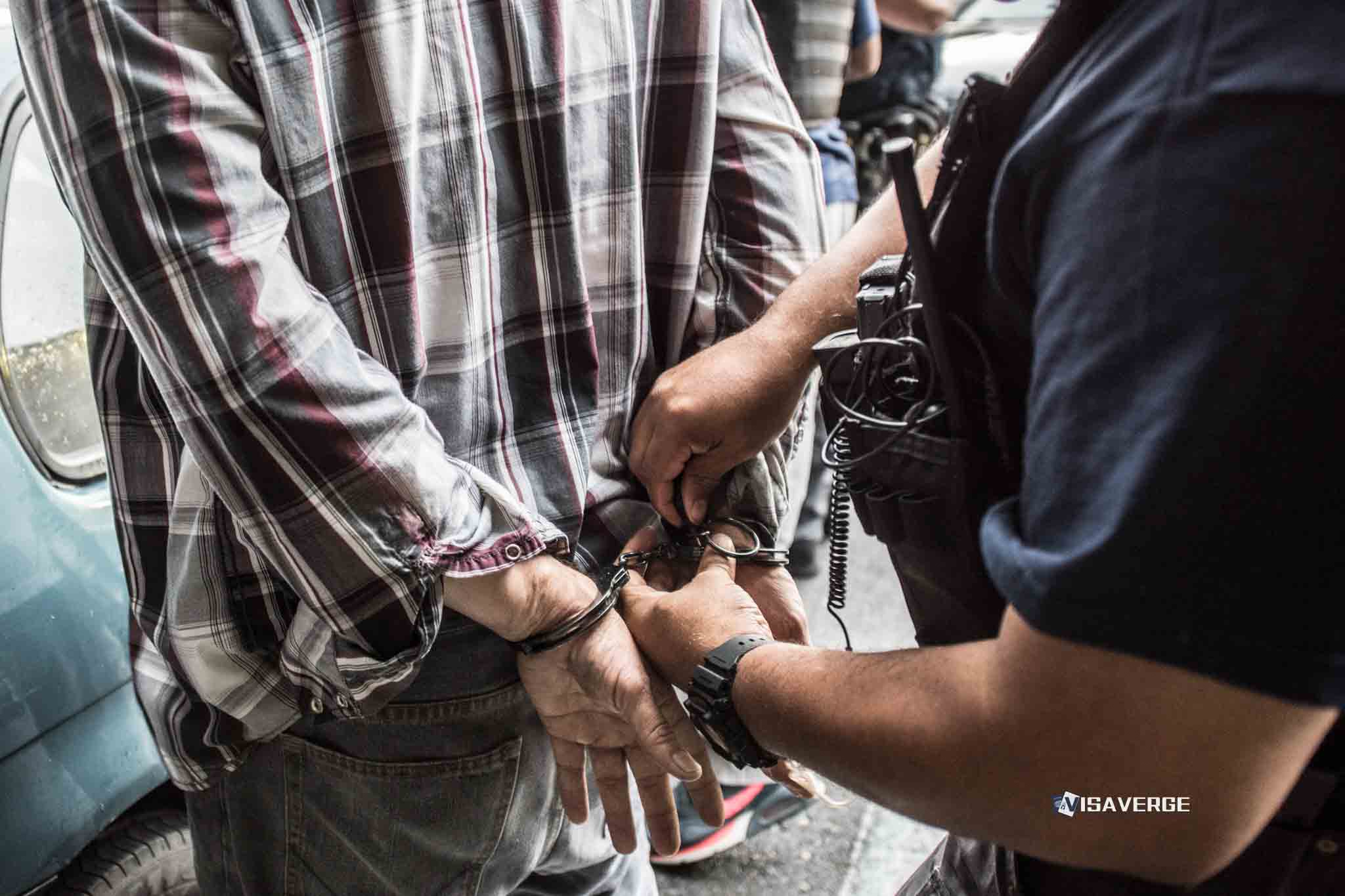
Officials identified other arrested individuals as Trahern Jeen Crews, Georgia Fort, and Jamael Lydell Lundy. Authorities also linked the controversy to the church’s pastor, David Easterwood, described as the acting director of a local U.S. Immigration and Customs Enforcement (ICE) field office.
The story sits at the intersection of federal criminal law, protest activity, and immigration enforcement tensions. It also raises press-freedom questions when a livestreamer is accused of being part of a criminal plan.
Incident details and what “coordinated attack” means
Officials say that on January 18, 2026, roughly 30–40 protesters entered Cities Church during a Sunday service. The protest targeted the church’s pastor, David Easterwood, because of his reported ICE leadership role.
| India | China | ROW | |
|---|---|---|---|
| EB-1 | Apr 01, 2023 ▲31d | Apr 01, 2023 ▲31d | Current |
| EB-2 | Jul 15, 2014 ▲303d | Sep 01, 2021 | Current |
| EB-3 | Nov 15, 2013 | Jun 15, 2021 ▲45d | Jun 01, 2024 ▲244d |
| F-1 | May 01, 2017 ▲174d | May 01, 2017 ▲174d | May 01, 2017 ▲174d |
| F-2A | Feb 01, 2024 | Feb 01, 2024 | Feb 01, 2024 |
That ICE connection matters because it may explain why a worship service became the protest venue. It may also explain why federal authorities framed the event as more than speech.
When prosecutors call something a “coordinated attack,” it is typically a theory about planning and shared intent. It can imply advance communication, assigned roles, and steps taken to disrupt an event. It does not, by itself, prove guilt. Those allegations are tested through evidence.
Here, officials appear to be distinguishing protected protest from conduct they say obstructed religious exercise. That framing becomes legally significant under both civil-rights conspiracy theories and statutes tied to access and obstruction.
Warning: Early government characterizations can shape public perception. They are not the same as proven facts in court. Treat key claims as allegations until supported by filings or trial evidence.
Arrest, charges, and the federal criminal process
Officials say Lemon was arrested the night of January 29, 2026, in Los Angeles, by federal agents including the FBI and Homeland Security Investigations (HSI). Authorities said he was held pending an initial appearance.
In federal court, an initial appearance is usually where a judge addresses identity, rights, counsel, and the government’s detention position. It is not a determination of guilt.
Conspiracy to deprive others of civil rights (plain-English framework)
Reporting describes one charge as conspiracy to deprive others of civil rights. In general terms, prosecutors often try to prove:
- An agreement between two or more people
- Intent to interfere with protected rights
- Acts taken to advance the plan
- A link between conduct and the targeted right
The exact elements depend on the charging statute and circuit law. The government’s “agreement plus intent” theory often turns on texts, planning, and coordinated movement.
The FACE Act and why a church setting can matter
Authorities also referenced the Freedom of Access to Clinic Entrances Act (FACE Act). The FACE Act is often discussed in clinic-related cases, but reporting indicates the government is invoking its protection for religious exercise at a place of worship.
In that framing, the church context is not incidental. It becomes the protected setting. Prosecutors may argue that intentional obstruction at a worship service crosses from protest into unlawful interference.
Why FBI and HSI involvement matters
Multi-agency investigations can broaden evidence sources. Investigators may use surveillance and phone video, livestream archives, social media and messaging records, witness interviews from congregants and protesters, and location data, subject to warrants and litigation.
If Lemon livestreamed, the government may treat the recording as evidence of conduct and intent. The defense may treat it as contemporaneous journalism.
Official statements and competing perspectives
DOJ and DHS messaging has emphasized religious freedom and deterrence. Lemon’s side, as described in reporting, emphasizes press freedom and the line between documenting and participating.
Attorney General Pam Bondi said on January 30, 2026, that agents arrested Lemon and others “in connection with the coordinated attack on Cities Church in St. Paul, Minnesota.” The statement indicates more details would follow. (See the DOJ’s main newsroom at https://www.justice.gov.)
DHS Secretary Kristi Noem said on January 23, 2026: “Religious freedom is the bedrock of the United States — there is no First Amendment right to obstruct someone from practicing their religion.” That frames the dispute as conduct-versus-speech.
Deputy Attorney General Harmeet Dhillon, described as speaking for DOJ Civil Rights, argued that Lemon’s presence was part of a conspiracy and not protected by labeling it journalism. That is an intent-based framing.
FBI Director Kash Patel stated: “WE DO NOT TOLERATE ATTACKS ON PLACES OF WORSHIP.” That message aligns with a deterrence posture.
Facts, statistics, and the policy backstory
Reporting ties the case to an immigration enforcement push in Minnesota described as Operation Metro Surge. In many enforcement surges, agencies reallocate personnel, expand arrest teams, and increase visibility. That can heighten community tensions and increase protest activity.
The reported numbers matter because they can be used politically and legally. Politically, agencies cite totals to show results. Legally, scale arguments can appear in detention filings or public-safety rhetoric.
The reporting states that more than 2,000 arrests have been made since the beginning of the surge in early January 2026. It also describes the church incident crowd as approximately 30–40 protesters.
Those figures do not prove a link between the surge and the church disruption. They do help explain why immigration enforcement became the protest’s focus.
Warning: If a case is tied to an enforcement surge, defendants may face heightened scrutiny at bond and charging stages. That can affect conditions of release and public statements by agencies.
Context and significance: protest rights, religious freedom, and press activity
This case presents classic First Amendment tension points. Courts often distinguish speech from disruption. They also distinguish public forums from private property.
A worship service is generally not a public forum in the way a sidewalk is. Even if protest goals are political, conduct inside a service can be treated differently than speech outside.
Time, place, and manner limits often become central. Conduct that blocks movement, prevents worship, or intimidates attendees can be treated as unprotected.
The press angle can be complicated. Credentialing is not always dispositive. Courts often examine conduct. A person filming may still face exposure if prosecutors prove agreement and intent to advance a plan.
Reporting also referenced judicial friction over warrants and evidence, and said DOJ proceeded by grand jury indictment on January 29, 2026. At early stages, courts do not resolve the full factual record. They address detention and scheduling.
Finally, the reporting references fatalities during immigration operations and suggests they were part of advocacy rhetoric around protests. Those deaths, as described, are not adjudicated in this church case. Still, they may be invoked to explain motive.
Impact on individuals and groups, including immigration consequences
What typically happens next for defendants
- Initial appearance. Judge addresses identity, rights, counsel, and detention position.
- Detention or bond hearing. Court decides release conditions or detention.
- Arraignment and plea entry. Formal charges read and plea entered.
- Discovery and motions. Parties exchange evidence and litigate pretrial issues.
- Trial or resolution. Case proceeds to trial or resolves by plea or dismissal.
Conditions of release can restrict travel and contact. They can also limit internet use in some cases.
Deadline: In federal cases, detention arguments often happen quickly after arrest. Missing early filing deadlines can hurt later motions. Get counsel immediately.
Independent journalists and protest coverage
For journalists and livestreamers, the practical lesson is that proximity to a disruptive event can be recharacterized by prosecutors. The line often turns on evidence of planning, coordination, and intent.
Even if a person claims “I was only documenting,” the government may argue that advance knowledge or tactical positioning supports a conspiracy theory.
Immigration consequences (often overlooked)
If any defendant is a noncitizen, federal charges can trigger separate immigration exposure. Immigration consequences can begin even before conviction, depending on status and custody.
Key risks may include ICE detainers or transfer to immigration custody, bond complications if a judge views charges as serious, inadmissibility issues for visa holders and applicants, and deportability issues for lawful permanent residents depending on conviction.
A central Board of Immigration Appeals precedent on conspiracies is Matter of S-I-K-, 24 I&N Dec. 324 (BIA 2007). The BIA held that conspiracy can involve moral turpitude when the underlying offense is turpitudinous, and intent matters.
Another frequently cited moral-turpitude framework appears in Matter of Silva-Trevino, 26 I&N Dec. 826 (BIA 2016), addressing how adjudicators analyze a conviction under the categorical approach.
The practical impact is straightforward. Even “non-immigration” criminal cases can become immigration cases overnight. That is especially true when the charge is framed as civil-rights interference or intentional obstruction.
Warning: Noncitizens should avoid pleading to any offense without immigration counsel input. A “good” criminal deal can still trigger removal under INA provisions.
Official sources and credibility notes
At this stage, many details are allegations. Readers should separate confirmed facts in official releases, claims in attorney statements, and allegations that will require court proof.
Primary sources referenced in reporting include the U.S. Department of Justice Newsroom: U.S. Department of Justice Newsroom. For case updates, monitor official releases and federal court dockets in the charging district. Initial appearances and detention orders often clarify what the government is actually alleging.
Sections labeled for interactive tools (such as “Official sources and credibility notes”) will have tools added separately. This section provides explanatory context to lead into those tools.
Practical takeaways for readers
- A “coordinated attack” label is a prosecutorial theory. It must be proven with evidence.
- Places of worship raise unique obstruction and religious-exercise issues.
- Livestreaming does not automatically confer immunity. Conduct and intent drive exposure.
- If you are not a U.S. citizen, criminal charges can create immediate immigration risk.
- Do not rely on social media summaries for legal strategy. Court filings matter.
Strongly consider consulting both a federal criminal defense attorney and, if any noncitizens are involved, a separate immigration attorney. Coordination between counsel is often essential.
This article provides general information about immigration law and is not legal advice. Immigration cases are highly fact-specific, and laws vary by jurisdiction. Consult a qualified immigration attorney for advice about your specific situation.
Resources: AILA Lawyer Referral