- The BIA ruling in Matter of Guerra allows judges to weigh discretionary factors for bond release eligibility.
- Immigration detention is rapidly expanding in 2026, prioritizing enforcement over exceptional use for many noncitizens.
- Preparing a detention packet early mitigates risks from transfers to remote facilities far from legal counsel.
Holding and practical impact. In Matter of Guerra, 24 I&N Dec. 37 (BIA 2006), the Board of Immigration Appeals (BIA) held that when an immigration judge considers release on bond under INA § 236(a), the judge may weigh a noncitizen’s danger to the community and risk of flight using a non-exhaustive set of discretionary factors. The BIA also confirmed that release on bond is not automatic, even when a person is otherwise eligible to request it.
Why this matters right now. As immigration detention Becomes Booming Business for Private Prison Giants”>immigration detention expands and becomes a more common default enforcement tool, Guerra is one of the most-cited frameworks in day-to-day custody fights. Even when detention is not mandatory, the expanded use of detention, transfers, and fast-moving charging decisions makes the initial bond presentation—and the record supporting it—far more consequential.
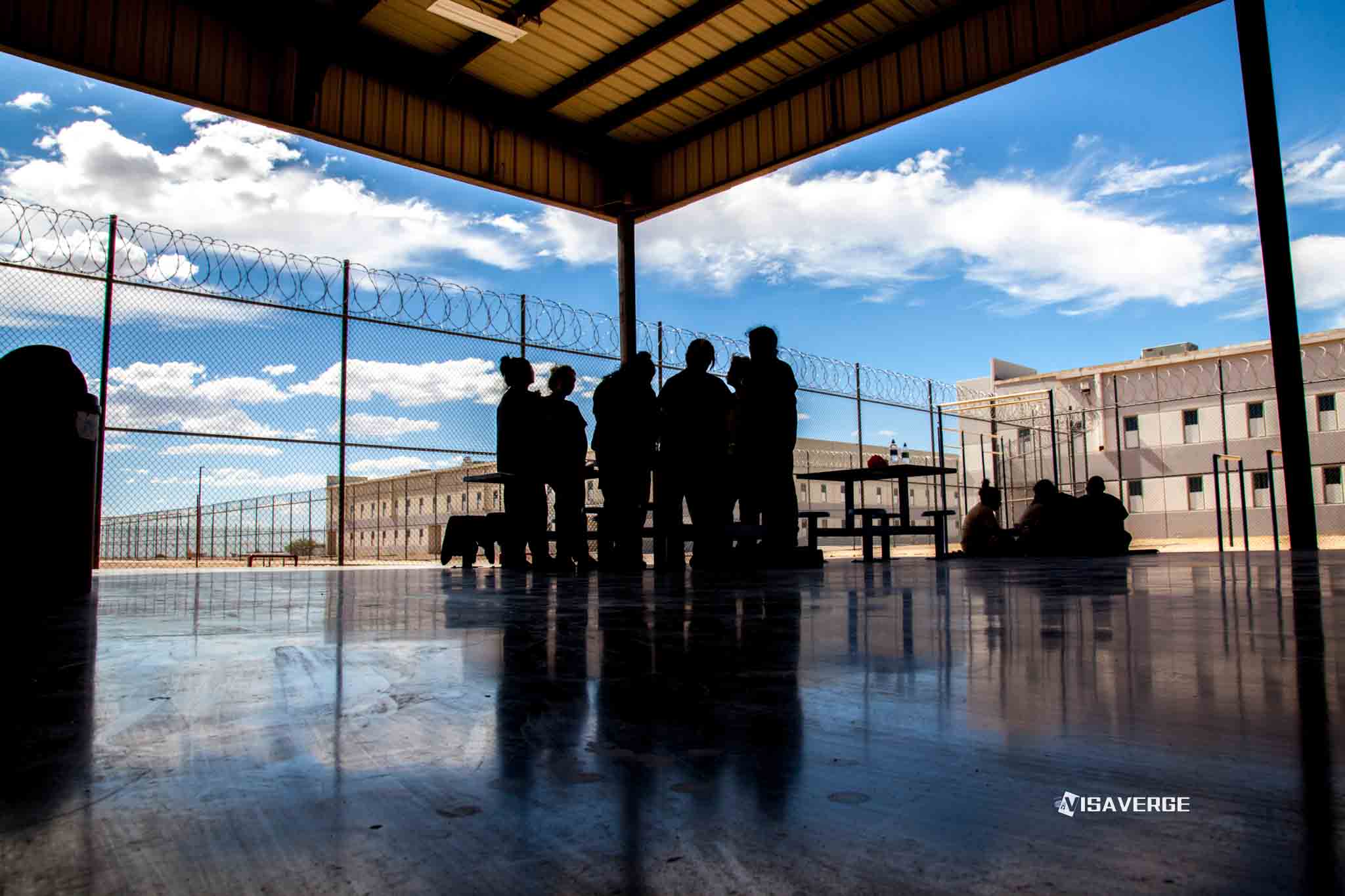
This article explains Guerra’s facts and rule, then connects it to current detention expansion dynamics, including DHS/USCIS operational shifts that increase the chance a person ends up in ICE custody.
1) Overview: what “detention expansion” means in 2026, and why bond standards matter
Immigration detention generally means civil custody by ICE. It is different from (1) removal proceedings in Immigration Court (EOIR) and (2) a final removal order (“deportation”). A person can be detained while fighting their case, or while pursuing relief.
By January 14, 2026, the U.S. detention system has grown quickly in capacity and geographic footprint. In practice, “detention expansion” often shows up as:
- More arrests away from the border, including after local stops.
- More people detained while they have pending benefits with DHS/USCIS.
- More transfers, including to remote locations that separate people from counsel and family.
- More reliance on detention as an enforcement baseline, rather than an exceptional step.
People potentially affected include: noncitizens with pending benefits, people booked into local jails, border crossers, and long-term residents who face charges that can trigger mandatory detention under new or existing rules. Key terms include DHS, ICE, USCIS, EOIR, NTA (Notice to Appear), and 287(g) partnerships between ICE and local law enforcement.
In this environment, bond eligibility and the Guerra discretionary factors can be decisive, because detention can undermine the ability to gather evidence, stabilize housing, and keep counsel.
2) Official statements and memos: what is binding, and what changes practice
Public leadership statements can signal priorities, but they are not always binding law. By contrast, formal directives and policy memoranda can reshape how cases enter detention and court.
Examples of what policy can change quickly include:
- NTA issuance practices and referrals to ICE.
- “Hold” and “re-review” processes for pending or approved benefits.
- How agencies share data, and how quickly enforcement follows a denial.
- Oversight rules that affect transparency and accountability in facilities.
For readers, the practical point is procedural. Keep copies of every notice, including I-862 NTAs, custody paperwork, and USCIS correspondence. Document names, dates, and locations. Verify claims through official sources when possible.
Warning: Do not assume a verbal assurance from any officer controls your custody status. Custody decisions can change after database checks, supervisory review, or a transfer.
3) Capacity expansion and infrastructure: why scaling up changes custody litigation
Major appropriations can fund “beds,” transport, staffing, and detention contracts. That can include federal facilities, private detention contracts, local jail agreements, and temporary structures. It can also include reopening sites that previously closed.
A crucial distinction is capacity targets versus daily population. Capacity describes how many people ICE can hold. Daily population reflects real-time custody. When capacity grows quickly, ICE typically gains flexibility to:
- Detain people who previously might have been released.
- Transfer detainees across state lines on short notice.
- Place detainees in facilities far from their community ties.
For bond cases under INA § 236(a), this matters because Guerra heavily favors evidence of stable community ties. Distance and transfers can make that evidence harder to assemble. It can also make it harder for family witnesses to appear, even by telephone.
4) Facility plans and detention scale: mega-centers, hubs, and due process pressure
Large “mega-centers” and warehouse conversions tend to raise recurring due process and access issues. Those issues include staffing shortages, delays in medical access, limited attorney visitation capacity, and transportation constraints for court appearances.
Hub networks can also accelerate transfers. A person may be processed at one site, classified at another, and then moved again for bed space. Each move can interrupt attorney relationships, delay evidence collection, and increase confusion about where the case is pending.
Families and lawyers can reduce disruption by preparing a “detention packet” early. It should include identity documents, proof of residence, medical records, and letters of support. It should also include a plan for childcare and rent.
Deadline risk: Bond hearings can occur quickly after detention, and continuances are not guaranteed. Early preparation can affect what the judge sees in the first hearing.
5) Significant policy shifts: mandatory detention triggers, USCIS enforcement pivot, and 287(g)
Three drivers can increase detention exposure.
(1) Mandatory detention concepts. Congress can expand categories of mandatory detention, and existing law already contains mandatory detention provisions. Under INA § 236(c), many noncitizens with certain criminal convictions may be subject to mandatory detention. If a new statute mandates detention for broader charge-based triggers, that can pull more people out of the Guerra bond framework, because the judge may lack bond authority in mandatory cases.
(2) USCIS enforcement pivot and NTAs. An NTA is the charging document that starts removal proceedings in EOIR. When USCIS issues NTAs more frequently, or refers more cases to ICE, benefits applicants can face a different risk profile. A denial, fraud finding, or status issue can shift from a paper adjudication into a detention-and-court track.
(3) 287(g) expansion. Under 287(g) arrangements, local agencies may perform certain immigration functions in coordination with ICE. That can increase the chance a routine local arrest results in an ICE detainer and transfer into immigration detention.
These shifts make it essential to know which custody statute applies. INA § 236(a) typically allows a bond request. INA § 236(c) often does not. The statute applied can turn on the NTA allegations, criminal paperwork, and timing.
Warning: A guilty plea that seems “minor” in criminal court can carry major detention consequences. Seek immigration-informed criminal counsel when possible.
6) Conditions and human impact: why detention expansion can change case outcomes
Rapid scaling can strain medical care, mental health services, and grievance processes. It can also change who is detained, including more first-time detainees unfamiliar with Immigration Court procedures.
At a high level, detained individuals generally have the right to:
- Retain counsel at no government expense.
- Request a bond hearing if eligible under the statute.
- Request a custody redetermination in Immigration Court under 8 C.F.R. § 1003.19, subject to limits.
- Seek documents and records relevant to the case, including criminal dispositions.
Where oversight declines, accountability may weaken. For case strategy, documentation becomes more important. If there are medical issues, disability needs, or safety incidents, records may support custody arguments and sometimes substantively support relief.
7) Interpreting dates and numbers: avoid common misconceptions
Detention metrics can mislead if read without context. Appropriations do not equal ready capacity. Staffing, contracting, and local licensing can delay openings. Capacity also does not equal detention decisions in individual cases.
Counts of NTAs, referrals, and 287(g) agreements indicate enforcement throughput, but they are not one-to-one with detention. Many NTAs are issued to non-detained respondents. Some referrals do not lead to custody.
Also watch the difference between:
- Enactment of a law.
- Implementation guidance.
- Operational ramp-up, which can lag or surge.
When official figures are updated, revisions may occur. Readers should track updates through government portals and dated PDFs, and save copies for reference.
8) The case analysis: what Matter of Guerra decided, and how it plays out in 2026
Key facts in Guerra
Guerra involved a custody request under INA § 236(a). The core question was how Immigration Judges should evaluate bond, and what considerations are legitimate in deciding whether release is appropriate.
The legal rule
In Matter of Guerra, 24 I&N Dec. 37 (BIA 2006), the BIA emphasized that bond determinations are discretionary and may consider factors tied to:
- Risk of flight (including fixed address and family ties).
- Danger to the community (including criminal history and conduct).
- Ability to pay (not as a standalone basis for release, but as part of setting an amount).
- Other relevant equities such as employment history and length of residence.
The decision is widely used because it provides a practical checklist, while leaving room for judges to weigh the totality of circumstances.
How Guerra interacts with detention expansion
In a system with more immigration detention, the Guerra factors become harder to prove from behind bars. Transfers can sever access to documents and witnesses. Remote facilities can block counsel from meeting quickly. That can lead to thinner bond records, even for strong candidates.
Detention expansion can also increase the number of cases where DHS argues “danger” based on allegations, pending charges, or broad public-safety messaging. Guerra permits consideration of many types of evidence, so respondents often need to counter allegations with certified dispositions, mitigation evidence, and stable-release plans.
Circuit variation and unresolved issues
Bond procedure can vary by jurisdiction and evolving litigation. Some circuits have addressed burdens of proof, the timing of bond hearings, and prolonged detention standards in different ways. Practitioners should check controlling circuit precedent, because it can affect how Guerra is applied in practice.
Dissenting opinions
Matter of Guerra is not known for a major dissent that drives later interpretation. The more important divides typically arise from later court litigation about detention statutes and constitutional limits, which can differ by circuit.
Practical takeaways for families and respondents
- Identify the detention statute early. INA § 236(a) versus § 236(c) can control bond eligibility.
- Build a Guerra record fast. Prepare proof of address, support letters, medical records, and certified court dispositions.
- Expect transfers. Maintain a shared folder or printed packet that can travel with the case.
- Track USCIS/ICE paper. If DHS/USCIS actions triggered detention, preserve every notice and decision.
- Get counsel quickly. The first custody presentation often frames the entire case.
Detention expansion increases the stakes of early missteps. An attorney can analyze mandatory detention issues, criminal-charge interactions, venue, and the best custody strategy under local practice.
Official government starting points (primary sources)
Below are primary government sources and a referral resource to begin research and find counsel.
– USCIS Policy Memoranda: https://www.uscis.gov/legal-resources/policy-memoranda
– EOIR Immigration Court information: https://www.justice.gov/eoir
Nonprofit and lawyer referral resources
– AILA Lawyer Referral: https://www.aila.org/find-a-lawyer
Legal Disclaimer
This article provides general information about immigration law and is not legal advice. Immigration cases are highly fact-specific, and laws vary by jurisdiction. Consult a qualified immigration attorney for advice about your specific situation.
This article explores the Matter of Guerra framework and its critical role in the 2026 immigration detention expansion. It details how the BIA uses community safety and flight risk to decide bond eligibility. With increased ICE capacity, transfers, and mandatory detention triggers, the stakes for initial bond hearings have risen, requiring noncitizens to prepare extensive documentation to secure release from civil custody.