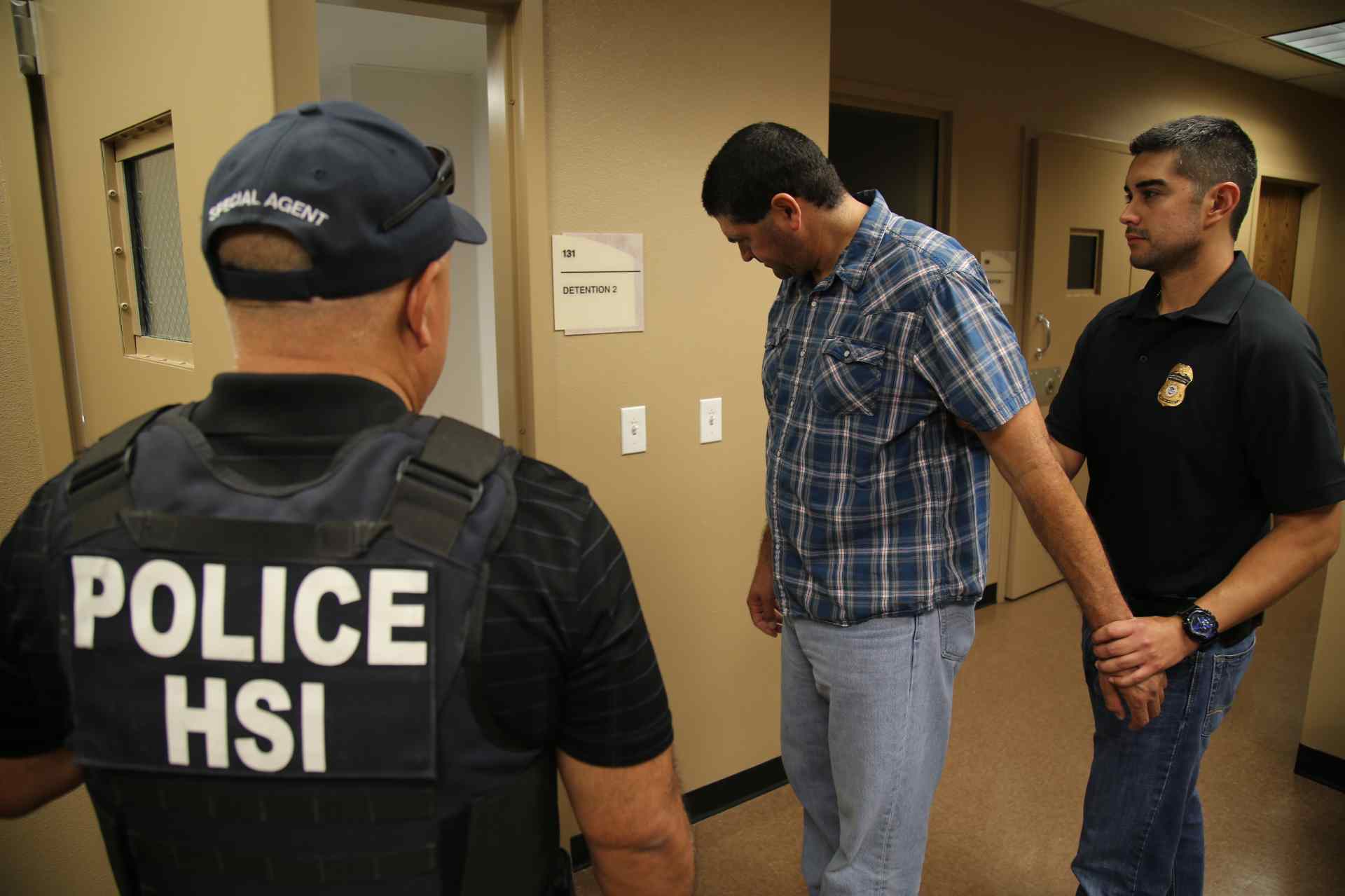
- Denton County adopted the Task Force model, expanding immigration enforcement beyond the jail into street-level interactions.
- Tarrant County received a $140,000 grant to strengthen its jail-based screening and identification capabilities.
- Texas Senate Bill 8 mandates 287(g) agreements for large counties, increasing pressure for statewide local-federal cooperation.
(TEXAS) — Two of North Texas’s largest counties have expanded their participation in ICE’s 287(g) program in January 2026, with Denton County shifting to the street-capable Task Force model on Jan. 13, 2026, and Tarrant County bolstering a jail-based approach following a state grant announcement on Jan. 15, 2026—moves occurring alongside SB 8, which became effective Jan. 1, 2026.
The changes stem from (1) county-level approvals and funding announcements tied to ICE partnerships, and (2) Texas Senate Bill 8’s new requirement that certain sheriffs formalize cooperation with ICE. At the federal level, the moment also coincides with a new USCIS policy memo on adjudicative holds for certain cases: USCIS Policy Memorandum PM-602-0194 (issued Jan. 1, 2026).

Warning (practical): Expanded 287(g) participation can increase the chance that a routine local law enforcement contact becomes an immigration referral, especially in a Task Force model setting.
Overview: What North Texas 287(g) changes mean and why SB 8 matters
The 287(g) program refers to a set of agreements authorized by INA § 287(g) that allow ICE to train and supervise selected local officers to perform certain immigration enforcement functions. It is not “state immigration law.” It is a federal delegation structure with local participation.
In plain terms: 287(g) agreements may permit local officers—after ICE training and under ICE oversight—to ask immigration-status questions, run database checks, prepare paperwork, and in some models, help initiate custody decisions that lead to ICE involvement.
A key distinction is street-level activity versus jail-based screening. A Task Force model can touch patrol and traffic enforcement. A jail model usually focuses on people already booked into a county jail.
This is why Denton and Tarrant are drawing attention. Denton’s shift signals a wider set of encounters that may trigger immigration exposure. Tarrant’s approach is framed as capacity building inside the jail.
The state backdrop matters. SB 8 increases pressure on larger counties to adopt 287(g) relationships. People who may be affected include immigrants, mixed-status families, employers, and residents who interact with local law enforcement.
Common triggers include traffic stops, jail booking, probation checks, and calls for service.
Denton County: Transition to the 287(g) Task Force model
On Jan. 13, 2026, Denton County approved a transition from a jail-focused 287(g) structure to the Task Force model. Operationally, that model is designed to extend 287(g)-related functions beyond the booking environment.
Typically, under a Task Force model, trained deputies may be authorized—under ICE supervision and program rules—to:
- ask certain immigration questions during lawful encounters,
- communicate with ICE in real time,
- complete ICE-directed paperwork, and
- in limited circumstances, support arrests tied to immigration violations as defined in the agreement.
Exactly how it plays out depends on training, written local policies, and how tightly the sheriff’s office structures supervision and referrals. Denton County Sheriff Tracy Murphree publicly described the move as “full participation” and emphasized training and enforcement posture, which may signal more assertive implementation.
For residents, the most concrete day-to-day change is that immigration questions may be more likely to arise outside the jail setting—such as during patrol contacts and traffic stops—rather than only after an arrest.
Deadline: Denton’s Task Force approval occurred in mid-January 2026, but operational rollout may lag while deputies complete ICE training and credentialing.
Tarrant County: Jail Enforcement model and state grant support
Tarrant County has emphasized that it remains in the Jail Enforcement model, meaning immigration identification and screening generally occur after someone is booked into the jail. This tends to concentrate risk on people who are arrested and processed, rather than on street encounters that end with a citation.
On Jan. 15, 2026, state officials announced the Sheriff Immigration Law Enforcement Grant Program, and Tarrant County was identified as eligible for $140,000 to support personnel, training, and equipment tied to its 287(g) agreement.
While this does not necessarily mean more “visible” immigration enforcement in neighborhoods, it can still change volume and consistency inside the jail. Additional funded staff may lead to more systematic screening, more timely ICE notifications, and fewer gaps during weekends or staffing shortages.
Those at higher risk of ICE contact in a jail model often include people with prior removal orders, prior deportations, pending criminal matters, or unresolved immigration status issues that appear in databases during booking.
Texas legislative context: SB 8 and the compliance pressure on counties
SB 8 reshapes incentives by requiring sheriffs in larger counties to enter into 287(g) agreements by the end of 2026. The statute also authorizes enforcement pressure through potential litigation by the Texas Attorney General if a county fails to comply.
Practically, this can push counties that previously limited cooperation to consider formal 287(g) enrollment or expansion. Counties may also weigh which model to adopt.
Deadline: Counties covered by SB 8 should track the end-of-2026 compliance timeline, including any local approval steps and ICE processing time for agreements.
Broader federal context: USCIS/DHS adjudication holds and national security screening
Local enforcement trends often intersect with federal benefits processing. A common pain point is the USCIS adjudicative hold, where USCIS pauses final action on a benefit request pending additional vetting.
USCIS Policy Memorandum PM-602-0194 (issued Jan. 1, 2026) directs adjudicative holds and review for benefit applications filed by nationals from certain “high-risk” countries, prioritizing national security and public safety screening. The memo can extend processing times.
Practical consequences may include delayed decisions on adjustment of status, naturalization, or other benefits, as well as knock-on delays for employment authorization in some categories. Applicants should plan travel cautiously, watch expiration dates, and respond promptly to USCIS notices.
Monitor cases through official USCIS tools, keep copies of filings, and file address changes as required under 8 C.F.R. § 265.1.
Warning (procedural): A hold is not a denial. But it can create time pressure around work authorization, travel, and maintaining lawful status.
Official sources and references (for verification and follow-up)
– USCIS Newsroom (policy updates and announcements): USCIS Newsroom
– USCIS Policy Memorandum PM-602-0194 (issued Jan. 1, 2026): PM-602-0194 PDF
Recommended actions and timeline
If you live or work in Denton or Tarrant County, identify immigration counsel now, review any pending court dates or probation requirements, and audit your USCIS case status and address information this month.
If you may be subject to SB 8-driven county changes elsewhere in Texas, watch your county commissioners’ agenda items and sheriff announcements through 2026.
⚖️ Legal Disclaimer: This article provides general information about immigration law and is not legal advice. Immigration cases are highly fact-specific, and laws vary by jurisdiction. Consult a qualified immigration attorney for advice about your specific situation.