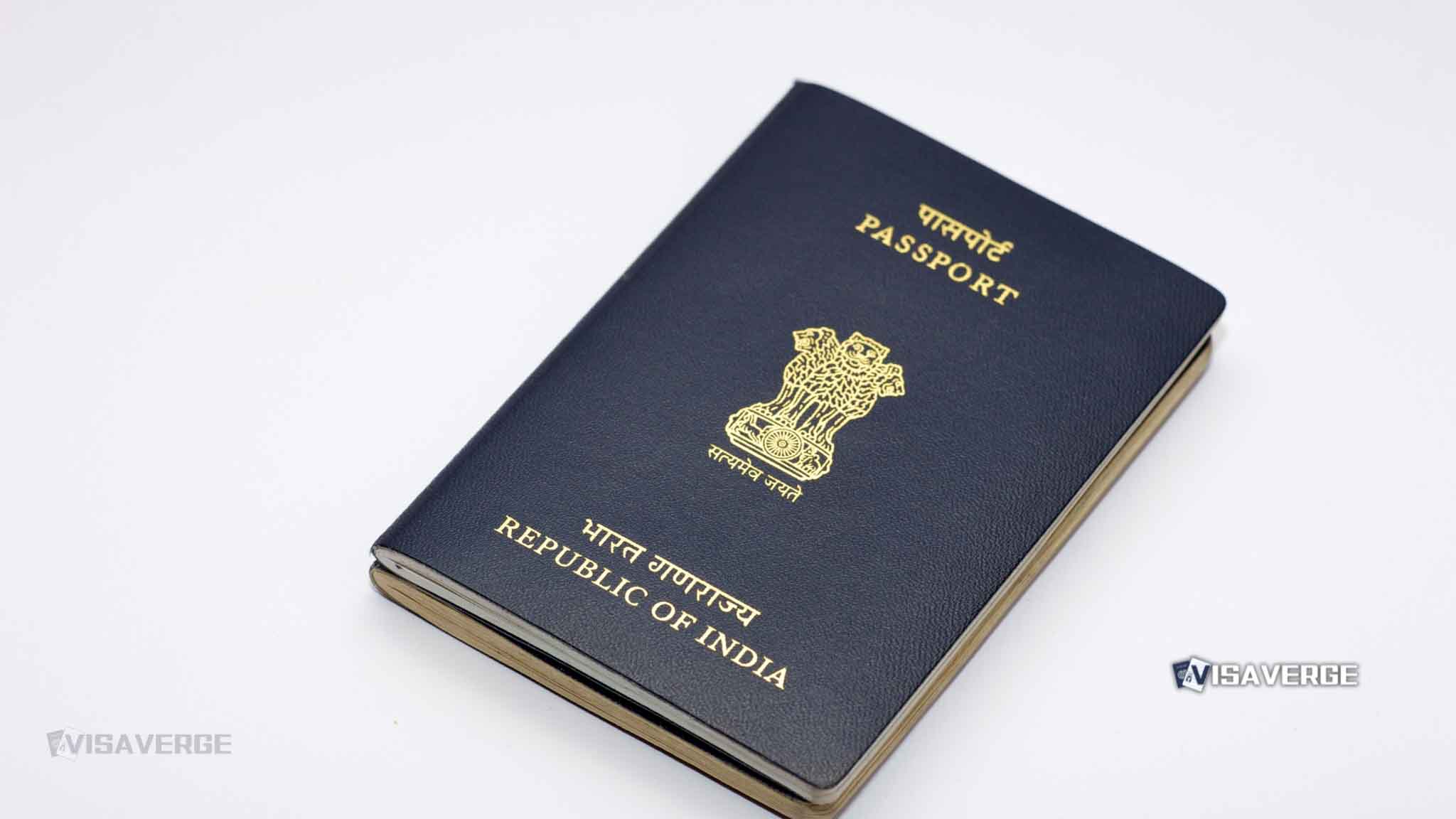
Nearly 9 lakh Indians have given up Indian citizenship over the last five years, with 896,843 people reported to have renounced their citizenship between 2020 and 2024, data presented in the Rajya Sabha shows. Minister of State for External Affairs Kirti Vardhan Singh tabled the figures during the 2025 monsoon session, putting a hard number on a trend many families see up close as relatives settle abroad. The post‑pandemic rebound is clear: after travel bans and closed offices in 2020, renunciations rose sharply in each subsequent year. Officials say the decisions reflect personal plans, not a government push.
Year-wise trend (2020–2024)
The government linked the 2020 dip to COVID-era restrictions on travel and consular services. Mobility returned once borders reopened, producing rising annual totals thereafter.
| Year | Number of renunciations |
|---|---|
| 2020 | 85,256 |
| 2021 | 163,370 |
| 2022 | 225,620 |
| 2023 | 216,219 |
| 2024 | 206,378 |
| Total (2020–2024) | 896,843 |
- The count nearly doubled from 2020 to 2021, then jumped again in 2022.
- It eased slightly in 2023 and 2024, but the five-year total remains close to 9 lakh.
- Singh’s reply did not include month-by-month spikes but confirmed the annual pattern the ministry has tracked.
Longer historical context (2011–2024)
The same data set was also shared earlier in a written response dated March 20, 2025, to Rajya Sabha Question No. 220, which provided year-wise totals from 2011 through 2024.
- Over the 14-year period 2011–2024, more than 2 million renunciations were recorded.
- 1,189,194 people renounced Indian citizenship during 2011–2019 alone.
- Annual totals in the pre-pandemic period stayed above 120,000, peaking at 144,017 in 2019.
- This suggests the 2021–2024 surge built on an already steady outflow rather than representing a wholly new phenomenon.
Destinations and diaspora spread
Singh told lawmakers that Indians who surrender citizenship do so to take up nationality in around 135 countries. The ministry listed the biggest destinations as:
- United States 🇺🇸
- Canada 🇨🇦
- Australia
- United Kingdom
- Germany
The reply also mentioned destinations ranging from Antigua and Barbuda and Brazil to Iceland and even the Vatican, highlighting the global reach of Indian migration networks. The ministry described the overseas Indian community as an “asset” for knowledge-sharing and soft power in global forums.
What the government did and did not provide
- The ministry did not provide state-wise data on where renunciations originate.
- Officials said they do not maintain state-wise records, a gap that frustrates state governments planning for talent loss or diaspora engagement.
- Figures stop at 2024; no 2025 number was available at the time of the reply.
- The government did not offer a single cause for renunciations, stating people mostly decide for “personal reasons.”
Key takeaway: Between 2020 and 2024, 896,843 Indians renounced citizenship. The government frames most cases as private choices, but analysts and state authorities want more granular data to understand regional impacts and trends.
Legal and practical implications
India does not allow dual citizenship, so many emigrants face a clean break to obtain a foreign passport. Consequences and alternatives include:
- Impacts of renunciation:
- Loss of voting rights
- Ineligibility for some government jobs
- Restrictions on buying certain kinds of property
- Common alternative: Overseas Citizen of India (OCI) status
- OCI offers lifelong entry and work rights but is not equivalent to citizenship
- Official guidance: see the Ministry of External Affairs guidance on renunciation
Drivers and pressures behind decisions
Behind the totals are everyday choices: a couple deciding where a child will study, or an engineer weighing a promotion that requires foreign citizenship.
- Factors cited by immigration lawyers and observers:
- Pent-up demand from those who had permanent residence abroad but could not complete formalities during 2020
- Practical requirements in some countries: years of residence, language tests, and employer preference for citizens
- Family decisions about stability, housing, and the ability to sponsor relatives
- Government’s stated explanation remains limited to the practical obstacles of 2020 and “personal reasons.”
Policy debate and broader implications
The numbers feed an ongoing conversation about brain drain, remittances, and diaspora engagement.
- Proponents’ view:
- Overseas Indians bring investment, skills, and soft power benefits
- Critics’ concerns:
- Renunciation totals may reflect problems in job markets, bureaucracy, or the desire for easier global mobility
- The spread across 135 countries suggests the phenomenon is broadly based, not driven by a single destination’s policy change.
Data gaps and what to watch
- Because state-level data are unavailable, researchers rely on surveys to map where departures are concentrated.
- Any shift in 2025 will be closely watched as visa rules and global economic conditions evolve.
- According to analysis by VisaVerge.com, the five-year tally is among the highest blocks of renunciations recorded in any comparable global period to date.
For now, the government record is clear: between 2020 and 2024, 896,843 Indians renounced their citizenship — a figure described in Parliament as nearly 9 lakh — and no newer official count has been released.
Parliamentary responses show 896,843 Indians renounced citizenship from 2020–2024, rising after COVID-19 travel limits eased. Most cases are described as personal choices. Renunciations spread across about 135 countries, mainly the US, Canada, Australia, the UK and Germany. The MEA did not provide state-level origin data, limiting regional analysis. India forbids dual citizenship; many opt for OCI status. Analysts urge more granular data to assess brain drain, remittances and long-term policy effects.