- Chief Justice Patricia Guerrero intensified monitoring of enforcement at California courthouses starting January 2026.
- The judiciary treats immigration arrests as access-to-justice issues impacting witness and victim participation.
- A formal proposal for statewide incident data reporting will be considered on April 24, 2026.
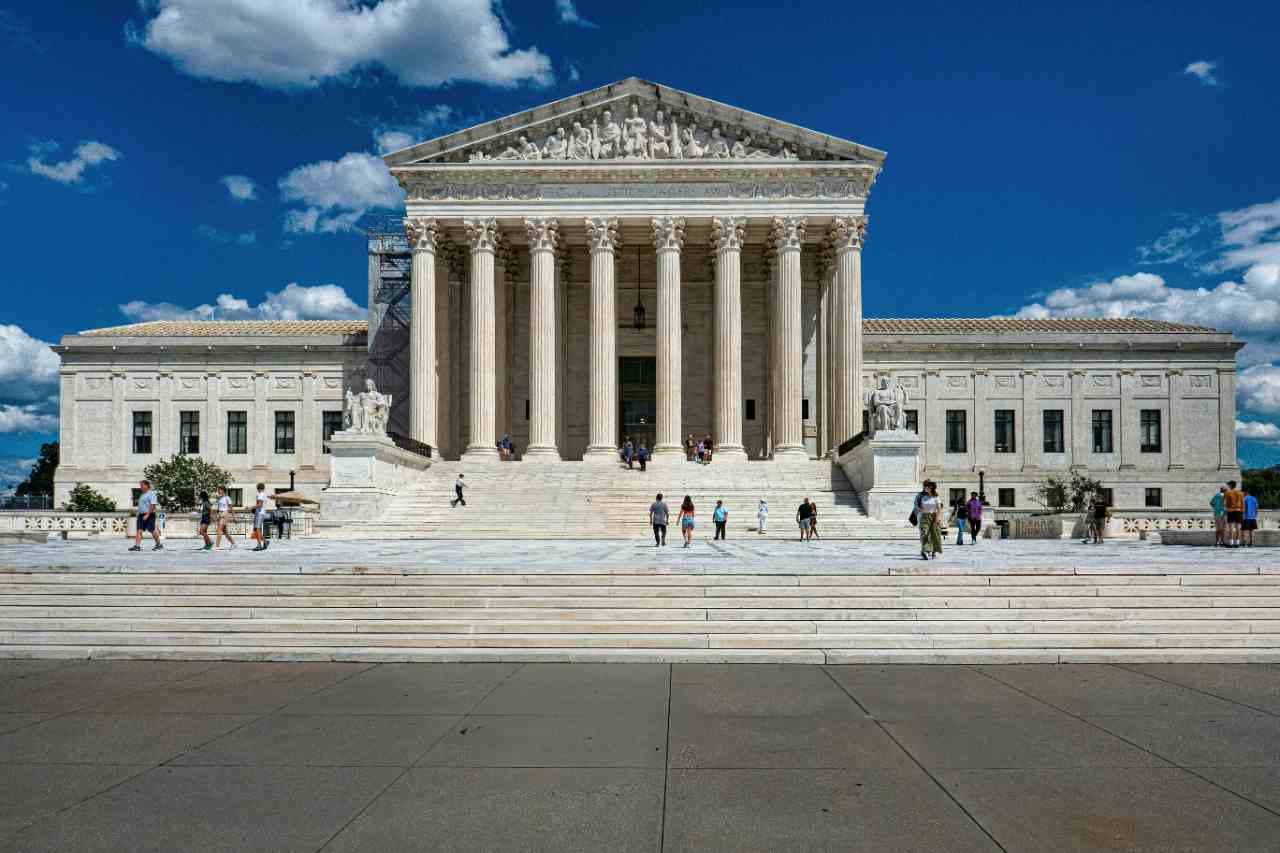
(CALIFORNIA, UNITED STATES) — As of January 2026, Chief Justice Patricia Guerrero, Chief Justice of California has intensified monitoring of immigration enforcement actions at California courthouses, casting it as an operational necessity amid a federal shift away from courthouse protections and a surge in U.S. Immigration and Customs Enforcement (ICE) activity.
Escalation: California judiciary increases monitoring of immigration enforcement at courthouses
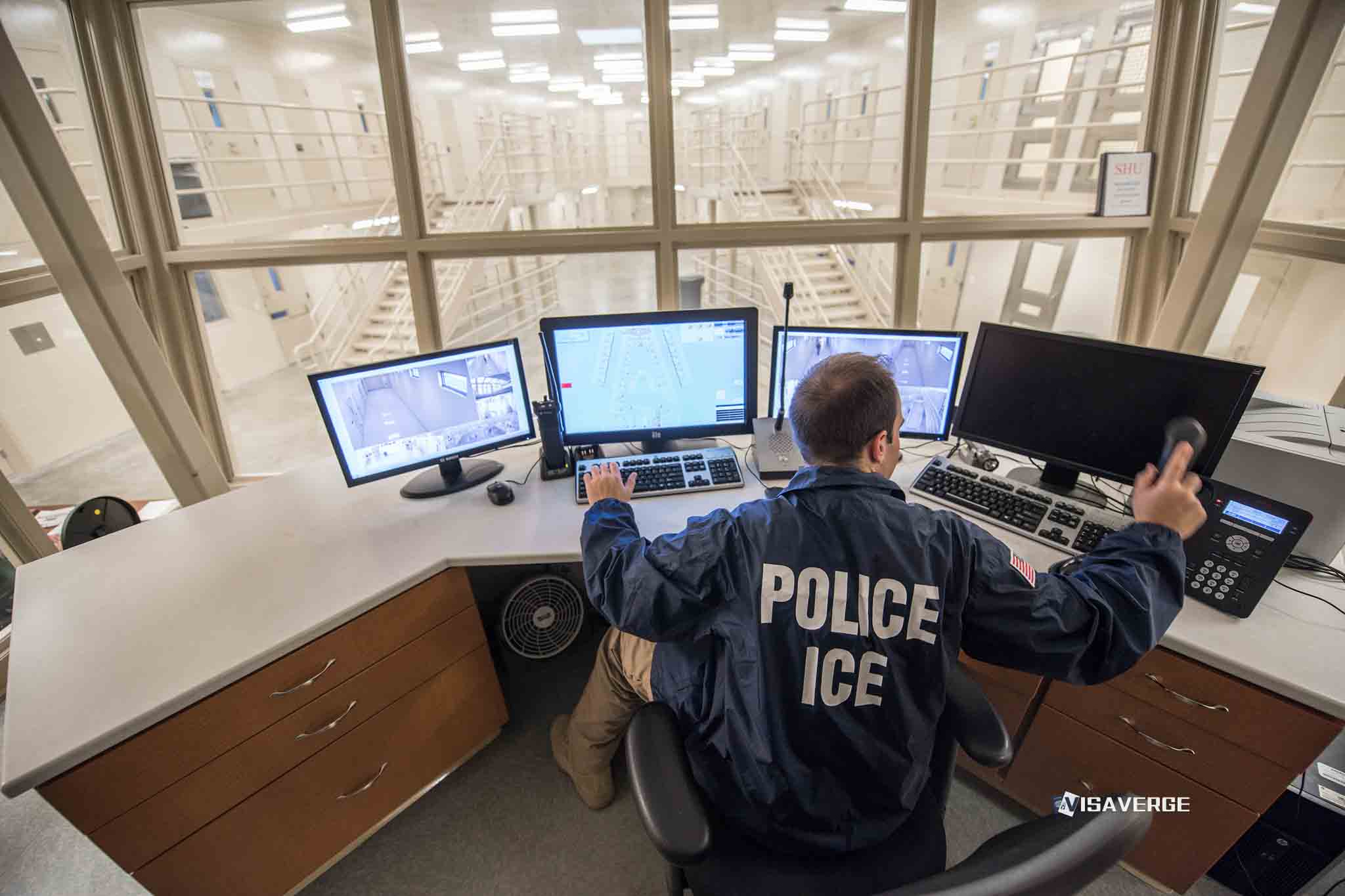
Monitoring in this context is not the California court system trying to enforce federal immigration law. It is closer to an internal “incident tracking” function.
Court leadership collects reports of immigration enforcement actions in courthouse and courthouse-adjacent spaces, looks for repeat patterns, and assesses how those actions affect daily court operations. California’s court leaders have treated the change as an access-to-justice issue.
If people expect immigration arrests at or near courthouses, they may avoid showing up. That fear can affect a wide range of cases—criminal matters where a witness is needed, domestic violence restraining orders, family court proceedings, and even routine civil hearings.
Courts rely on voluntary participation. Without it, the system slows and outcomes can skew through missed appearances. Pressure on courthouse operations has also increased because federal policy has changed.
| India | China | ROW | |
|---|---|---|---|
| EB-1 | Apr 01, 2023 ▲31d | Apr 01, 2023 ▲31d | Current |
| EB-2 | Jul 15, 2014 ▲303d | Sep 01, 2021 | Current |
| EB-3 | Nov 15, 2013 | Jun 15, 2021 ▲45d | Jun 01, 2024 ▲244d |
| F-1 | May 01, 2017 ▲174d | May 01, 2017 ▲174d | May 01, 2017 ▲174d |
| F-2A | Feb 01, 2024 | Feb 01, 2024 | Feb 01, 2024 |
Federal rules that once discouraged enforcement in certain “sensitive” spaces have been rolled back, and ICE has adopted a directive that expressly contemplates civil immigration enforcement actions in or near courthouses. That combination has left California courts planning for uncertainty at entrances, hallways, parking areas, and other courthouse-adjacent zones where people gather for hearings.
| Aspect | Detail | Date/Period | Source |
|---|---|---|---|
| Intensified statewide monitoring | Chief Justice Patricia Guerrero increased monitoring of immigration enforcement actions at/near courthouses as an operational response | January 30, 2026 | California Judicial Branch |
| Informal incident tracking | Incidents documented across 17 courthouses | By January 29, 2026 | California Judicial Branch |
| Geographic concentration | Shasta County reported the highest activity | By January 29, 2026 | California Judicial Branch |
| Federal policy reset | Prior “Protected Areas” guidance rescinded by U.S. Department of Homeland Security (DHS) | January 20, 2025 | DHS |
| ICE standard-setting directive | ICE Directive 11072.4 addresses civil enforcement actions in or near courthouses | May 27, 2025 | ICE |
⚠️ Federal policy has shifted away from courthouse-related protections, while California courts are building a more formal data-reporting approach. That mix may affect scheduling, security practices, and willingness to attend hearings—especially for victims and witnesses.
Official statements and policy shifts driving the change
A big driver of California’s response is a clear federal policy turn away from earlier limits on where immigration enforcement should occur.
On January 20, 2025, U.S. Department of Homeland Security (DHS) rescinded prior “Protected Areas” guidance. In practice, that removal matters because it reduces the formal expectation that courthouses and other sensitive community spaces will be treated as off-limits or strongly discouraged for enforcement.
Even when an agency says it will apply “common sense,” court users may not know what that will mean on a given day. Uncertainty alone can change behavior.
Then, on May 27, 2025, U.S. Immigration and Customs Enforcement (ICE) issued ICE Directive 11072.4, titled “Civil Immigration Enforcement Actions In or Near Courthouses.” The directive’s structure matters for courts because it describes when ICE personnel “may” conduct civil enforcement actions in or near courthouses if they have “credible information” that a targeted person will be present.
It also includes language that officers “should generally avoid” enforcement actions in areas wholly dedicated to non-criminal proceedings, such as family court and small claims court. That “should generally avoid” phrasing is not the same as a ban.
Courts still must plan for the possibility of enforcement encounters in courthouse-adjacent settings and in mixed-use facilities. Public messaging has reinforced a safety-based rationale for courthouse-related enforcement.
On August 3, 2025, ICE messaging around courthouse detentions emphasized that courthouses can be “safer” locations because people pass through security screening and weapons checks. From an enforcement perspective, that can be framed as risk reduction.
From a court-access perspective, the same message can increase fear among victims, witnesses, and litigants who see courthouse attendance as a potential trigger for immigration arrests.
⚠️ Federal policy has shifted away from courthouse-related protections, and California courts are building a more formal data-reporting approach. That mix may affect scheduling, security practices, and willingness to attend hearings—especially for victims and witnesses.
Key facts, statistics, and policy details
California’s response has two layers: what is already happening informally, and what may soon become a structured statewide reporting system.
On January 29, 2026, Chief Justice Patricia Guerrero said her office had informally documented immigration enforcement incidents at 17 courthouses, with the highest activity reported in Shasta County. Informal tracking typically means court leaders are gathering incident reports and attempting to measure frequency and location without yet imposing a uniform statewide reporting template.
A proposed next step is more formal. The California Judicial Council is scheduled to consider a proposal on April 24, 2026 that would require superior courts to submit regular data on civil arrests occurring in or near courthouses.
While specific reporting fields can vary in design, the core operational questions are predictable. Those questions focus on where, when, what type of proceeding, and the civil arrest context.
- Where did the encounter occur: inside a courthouse, at an entrance, in a hallway, or in a courthouse-adjacent area such as a walkway or parking zone?
- When did it occur: date and time, and whether it coincided with calendar call or peak foot traffic.
- What type of proceeding was underway: criminal, family, civil, traffic, juvenile, or a mixed calendar in a shared building.
- What the “civil arrest context” looked like: for example, whether the person was a party, witness, or support person, and whether the arrest followed a routine hearing appearance.
Those details matter because they help court administrators decide what changes may reduce disruption. Data can also help courts document patterns without asking staff to intervene in federal enforcement.
The scale of arrests described in the San Diego area is a key reason the issue has moved quickly. Federal immigration arrests surged by 1,500% between May and October 2025 compared to the same period in 2024, with about 4,500 arrests in San Diego area May–Oct 2025 vs 300 May–Oct 2024.
Even if only a fraction of those arrests are courthouse-related, that kind of jump can shape public perception. Perception drives behavior. Court administrators plan for behavior.
Federal litigation has also shaped the operating environment. On December 24, 2025, a federal judge in San Jose issued a temporary restraining order blocking ICE from arresting immigrants appearing for routine hearings in Northern California, citing chilling effects on the judicial system.
The limits of that order matter. It targets a specific type of arrest activity tied to routine hearings and is bounded by jurisdiction. It does not function as a statewide policy rewrite, and it does not remove the need for local courts to plan for courthouse-adjacent enforcement encounters outside the order’s scope.
⚠️ The federal posture has changed, and California’s April 24, 2026 proposal would shift incident collection from informal tracking to structured reporting. A formal reporting pipeline may affect courthouse security coordination, calendar management, and remote appearance availability.
Context and significance: constitutional and jurisdictional tensions
Courts are not only buildings. They are a public service that depends on trust.
California courts have an institutional duty to keep courthouses accessible so people can assert rights, respond to charges, seek protection orders, and testify. When a courthouse becomes a place people fear, the justice system can lose witnesses, lose victims, and lose legitimacy with entire communities.
At the same time, immigration enforcement is federal. The federal government can carry out immigration enforcement actions, including civil arrests, under federal authority. The tension is not about whether the federal government can enforce immigration law at all.
The tension is about whether courthouse operations can continue without becoming collateral damage. One constitutional idea often raised in state–federal friction is the 10th Amendment “anti-commandeering” principle.
In plain language, it means the federal government generally cannot force state officials to carry out federal programs. Applied here, California’s position is often framed as: federal officers may enforce federal law, but California courts and staff should not be pressed into helping, nor should enforcement actions effectively block access to state courts.
Chief Justice Guerrero’s posture has been described as shifting from cautious to proactive because the issue is no longer abstract. When court users fail to appear, calendars break down. When witnesses refuse to testify, prosecutions weaken. Those are operational impacts, not political talking points.
Impact on individuals: chilling effects and court accessibility
Victims and witnesses are often the first to change behavior when fear rises.
In many cases, a person coming to court is not there because they want to be. They may be under subpoena, responding to charges, seeking a restraining order, or trying to protect a child’s interests in family court.
If that person believes a courthouse visit could lead to immigration arrests, skipping court can feel like the safer option—even when it creates legal risk. Chief Justice Guerrero addressed that concern directly on January 29, 2026, saying: “The type of immigration enforcement action that we’ve seen instills fear in witnesses [and] litigants that creates problems for them being able to access the courts.”
Leadership statements like that matter because they signal to judges and administrators that court access is being treated as a system-wide problem, not an isolated incident.
- Fewer witnesses show up, which can mean weaker criminal cases and dismissed charges.
- Victims may avoid restraining order hearings, leaving them without court-issued protection.
- Missed civil hearings can lead to defaults, bench warrants, or other penalties.
- Community members may stop reporting crimes if they associate court contact with immigration enforcement.
Remote and virtual appearances can reduce exposure to courthouse-adjacent encounters. Still, they are not a full substitute for in-person participation.
Some hearings require credibility assessments, evidence handling, or custody determinations that judges may prefer to conduct in person.
Mitigation efforts and operational responses
Operational responses focus on keeping cases moving while lowering the risk that courthouse attendance triggers fear.
Expanding virtual/remote appearances is one of the most direct tools available to courts. When a party or witness can appear remotely, they may avoid a courthouse entrance and adjacent public areas where enforcement encounters are more likely.
Remote options can apply in both civil and criminal matters, though eligibility often depends on the type of case, the judge, local court rules, and due process needs.
Structured reporting is the other major lever. When courts collect standardized incident data, they can identify hotspots, adjust calendars, coordinate internal security planning, and provide statewide leadership with credible measurements that support operational decisions.
- Identify hotspots (specific buildings, entrances, or times of day).
- Adjust calendars to reduce crowding in sensitive areas.
- Coordinate internal security planning focused on access and safety, rather than immigration enforcement.
- Provide statewide leadership with credible measurements that support operational decisions.
Tradeoffs remain. Remote access can create technology barriers for low-income court users. It can also raise fairness questions if one side has better connectivity or private space than the other.
Some people need in-person interpreters or disability accommodations that work better onsite. Courts typically have to balance those realities case by case.
✅ For readers with casework in California courts: verify current courthouse procedures and remote appearance options through official California court portals before your hearing date.
Official government sources and where to verify
Policy shifts on courthouse-related enforcement can happen quickly, and court procedures can change with little notice. Use primary sources whenever possible.
USCIS is not the same agency as ICE, but USCIS communications can still matter for people trying to keep immigration filings on track while dealing with court dates. Start with the USCIS Newsroom.
For DHS announcements and guidance changes, check official DHS press communications on the DHS website. For ICE directive-level documentation, look for ICE’s policies and procedures materials on ICE’s official site, including entries for directives like ICE Directive 11072.4.
California court operational updates are published through the California Judicial Branch and the California Judicial Council, including announcements tied to courthouse operations and administrative proposals.
Readers tracking the Northern California restraining order entered on December 24, 2025 may also look up filings and orders through federal court records systems, or through official summaries where available from government sources.
This article presents information from official government sources and policy documents. It does not constitute legal advice.
Policy and court procedures can change; readers should verify current rules with official sources. April 24, 2026 is the next key date to watch, because it is when the California Judicial Council is scheduled to consider the statewide courthouse-arrest data reporting proposal.