(UNITED STATES) — A new era of immigration-tax compliance is tying together how you are paid (W-2 vs 1099), your tax residency status, and the tax relief you claim—creating real visa risk for H-1B holders and other nonimmigrant workers when paperwork does not match.
Federal enforcement in 2025 is built around cross-checking. USCIS and DHS are treating employment classification and tax filings as credibility evidence, not separate administrative tasks. That shift matters most for people whose work authorization depends on a clear employer-employee relationship, and for anyone whose “Residency Tests” results changed mid-stay.
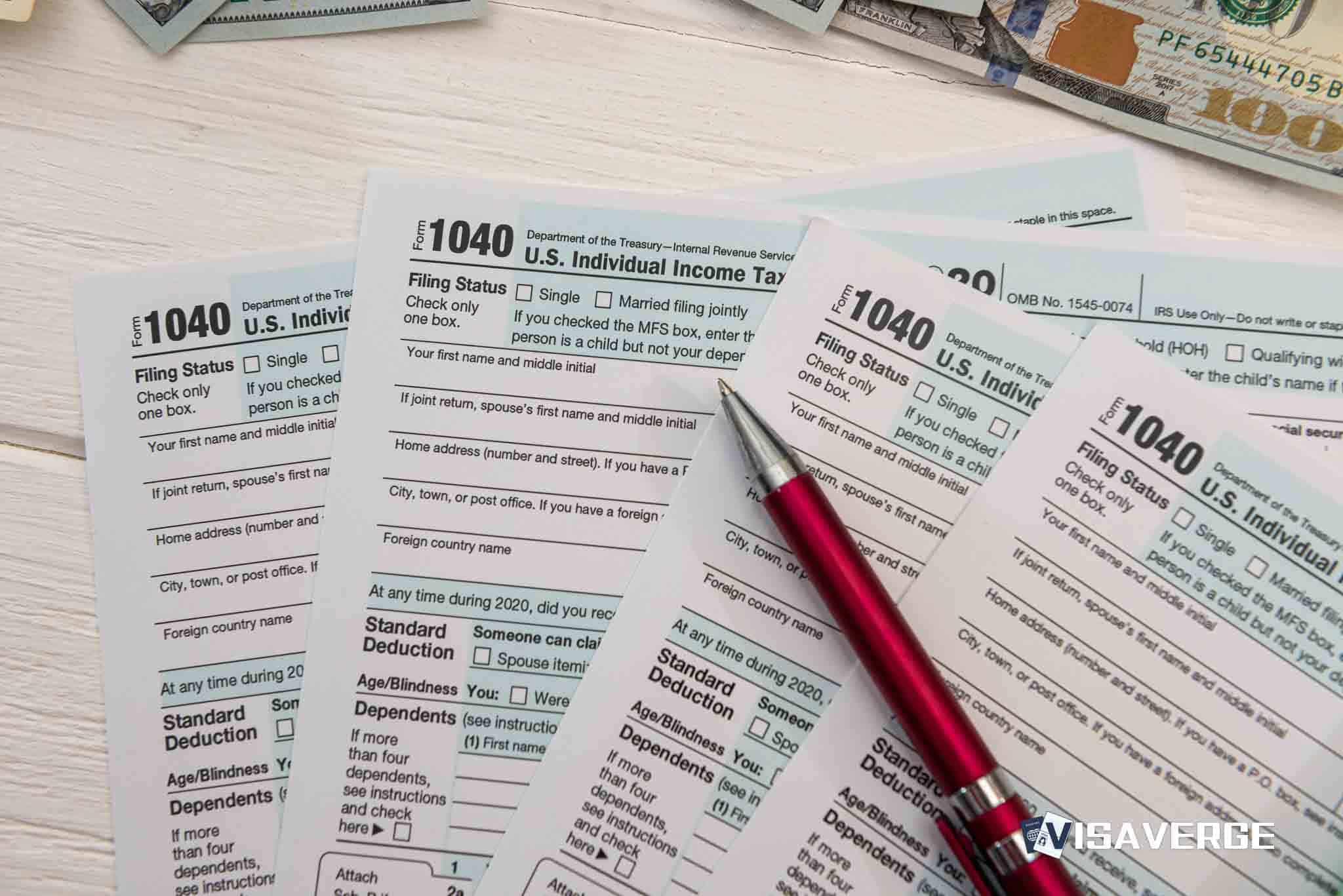
W-2 vs 1099: employment classification is now an immigration fact pattern
H-1B status typically depends on an employer-employee relationship supported by the petition, LCA terms, and payroll records. A W-2 is not legally required in every scenario, but it often aligns with what USCIS expects to see: supervision, control, and wages paid by the petitioning employer. Clean W-2 payroll can also make later filings easier to document.
1099 work is different. A 1099-NEC signals independent contractor treatment, and USCIS may view it as self-employment. For many nonimmigrants, that can collide with status rules. Even when the work itself is within the same specialty area, the structure can create the problem.
August 2025 marked a practical turning point. USCIS began verifying self-employment proofs against IRS records, and income inconsistencies can now escalate beyond a routine RFE. That is happening in a broader anti-fraud posture. FDNS completed 19,300 fraud cases in 2025, and DHS reported fraud findings in about 65% of reviewed cases.
W-2 vs 1099 in immigration and tax contexts (2025)
| Aspect | W-2 (Employee) | 1099 (Independent Contractor) | Immigration Note |
|---|---|---|---|
| Control of work | Employer directs duties and schedule | Contractor controls how work is done | Control supports an H-1B employer-employee relationship |
| Tax withholding | Withheld through payroll | No withholding | Big filing gaps can draw questions in later USCIS reviews |
| Payroll evidence | W-2, paystubs, payroll taxes | Invoices, 1099-NEC, Schedule C | USCIS may compare claimed income to IRS transcripts starting August 2025 |
| Social taxes | Employee share via payroll | Self-employment tax | Mismatched reporting can look like misrepresentation |
| Visa risk (typical) | Lower for H-1B if petition matches job | Higher for many nonimmigrants | 1099 income may be treated as unauthorized employment if not structured correctly |
⚠️ New: USCIS verification of self-employment income against IRS records may trigger RFEs or denials for inconsistencies starting August 2025
A 1099 arrangement is not automatically fatal, but it is rarely “plug and play” for H-1B holders. The stakes rise because the same records used for taxes can become exhibits in immigration filings.
✅ If you’re an H-1B or nonimmigrant considering 1099 work, obtain immigration counsel before accepting contracts
Residency Tests: “Resident Alien for Tax Purposes” is not a visa label
Tax residency is determined under IRS rules, not by whether someone is in H-1B, F-1, or O-1 status. That separation creates common filing errors, especially in years when someone’s days in the U.S. cross a threshold.
Two tests drive most outcomes:
- Green Card Test: A lawful permanent resident is generally a Resident Alien for Tax Purposes for the year.
- Substantial Presence Test (SPT): Many nonimmigrants become a Resident Alien for Tax Purposes after enough U.S. days under the formula (current year days + 1/3 of prior year days + 1/6 of days two years prior), meeting the 183-day threshold.
H-1B holders often become tax residents under SPT, even while remaining nonimmigrants for immigration law. That matters because tax residents are taxed on worldwide income, and their reporting footprint expands fast. It also affects what USCIS can ask for. In 2025, officers have been requesting three years of IRS transcripts in adjustment of status and naturalization contexts, which makes earlier tax choices harder to “outgrow.”
Residency status quick-reference
| Heading | Nonresident Alien | Resident Alien | Key Implications for H-1B |
|---|---|---|---|
| Main test | Does not meet SPT (or is exempt) | Meets SPT or Green Card Test | Many H-1B holders shift into Resident Alien status under SPT |
| U.S. tax scope | U.S.-source income only | Worldwide income | Foreign accounts, foreign income, and credits may enter the return |
| Typical return | Form 1040-NR | Form 1040 | USCIS may compare filed returns and transcripts to immigration timelines |
| Deductions/credits | More limited | Broader access | Filing positions can affect later “consistency” reviews |
Joseph B. Edlow framed the enforcement posture plainly. On December 22, 2025, the USCIS Director said:
“USCIS has taken an ‘America First’ approach. ensuring that it serves the nation’s interests and protects and prioritizes Americans over foreign nationals.”
That tone is showing up in casework where inconsistencies look like intent problems, not math errors.
FTC vs FEIE: double-tax relief choices can carry immigration consequences
Foreign income is common for global workers. Equity vesting tied to prior foreign service, overseas rentals, side consulting abroad, and foreign bank interest can all show up after a move to the United States. For tax residents, the question is often whether to claim the Foreign Tax Credit (FTC) or the Foreign Earned Income Exclusion (FEIE).
FEIE can exclude foreign earned income, but it comes with a narrative requirement: your tax home must be outside the United States, and you must meet a presence test (physical presence or bona fide residence). For many nonimmigrants temporarily abroad, that can fit. For green card holders, it can create risk if it suggests a primary home outside the U.S., especially during re-entry or later naturalization review.
FTC works differently. It generally offers a credit for foreign income taxes paid, which can be more consistent with living primarily in the U.S. while still having foreign income. It also avoids the optics problem of asserting a foreign tax home when someone is trying to prove permanent U.S. residence.
📅 Note the FEIE limit for 2025: $130,000; consult a tax professional for eligibility and timing
FTC vs FEIE decision guide
| Scenario | FTC | FEIE | Immigration Considerations |
|---|---|---|---|
| Taxed heavily abroad (often higher-rate countries) | Often a better fit | May waste foreign taxes paid | FTC can reduce double tax without claiming a foreign tax home |
| Working abroad long stretches with a foreign base | May still work, depends on tax paid | Often a better fit up to $130,000 | FEIE requires foreign tax home, which can clash with green card permanence claims |
| Planning for adjustment of status or naturalization | Often steadier | May raise questions if it signals non-U.S. residence | USCIS review of transcripts can spotlight shifting “home” positions |
| Mixed U.S. and foreign income in same year | Can coordinate across categories | Limited to foreign earned income | Returns that look inconsistent with the immigration timeline can trigger RFEs |
Switching between FEIE and FTC has technical limits, and the right answer is fact-specific. The immigration angle is simpler: filings should match the life you are presenting to USCIS.
2025 enforcement shift: transcripts, fees, and process changes
September brought a second pressure point for H-1B workers and employers. A Presidential Proclamation effective September 21, 2025 mandated a $100,000 fee for new H-1B petitions for workers outside the U.S. That cost can change staffing plans, timing, and who remains eligible for sponsorship.
Late December added more structure. On December 23, 2025, USCIS publicly described H-1B process changes tied to exploit concerns. USCIS spokesman Matthew Tragesser said:
“The existing random selection process of H-1B registrations was exploited. The new weighted selection will better serve Congress’ intent. by incentivizing American employers to petition for higher-paid, higher-skilled foreign workers.”
For workers, the takeaway is that agencies are correlating records more aggressively, and they are doing it while raising the consequences of perceived manipulation.
| Country/Type | Visa Category | Processing Time |
|---|---|---|
| USA | General USCIS verification of self‑employment income | August 2025 |
| USA | H‑1B fee (Presidential Proclamation) — new fee for workers outside U.S. | September 21, 2025 |
| USA | USCIS Director public policy statement (tone shift) | December 22, 2025 |
| USA | USCIS H‑1B selection/process changes announced (weighted selection) | December 23, 2025 |
| USA | Adjustment of status & naturalization — IRS transcripts requested | three years (2025) |
One practical effect shows up in filings beyond H-1B. Adjustment of status and naturalization cases in 2025 have seen routine requests for three years of IRS transcripts. If W-2 wages, 1099 income, or residency positions do not align with the immigration story, that mismatch can become the issue.
Policy callout: 2025 updates at a glance
| Policy Area | Date/Year | What Changed | Impact on Immigrants |
|---|---|---|---|
| USCIS income verification | August 2025 | USCIS began verifying self-employment proofs against IRS records | 1099/self-employment inconsistencies may trigger RFEs or denials |
| Tax records in benefits filings | 2025 | Three years of IRS transcripts requested for adjustment of status and naturalization | Past filing choices can surface during eligibility review |
| H-1B fee reform | September 21, 2025 | $100,000 fee for new H-1B petitions for workers outside the U.S. | Sponsorship decisions may tighten; timing and budgets change |
| Fraud scrutiny | 2025 | FDNS completed 19,300 fraud cases; about 65% involved identified fraud | Higher sensitivity to inconsistencies across forms and agencies |
| USCIS posture statement | December 22, 2025 | Joseph B. Edlow “America First” quote | Reinforces strict review tone across benefit types |
| H-1B process statement | December 23, 2025 | USCIS statement on selection/process changes | Signals continued enforcement-driven program redesign |
📅 Note the FEIE limit for 2025: $130,000; consult a tax professional for eligibility and timing
This article provides general information and is not legal or tax advice. Readers should consult qualified immigration and tax professionals for personalized guidance. Policy and enforcement developments are ongoing; verify against official sources (USCIS, IRS, DHS).
The 2025 enforcement landscape ties immigration status directly to tax compliance. H-1B workers face increased scrutiny over whether they are classified as W-2 employees or 1099 contractors, with USCIS now verifying income against IRS transcripts. Additionally, the Substantial Presence Test often makes nonimmigrants tax residents, impacting their global reporting obligations. Choosing improper tax credits or exclusions can jeopardize future green card or naturalization applications.