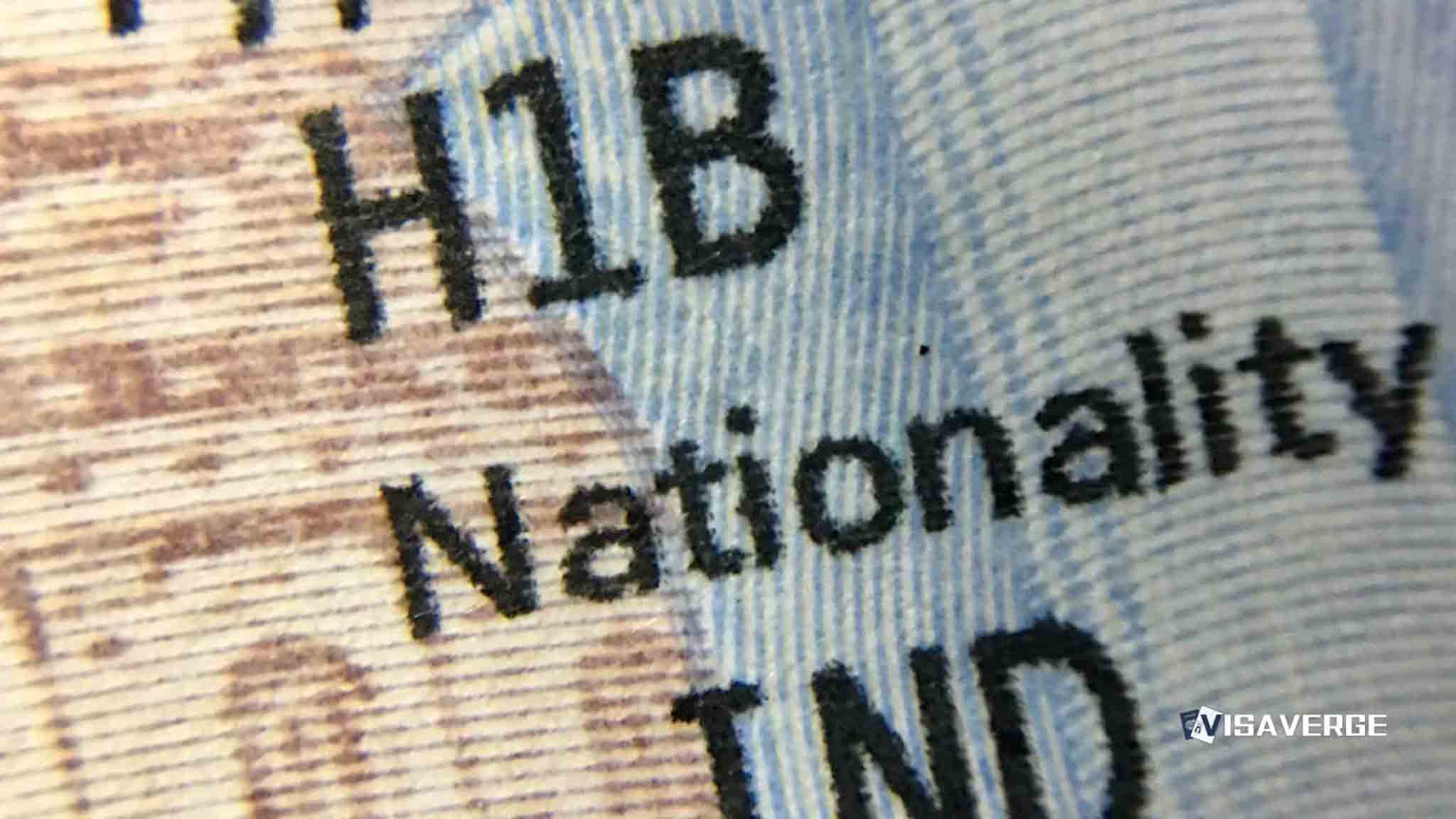
(UNITED STATES) Thousands of workers and family members with approved H-1B visa and H-4 visa petitions are seeing their long‑planned consular interviews wiped from the calendar as the 🇺🇸 government rolls out a wider social media vetting system. Since December 15, 2025, many appointments that were set for mid‑ to late‑December at U.S. consulates, including major posts in India such as Hyderabad and Chennai, have been cancelled and pushed back to March 2026, creating fresh uncertainty for employers and tech professionals on tight project timelines.
What changed: expanded social media screening
The U.S. Department of State’s new policy, which took effect on December 15, 2025, extends online screening rules that previously applied mainly to F, M, and J students and exchange visitors to now cover H-1B specialty occupation workers and their H-4 dependents.
- Under the change, every H-1B and H-4 applicant must make their social media accounts publicly accessible before the visa interview.
- Consular officers will review posts, photos, connections, and other digital traces as part of the security review.
According to analysis by VisaVerge.com, this expansion marks a clear shift toward treating a person’s online presence as a central part of visa eligibility.
How consulates are handling interviews and biometrics
Consulates have not stopped work completely.
- Biometrics appointments (fingerprints and photos) are still being held on schedule.
- But officers are sharply reducing the number of daily visa interviews to allow time for more extensive online reviews.
This shift in workflow is driving the wave of cancellations and rescheduling, as posts try to manage the extra screening load with limited staff and fixed office hours. Applicants report receiving sudden notices moving their slots by several months, often with little explanation beyond “rescheduling due to operational reasons.”
What officers will review online
The new social media vetting process is broad and directive; officers are guided to look for multiple categories of information:
- Employment details — compare claimed work history with public profiles (e.g., LinkedIn).
- Immigration history — spot inconsistencies or red flags.
- Security concerns — hostile statements about U.S. institutions, or posts suggesting ties to groups that raise national security questions.
If officers conclude that a person’s online behavior does not match the visa application, or if it raises doubts about honesty, they can refuse a visa under section 214(b) of U.S. immigration law, which covers failure to meet the legal standard for the requested category.
“A person’s online presence may now be treated as a central piece of evidence in visa eligibility decisions.”
Risks and legal advice
Immigration attorneys warn this creates a new front of risk for both H-1B holders and H-4 spouses/children.
- Even old posts never intended for consular eyes can be pulled into the decision process if they are public before the interview.
- Some people already inside the United States have seen sporadic visa revocations after consular officers later reviewed social media and questioned earlier approvals.
Attorneys are advising clients to:
- Review old posts and remove or restrict anything problematic well before an interview.
- Check privacy settings early and understand what is visible publicly.
- Avoid jokes or casual comments that could be misread out of context.
Context: other H-1B policy changes in 2025
The timing adds strain to a category already facing tighter rules.
- Earlier in 2025, the U.S. government introduced a package of H-1B “modernization” rules that:
- Narrowed how “specialty occupation” is defined.
- Raised compliance pressure on employers.
Those changes mean consular officers are already applying closer scrutiny to whether a job truly needs a bachelor’s degree in a specific field and whether the offered work matches the worker’s skills and wage level.
- The new online review does not replace that legal test.
- But it provides officers another tool to challenge a case if, for example, a public profile suggests different duties than what appears in the petition.
Impact in India and on families
In India, where U.S. tech‑sector demand has long fueled heavy H-1B use, the shift is particularly disruptive.
- Applicants expecting to travel in December to start January jobs are now facing multi‑month delays.
- U.S. companies must scramble to adjust project plans or move work offshore.
- Families that booked tickets, ended leases, or withdrew children from schools are left reversing choices or living in temporary housing.
- Some H-4 spouses who relied on quick stamping to return to U.S. employment risk work disruption and loss of income.
Travel and filing risks — attorney guidance
Immigration attorneys are generally advising workers to avoid non‑urgent international travel until consulates clear the backlog.
- Someone who departs the United States for a routine visa stamping trip may find they cannot return for months if:
- Their interview is postponed, or
- Social media vetting raises questions requiring extra review.
This guidance is especially strong for people in the middle of job changes or green card processes, where any long absence can disrupt timed filings and status maintenance.
Official stance and remaining uncertainty
For now, there is no clear timeline for how long the appointment crunch will last.
- The State Department frames the December 15 policy as part of a broader push to strengthen vetting while keeping visas open to qualified workers.
- On its main visa information portal, travel.state.gov, the department stresses that security checks are designed to protect the United States while still supporting legal travel and work.
However, without open data on how many H-1B and H-4 interviews are being postponed, it is difficult for employers, universities, and families to plan around the delays.
Broader implications: digital footprint vs. traditional evidence
Immigration lawyers highlight a deeper tension: H-1B and H-4 applicants now face a system where their digital footprint may carry as much weight as degrees, job offers, or family ties.
- A decade ago, consular interviews focused mainly on paper documents and short face‑to‑face questions.
- Today, a stray tweet, an old meme, or an outdated profile can influence an officer’s view of credibility in ways applicants may not foresee or control.
As social media becomes more tightly tied to immigration screening, many expect rising disputes over:
- Fairness and transparency,
- The balance between security and privacy,
- How much a person should be judged on past, public online content when their future life in the United States may hinge on it.
Key takeaway: Applicants and their families should proactively audit their online presence, plan travel cautiously, and consult immigration counsel when in doubt — because what used to be an ancillary detail can now determine visa outcomes.
Effective December 15, 2025, the State Department expanded social media screening to H-1B workers and H-4 dependents. Many consular interviews were canceled or rescheduled to March 2026 while biometrics continue. Officers will compare public posts to application claims; inconsistencies can trigger denials under section 214(b). Attorneys recommend auditing online accounts, avoiding nonessential travel, and seeking legal advice because delays and revocations have been reported, particularly affecting tech hires and families in India.