- The Trump administration is challenging a ban on immigration arrests during USCIS benefit interviews.
- A Maryland judge previously blocked ICE from using appointments as traps for detaining applicants.
- A Fourth Circuit ruling could immediately resume enforcement actions at federal immigration offices nationwide.
(MARYLAND) — As the Trump administration pushes to overturn a Maryland judge’s ban on arrests at USCIS interviews, readers learn how the clash over arrests during I-601A waivers and marriage-based green cards could reshape who can attend interviews, where enforcement can happen, and what it means for applicants and their families.
1) Case overview and current status
February 1, 2026 finds a fight over a simple question with high stakes: can immigration agents use a scheduled USCIS appointment as the moment to arrest someone?
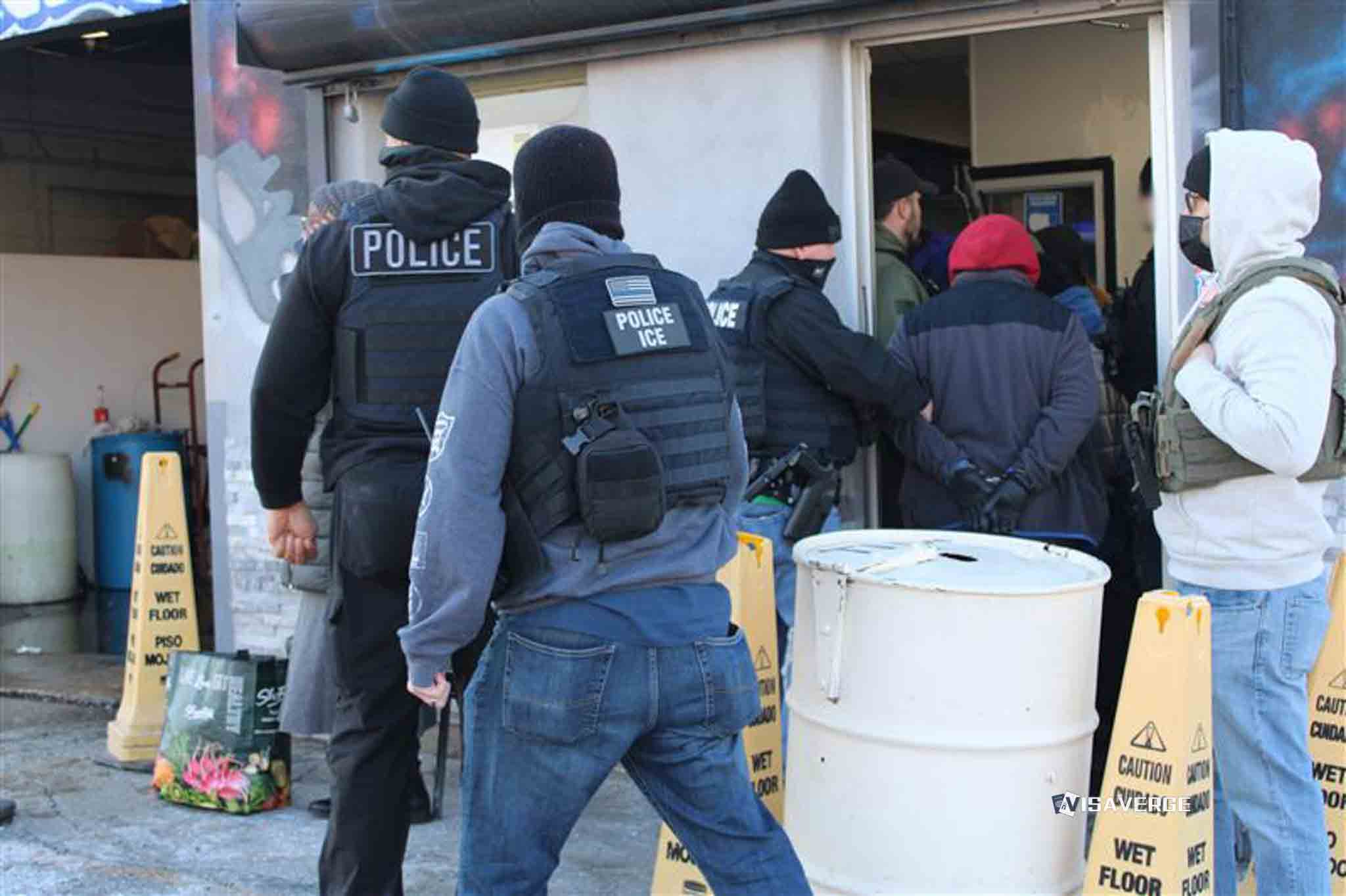
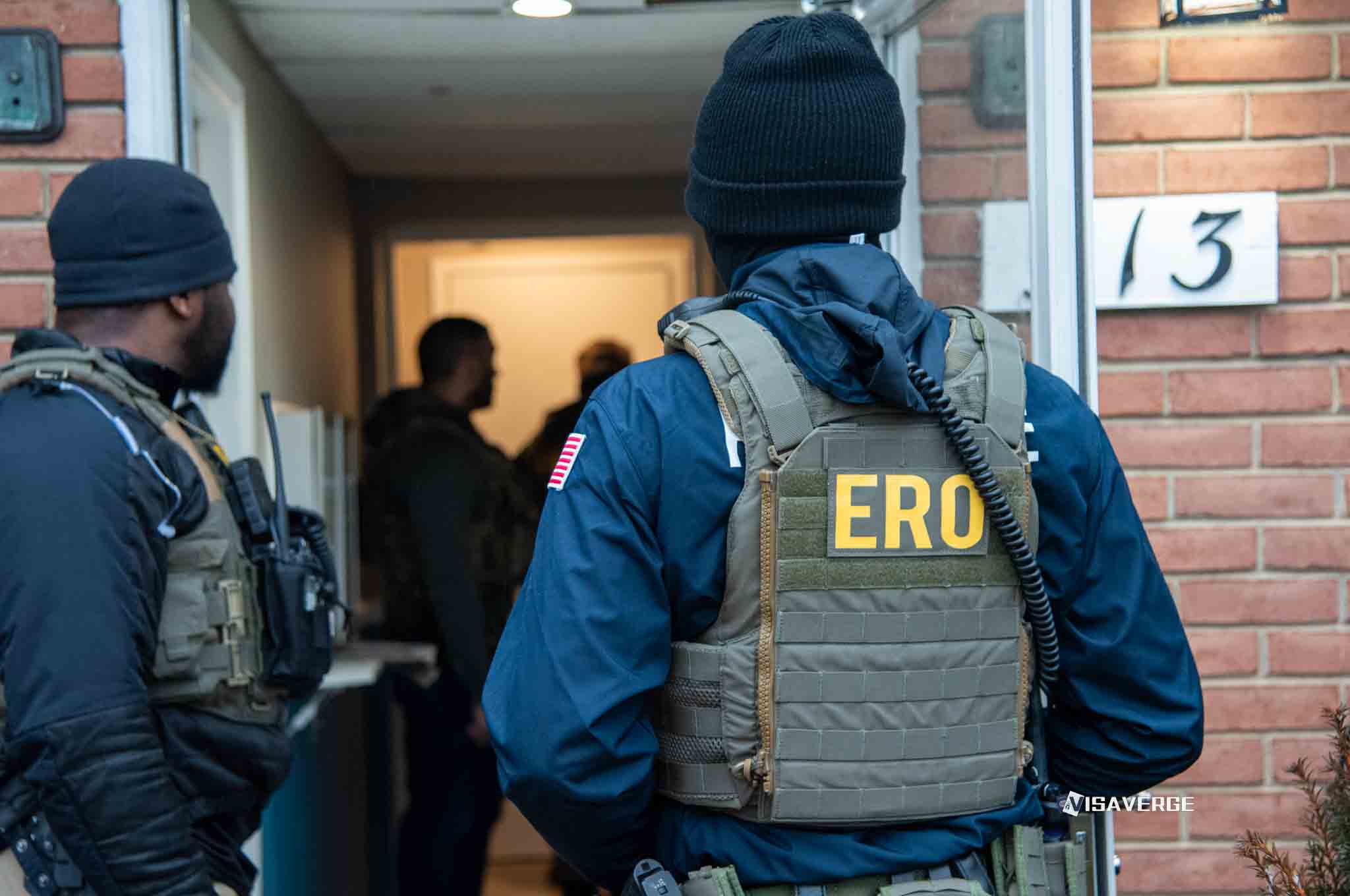
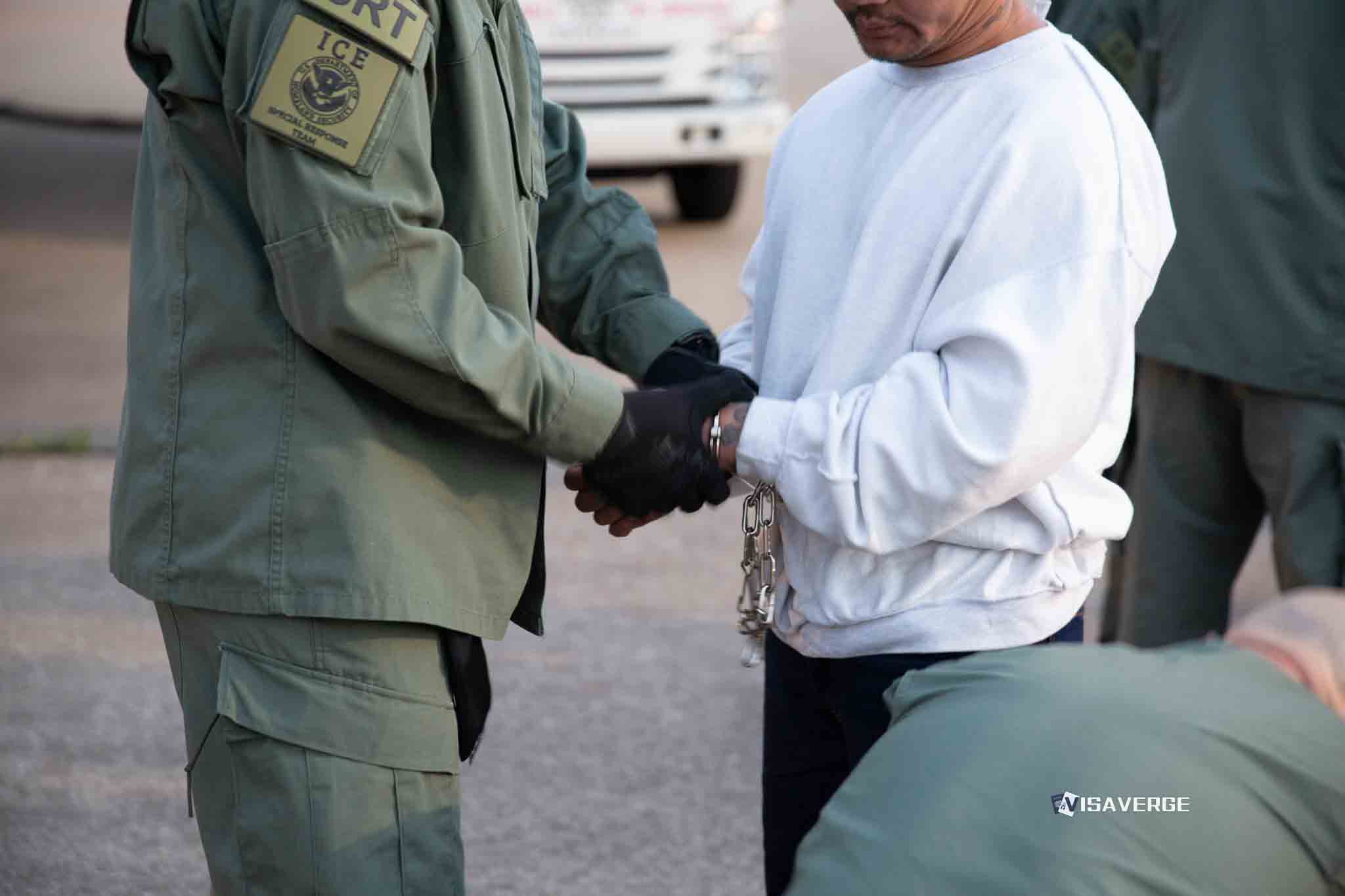
In practical terms, “arrests at USCIS interviews” means an applicant arrives at a field office for a benefits interview—often a step tied to family-based immigration—and is taken into custody during or immediately after the appointment. For families, the shock is direct: you show up to follow the process and you may leave in handcuffs.
Two application settings sit at the center of this dispute:
- I-601A provisional unlawful presence waiver interviews. Form I-601A is a waiver process designed to address certain unlawful-presence bars before a person departs the United States for consular processing.
- Marriage-based green card processes. Many applicants attend interviews that assess the marriage relationship and eligibility for permanent residence based on that relationship.
The legal battle is now in the U.S. Court of Appeals for the Fourth Circuit, where the administration is trying to undo a Maryland court restriction that limited arrests tied to interview attendance.
2) Court history and legal actions
Judge George L. Russell III of the Maryland District Court issued a 2024 ruling that blocked DHS from arresting or detaining certain people in connection with I-601A interview attendance. The court characterized the practice as an unlawful trap in the waiver context.
In plain language, the restriction aimed to stop the government from summoning people for a benefits step and then using that appearance as the basis for an enforcement pickup. Now the administration, through the Department of Justice (DOJ), wants the Fourth Circuit to undo that result.
Two appellate terms matter for readers:
- Reverse: the appeals court disagrees with the lower court and changes the outcome.
- Vacate: the appeals court wipes out the lower court order, often sending the case back or removing the restriction.
Appellate review typically tests whether the district court had a sound legal basis and whether the remedy was too broad. In this kind of case, judges often focus on the scope of the restriction, the agency’s legal authority, and constitutional or administrative-law limits on how the government carries out enforcement at federal facilities.
If DOJ gets the reversal or vacatur it wants, the practical effect could be immediate. Arrests during interviews could resume or expand at field offices within reach of the ruling, depending on DHS/USCIS and ICE operational choices.
3) Key facts and policy details
One core claim from plaintiffs has been a “bait and switch” tactic. The allegation is straightforward: a civil immigration appointment—meant to process a benefit request—gets used as a pretext for arrest, especially for people with final orders of removal who are also pursuing family-based steps.
The Maryland restriction targeted arrests or detentions tied to I-601A interview attendance, with an emphasis on how the practice may chill participation. Many applicants see an interview notice as a required checkpoint; if attending may lead to arrest, some may skip or delay the process and that can derail a case.
Expanded enforcement authority inside USCIS adds another layer. A DHS Final Rule titled “Codification of Certain U.S. Citizenship and Immigration Services Law Enforcement Authorities,” dated October 6, 2025, formally granted USCIS officers added powers related to law enforcement activities, including executing search and arrest warrants.
That matters because interviews take place in USCIS-controlled space. The line between “benefits officer” and “enforcement actor” can feel thinner to applicants.
Administrative warrants vs. judicial warrants (why the difference matters)
An administrative warrant in immigration enforcement is typically issued within the executive branch. It is signed by immigration officials, not by a judge. A judicial warrant is issued by a court.
That distinction can matter sharply inside federal facilities and at the doorway to private spaces. A judicial warrant carries a judge’s authorization. An administrative warrant reflects executive authority that may not provide the same access powers in all contexts.
Applicants and their families often hear “warrant” and assume a judge signed it. Many times, that is not what “administrative” means.
A May 12, 2025 internal memo signed by Acting ICE Director Todd Lyons authorized arrests based on administrative warrants. That memo has been cited as part of the enforcement posture that applicants fear will show up at interviews.
| Date | Event | actors | Impact |
|---|---|---|---|
| May 12, 2025 | Memo signed by Todd Lyons authorizing arrests based on administrative warrants | ICE | Supports faster enforcement actions without a judicial warrant |
| October 6, 2025 | DHS Final Rule expanding USCIS law enforcement authorities | DHS/USCIS | Increases officer powers connected to enforcement in USCIS settings |
| November 12, 2025 | Reports of arrests tied to USCIS settings begin drawing public attention | ICE, USCIS field offices | Raises fear about attending benefits appointments |
| November 21, 2025 | A reported post-interview detention linked to a marriage-based process | ICE | Highlights timing risk around interview completion |
| January 20, 2026 | DHS enforcement statement tied to federal facilities | DHS/USCIS, ICE | Signals willingness to arrest at USCIS offices |
| January 29, 2026 | Oral argument in the Fourth Circuit with DOJ seeking reversal/vacatur | Department of Justice (DOJ) | Puts the Maryland restriction at risk on appeal |
| February 1, 2026 | Case remains active in the Fourth Circuit | U.S. Court of Appeals for the Fourth Circuit | Continued uncertainty for interview attendance decisions |
4) Official statements and quotes
DOJ has framed the appeal as a challenge to what it calls an overly broad lower-court remedy. At oral argument on January 29, 2026, DOJ attorney Mary Larakers urged the Fourth Circuit to undo the district court’s order:
“This court should reverse and vacate the District Court’s sweeping declaratory judgment, which allows even dangerous criminal aliens to remain in the United States despite their final orders of removal.”
Larakers also argued that plaintiffs with final orders of removal “lack any right to remain in the United States,” even with pending marriage-based applications.
DHS messaging has reinforced a public-facing enforcement posture. On January 20, 2026, a DHS spokesperson stated that ICE has said people unlawfully present “may face arrest at federal facilities, including USCIS offices,” and linked visa overstays to deportation risk.
Statements like these can change behavior even before a court rules. Some applicants may decide not to attend. Others may bring counsel, reschedule, or avoid starting processes that require an in-person appearance.
5) Impact on affected individuals and communities
Reports of arrests tied to interviews have surfaced across multiple locations, including San Diego, Cleveland, New York City, and Utah. Place matters: field-office practices and local ICE coordination can vary.
An arrest during an interview can set off a chain reaction: delayed cases, renewed removal proceedings, and sudden detention logistics that strain families and counsel.
- A missed or interrupted appointment. That can delay a case or lead to denial for failure to appear, depending on the context.
- Removal proceedings may restart or accelerate. People with final orders of removal face acute risk because enforcement can move quickly once custody occurs.
- Detention logistics can be sudden. Families may scramble for childcare, money for phone calls, and basic information about location and custody status.
Attorneys have described clusters of arrests at certain offices, including reports of 39 arrests in a single day at one field office during a week in mid-November. Even when figures vary by place and time, the pattern can shape community behavior.
Some people may avoid all contact with the benefits system. Others may seek legal screening earlier than they otherwise would.
arrests at interviews can disrupt appointments and trigger removal processes; readers should consult an attorney for personalized guidance
6) Context: immediate relatives and INA framework
“Immediate relatives” is a family-based category under the Immigration and Nationality Act (INA) that includes, most commonly, the spouse of a U.S. citizen. Many readers hear that category and assume it guarantees a green card. It does not.
Immediate-relative classification often helps because it can remove certain quota backlogs. Yet other barriers can still apply. Unlawful presence, entry issues, prior removal orders, and other inadmissibility grounds may still block approval or require waivers.
That is where I-601A comes in. Conceptually, it is meant to reduce the time families are separated by letting some applicants request a provisional waiver of unlawful presence before leaving the United States for consular processing.
The interview setting becomes sensitive because it is tied to a benefits path that depends on applicants showing up and cooperating with a process that can expose them to enforcement risk. An enforcement action at that moment can interrupt the path midstream and may change timing in ways that affect eligibility.
7) Government sources and reference materials
Official documents matter more than social media recaps. Readers can check primary materials without guessing what is current.
DHS releases public statements through its newsroom at dhs.gov/news. Look for whether a post describes a binding policy action, a general enforcement message, or a case-specific statement.
USCIS policy changes may appear in the Policy Memoranda repository at uscis.gov/legal-resources/policy-memoranda. A memo may clarify how officers should process interviews or handle referrals.
Rule text belongs in the Federal Register because it carries the legal language that agencies must follow. Search the Federal Register for the October 2025 final rule titled “Codification of Certain U.S. Citizenship and Immigration Services Law Enforcement Authorities.”
Court authority also varies by level. A district court order applies first at the trial level. A circuit court decision can change or erase that order. For the Fourth Circuit, authoritative items include opinions, orders, and docket entries from the U.S. Court of Appeals for the Fourth Circuit.
8) What’s next and potential implications
Four outcomes are common in an appeal like this:
- Affirm: the Fourth Circuit leaves the Maryland restriction in place.
- Reverse: the restriction is overturned.
- Vacate: the restriction is erased, often sending issues back for more work.
- Remand: the appeals court sends the case back for further proceedings, sometimes with instructions.
Uncertainty alone can shape decisions about filings and interviews. Some applicants may consider rescheduling if permitted. Others may attend with counsel, or prepare family contingency plans in case detention occurs.
On the agency side, USCIS field-office workflows could shift if more enforcement actions occur at or near interviews, including increased security presence or different coordination with ICE.
✅ If attending an interview, verify latest agency guidance and consider counsel; monitor official DHS/USCIS notices and Federal Register updates
The most immediate date marker is already on the calendar: the January 29, 2026 Fourth Circuit argument tees up a decision that could quickly change how safe—or risky—USCIS appointments feel in Maryland and beyond.
This article discusses legal and immigration process issues. It does not constitute legal advice. Readers should consult qualified counsel for personal guidance.