- Nicki Minaj endorsed the Trump Gold Card program during a high-profile summit in Washington, D.C.
- The initiative offers expedited immigration pathways for wealthy individuals through large financial gifts.
- Applicants must contribute $1 million to the Treasury and meet existing EB-1 or EB-2 visa criteria.
(UNITED STATES) — Nicki Minaj appeared alongside President Donald J. Trump on January 28, 2026, and then posted a photo of what she called a Trump Gold Card, amplifying attention on the administration’s new, high-cost immigration initiative.
“I will say that I am probably the president’s number one fan, and that’s not going to change. And the hate, or what people have to say, it does not affect me at all. It actually motivates me to support him more,” Minaj said during the “Trump Accounts Summit” at the Carnegie Mellon Auditorium in Washington, D.C.
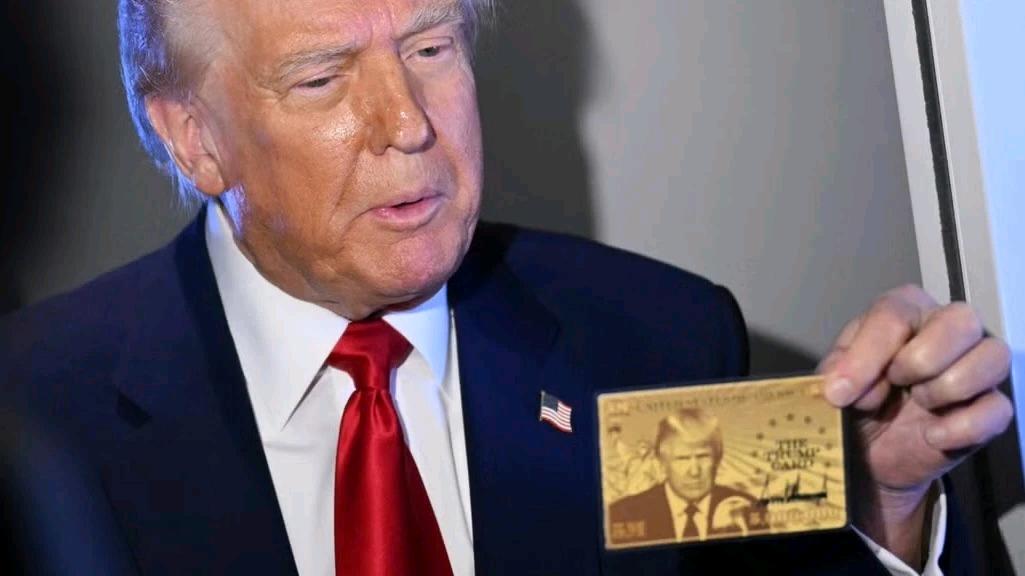
After the event, Minaj posted a photo of her physical Trump Gold Card on X, formerly Twitter, with the caption “Welp.” She later wrote on January 29, 2026, that she was “finalizing that citizenship paperwork as we speak” and claimed she received the card “free of charge,” though the standard policy requires a $1 million contribution.
Overview of the Trump Gold Card Program
The Trump Gold Card program, as described in official documentation from U.S. Citizenship and Immigration Services and the White House, presents itself as an expedited immigration pathway aimed at “ultra-high-net-worth individuals,” and it has circulated widely online amid celebrity attention.
Official records describe the Gold Card as an initiative tied to existing employment-based green card pathways rather than a new immigrant visa category. The legal structure points applicants toward EB-1 Extraordinary Ability or an EB-2 National Interest Waiver route, with the program framing a large “unrestricted gift” as supportive evidence used to speed review.
Origins and Implementation Steps
The administration traced the program’s origin to September 19, 2025, when President Trump signed Executive Order 14351, titled “The Gold Card,” directing the Secretary of Commerce, in coordination with the Secretaries of State and Homeland Security, to establish an expedited immigration pathway for high-capacity contributors.
That executive action sets direction for the executive branch, but the program’s practical operation depends on agency rules, filing mechanics, and evidence standards. USCIS connected the initiative to a new filing process, including a dedicated petition form and a required online registration step before filing.
USCIS launched Form I-140G, Immigrant Petition for the Gold Card Program, in late 2025. Guidance dated December 10, 2025 set out the sequencing USCIS expects applicants to follow: “You may only file Form I-140G after you have registered your information on trumpcard.gov and received confirmation your submission was accepted. USCIS will contact you when it is time to create or log in to your USCIS online account to file the Form I-140G.”
The guidance places the initial step on a portal, and government accounts promoted that site publicly. On January 28, 2026, the official White House social media account reposted Minaj’s photo and used the caption, “oh she’s super BASED ✨,” directing viewers to the portal.
Fees, Financial Structure, and Legal Character
The program’s published financial structure includes both a contribution and a government processing fee, and the documents describe the fee as non-refundable. The individual pathway requires a $1 million “unrestricted gift” to the U.S. Treasury, while the corporate pathway calls for a $2 million gift to sponsor a foreign worker.
In addition, the program sets a non-refundable $15,000 fee paid to the Department of Homeland Security via Form I-140G. In immigration processing, filing fees typically pay for adjudication work, but the “gift” described here functions differently, signaling capacity or commitment rather than operating as capital placed at risk.
That distinction matters because the program’s description does not treat payment alone as creating eligibility for permanent residence. The initiative ties the Gold Card to EB-1 or EB-2 National Interest Waiver criteria, meaning applicants must still fit within statutory requirements and provide supporting evidence beyond any payment.
How the Program Fits Within Existing Immigration Categories
For EB-1 Extraordinary Ability, the stated pathway points toward a standard built around sustained acclaim and documented achievements, along with a continuing intent to work in the field. Applicants must show evidence consistent with the longstanding EB-1 criteria.
For an EB-2 National Interest Waiver, the stated approach points toward advanced degree or exceptional ability standards and a showing that the proposed endeavor has national importance and that the applicant is well-positioned to advance it.
USCIS described the $1 million gift as “evidence of eligibility” and “exceptional business ability” used to expedite the process, but the legal mechanics still rest on the underlying categories and what applicants can document. In practice, the petition step functions like an I-140-style process, separating the initial classification request from the later step of obtaining a green card through adjustment of status or consular processing.
Reported Results and Administrative Rationale
Commerce Secretary Howard Lutnick reported in March 2025 that over 1,000 gold cards had already been sold, yielding over $1.3 billion for the U.S. Treasury. The administration has described the route as a way to attract wealthy people and channel funds to the government while moving cases faster.
The program’s premise intersects with longstanding pressures in employment-based immigration. The initiative describes faster screening for high-capacity contributors, but employment-based green cards still operate within systems that include priority dates and per-country limits, and those constraints shape when green cards can be issued.
Even if a petition review moves more quickly, visa availability can remain a separate limiting factor depending on category and demand. The program’s framing, in tying eligibility to EB-1 and EB-2 National Interest Waiver pathways, also points toward possible increased demand for those filings if wealthy applicants or corporate sponsors seek to pursue the expedited route.
Public Reaction and Celebrity Influence
Minaj’s role, as described by her public appearances and posts, sits in the realm of visibility and messaging rather than immigration authority. Celebrity attention can rapidly spread incomplete or mistaken impressions about how eligibility works, but endorsements do not change statutory criteria, filing requirements, or evidentiary standards.
Public affiliation also does not, in itself, decide an immigration petition. The program’s published steps still require registration through the portal and subsequent USCIS filing steps, and the guidance points applicants back to formal instructions and official accounts rather than social media claims.
Minaj’s alignment with the initiative drew sharp public reaction. A Change.org petition amassed nearly 100,000 signatures calling for her deportation, but immigration experts noted she is a Lawful Permanent Resident, making deportation for political speech legally impossible under the First Amendment.
The backlash also underscored how easily immigration status can become muddled in public debate, particularly when prominent figures make public claims about citizenship or documentation. Minaj was born in Trinidad and Tobago and moved to the U.S. as a child, and she publicly stated in 2024 that she was not a U.S. citizen despite paying millions in taxes.
Verification and Primary Sources
As the Gold Card circulates online, the safest way to confirm program details remains checking primary government sources, including the form’s official page, the executive order text, and the portal address that agencies promote.
USCIS lists Form I-140G details at USCIS Form I-140G Detail, while the White House hosts the executive action under Executive Order 14351. The program portal appears at Program Portal, and the USCIS guidance describes it as the required registration step before filing.
Final Notes on Process and Public Statements
The program’s published steps still require registration through the portal and subsequent USCIS filing steps, and the guidance points applicants back to formal instructions and official accounts rather than social media claims. Endorsements and social posts can influence perception but do not alter legal requirements.
Minaj, posting after the summit, offered her own political framing in Washington: “I will say that I am probably the president’s number one fan, and that’s not going to change. And the hate, or what people have to say, it does not affect me at all. It actually motivates me to support him more.”