- California offers two distinct licensing paths for immigrants in 2026 based on their legal presence status.
- The AB 60 license allows residents to drive legally without proof of lawful presence in the U.S.
- Applicants must pass vision, knowledge, and road tests while paying a thirty-three dollar application fee.
(CALIFORNIA, USA) Immigrants in California have two main driver’s license paths in 2026: a REAL ID license or standard license for people who can prove lawful presence, and an AB 60 license for people who cannot. The process is the same in many ways, but the documents, federal use, and a few form details are different from the start.
For most applicants, the full DMV journey takes 8 to 14 weeks and costs $33 in DMV fees. You must live in California, meet the age rules, pass the required tests, and show the DMV that you are the person named in your application.
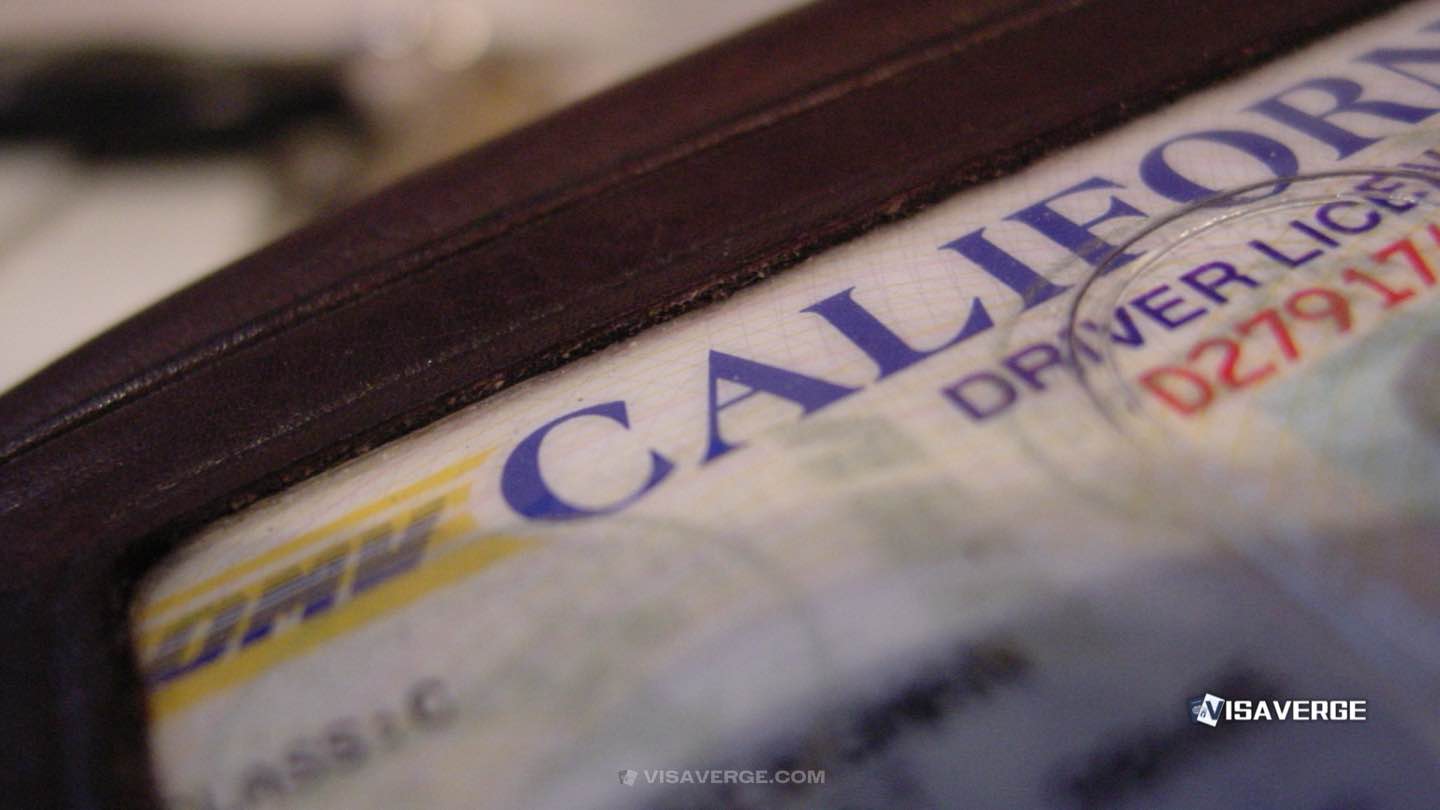
California’s two license tracks in 2026
California created the AB 60 license through Assembly Bill 60, which took effect on January 1, 2015. That license lets eligible residents drive legally even if they do not have proof of lawful presence in the United States 🇺🇸.
A standard license or REAL ID license is different. That path is for people who can show lawful presence, such as many visa holders, green card holders, asylum applicants with work authorization, and some DACA or TPS recipients. A REAL ID license is federally compliant for domestic flights and entry into certain federal buildings.
The AB 60 license is valid for driving in California. It is not valid as federal identification. Cards issued under Assembly Bill 60 carry the marking “Federal Limits Apply.”
According to analysis by VisaVerge.com, this split system matters because many immigrant families qualify for one path but not the other, and choosing the wrong path often leads to delays, extra document reviews, or a failed appointment.
Picking the right license before you apply
Start with the document question. If you can prove lawful presence, identity, California residency, and provide a Social Security number if you are eligible for one, you should look at the standard or REAL ID license track.
If you cannot prove lawful presence, but you can prove identity and California residency, the AB 60 license is the right route. On the application, people applying under Assembly Bill 60 who do not have a Social Security number should check the box showing they do not have one. They should never invent a number.
Every applicant must be a California resident. You also must be at least 16 years old to apply. Drivers under 18 face extra limits, while 18 is the age for an unrestricted license without supervision.
The basic requirements every applicant faces
No matter which license type you choose, the DMV will ask for the same core steps:
- A vision exam
- A knowledge test
- A behind-the-wheel driving test
- An application fee of $33
The written test has 36 multiple-choice questions on traffic laws and road signs. You need 30 correct answers to pass, and the DMV gives three attempts. The California Driver’s Handbook is available in multiple languages, which helps many first-time applicants prepare with less stress.
Another timing rule catches many newcomers. Wait more than 10 days after entering the United States 🇺🇸 before applying. For people using immigration documents, file 60 or more days before those documents expire, but not when there are fewer than 30 days left.
Step 1: Build your document packet
Give yourself 1 to 2 weeks to gather documents. This step decides how smooth the rest of the process will feel.
For a standard or REAL ID license, identity documents often include a valid foreign passport with a U.S. visa, a green card, or an employment authorization document. Residency usually means two documents showing your California address, such as a lease, utility bill, bank statement, tax return, or school record.
For an AB 60 license, the identity options are broader. They can include a foreign passport, a consular identification card, or an expired passport paired with a foreign birth certificate translated by the consulate. Residency proof usually means one or two documents, such as a lease, utility bill, medical record, or employer letter.
The DMV’s official driver’s license and ID online application page helps applicants start the process and review document rules before an office visit.
Step 2: Study before the clock starts
Many applicants rush to book an appointment before they are ready. That often leads to a second visit.
Study the handbook first. Focus on road signs, right-of-way rules, lane changes, speed laws, school zones, and safe turning. Because you have only three chances to pass the knowledge test, early study saves time. It also lowers pressure on appointment day, when you will already be handling forms, fingerprints, and document checks.
Step 3: Complete the `DL-44` application
The application begins online through a MyDMV account. The electronic version of the `DL-44` form feeds your information into the DMV system before you arrive.
Non-citizens should skip the voter registration part. That section does not apply to them, and it is better to leave no room for confusion. Review every name, date, and address carefully. Small mistakes on spelling or apartment numbers can slow the case when DMV staff compare your documents.
Step 4: Book the appointment and attend the permit visit
Expect a 2 to 4 week wait for an appointment in many cases. First-time applicants should plan ahead, especially during busy seasons.
You can schedule online, call 1-800-777-0133 and ask for an interpreter, or visit a DMV office in person. At the appointment, expect to spend 2 to 3 hours. You will submit documents, give fingerprints, take a photo, pay the $33 fee, complete the vision exam, and take the written test.
If everything checks out and you pass the tests, the DMV issues an instruction permit. That permit stays valid for 12 months. If the DMV sends documents for secondary review, the permit step can take longer.
Step 5: Practice, road test, and card delivery
Practice driving with a licensed driver who is 25 or older. Your practice car must meet DMV standards, including insurance and working lights and signals.
When you are ready, schedule the driving test 1 to 3 weeks ahead. You get three attempts. Bring your own insured vehicle for the exam. If you pass, the DMV gives you a temporary paper license valid for 90 days.
The plastic license card arrives by mail at your California address in about 3 to 4 weeks. One last point matters: California does not treat an International Driving Permit as a standalone license. It cannot replace this DMV process for residents.
_bans_Uber_Black_driver_9c40ad3e.jpg "Dalilah Law Guides Immigrants to Get Florida CDL for 18-Wheelers in 2026")