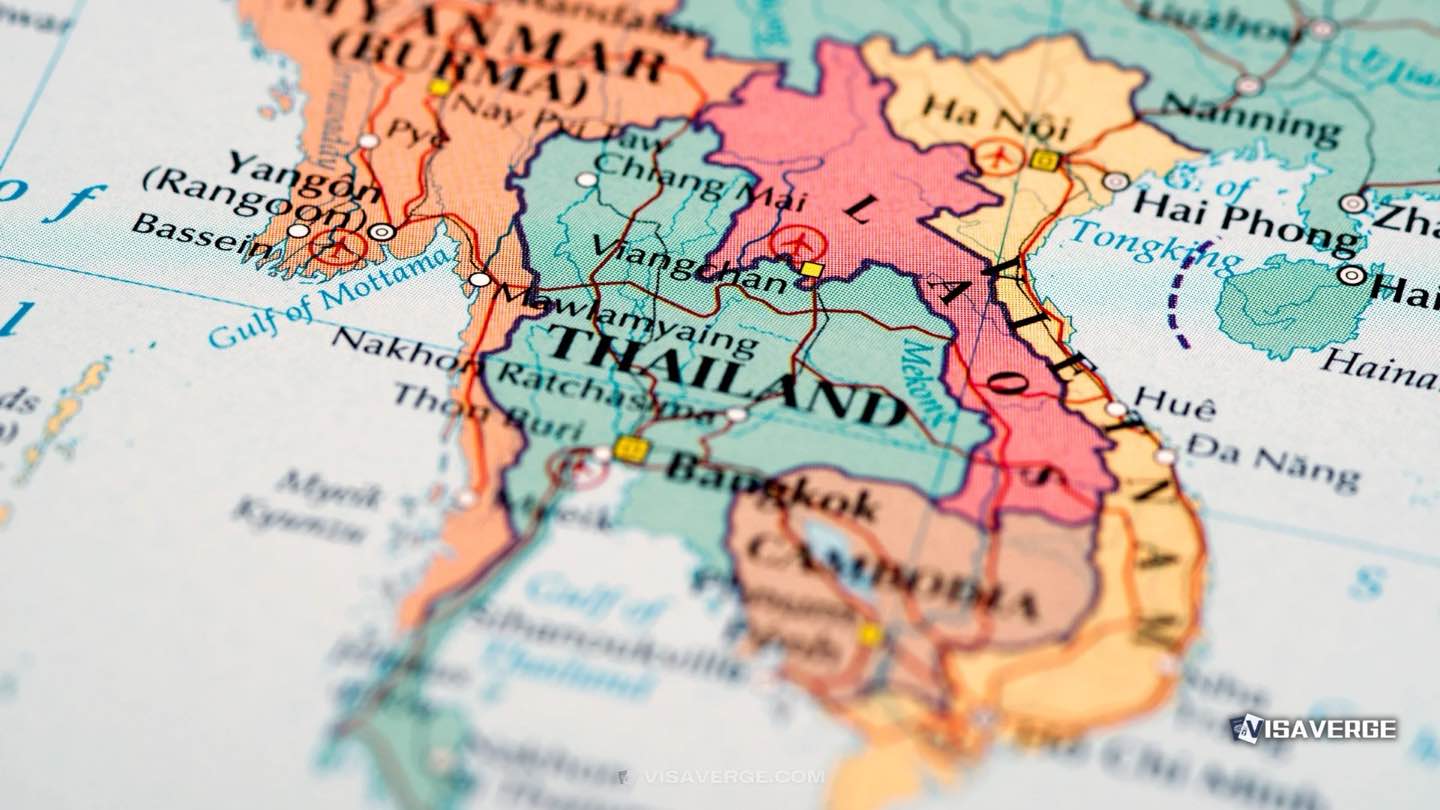
- Thailand extended work permits for 770,000 migrant workers through December 11, 2027.
- The measure applies to registered workers only from Myanmar, Laos, and Vietnam to address labor shortages.
- Eligible employees must still complete administrative renewals and pay approximately 1,000 Thai Baht in fees.
Thailand’s Cabinet approved a one-year extension of work permits for about 770,000 migrant workers from Myanmar, Laos and Vietnam, allowing eligible people to remain employed through December 11, 2027.
The decision, made July 14, covers workers already registered under the November 11, 2025 Cabinet resolution. Their current permissions were generally due to expire on December 11, 2026. The policy does not reopen registration for new workers.

Captain Phatdarasmi Thongsaluaykorn, deputy spokesperson of the Prime Minister’s Office, said the extension was intended to protect production and employment during a period of labor shortages.
"The government extended the leniency period to stabilize the national economy and alleviate labour shortages in the industrial and service sectors. If work permits expire en masse, it could halt production lines and force businesses to close temporarily. This measure was implemented for pre-emptive prevention from such an outcome."
Phatdarasmi gave the statement July 19.
A Thai Government Announcement issued July 20 set out the main restriction: "This measure applies only to current workers already registered in the government system and does not allow new registrations."
The extension protects existing status, but workers still face paperwork
The extra year does not automatically complete the renewal process. Eligible workers must still deal with the Department of Employment and complete the required administrative steps.
Those steps include obtaining a passport or an equivalent travel document, securing visa endorsement, undergoing health checks and completing the necessary registration procedures. One reported fee schedule sets the total at THB 1,000, comprising a THB 100 application fee and a THB 900 permit fee.
The July 31, 2026 deadline applies to passport and visa procedures connected with the 2025 registration round. Renewal applications are described as due by December 11, 2026.
The government’s extension takes effect after the relevant notifications from the Ministry of Interior and Ministry of Labour are issued. Workers awaiting full issuance may receive temporary permits while officials complete biometric registration and issue smart cards.
A separate administrative adjustment addresses problems with the electronic system. On July 21, the Department of Employment confirmed that manual submissions would be accepted until October 28, 2026, because of technical issues with the e-Work Permit system.
| Requirement or deadline | Detail |
|---|---|
| Eligible population | About 770,000 registered workers |
| Nationalities | Myanmar, Laos and Vietnam |
| Previous permit end date | December 11, 2026 |
| New permission end date | December 11, 2027 |
| Passport and visa steps | July 31, 2026 deadline for the 2025 registration round |
| Renewal applications | December 11, 2026 deadline |
| Manual submissions | Accepted through October 28, 2026 |
| Reported renewal fee | THB 1,000 total |
Employers avoid a mass expiry in labor-dependent industries
The measure targets sectors that rely heavily on foreign workers, including manufacturing, construction, agriculture, fisheries, tourism and services. Officials said a simultaneous loss of legal status could disrupt production lines and worsen existing labor shortages.
The Ministry of Labour proposed the resolution as part of a labor-management strategy that began in November 2025. The government acknowledged that many workers had not completed the legal procedures required before the earlier December 2026 deadline.
Without additional time, hundreds of thousands could have become technically undocumented when their papers expired. The extension is designed to reduce that risk while giving employers more time to keep eligible staff in lawful employment.
The policy also reduces immediate pressure on workers who have struggled to finish passport or visa formalities. Many of those affected are Myanmar nationals who remain registered but have not completed every document requirement.
Myanmar worker advocates welcome the extra time
Ko Ye Min of the Aid Alliance Committee, which assists Myanmar workers, said administrative delays had left people exposed to the possibility of losing their documented status.
“With this extension, workers will have sufficient time to systematically renew their residence permits. Prior to this extension, administrative delays and insufficient processing windows put workers at risk of becoming undocumented. This decision successfully averts that risk.”
Ko Ye Min made the statement July 22.
The added time can also reduce the risk of exploitation or deportation linked to expired papers. Workers still need to complete the official process, however, including health, identity and immigration-related requirements.
Officials plan broader digital tracking during the extension
The government plans to use digital technology during the extension period to connect migrant-worker databases across agencies. The stated goals are to monitor legal status more closely and reduce irregular immigration.
That effort comes alongside the temporary acceptance of manual filings. Workers who encounter errors in the e-Work Permit system have until October 28, 2026, to submit applications manually under the Department of Employment’s July 21 confirmation.
The policy is a labor-management measure, not a digital nomad or remote-work visa. It applies to people already registered in Thailand’s system and does not create a route for new foreign workers to enter under this decision.
The Cabinet approved the extension and two draft notifications from the Ministry of Interior and Ministry of Labour on July 14. Public details followed through the Prime Minister’s Office on July 19, with the manual-submission update arriving July 21.