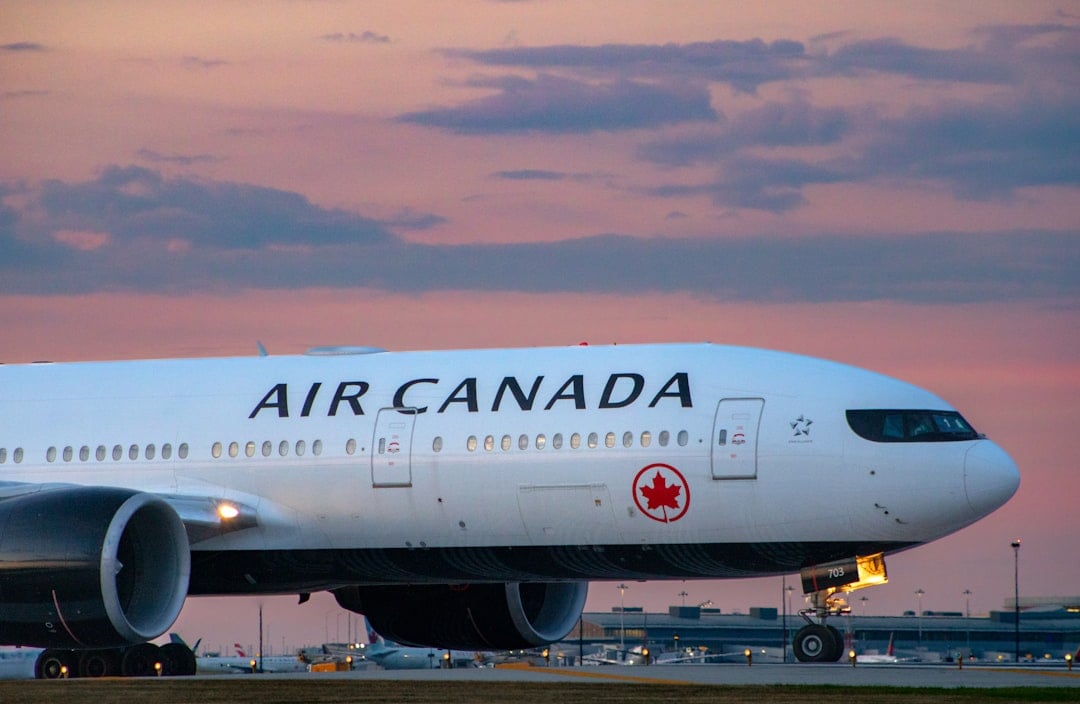
- Air Canada Express Flight 8646 collided with a fire truck on a LaGuardia runway.
- The fatal crash killed both pilots and hospitalized over 40 people on March 22.
- Major airlines have issued travel waivers as runway closures cause significant regional delays.
(NEW YORK, UNITED STATES) — Air Canada Express Flight 8646’s crash at LaGuardia is no ordinary disruption. If you’re booked through New York, expect delays, rebookings, and waiver rules that can change your trip fast.
The incident has also raised serious safety questions after a Jazz Aviation Mitsubishi CRJ-900 arriving from Montreal struck an ARFF truck on Runway 4 late on March 22. For travelers, the immediate issue is simpler: LaGuardia’s recovery is taking days, not hours, and that can ripple across your entire itinerary.

A fatal crash that turned LaGuardia into a travel bottleneck
Air Canada Express Flight 8646 was operating for Air Canada Express under Jazz Aviation. The regional jet was arriving from Montreal when it collided with a Port Authority Aircraft Rescue and Firefighting truck on Runway 4.
That single event immediately became a major travel disruption for one of the country’s most tightly packed airports. LaGuardia handles dense banks of short-haul flights, so one runway problem can affect hundreds of trips in a chain reaction.
This is not the kind of delay that clears after one canceled bank of departures. Travelers should expect rolling schedule changes, missed connections, aircraft repositioning issues, and gate congestion well beyond the overnight period.
What happened onboard
The aircraft carried 72 passengers and 4 crew members. Reports say the plane hit the truck at roughly 93 to 105 mph, which helps explain the severe damage to the front of the aircraft.
The nose area was demolished in the impact. Both pilots were killed. That makes this the first fatal crash at LaGuardia in 34 years, a grim milestone for the airport and the region.
At least 41 to 43 people were hospitalized after the crash, including two Port Authority officers who were reported in stable condition. All passengers were accounted for, and an unaccompanied minor was reunited with family.
One survivor, Rebecca Liquori of Baldwin, Long Island, described the moment as a violent jolt followed by grinding and a huge boom. She said she expected turbulence, not the front of the aircraft to be gone.
Her account also reflects something travelers often forget in crash coverage: the human effect stretches beyond the headline. For the passengers onboard, the experience was terrifying, and the emotional fallout will likely last longer than the schedule disruption.
Investigation and why the runway closure matters
The National Transportation Safety Board is leading the investigation, with Chair Jennifer Homendy on site. A 25-investigator team is documenting debris, collecting surveillance video, reviewing FAA surface-detection replay data, and gathering air traffic control recordings.
The cockpit voice recorder and flight data recorder were recovered undamaged. Investigators planned to examine them on March 24, which could provide a clearer picture of the sequence of events.
Runway 4 remained closed for evidence processing. That matters because LaGuardia’s runway capacity is already limited in normal conditions. When one runway is unavailable, the airport loses flexibility fast.
Staffing also became part of the conversation. Officials said LaGuardia had 33 certified controllers and 7 in training, compared with a target of 37. Transportation Secretary Sean Duffy described the airport as very well staffed.
A partially open LaGuardia can still behave like a much smaller airport. One runway closure can create hours of follow-on delays, even after operations restart.
How the disruptions spread after the airport reopened
LaGuardia initially closed after the crash, then reopened Monday afternoon with limited operations. That restart did not mean normal service returned.
With reduced runway availability, arrivals and departures began feeding into each other’s delays. Aircraft out of place in the evening can trigger cancellations the next morning. That is the classic domino effect travelers hate.
The airport also faced a messy operating environment. Airlines were shifting crews and aircraft while passengers were trying to reach New York or leave it. In that kind of recovery, a flight that is merely delayed at 10 a.m. can become canceled by noon.
That is why live alerts mattered so much. Travelers needed to watch airline apps, gate changes, and real-time flight trackers instead of relying on a single airport status page.
Airlines responded with waivers
As the disruption spread, carriers started publishing travel waivers. Those policies can save you money, but they do not work the same way across airlines.
Here is a quick comparison of the published LaGuardia-related waivers:
| Airline | Waiver Window | Rebooking/Travel Deadline |
|---|---|---|
| American Airlines | Through March 25 | Rebook or reissue by then |
| Delta Air Lines | March 23-24 | Rebook by March 27 |
| United Airlines | March 23 | Rebook by April 6 |
| Southwest Airlines | March 23 | Rebook by March 10 |
| Air Canada | March 23-24 | Carrier-specific terms apply |
| Porter Airlines | March 23 | Carrier-specific terms apply |
A waiver is not a guarantee of a seat on the next flight. It usually lets you change your itinerary without paying the usual change fee, subject to inventory and routing rules.
That distinction matters if you are trying to get out of New York quickly. A waived fee does not create open seats during a packed recovery period.
Carrier rules also vary by date. Some waivers cover travel on one day, while others allow rebooking later. If one date looks inconsistent, check the carrier’s own policy before changing anything.
What this means for miles, points, and elite flyers
If you paid cash, a waiver can preserve the value of your trip by avoiding change fees. If you booked with miles, the rules may be different.
Award travelers should check whether the airline will redeposit miles without a fee or allow a free date change. Some programs handle involuntary disruptions more generously than voluntary changes.
Elite flyers should also keep an eye on connection risk. A reroute that preserves your ticket may still reduce the chance of earning status-qualifying segments if you accept a shorter or different itinerary.
If your schedule is flexible, compare a free rebooking against an outright refund. On some trips, a refund and a new award booking can be cheaper than accepting a bad reroute.
Official statements and the road to recovery
Air Canada CEO Michael Rousseau said the airline does not yet have all the answers this early in the investigation. That is the right posture. Causes should not be guessed at while investigators are still gathering facts.
NYC Mayor Zohran Mamdani said the city would not rest until the investigation is complete. Canadian Prime Minister Mark Carney called the crash deeply saddening and offered condolences.
The Port Authority Police Benevolent Association praised ARFF responders for their immediate rescue efforts. That response mattered, especially given the speed and severity of the crash.
Canadian officials are also assisting because the aircraft was operated by a Canadian carrier. That cross-border coordination is standard in a crash involving a foreign airline and a U.S. airport.
Travelers should expect the recovery to stretch over several days. Even after the runway reopens, schedule stability may lag behind. Crews, aircraft, and passengers still have to be moved back into place.
Refund rights are not the same as waivers
Airline waivers, refund rights, and reimbursement claims are separate issues. That distinction is easy to miss when you are rushing to salvage a trip.
A waiver helps you change a ticket without a penalty. A refund right may apply if the airline cancels your flight or makes a major schedule change. Reimbursement questions can cover hotels, meals, or ground transportation, depending on the situation and the carrier’s policy.
For travelers affected by the LaGuardia crash, documentation matters. Save your original itinerary, boarding pass, app screenshots, cancellation notices, and any communication about rerouting or refunds.
If you used points, save the award confirmation and any receipt showing taxes and fees. If your trip included a checked bag or seat selection charge, keep that record too.
The exact rights checklist and documentation steps are worth keeping close, because a good paper trail can speed up both refunds and reimbursements.
LaGuardia’s recovery is still unfolding, and travelers should keep checking airline apps before leaving for the airport. If you have a spring trip through New York, rebook now if your carrier’s waiver still applies, and do not assume a delayed flight will actually operate on time.