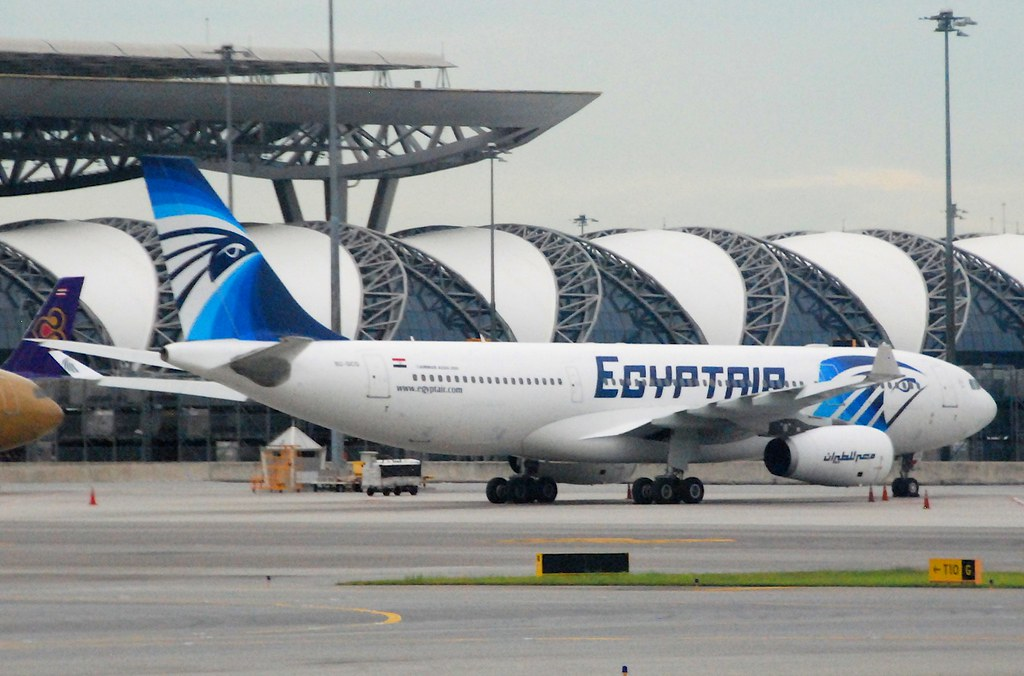
- Major Gulf airlines suspended regional operations due to escalating airspace and safety concerns.
- Travelers should monitor official advisories as restart times do not guarantee immediate flight departures.
- Emirates and Etihad provide specific restart targets, while Qatar Airways focuses on periodic status updates.
(DUBAI, UAE) — If you’re flying through Dubai, Abu Dhabi, or Doha in the next 48 hours, your choice of airline matters as much as your ticket. Emirates, Etihad, and Qatar Airways have all paused operations due to regional airspace and safety constraints, and the “restart time” doesn’t mean your flight will actually run on time. The smart move today is to pick the carrier whose hub and rebooking rules best match your trip’s flexibility, and to avoid self-connecting plans until schedules stabilize.
This is a comparison of how Emirates, Etihad, and Qatar Airways stack up right now for disrupted travel. It’s written for travelers making real decisions: whether to wait, rebook, reroute, or refund.

Quick recommendation (what I’d do)
- Most travelers should stick with Emirates if Dubai is your only practical hub, but plan for knock-on delays even after the suspension end time.
- Choose Etihad if you want earlier “target restart” timing and potentially clearer waiver logic, especially if your ticket matches the airline’s eligibility windows.
- Choose Qatar Airways only if Doha is essential or you’re already booked, since the airline’s next firm “moment” is an update time, not a restart time.
Why this matters: a published restart target is only the beginning. Aircraft and crews need repositioning, airports need slots, and misconnected bags and passengers compound congestion.
Side-by-side comparison: who’s best for you during the disruption
| Category | Emirates (DXB) | Etihad (AUH) | Qatar Airways (DOH) |
|---|---|---|---|
| What “suspension” means today | No departures/arrivals to Dubai until the published time | No departures/arrivals to Abu Dhabi until the published time | Operations suspended with a defined next-update time |
| How clear the next checkpoint is | Clear restart target, but subject to rolling advisory updates | Clear restart target, plus stated waiver eligibility concepts | Next checkpoint is an advisory update, not a restart |
| Best for | Dubai-bound trips, travelers who can flex by a day | Travelers willing to reroute via AUH, and those who qualify for waivers | People already committed to DOH connections, or with limited alternatives |
| Rebooking/refund framing | Rebook within a defined window or refund; process differs by booking channel | Rebooking/refunds may vary by fare and situation; some assistance may apply | Guidance focuses on monitoring until the next operational update |
| Connection risk after restart | High at DXB due to volume and banked connections | Moderate, smaller hub but still constrained | High if airspace constraints persist and banks compress |
| Miles/status impact | Protect your elite progress by keeping ticket numbers and booking class consistent | Watch ticket reissues and partner credit rules if rerouted | Be careful with reaccommodation that changes marketing carrier |
| Who to call first | Airline if booked direct; agency if booked via third party | Same as Emirates | Same as Emirates |
1) Overview: what the suspensions mean, and why timelines are not guarantees
A “suspension” is the hardest operational stop an airline can make. It usually means no departures and no arrivals at the carrier’s hub, not just a few canceled flights.
Even if airspace restrictions ease, airlines still face three practical problems:
- Aircraft positioning. Your aircraft may be parked in the wrong country.
- Crew legality. Duty-time rules can prevent immediate restarts.
- Airport constraints. When flights restart together, slots and gates get tight fast.
That’s why reopening airspace does not mean normal schedules return instantly. It often means a messy ramp-up, with rolling cancellations and long delays.
Timelines still matter, though. They guide your next decision: do you wait it out, reroute, or cut your losses with a refund. The exact end times and advisory update deadlines are best treated as checkpoints, not promises.
2) Current status by airline (as of the latest advisories)
The single most important habit today is checking the latest timestamp on an airline advisory. Screenshots shared online go stale quickly. You want the newest advisory page, then your flight number status, then your booking management page.
Emirates (Dubai International Airport)
Emirates has paused operations to and from Dubai, with a published restart target. Advisories can change within the same day, so the “last updated” time matters as much as the suspension end time.
Operationally, Emirates’ scale cuts both ways. The airline has more aircraft and options, but DXB also has more banked connections to unwind.
Etihad (Zayed International Airport, Abu Dhabi)
Etihad has also paused Abu Dhabi operations with a published restart target. The airline has additionally tied some flexibility to ticket issue date and travel-date windows in its waiver logic.
That matters because two travelers on the same flight can face different options. It depends on when the ticket was issued, and the dates on the itinerary.
Etihad’s smaller hub can be an advantage once restarts begin. There are fewer flights to reschedule than Dubai.
Qatar Airways (Hamad International Airport, Doha)
Qatar Airways’ most concrete near-term checkpoint is a defined next-update time. That’s not the same as a restart time.
When airspace closures are the binding constraint, the airline may not be able to commit to a reliable ramp-up schedule. That creates planning risk for tight connections in Doha.
(Flight-status timing details appear in the embedded status tool in this section.)
3) Passenger options: rebook, refund, reroute, or wait
This is where the three airlines differ most in practice. Your booking channel also matters more than usual.
Emirates: generally straightforward rebooking window or refund
Emirates has offered rebooking within a defined window or refunds. The practical split is simple:
- Booked direct: use Emirates channels, and keep everything in writing.
- Booked via a travel agency or online travel site: the agency controls the ticket. The airline may not be able to change it.
If you’re connecting in Dubai on one Emirates ticket, a cancellation of the long-haul segment usually collapses the whole itinerary. That’s good. It keeps your protection intact.
If you built a separate-ticket connection, expect more friction. Emirates can cancel its segment and still leave you holding the other ticket.
Etihad: options can vary by fare type and circumstances
Etihad’s rebooking and refund paths can depend on fare rules and the reason you’re stranded. Some travelers may also see assistance like accommodation, but it’s not uniform.
One key operational point: if you’re connecting and an onward Etihad segment is canceled, you may not be able to board the first leg. That’s a standard “no onward travel” control.
If you’re trying to reroute, ask for “re-accommodation” options that keep you on a single ticket. That protects you if the new routing misconnects.
Qatar Airways: don’t confuse “next update” with “restart”
Qatar’s guidance focuses on monitoring until the next operational update. Until the airline publishes a restart plan, your best move is usually:
- hold your booking,
- avoid speculative rebuys unless you must travel,
- and prepare a backup routing you can ticket quickly if policies open up.
This is especially true if you’re transiting Doha to South Asia, East Africa, or Europe. Those flows can bottleneck when schedules compress.
Exact waiver windows and date boundaries are published in advisories. Treat them as hard lines, and confirm your ticket qualifies before you agree to a reissue.
4) Broader regional impact: even “unaffected” flights can unravel
Even if your flight is not on Emirates, Etihad, or Qatar Airways, the region is dealing with multi-day ripple effects:
- Other UAE carriers have also suspended flights. That weakens feeder networks into Dubai and Abu Dhabi.
- Foreign airlines have canceled or reduced Middle East flying across a multi-day horizon. That can strand inbound travelers from Europe and Asia.
- Reroutes are longer. Avoided airspace can add flight time, and that triggers crew-duty issues and missed connections.
Here’s what that looks like on the ground:
- If you’re flying from Europe to Asia via the Gulf, expect fewer same-day rebooking options.
- If you’re flying into the UAE for business, build in an extra day for arrival.
- If you’re a remote worker heading to Bali, Bangkok, or Colombo via Gulf connections, assume your connection is the weak link.
If you must travel, prioritize itineraries with fewer legs and larger buffers. Separate tickets are especially risky right now.
5) Why this is happening (and why restart times can slide)
These suspensions are driven by airspace closures and escalating regional security events. Airlines are making safety-driven decisions under fast-changing constraints.
Operationally, three things can force timelines to move:
- Regulatory changes and NOTAMs that open or close airspace with little notice.
- Safety assessments by airlines and civil aviation authorities.
- Aircraft and crew positioning, which can’t be fixed instantly after a hard stop.
Third-party “restart predictions” are a distraction. The only reliable signals are official airline advisories and flight status systems tied to operational control.
6) Miles, points, and passenger-rights: what to protect while you rebook
Disruptions like this can quietly wreck your miles plan if you don’t guard the basics.
Protect your miles and elite status credit
If you’re chasing status, the goal is to keep your trip ticketed in a way that still earns credit.
Watch for these pitfalls:
- Marketing carrier changes. A reaccommodation onto a different airline can change where you earn credit.
- Fare class changes. A reissue can drop you into a bucket that earns fewer miles.
- Partner-credit rules. If you’re crediting to a partner program, confirm the new flight numbers still qualify.
For award tickets, focus on:
- redeposit and change fees being waived where permitted,
- keeping the same origin and destination to reduce repricing,
- and checking whether your program treats this as a voluntary change.
Know what to save for refunds and claims
Regardless of airline, save:
- boarding passes (if you flew any segment),
- original and revised itineraries,
- receipts for meals, hotels, and ground transport,
- and written confirmation of cancellations or rebooking offers.
If you end up buying a replacement ticket, keep that receipt too. It may matter for insurance or airline reimbursement pathways.
Passenger-rights and compensation rules depend on itinerary, disruption reason, and ticketing. The exact delay thresholds, eligibility matrix, and compensation amounts are summarized in the embedded compensation tool in this section.
⚠️ Heads Up: If your itinerary includes separate tickets, assume you are self-insured for missed connections unless you have coverage that explicitly protects them.
Choose Emirates vs. Etihad vs. Qatar Airways: real-world scenarios
Choose Emirates if…
- Dubai is your destination, or your hotel and meetings are in Dubai.
- You’re booked on one Emirates-issued ticket with a Dubai connection.
- You can tolerate congestion after the restart target time.
Choose Etihad if…
- You can switch your hub from Dubai to Abu Dhabi without derailing the trip.
- Your ticket falls inside Etihad’s waiver eligibility concepts.
- You want a smaller-hub recovery, with fewer banks to unwind.
Choose Qatar Airways if…
- Doha is essential for your routing, and you’re prepared to wait for the next update.
- You’re already ticketed in premium cabins and want Qatar to protect the itinerary.
- Alternate routings would force you into separate tickets or risky self-connects.
A balanced verdict: which airline is “best” right now?
There isn’t one universal winner. This is about picking the least-bad path for your trip.
- Emirates is usually the best choice if Dubai is non-negotiable, but expect post-restart turbulence at DXB.
- Etihad can be the most practical reroute play, especially if you qualify for its waiver logic and can work from Abu Dhabi.
- Qatar Airways is the hardest to plan around today, because the next firm milestone is an update time.
Your most time-sensitive move is simple: don’t go to the airport on speculation. Recheck official advisories and your flight status near the published Monday checkpoints, then lock in a protected rebooking or refund while waiver terms are still open.