- The Supreme Court will hear arguments in April 2026 regarding the termination of Haitian TPS protections.
- A federal court stay preserves deportation protection and work permits for approximately 352,000 Haitian nationals.
- A final decision expected by June 2026 could impact TPS programs for Syria, Venezuela, and other nations.
(UNITED STATES) — A federal court stay has kept Temporary Protected Status in place for Haitians in the United States as the Department of Homeland Security fights to revive its termination order before the U.S. Supreme Court, which is set to hear arguments in late April 2026.
The court action has preserved deportation protection and work authorization for about 352,000 Haitian nationals as of March 2026, after litigation blocked a planned end to the program on February 3, 2026.
That has left Haitian TPS holders, employers and lawyers watching the high court closely. A decision is anticipated by May or June 2026 and could affect not only Haiti but TPS disputes involving Syria, Venezuela and other countries.
Congress created Temporary Protected Status in 1990 under the Immigration Act to let eligible nationals of designated countries, and some people without nationality who last lived there, remain and work legally in the United States when conditions prevent safe return.
Haiti has held TPS continuously since January 21, 2010, after a 7.0-magnitude earthquake killed over 200,000 people, displaced 1.5 million and crippled infrastructure. Later crises cited in the designation history included political assassinations, gang control over 80% of Port-au-Prince, economic collapse, food insecurity affecting 5.4 million people and repeated natural disasters.
TPS does not provide a path to permanent residency or citizenship. It offers temporary protection from deportation and employment authorization for designated periods, usually 6, 12, or 18 months, and requires re-registration to keep the benefits.
The Trump administration moved in 2025 to tighten TPS designations it said had drifted from the program’s temporary purpose. On February 20, 2025, Homeland Security Secretary Kristi Noem announced a 12-month extension for Haiti ending August 3, 2025, instead of the earlier 18-month period set under President Biden.
DHS followed with a July 1, 2025, termination notice that set September 2, 2025, as the end date. A federal judge in New York blocked that move on July 15, 2025, keeping protections in place until February 3, 2026.
The administration took its most direct step on November 28, 2025, when DHS published a Federal Register notice, 90 Fed. Reg. 54,733, formally terminating Haiti’s TPS at 11:59 p.m. on February 3, 2026.
Noem argued that conditions in Haiti no longer met the legal threshold for TPS and emphasized that the program was not meant to be permanent. The move covered roughly 352,000 beneficiaries at the time, down from earlier estimates of 500,000 because of attrition and non-re-registrations.
One day before the deadline, U.S. District Judge Ana Reyes of the U.S. District Court for the District of Columbia stepped in. On February 2, 2026, Reyes issued a stay in Miot et al. v. Trump et al. (No. 25-cv-02471-ACR), finding the termination “substantially likely” violated the Administrative Procedure Act.
Her order said the action appeared arbitrary and capricious, failed to include required consultation with federal agencies and breached equal protection principles. The ruling also found DHS had not shown that conditions in Haiti had improved enough, citing gang violence that had displaced 700,000 people and a humanitarian crisis described in U.N. reports.
The government appealed on February 6, 2026. A divided panel of the D.C. Circuit denied an emergency stay on March 6, 2026, leaving Reyes’ order in place.
The administration then asked the U.S. Supreme Court for expedited review. The justices agreed to hear arguments in late April 2026 and did not lift the stay while the case proceeds.
USCIS updated its guidance on March 13, 2026, confirming that Haitian TPS protections remain in effect and reminding employers about Form I-9 compliance. That guidance followed an earlier update on February 4, 2026.
For Haitian nationals seeking TPS now, the eligibility rules remain tied to the active designation. Applicants must be Haitian citizens, or stateless people who last resided in Haiti, and must have continuously resided in the United States since June 3, 2024.
They also must have been continuously physically present in the country since August 4, 2024. Initial applications were accepted from July 1, 2024, through February 3, 2026, a period that remained relevant as the litigation continued.
Current holders whose employment authorization documents expired on August 3, 2024, or later had to re-register during open 60-day windows, including July 1 to August 30, 2024, for earlier periods. Pending applications as of July 1, 2024, are automatically considered for extensions through February 2026 if approved.
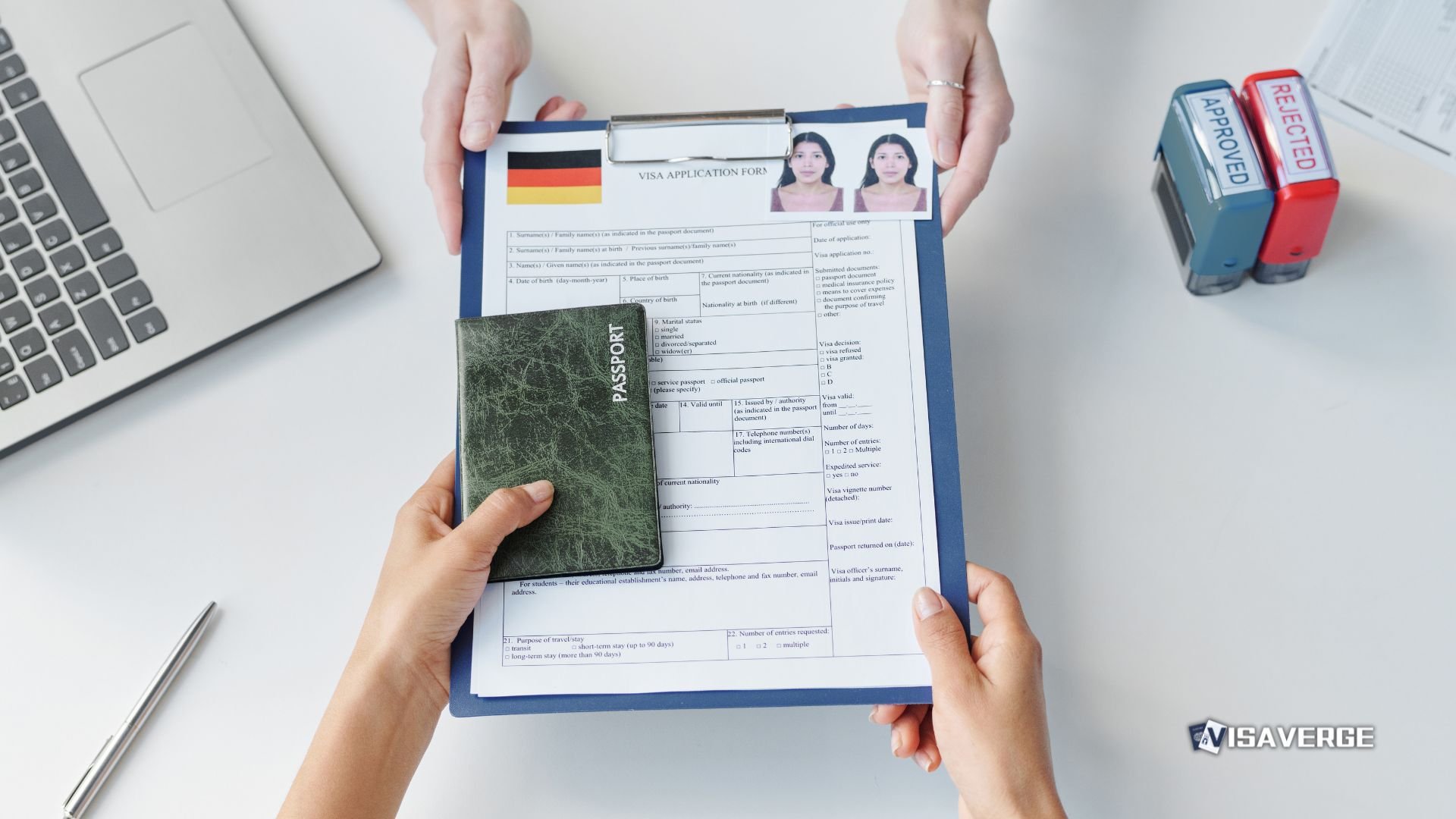
Applicants file Form I-821 for TPS and Form I-765 for employment authorization, either online or by mail. Supporting records can include pay stubs, tax records, school papers, rent receipts, medical records or affidavits.
The listed fees are $50 for an initial Form I-821 and $0 for renewals, plus $470-$520 for Form I-765 and $30 for biometrics. Fee waivers are available for low-income applicants.
Approved TPS can last up to 18 months and can be renewed depending on country conditions. The court stay has extended the protection indefinitely for now, but the case has not ended.
Work authorization has become one of the most immediate issues for both beneficiaries and employers. Court orders have automatically extended employment authorization documents in categories A12 or C19 that carry original expiration dates of February 3, 2026; August 3, 2025; August 3, 2024; June 30, 2024; February 3, 2023; December 31, 2022; October 4, 2021; January 4, 2021; January 2, 2020; July 22, 2019; January 22, 2018; and July 22, 2017.
Employers must accept those documents as valid List A documents for Form I-9 verification even when the cards appear expired. The guidance says employers should note “per court order” and a temporary end date such as March 15, 2026, in the appropriate fields.
Haitian Bridge Alliance has recommended that employers keep printouts of USCIS guidance with I-9 records. For workers seeking new or renewed cards, filing during open periods remains important because the automatic extensions operate only while the court fight continues.
The dispute matters far beyond paperwork. Haitian TPS holders work in construction, healthcare, hospitality and caregiving, and estimates in the case materials say they pay $1.5 billion in taxes each year.
The same materials say more than 200,000 U.S.-citizen children live in mixed-status families that include Haitian TPS holders. Another estimate says over 474,000 Haitians could potentially qualify for TPS, though the current litigation is shielding 352,000 people from deportation.
The figures cited in the broader debate are stark. Some healthcare facilities report Haitian TPS workers make up 10-15% of staff in certain states, while one estimate says deportation could separate 250,000 U.S.-citizen children.
Conditions inside Haiti remain central to the legal clash. Case filings describe a country where 45% of the population faces acute hunger and gangs control critical infrastructure, reinforcing plaintiffs’ argument that return would not be safe.
Plaintiffs in Miot argue DHS ignored the APA’s requirement for reasoned, evidence-based decisions and violated equal protection by disproportionately targeting countries with non-white majority populations. Earlier rulings also shaped the case, including Judge Chen’s September 5 order in a related New York lawsuit that restored Biden-era dates.
The Supreme Court’s decision could set a broader marker for how much latitude DHS has when it tries to end TPS designations. A ruling for the administration could clear the way for quicker terminations across 13 countries, while a ruling for the plaintiffs could force stricter procedural steps, including inter-agency consultations.
Parallel TPS cases have already produced mixed interim outcomes at the Supreme Court level, including denials of stays in some Venezuela matters. That has added to the sense that the justices’ Haiti ruling may shape future fights over the program’s scope and duration.
For current beneficiaries, the immediate message from USCIS remains that protections and work authorization continue. Re-registration still matters because anyone who fails to do so risks losing benefits if the stay is lifted.
For first-time applicants, the practical task is to assemble proof of residence and physical presence and submit the required forms before the February 3, 2026, deadline tied to the current registration period. Low-income applicants can use fee waivers that reduce costs to the $30 biometrics charge.
Some lawyers and advocacy groups have also urged TPS holders to examine other forms of relief, including asylum or family-based options, when they qualify. USCIS processing for employment authorization renewals can take 3-6 months, making timing a pressing issue for workers trying to avoid gaps on the job.
The legal fight has turned what would have been an immediate loss of status into a waiting period measured in months, not days. For now, the court orders have left Haiti’s TPS holders with their protections intact as the U.S. Supreme Court prepares to weigh the future of one of the country’s largest humanitarian immigration programs.