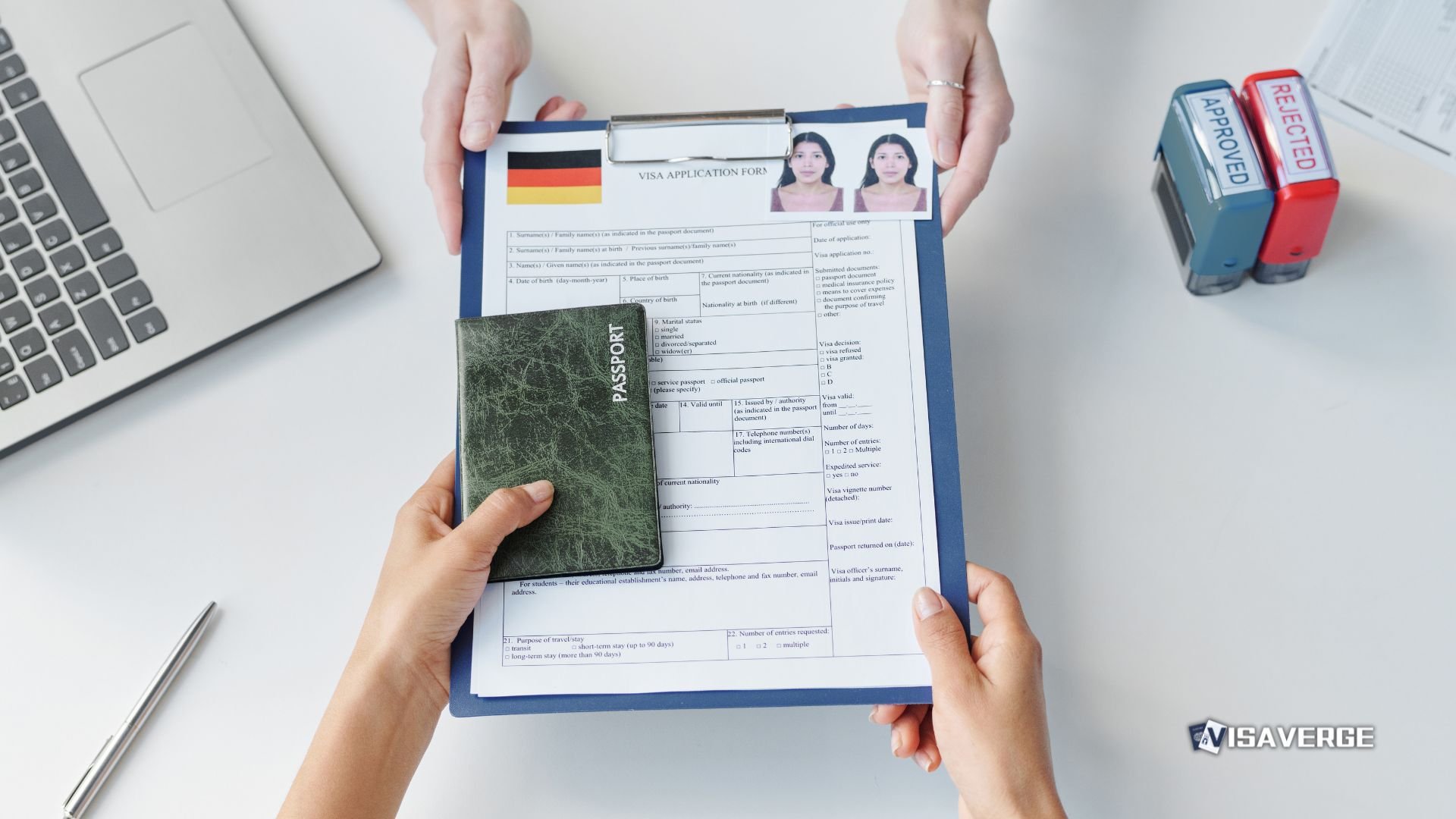
- President Trump expanded the travel ban to 39 countries through Proclamation 10998, effective January 1, 2026.
- The order suspends most visa categories for 19 full-ban countries, including student and visitor visas.
- Specific exemptions exist for major sporting events like the 2026 World Cup and 2028 Olympics.
President Donald Trump expanded the U.S. travel ban through Presidential Proclamation 10998 on December 16, 2025, barring entry for nationals from 19 countries and holders of Palestinian Authority-issued travel documents, with partial restrictions on nationals from 20 other countries.
The order took effect January 1, 2026. It applies to foreign nationals outside the United States on that date who did not hold valid visas issued before 12:01 a.m. EST.
Under the policy, existing visas remain valid and are not revoked. Lawful permanent residents, dual nationals traveling on passports from countries not covered by the ban, and people already in the United States are exempt.
The new proclamation widened restrictions first imposed in June 2025 and removed earlier grace periods and some family-based exceptions. It also came ahead of a separate January 14, 2026, administration announcement pausing immigrant visa processing for nationals of 75 countries because of public charge risks, effective January 21, 2026.
Background and Policy History
Trump’s second-term policy builds on the travel bans from his first term. Executive Order 13769 in January 2017 targeted Iran, Iraq, Libya, Somalia, Sudan, Syria, and Yemen, and later revisions removed Iraq while adding North Korea and Venezuela.
The Supreme Court upheld that earlier policy in Trump v. Hawaii (2018). The administration’s 2025-2026 changes moved well beyond a March 2025 draft that had proposed 43 countries under tiered restrictions.
By June 2025, Proclamation 10949 had imposed full bans on 12 countries and partial measures on four others. Presidential Proclamation 10998 broadened that framework to 39 affected nationalities and travel document holders, with immediate enforcement and continuing reviews for possible changes.
The administration has framed the policy around vetting deficiencies, poor security cooperation and terrorism concerns. Those concerns were prompted in part by the December 2025 charging of an Afghan immigrant in a Washington, DC, shooting.
Countries and Visa Categories Affected
The full entry ban suspends immigrant and nonimmigrant visas, including B-1/B-2 visitor visas, F and M student visas and J exchange visas. Those restrictions apply to Afghanistan, Burkina Faso, Chad, Republic of the Congo, Equatorial Guinea, Eritrea, Haiti, Iran, Laos, Libya, Mali, Myanmar (Burma), Niger, Sierra Leone, Somalia, South Sudan, Sudan, Syria and Yemen, as well as holders of Palestinian Authority-issued travel documents.
Partial restrictions apply to Angola, Antigua and Barbuda, Benin, Burundi, Côte d’Ivoire, Cuba, Dominica, Gabon, Gambia, Malawi, Mauritania, Nigeria, Senegal, Tanzania, Togo, Tonga, Turkmenistan, Venezuela, Zambia and Zimbabwe. For most of those countries, immigrant visas are barred and B-1/B-2, F, M and J visas are suspended, while other visa categories face limits.
Turkmenistan is listed as immigrant only under the partial restrictions. The December expansion also lifted some earlier nonimmigrant bans, including Turkmenistan’s prior restriction in that category.
Compared with the June 2025 version, the administration added seven countries to the full-ban list: Burkina Faso, Laos, Mali, Niger, Sierra Leone, South Sudan and Syria. It also added 16 countries to the partial-restriction list.
Countries that appeared in the earlier 43-country draft but not in the final version include Bhutan, Pakistan and Russia. Those countries did not meet the final deficiency thresholds.
How the Ban Applies
The ban reaches travelers differently depending on their visa category. For nationals from full-ban countries, both immigrant and nonimmigrant visas are suspended if they were outside the United States without valid visas when the policy became effective January 1, 2026.
For nationals from partially restricted countries, immigrant visas are halted and common nonimmigrant categories such as visitor, student and exchange visas are also blocked. Other visas remain available in narrower form, including reduced validity in some cases.
The effects extend beyond new visa applicants. Travelers who already held visas issued before January 1, 2026 may still use them for entry, but they face enhanced screening.
Universities have warned students against international travel. The policy also complicates family-based, employment-based and diversity visa cases, especially when combined with the separate 75-country immigrant visa pause that began on January 21, 2026.
That later measure applies only to immigrant visas, not nonimmigrant visas, and allows consular interviews to continue without visa issuance. USCIS pauses adjudication of related benefits under that policy.
Spouses of U.S. citizens do not have exceptions under the immigrant visa pause, stranding petitions. Families pursuing adoptions may continue interviews for case-by-case relief.
Exemptions and Carveouts
Athletes, coaches and support staff for designated sporting events remain among the most visible exemptions to the travel ban. Those events include the 2026 World Cup, 2028 Olympics, NFL, NBA, MLB, NHL, NASCAR, Formula 1 and UFC, as well as others designated by Secretary of State Marco Rubio.
Spectators, media and sponsors generally are not eligible under that sports carveout. Diplomats, certain government officials, Special Immigrant Visa holders, Iranian religious minorities and some adoption cases may also qualify for exceptions under national interest provisions.
Dual nationals can avoid the restrictions if they travel on passports from countries not covered by the ban. That same exemption appears in the separate 75-country immigrant visa pause.
The administration has also kept a case-by-case waiver process for U.S. national interest. At the same time, prior exceptions for immediate relatives, adoptions and some refugee and asylum family members were removed from parts of the current framework.
Refugees and asylees face new barriers as the ban reaches new arrivals and some family reunification channels. Fourteen of the IRC’s 2026 Emergency Watchlist countries are affected.
Economic, Educational and Diplomatic Impact
Employers in technology, academia and healthcare also face disruptions. Cuba, Nigeria and Venezuela have been important sources of international workers now dealing with delays.
The policy’s reach has spread into tourism and remittances as well. Caribbean countries such as Antigua and Barbuda and Dominica face drops in tourism, while Venezuela and Haiti face losses in remittances from workers in the United States.
The ban could also affect higher education finances. International students contributed $40 billion in pre-ban eras, and current restrictions put that revenue at risk.
Civil rights groups have criticized the policy and expect legal challenges similar to those filed in 2017. Those groups, including the ACLU, argue that Muslim-majority countries dominate the full-ban list, while the administration has defended the order as non-discriminatory and tied to vetting gaps.
Diplomatically, the policy strains relations with countries affected directly and with nearby partners. That includes Nigeria and Pakistan-adjacent nations, with risks of retaliation against U.S. travelers and weaker counterterrorism cooperation.
The administration’s review system leaves room for future changes. Countries may seek relief by improving vetting standards and cooperation with the United States.
That ongoing process marks a break from the March 2025 draft, which had offered some countries 60-day remediation periods. Under the current policy, enforcement is immediate and any easing comes later, after review.
Practical Effects for Travelers and Families
For travelers, the line between who may enter and who may not often turns on dates, documents and nationality. A visa issued before 12:01 a.m. EST on January 1, 2026 can remain valid, while an applicant from the same country without that document may be blocked entirely.
For immigrants, the separate public charge pause adds another layer. The January 14, 2026, announcement halted immigrant visa issuance for nationals of 75 countries starting January 21, 2026, though nonimmigrant visas were not covered and interviews could still go forward.
That policy was part of Trump’s self-sufficiency mandate, aimed at preventing welfare reliance. In practice, it has added pressure on family-based immigration, employment migration and adoption cases already caught up in the broader travel ban.
Travelers affected by either policy are advised to check for updates, attend scheduled interviews and avoid leaving the United States if possible. Dual nationals must use passports from countries not covered by the restrictions.
People seeking sporting exemptions are advised to verify event eligibility through embassies. Others have been told to prepare alternatives such as third-country processing and to consult immigration attorneys.
Presidential Proclamation 10998 has redrawn U.S. entry rules for dozens of countries in a way that reaches tourists, students, workers, refugees and families at once. With the travel ban effective January 1, 2026 and reviews still underway, the people caught by it face a system in which nationality, visa timing and exemption status now decide whether a trip, a job, a degree or a family reunion can go ahead.