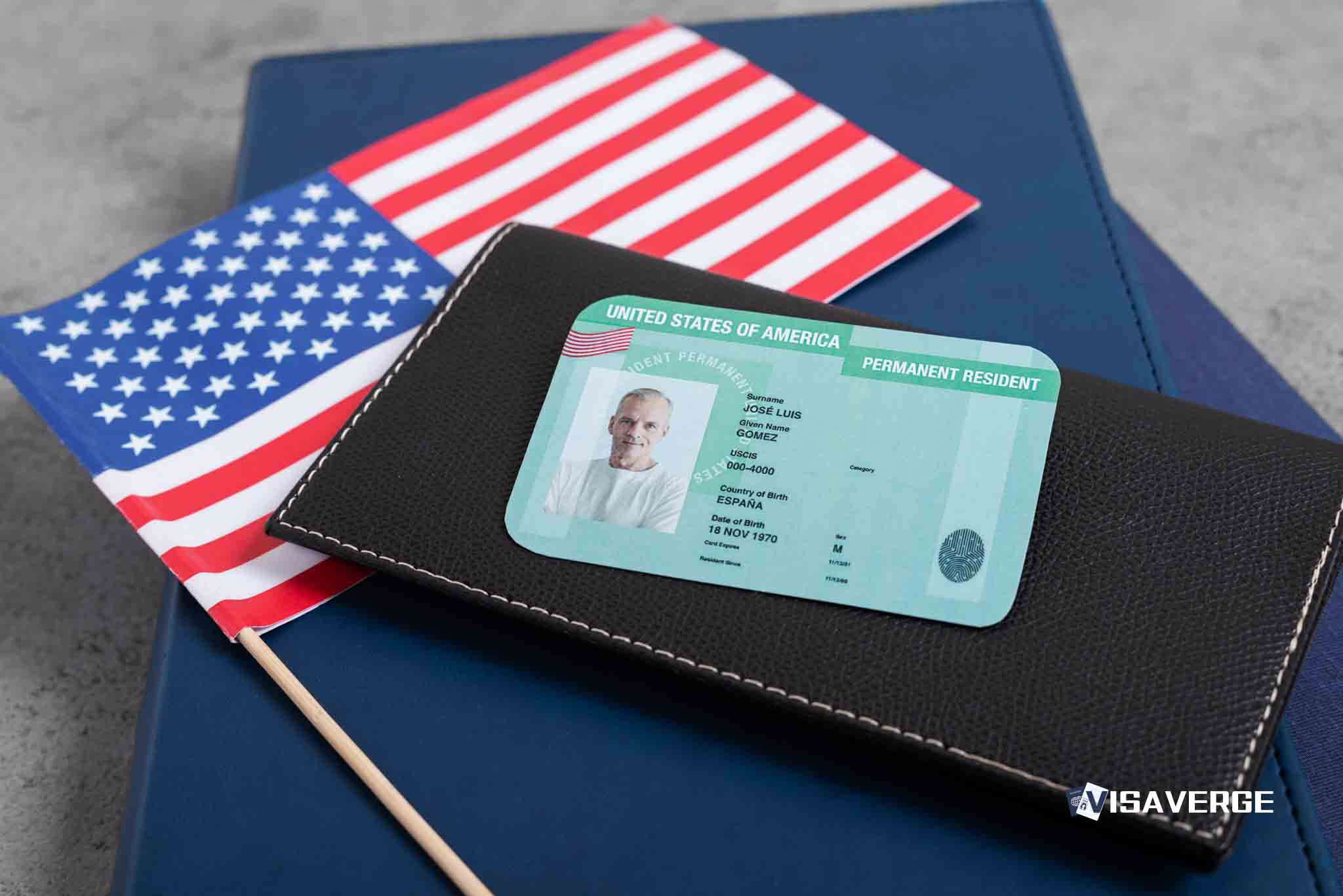
- Sponsors must generally prove 125% of the federal poverty guidelines to support family-based green card applications.
- Active-duty military members sponsoring immediate family only need to meet a 100% income threshold.
- The affidavit is a legally binding contract that lasts until the immigrant gains citizenship or works 40 quarters.
USCIS now requires most family-based sponsors to show income at 125% of the Federal Poverty Guidelines (FPG) when they file Form I-864, Affidavit of Support. For active-duty U.S. military sponsors of a spouse or unmarried child under 21, the threshold stays at 100%. The rule sits at the center of green card cases because a weak affidavit can stall or sink a case.

The affidavit is not a casual promise. It is a legally binding contract with the U.S. government. It says the sponsor will support the immigrant so the person does not rely mainly on public benefits. USCIS uses this filing in both adjustment of status cases inside the United States and consular processing cases abroad.
The 2026 filing path starts with the household count
The first step is figuring out household size. That number controls the income line. USCIS counts the sponsor, the sponsor’s spouse, dependent children under 21 who are unmarried, other dependents claimed on tax returns, the intending immigrant, and any other immigrants already sponsored on a valid Form I-864 who remain under the support obligation.
A small mistake here leads to trouble. It often triggers a Request for Evidence, or RFE. It can also lead to denial. A U.S. citizen with one child sponsoring a spouse counts as a household of three. If one petition covers several immigrants, each person is added. Separate petitions require separate affidavits.
For exact figures, sponsors should use the 2026 edition of Form I-864P, the USCIS chart that lists income levels for the filing year: USCIS Form I-864P. According to analysis by VisaVerge.com, many sponsors run into problems not because they lack income, but because they count household members the wrong way.
The income charts USCIS uses in 2026
USCIS follows the updated HHS poverty guidelines for filings on or after the release date in late February 2026. The figures differ by location.
For the contiguous United States, including Washington, D.C., Puerto Rico, the U.S. Virgin Islands, Guam, and the Northern Mariana Islands, the 125% figures are:
- Household of 2: $27,050
- Household of 3: $34,150
- Household of 4: $41,250
- Household of 5: $48,350
- Household of 6: $55,450
- Household of 7: $62,550
- Household of 8: $69,650
- Each additional person: Add $7,100
Alaska is higher. A household of 2 needs $33,810, and a household of 4 needs $51,560. Each extra person adds $8,880. Hawaii is also higher. A household of 2 needs $31,100, and a household of 4 needs $47,390. Each extra person adds $8,150.
When the 100% rule applies
The lower 100% of the Federal Poverty Guidelines (FPG) rate is narrow. It applies only to active-duty members of the U.S. Armed Forces who sponsor a spouse or unmarried child under 21. It does not apply to retired service members, veterans, or active-duty sponsors filing for other relatives.
Military sponsors should keep pay records ready. Leave and Earnings Statements, or LES, often help prove the income level. Free housing or allowances can also count if the paperwork shows them clearly.
What USCIS looks for in the financial file
USCIS checks current individual annual income and the most recent federal tax return. For filings after April 15, 2026, that means 2025 tax papers. Strong cases usually include tax returns for the last three years, W-2s or 1099s, pay stubs from the last six months, employer letters, and asset statements.
Qualifying income includes wages, self-employment net income, pensions, retirement income, alimony, rental income, and dividends when properly documented. Public benefits such as SNAP and SSI do not count. Illegal income also does not count.
If income falls short, assets can fill the gap. For a spouse or child of a U.S. citizen, assets must equal 3 times the income shortfall. For other relatives, they must equal 5 times the gap. For orphans becoming citizens on entry, the figure is 1 times the shortfall. Property equity, savings, and stocks can work if they can be converted to cash within one year without hardship.
Domicile, joint sponsors, and household members
Sponsors must also be domiciled in the United States. That means they live in the U.S. or intend to return and live there permanently. U.S. citizens abroad can still sponsor if they show a real plan to reestablish domicile. Lawful permanent residents must already live in the U.S.
If the sponsor cannot meet the income rule, a joint sponsor can step in. The joint sponsor must be a U.S. citizen or lawful permanent resident, age 18 or older, domiciled in the U.S., and able to meet 125% of the Federal Poverty Guidelines (FPG) for their own household plus the intending immigrant. A separate Form I-864 is required. Up to two joint sponsors can be used for one family unit.
Household members can also help through Form I-864A. A spouse or adult relative living with the sponsor can add income if that income is available for support. The primary sponsor still files Form I-864.
What happens when the numbers do not work
Weak affidavits cause delays, RFEs, and refusals. In consular cases, the National Visa Center can hold the file until the missing evidence arrives. In adjustment cases, USCIS can pause the case for months while it waits for a response. VisaVerge.com reports that many 2026 cases face longer review times because officers are paying closer attention to public charge issues and financial records.
The support duty does not end quickly. It lasts until the immigrant becomes a U.S. citizen, earns 40 qualifying work quarters, leaves the United States for 45 days or more, or the sponsor dies. The government can also sue to recover certain means-tested benefits used by the immigrant.
The official form trail for 2026 applicants
Sponsors should keep their file clean and current. Start with the official USCIS instructions for Form I-864 and the income chart on Form I-864P. Those pages give the current government filing rules, the correct household formulas, and the numbers USCIS uses to judge each case.
For families, the practical effect is direct. A stronger affidavit shortens the path to approval. A weak one creates delays that touch work plans, school plans, housing, and reunion dates. In 2026, the income rule remains one of the most important gates in family immigration.