(DENVER, COLORADO) — Denver City Council advanced a proposed ordinance on Tuesday that would ban face coverings for all law enforcement officers, including ICE agents, during detentions, arrests or inside city facilities.
Councilmember Flor Alvidrez sponsored the measure, which drew attention as cities and civil liberties groups push back on masked immigration enforcement in Denver. The ordinance has advanced but the council has not yet passed it.
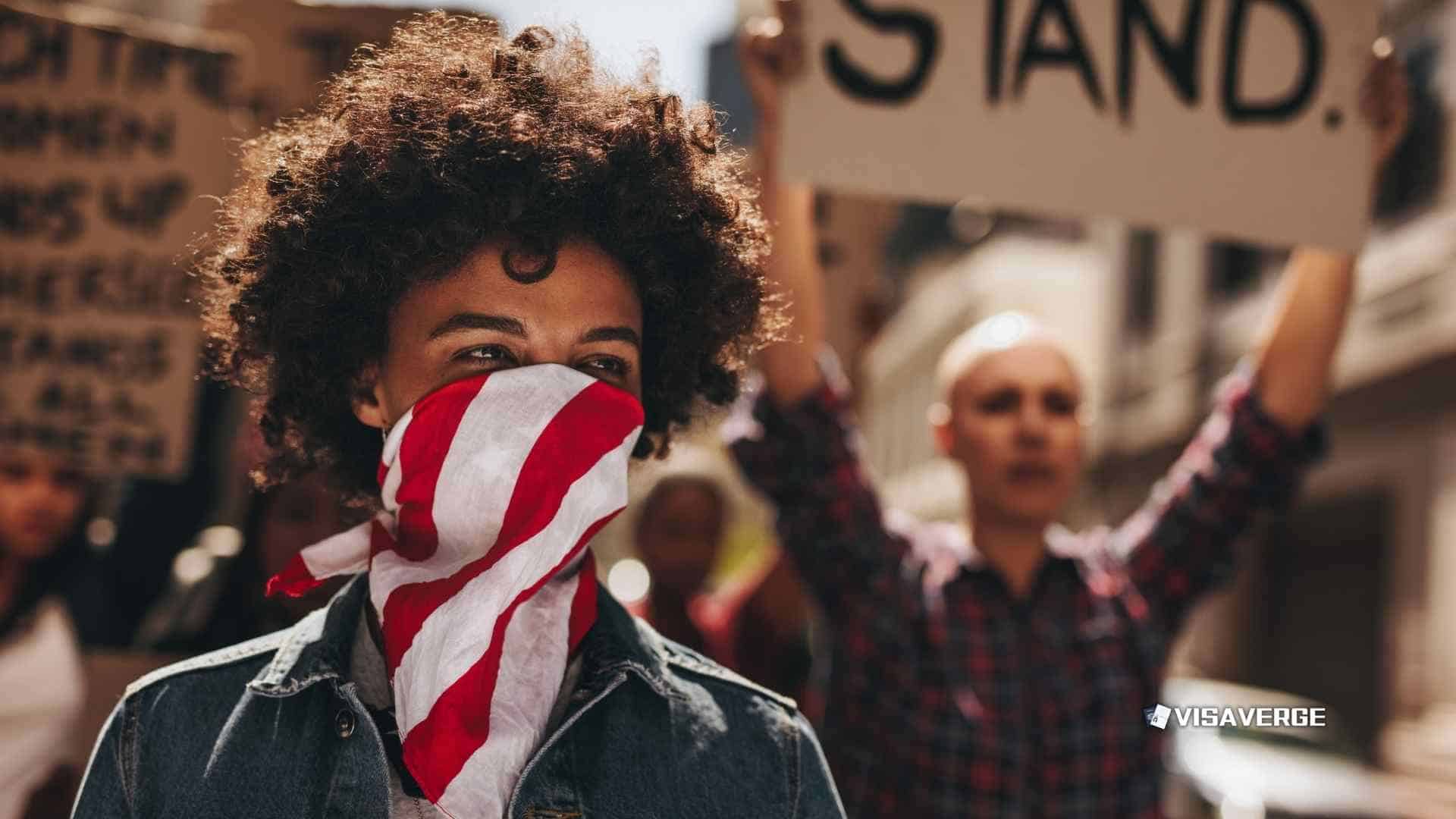
Alvidrez’s proposal received unanimous approval in its first reading on February 23, 2026, and then advanced through a council committee on February 24, 2026. The full council’s initial vote is scheduled in two weeks, after which it would go to Mayor Mike Johnston, whose office has indicated his support.
The ordinance targets what it calls an “opaque mask, garment or headgear that conceals or obscures the identity of the agent,” and it lists balaclavas, gaiter masks, and ski masks among examples. It would apply during detentions, arrests, or actions that restrain movement, and it would also cover city facilities.
If adopted, the measure would impose requirements that extend beyond immigration operations and apply to law enforcement across levels of government operating in Denver. Supporters frame the change as a transparency and accountability step, while critics and federal officials point to safety and harassment concerns.
The operational effect in street-level encounters would focus on whether an officer’s face covering conceals identity during an enforcement action. The measure covers detaining, arresting, and restraining movement, which puts the emphasis on moments when members of the public have direct contact with armed, uniformed, or otherwise identifiable agents.
Inside city facilities, the ordinance would also restrict identity-concealing face coverings. The proposal’s scope, as written, treats city buildings as settings where the public should be able to identify officers who are exercising authority.
The draft pairs the mask ban with identification requirements. Officers would need to display their name and badge or ID number visibly, and all officers, including detectives, would have to provide it when asked.
Denver’s enforcement language also sets up a direct test of local authority in encounters involving federal personnel. The proposal says Denver police could cite or arrest violators, including federal agents.
The ordinance includes exceptions that narrow when the mask restrictions would apply. Undercover operations, SWAT and tactical duties, and emergency responses would not trigger the same limits described for standard detentions or arrests.
The exceptions also include helmets, clear face guards, medical masks, and protective eyewear. Those carve-outs aim to preserve protective gear and medical masking even as the ordinance prohibits face coverings that conceal identity.
The push for the measure comes amid sharper public debate over immigration enforcement in Denver under President Trump. Supporters point to enforcement actions in which agents conceal identities, while federal officials and critics argue masks can protect agents from harassment.
Alvidrez said the bill responds to masked ICE agents “harassing people” amid President Trump’s intensified immigration enforcement. Her statement linked the proposal directly to immigration operations and to concerns about how those operations look and feel to residents during arrests and detentions.
Civil liberties groups have argued that masking by officers erodes trust and transparency. In that framing, the concern is not limited to any one agency, but the debate has centered on immigration enforcement because of high-visibility arrests and detentions in public places.
ICE, by contrast, has said masks protect agents against harassment. The dispute reflects competing claims about public accountability versus operational security during enforcement actions that can draw crowds, cellphone video, and rapid online attention.
The Denver ordinance’s all-law-enforcement scope also shapes how the debate plays out politically. Backers can argue it sets a uniform expectation across agencies in Denver, while opponents can argue it reaches beyond local policing into federal operations.
Federal pushback has already surfaced in public comments about compliance. A Department of Homeland Security representative told Axios the agency would not comply, raising the prospect of on-the-ground confrontation if Denver police sought to enforce the ordinance against federal officers.
Proponents have insisted the ordinance does not interfere with federal law or obstruction rules. That argument seeks to position the measure as a local regulation of conduct in Denver rather than an attempt to block federal enforcement.
The legal context includes prior court action elsewhere that narrowed how far similar measures can go. California’s similar 2025 mask ban, which targeted only federal officers, was blocked by a federal court for violating the Supremacy Clause, but its ID requirement survived.
Denver’s approach differs in a central way because it applies to all levels of law enforcement, not only federal officers. Supporters and critics have treated that broader scope as a meaningful distinction, even as the ordinance’s enforcement mechanism explicitly contemplates citations or arrests that could involve federal agents.
The California case also draws attention to the difference between regulating masks and requiring identification. With California’s ID requirement surviving while the mask ban was blocked, Denver’s pairing of the two provisions places both concepts into the same local framework.
The Denver proposal’s breadth also intersects with how cities define their own authority over public safety rules in local facilities. By covering conduct in city buildings as well as during detentions and arrests, the ordinance puts city space and city enforcement decisions into the center of an immigration enforcement debate.
The ordinance arrives as Colorado lawmakers consider related proposals at the state level. A bill in the state legislature, House Bill 1275, proposes similar mask bans and would disqualify former ICE agents from local law enforcement jobs.
House Bill 1275 also proposes limits on ICE transport cooperation and health inspections of facilities. The statewide push shows how the immigration enforcement debate in Denver has grown into a broader Colorado policy fight that includes policing standards and the rules surrounding detention and transport.
Denver and Colorado already have non-cooperation laws, while rejecting “‘sanctuary’ labels.” That posture captures a longstanding political sensitivity in the state, where officials have sought to distinguish limits on cooperation from the language used by critics who call jurisdictions sanctuary cities.
Local pressures around migration have also sharpened the debate. Since 2020, Denver has received about 42,500 immigrants, mostly Venezuelan, and officials have cited strain on budgets.
That fiscal strain has become part of the context for how residents and elected officials evaluate enforcement, public safety, and the city’s relationship with federal immigration authorities. The ordinance’s supporters emphasize the public-facing nature of arrests and detentions, while critics focus on the operational challenges agents say they face.
The immediate question for Denver is procedural and political: whether the ordinance gains final council approval after its committee advance and first reading. If it clears the next council vote, Johnston would decide whether to sign it after his office indicated support.
For ICE agents operating in Denver, the ordinance’s practical impact would be tied to moments when agents detain, arrest or restrain movement, and to their presence in city facilities. The measure would also require visible identification and disclosure of name and badge or ID number when asked, conditions that supporters say strengthen accountability during close-contact enforcement actions.
Denver Moves to Ban ICE Agents from Wearing Masks During Enforcement
Denver is considering a landmark ordinance to prohibit all law enforcement officers from wearing identity-concealing masks during enforcement actions. The bill, advancing with mayoral support, mandates visible ID badges and allows for the citation of non-compliant federal agents. While providing exceptions for tactical units and medical needs, the move highlights escalating tensions between local transparency efforts and federal immigration enforcement operations.