(UNITED STATES) — FedEx filed a lawsuit on Monday, February 24, 2026, in the U.S. Court of International Trade seeking a full refund of tariffs it paid under President Trump’s emergency tariff regime, days after the Supreme Court struck down the levies as illegal.
The complaint names U.S. Customs and Border Protection Commissioner Rodney Scott and the United States of America as defendants, placing the dispute squarely against the agency that collected the duties and the federal government that imposed them.
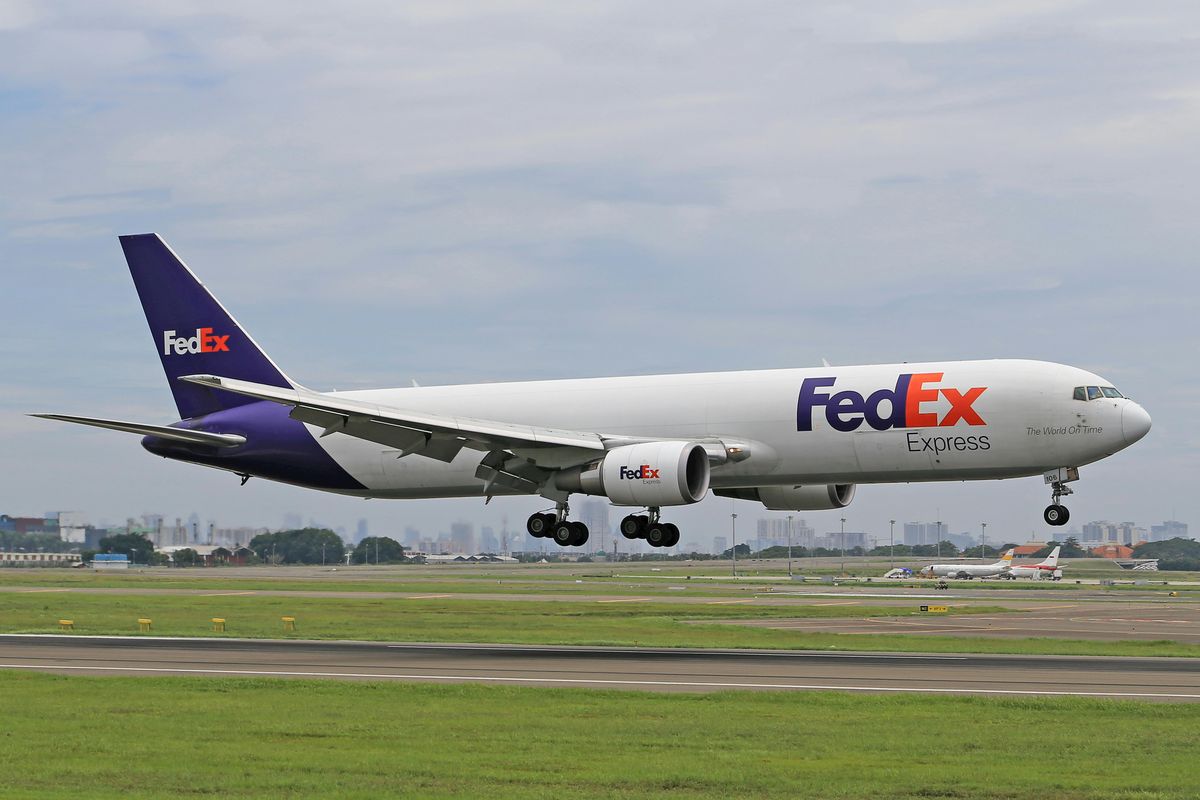
FedEx and its logistics arm served as importers of record on goods subject to tariffs imposed under the International Emergency Economic Powers Act, often called IEEPA, and the company asked the trade court to provide a pathway to unwind those duty payments through refunds and reliquidation.
In the filing, FedEx wrote: “Plaintiffs seek for themselves a full refund from Defendants of all IEEPA duties Plaintiffs have paid to the United States.”
The case is the first major company lawsuit seeking tariff refunds after the Supreme Court’s 6-3 decision on Friday that ruled Trump overstepped his authority by using IEEPA — described in the ruling as a sanctions law — to impose tariffs on imported goods.
That framework treated IEEPA as an emergency and sanctions statute rather than a conventional tariff statute, and the high court’s decision invalidated the IEEPA-based tariff regime at the center of the challenge, setting up a new wave of refund litigation.
FedEx did not disclose the specific dollar amount of the refund it is seeking, even as its complaint asked for a full return of IEEPA duties it paid and pushed for court-ordered steps to correct the duty calculations through the customs process.
The scale of potential repayment extends far beyond a single importer, with more than $175 billion in U.S. tariff collections subject to potential refunds, according to Penn-Wharton Budget Model economists.
FedEx has already described the business hit it expected from the tariff regime, telling investors in an earnings call that the tariffs would cost it approximately $1 billion in 2026, a figure that now sits alongside the broader question of how quickly — and under what standards — refunds might be processed.
Large dollar estimates like the Penn-Wharton figure raise the stakes for both importers and the government, because a court-driven unwind of duties can spur companies to press claims quickly while forcing officials to confront how to handle a potentially vast set of refund demands.
A prior decision by the Court of International Trade in December required companies to file lawsuits to seek reliquidation and refunds, a procedural posture that pushed importers toward court even if the Supreme Court had already invalidated the underlying tariff authority.
That December direction also helps explain why FedEx moved quickly after the Supreme Court ruling, with trade attorneys expecting an early major filing and warning that the recovery process still needs to be worked out by lower courts.
More cases are expected to follow, with lower courts left to determine the mechanics of recovery, including standards, timing and process, as companies seek to convert a high-level Supreme Court invalidation into company-by-company refunds through the trade court system.
Signals from Washington have pointed in two directions at once: an intention to comply with court orders on refunds, alongside political warnings about what could come next on trade pressure.
U.S. Trade Representative Jamieson Greer told Fox News that the administration would “follow whatever they [courts] say to do,” and Treasury Secretary Scott Bessent indicated refunds would likely occur.
President Trump, however, warned countries on Monday against exploiting the Supreme Court decision, threatening higher tariffs and potential license fees on trading partners, comments that businesses and trade lawyers are weighing as they decide how aggressively to pursue refunds and how to plan for possible new trade costs.
For FedEx, the lawsuit puts one of the country’s best-known logistics companies at the front of the post-ruling test of how quickly importers can recover IEEPA duties and how the Court of International Trade will translate the Supreme Court’s 6-3 decision into actual dollars returned.
Fedex Challenges Trump Tariffs Under International Emergency Economic Powers Act
FedEx is suing the U.S. government for a refund of tariffs following a Supreme Court ruling that found President Trump’s use of emergency powers to impose levies was unconstitutional. The logistics giant, facing a $1 billion impact, is leading a potential wave of litigation that could total $175 billion in repayments. While officials signal compliance, the President has warned of alternative trade pressures.