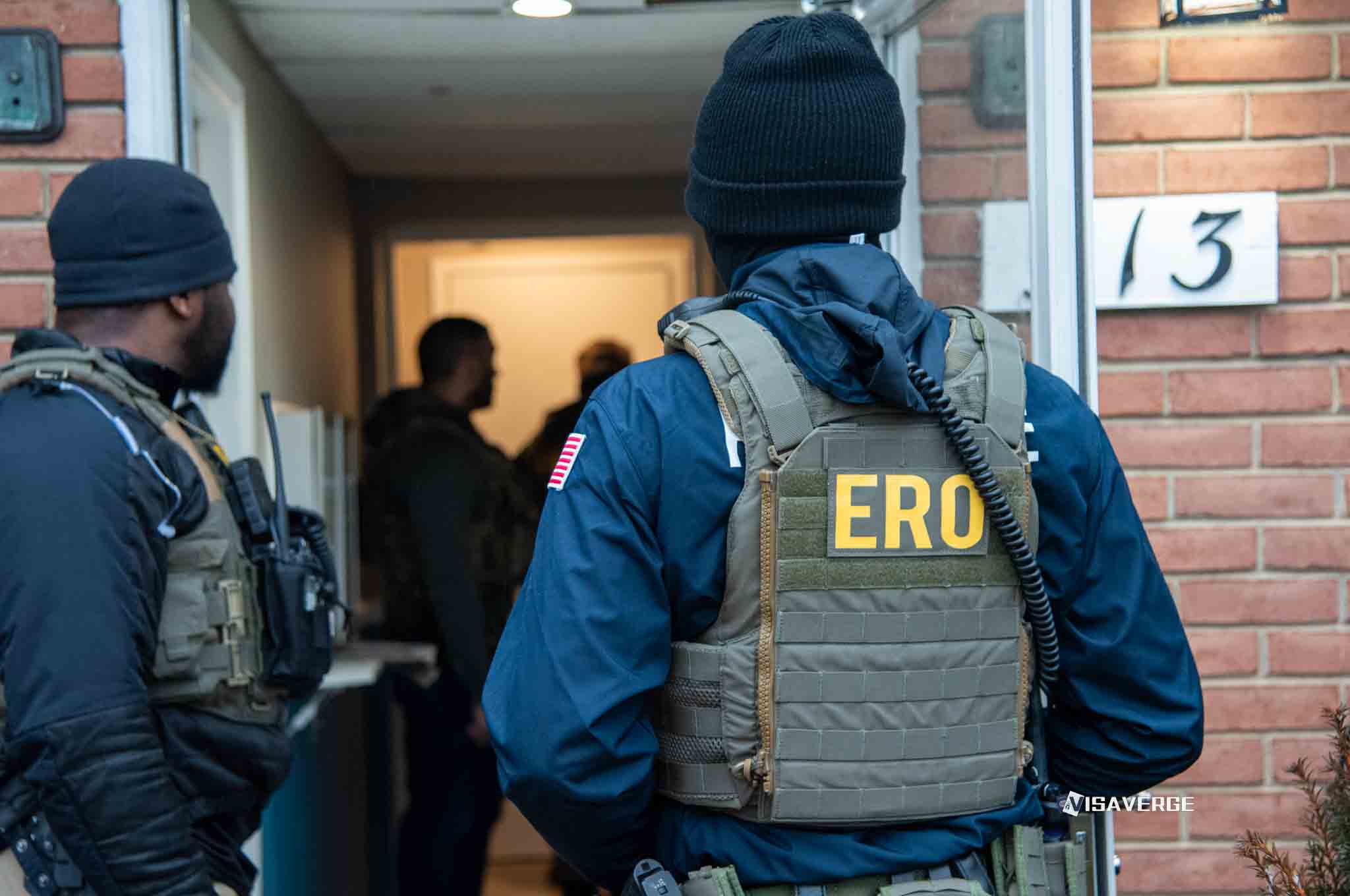
(NORTHERN CALIFORNIA) — Federal immigration agents stepped up arrests across California in late 2025, yet Northern California still recorded the nation’s lowest ICE arrest rate, a mismatch researchers and official policy reviews tied to the state’s sanctuary legal framework and local resistance to cooperation.
Surge in enforcement and federal statements

Department of Homeland Security (DHS) officials said enforcement has intensified under the current administration, while acknowledging that jurisdictions in Northern California do not routinely help ICE identify or transfer people from local custody.
“ICE ended 2025 with a surge operation in California targeting the worst of the worst criminal illegal aliens. 118 illegal aliens were arrested including pedophiles, registered sex offenders, burglars, domestic abusers, and serial drunk drivers. Criminal illegal aliens flock to California because they know Governor Newsom and his fellow sanctuary politicians will allow them to terrorize innocent American families,” said Tricia McLaughlin, DHS assistant secretary, after the operation on January 5, 2026, in a statement posted in the DHS press room.
DHS also highlighted high-visibility enforcement outside California. During a large operation in Minnesota on January 6, 2026, DHS Secretary Kristi Noem was filmed in a tactical vest personally accompanying officers and telling a handcuffed individual, “You will be held accountable for your crimes.”
Arrest data and the “lowest rate” paradox
Data processed by researchers and reported on January 7, 2026 showed ICE arrests in Northern California more than tripled between January 20, 2025, and October 15, 2025, compared with the same period in 2024. Despite that rise in raw arrests, the region’s per-capita rate remained the lowest nationwide.
| India | China | ROW | |
|---|---|---|---|
| EB-1 | Apr 01, 2023 ▲31d | Apr 01, 2023 ▲31d | Current |
| EB-2 | Jul 15, 2014 ▲303d | Sep 01, 2021 | Current |
| EB-3 | Nov 15, 2013 | Jun 15, 2021 ▲45d | Jun 01, 2024 ▲244d |
| F-1 | May 01, 2017 ▲174d | May 01, 2017 ▲174d | May 01, 2017 ▲174d |
| F-2A | Feb 01, 2024 | Feb 01, 2024 | Feb 01, 2024 |
Researchers and policy reviews explain the paradox this way:
- California law limits cooperation with federal immigration enforcement, reducing ICE’s ability to rely on quick jail transfers.
- As a result, ICE must perform more labor-intensive “at-large” arrests — surveilling, locating, and arresting people in neighborhoods rather than picking them up directly from local jails.
- Those at-large operations require more manpower and carry greater operational risk for agents and potentially the public.
Northern California is part of ICE’s “San Francisco Area of Responsibility” (AOR), an enforcement region that also covers Hawaii and U.S. territories, researchers said.
Composition of arrests
A September 2025 analysis cited in reporting found:
- 48% of people arrested by ICE in Northern California had no criminal record.
- 39% had a criminal conviction.
Those figures contrast with DHS’s nationwide portrayal. A DHS spokesperson told the San Francisco Chronicle in September 2025 that 70% of ICE arrests nationwide involve undocumented immigrants with criminal convictions or pending charges.
California laws limiting cooperation
California’s limits on local cooperation center on Senate Bill 54 (SB 54), the California Values Act, which restricts most routine notification to ICE or transfers from local custody, according to the policy reviews and researchers’ summary.
Key provisions and effects of SB 54:
- Local law enforcement cannot share release dates or provide non-public access to immigrants in custody unless the person has been convicted of specific serious or violent crimes.
- In practice, ICE often cannot wait at county jails for a handoff, forcing agents to pursue at-large arrests in the community.
A second law, SB 627, took effect Jan 1, 2026, and:
- Bans law enforcement — including ICE — from wearing masks that obscure their identity during operations.
- Was described as an effort to prevent “secret police” tactics.
Changes in ICE tactics and public-facing touchpoints
Because ICE cannot routinely obtain jail release dates, enforcement has shifted toward public-facing touchpoints. Reported examples include:
- Arrests at the San Francisco Immigration Court when individuals attend mandatory hearings at 630 Sansome St. and 100 Montgomery St.
- Arrests at routine Alternatives to Detention (ATD) check-ins, a practice advocates have called a “bait-and-switch.”
Researchers and advocates say these shifts have created a climate of fear for many families. Late-December enforcement activity — tied to the surge operation that resulted in 118 arrests statewide — was cited as feeding that climate.
Operational trade-offs and regional dynamics
Researchers tracking Northern California enforcement emphasize the gap between:
- The low arrest rate (relative to the estimated undocumented population), and
- The rise in raw at-large arrest totals.
The dynamic described:
- SB 54’s restrictions slow the pipeline from arrest to transfer, so even when federal effort rises, the per-capita arrest rate can remain low.
- Enforcement instead focuses on surveillance, locating people after release, and making arrests away from detention facilities.
- Long-standing regional “sanctuary” frameworks are cited as the central reason federal agents cannot depend on jail transfers, pushing operations toward courts and check-ins.
Sources and further information
- DHS press room item describing the surge: DHS Press Room – ICE Arrests 118 Illegal Aliens in California Surge
- DHS news release: DHS News – New Year, Same Mission
- ICE enforcement figures: ICE ERO Statistics Dashboard
- California law (SB 54): California Legislative Information – SB 54
Local impact and continuing tension
For residents and local officials in Northern California, the result is an ongoing tension between:
- Federal pressure to increase enforcement, and
- State rules designed to separate local policing from immigration enforcement.
That conflict continues to shape how ICE conducts operations in the region and explains why arrest totals and per-capita arrest rates can move in different directions.
Northern California remains a challenge for federal immigration enforcement due to state sanctuary laws that prevent local jails from transferring detainees to ICE. While total arrests tripled in 2025, the per-capita rate remains the nation’s lowest. This has forced a shift toward public-facing arrests at courts and check-ins, increasing regional tensions and creating a climate of fear among immigrant communities despite federal claims of targeting high-threat criminals.