January 3, 2026
- Updated start date context to confirm operations began November 19, 2025
- Expanded arrest totals to include statewide figure: more than 425 arrests by late November
- Added timeline entries showing arrests by November 24 (250+) and agent redeployments Nov 28
- Included detailed locations and methods (Triangle cities, shopping centers, unmarked cars, early-morning stops)
- Added documented impacts: nearly 21,000 school absences (Charlotte-Mecklenburg) and business/school disruptions
(CHARLOTTE, NORTH CAROLINA) — Federal immigration agents expanded a North Carolina enforcement sweep from Charlotte into Raleigh and the Research Triangle starting November 19, 2025, triggering arrests, protests and school and business disruptions that advocates and local officials said continued to reverberate into early 2026.
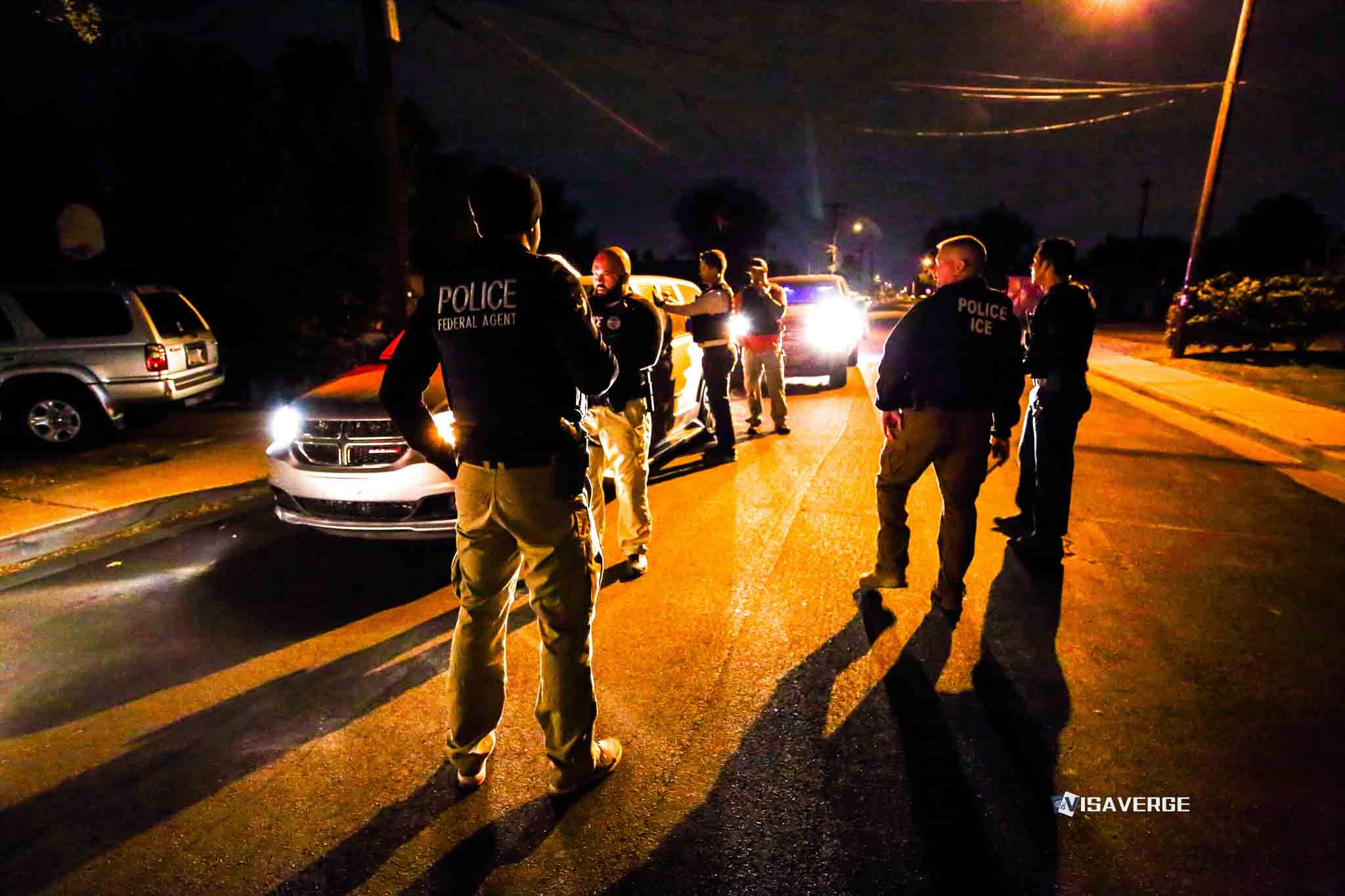
Overview of the operation and scope
The Department of Homeland Security (DHS) confirmed more than 425 arrests statewide by late November after the operation moved beyond Charlotte. In Charlotte alone, over 130 individuals were arrested, and 44 had criminal records. The operation involved U.S. Immigration and Customs Enforcement (ICE) and U.S. Customs and Border Protection (CBP).
The push began in Charlotte under “Operation Charlotte’s Web,” announced in mid-November 2025. DHS reported over 250 arrests by November 24, many at workplaces and public sites, before agents fanned into the Triangle.
Timeline and geography of enforcement
- Mid-November 2025: “Operation Charlotte’s Web” announced in Charlotte.
- November 19, 2025: Agents arrived in the Triangle (Raleigh, Durham, Cary, Morrisville, Fuquay-Varina). CBP agents appeared in public areas and shopping centers.
- November 24, 2025: DHS reported over 250 arrests overall by this date.
- Late November 2025: Agents shifted focus back to Charlotte after activity in the Triangle; preliminary reports indicated about 200 agents would redeploy to New Orleans for “Operation Catahoula Crunch” by Friday, November 28.
- December 5, 2025: Siembra NC reported a new month-long ICE operation bringing agents to Morrisville, Apex, Durham, Greensboro, and Charlotte.
- Early 2026: ICE maintained a daily presence in the Triangle, with ongoing monitoring by local groups.
Methods, tactics, and eyewitness accounts
- CBP agents, some heavily armed and masked, detained people at shopping centers, job sites, and other public areas after arriving in the Triangle on November 19.
- Videos and sightings documented agents in unmarked cars pursuing parked vehicles and conducting early-morning traffic stops, often targeting construction worker vans.
- Agents were reported at job sites, court hearings, traffic stops, and in family neighborhoods. Detentions at Avondale Drive in Durham prompted lockdowns at nearby child care centers, including All My Children.
- Siembra NC verified at least a dozen Triangle arrests on November 19 and held press conferences with community leaders.
“As the capital city, it is important to us that everyone who lives, works, plays, and learns in Raleigh feels safe.” — Raleigh Mayor Janet Cowell, November 18, 2025
Durham County Commissioner Nida Allam described witnessing events on November 19 as “painful and infuriating,” accusing agents of “kidnapping three men” without warrants in a family neighborhood located more than 1,300 miles from the border.
Official reactions and statements
- Raleigh Mayor Janet Cowell urged agents to focus on violent criminals and emphasized that the Raleigh Police Department was not involved in immigration enforcement planning.
- Governor Josh Stein (Democrat) condemned the tactics on November 19, writing on Facebook:
> “Once again, I call on federal agents to target violent criminals, not neighbors walking down the street, going to church, or putting up Christmas decorations. Stop targeting people simply going about their lives because of the color of their skin.” - CBP Commander Greg Bovino (November 20) blamed Stein’s rhetoric for inciting threats against agents, citing incidents including vehicle rammings in Charlotte and a video of a woman threatening ICE with a screwdriver.
- ICE spokesperson Lindsay Williams denied a fixed 50-agent surge but confirmed ongoing operations with no public schedule, saying operations are “fluid.”
Community response: protests and local political reactions
- On the evening of November 19, nearly 300 people marched from Raleigh’s Moore Square to City Hall, chanting against agent presence; no arrests were reported.
- Congressman Tim Moore issued statements supporting enforcement against “repeat criminals” and prior deportees.
- The Party for Socialism and Liberation also rallied on November 19, denouncing the actions as racial fear-mongering.
Community impact — schools, businesses, and families
- The operations prompted immediate, widespread changes in daily life across immigrant communities, including mixed-status families.
- School attendance drops were significant:
- Charlotte-Mecklenburg Schools reported nearly 21,000 absences on November 24, 2025 amid fear tied to enforcement activity.
- Durham Public Schools recorded district-wide drops in Latino attendance.
- Counselors described children terrified after hearing about parents facing guns on the way to work (counselor Carmon Ramon cited).
- Businesses temporarily closed or paused operations due to agent sightings near shopping districts and job sites:
- Shops on Cary’s Chatham Street closed on November 19–20.
- El Toro Loco Taqueria in Raleigh halted operations for community safety.
- Construction work slowed, and some projects were stalled, prompting concerns about economic costs across the state.
Advocacy, monitoring, and legal guidance
- Siembra NC tracked agent sightings through its OJO Obrero app, organized trainings on First and Fourth Amendment rights, and advised communities on:
- Filming agents, demanding warrants, and alerting neighbors.
- Whistling warnings and avoiding interference during encounters.
- Advocates emphasized that ICE and CBP generally need judicial warrants for home entry, with certain exceptions; trainings focused on understanding rights while avoiding escalation.
- The group also reported multiple credible accounts suggesting 50 agents arrived in the Raleigh area and noted charter flight bookings mirroring earlier surges — claims ICE disputed.
Law enforcement guidance and safety messaging
- Wake County Sheriff Willie Rowe advised residents not to confront agents, pointing to ICE’s facility in Cary.
- City officials, including Mayor Cowell, encouraged residents to continue using 911 for emergencies while stressing local police were not participating in the federal operations.
- Governor Stein urged residents to record inappropriate behavior and notify local officials.
Broader and ongoing effects
- Fear extended beyond undocumented immigrants to those with lawful status, including people with paperwork who worried about stops while traveling to work or running errands.
- The enforcement activity affected immigrant communities with skilled visa holders, notably Morrisville’s South Asian community, where concerns emerged about paperwork scrutiny.
- Rumors and anxiety circulated around possible fee hikes for skilled visas (reported rumors ranged from $5,000 to $100,000 for H-1B), intensifying community unease.
- A Raleigh father self-deported after 19 years, leaving his family — an example cited to illustrate emotional tolls on families.
- Even after the most visible surges eased, community leaders and advocates described uncertainty as operations remained unpredictable and fluid, shifting between cities.
Key numbers and locations (quick reference)
| Item | Detail |
|---|---|
| Total arrests statewide (late Nov) | >425 |
| Arrests in Charlotte | >130 |
| Arrests in Charlotte with criminal records | 44 |
| Reported absences — Charlotte-Mecklenburg Schools (Nov 24) | ~21,000 |
| Initial Triangle arrival date | November 19, 2025 |
| Reported redeployment to New Orleans | ~200 agents (preliminary, late Nov) |
Continuing monitoring and community response
- By early 2026, Siembra NC continued to monitor sightings while local officials repeated calls for federal agents to prioritize violent criminals rather than targeting people in routine activities.
- Advocates organized community meetings, legal aid efforts, and school response networks to help families navigate the ongoing impact.
- For many families, the lasting impact was reflected in decisions about whether to drive to work, send children to school, or participate in public life amid the possibility of renewed enforcement activity.
Federal immigration enforcement surged in North Carolina starting November 2025, leading to over 425 arrests in Charlotte and the Research Triangle. The operations, marked by high-visibility tactics at workplaces and schools, sparked significant fear, leading to 21,000 school absences and business closures. While ICE maintained the operations were fluid and targeted, local leaders and advocacy groups like Siembra NC condemned the broad scope and emotional toll on families.