(UNITED STATES) The fight over immigration in the 🇺🇸 has entered a new and sharper phase in 2025, as President Trump returned to the White House and moved fast to reshape the system through 181 executive actions on immigration in his first 100 days. These decisions, focused mostly on enforcement and deportation, have already changed policy on the ground, sparked legal battles, and stirred deep fear and anger in communities across the country.
Early priorities and national emergency declaration

Trump’s team came in with a clear priority: make immigration enforcement far tougher and cut back legal and humanitarian pathways. Within weeks, the administration:
- Declared a national emergency at the U.S.-Mexico border.
- Described unauthorized migration as an “invasion.”
- Floated plans to deploy more military personnel to support border operations.
According to analysis by VisaVerge.com, the scale and speed of these executive actions mark one of the most aggressive early agendas on immigration in modern U.S. history.
Enforcement goals and policy rollbacks
The administration has set an ambitious target of deporting 1 million unauthorized immigrants each year, a number far higher than recent annual removal totals. Officials say this is needed to restore control at the border and respond to public concern over illegal immigration.
At the same time, the White House revoked Biden-era policies that had limited enforcement in “sensitive locations” such as schools, hospitals, and places of worship. Immigrant advocates say these changes are already altering daily routines for mixed-status families.
Key enforcement and policy moves include:
- Suspension of humanitarian parole programs that had allowed certain people in urgent need to enter temporarily.
- Indefinite pause on refugee resettlement, closing a long-standing pathway for people fleeing war or persecution.
- Announced plans to end birthright citizenship for children born in the United States to noncitizen parents—an attempt to overturn more than a century of practice under the Fourteenth Amendment.
These sweeping actions extend beyond enforcement into fundamental questions about citizenship and humanitarian protection.
Legal challenges and constitutional fight
Those moves have triggered immediate court challenges. As of April 2025, a federal district court has temporarily blocked the birthright citizenship order from taking effect while lawsuits proceed.
Legal experts say the case could reach the Supreme Court, setting up a major constitutional showdown over:
- The meaning of citizenship under the Fourteenth Amendment.
- The extent of presidential power to reshape immigration through executive actions rather than legislation passed by Congress.
Enforcement operations and community impact
On the streets of major cities, the new approach is already visible. Examples include:
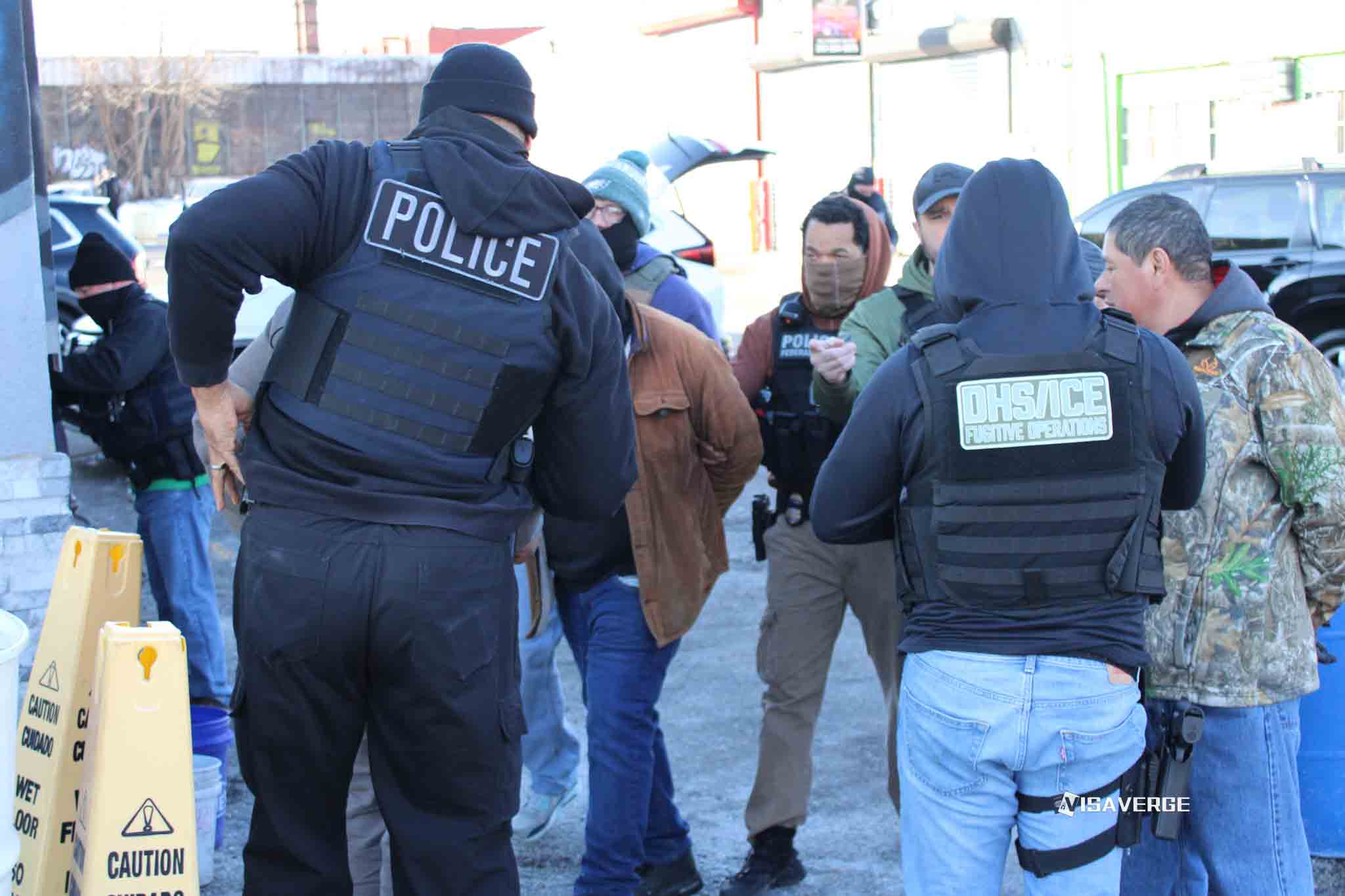
- “Operation Midway Blitz” in Chicago — an enforcement surge that led to the arrest of more than 3,200 people suspected of immigration violations, per the Department of Homeland Security.
- Similar operations expanded to other cities, including Charlotte, North Carolina, targeting people with outstanding deportation orders or criminal records.
These raids have prompted strong reactions:
- High school students in several cities staged walkouts and street protests, marching with signs and chanting outside government buildings.
- Families expressed fear that parents might be detained at work or while driving.
- Mixed-status households reported heightened anxiety as U.S. citizens and undocumented relatives navigate increased enforcement.
Population and border statistics
Behind the headlines, the enforcement wave is beginning to alter national population figures.
- As of June 2025, the foreign-born population in the United States has shrunk by more than one million people, marking the first decline since the 1960s.
- Analysts attribute the drop to a mix of factors:
- Stepped-up deportations.
- Migrants choosing to leave because of fear or lack of work.
- Fewer new arrivals at the border or through legal channels.
Border metrics reflect similar changes:
- Border crossings have fallen to levels not seen since the 1960s.
- Undocumented immigrant arrivals have dropped sharply since 2023, according to research cited in policy reports.
Supporters of the administration argue these numbers show the tougher approach is working. Critics counter that the data also reflect a climate of fear and reduced access to humanitarian protection for people who might qualify for asylum or other relief.
Public opinion: mixed and complex
The national argument over immigration is not settled by enforcement numbers alone. Public opinion is nuanced:
- A 2024 Pew Research study found 75 percent of voters believe undocumented immigrants fill important jobs that citizens do not want, especially in agriculture, care work, and service industries.
- The same study reported that a majority of Americans support a pathway to citizenship for undocumented immigrants if they meet conditions such as passing background checks and paying taxes.
- Notably, 76 percent of Americans say the country should maintain or increase current immigration levels, according to the Pew survey—an outcome that clashes with the impression of broad public appetite for deep cuts.
Still, concern about illegal immigration remains significant:
- Gallup polling shows 48 percent of Americans view illegal immigration as a key concern, placing it among the top issues in 2025.
Political views diverge along familiar lines:
- Republicans often emphasize worries about crime, pressure on schools and hospitals, and the rule of law.
- Democrats stress family unity, labor needs, and refugee traditions, while also navigating pressure from centrist voters who want clearer border rules.
State and local patchwork: sanctuary vs. strict enforcement
The political conflict extends into statehouses and city halls, creating a patchwork system:
- Some jurisdictions describe themselves as “sanctuary” and limit cooperation with federal enforcement, arguing that trust between immigrants and police is vital for public safety.
- Other states, notably Texas and Florida, have adopted aggressive anti-immigration measures, cooperating closely with federal authorities and adding state-level penalties.
Consequences of the patchwork:
- An undocumented parent in a sanctuary city may feel safer sending a child to school, while a similar family in a strict state could face local police checks and harsher penalties in addition to federal enforcement.
- Lawyers warn this uneven map increases confusion for immigrants deciding whether to stay, move, or leave the United States.
Stability concerns and the role of the courts
The growing reliance on executive actions rather than new laws raises questions about policy stability:
- Executive orders can be reversed by a subsequent president, making each election potentially decisive for immigration policy.
- Families and employers face uncertainty when planning for work, study, or sponsorship because rules can change dramatically over short periods.
For now, the courts act as a restraint on parts of the administration’s agenda. Judges are considering cases related to:
- Birthright citizenship.
- The refugee resettlement halt.
- The scope of enforcement powers.
Civil rights groups and some states argue that certain executive actions exceed statutory authority or violate constitutional protections. The White House maintains that existing laws grant the president broad authority over border control and the entry of noncitizens.
How people are responding on the ground
Amid uncertainty, affected communities are turning to multiple sources for help:
- Community groups and legal aid organizations offer assistance and information.
- Lawyers and state advocates provide legal guidance and representation.
- Federal agencies post policy updates and guidance, for example: uscis.gov — though official guidance can shift quickly as new orders and court rulings arise.
As 2025 progresses, immigration remains central to national politics. The early executive actions have deepened divisions: supporters view them as enforcement and control, while opponents see them as harming families, cutting humanitarian protections, and challenging long-standing norms on citizenship and refuge.
With legal battles ongoing and more orders likely, the struggle over who can enter, stay, and belong in the United States is set to shape the country’s politics well beyond this year.
This Article in a Nutshell
In early 2025 the Trump administration issued 181 executive actions focused on tougher immigration enforcement, declaring a national emergency at the U.S.–Mexico border and suspending humanitarian programs and refugee resettlement. Officials set an aggressive deportation target and proposed ending birthright citizenship, prompting immediate legal challenges; a federal court temporarily blocked the citizenship order as lawsuits progress. Major enforcement operations arrested thousands and spurred protests. By June 2025 the foreign-born population fell by over one million, while public opinion and state responses create a fragmented, uncertain policy landscape.