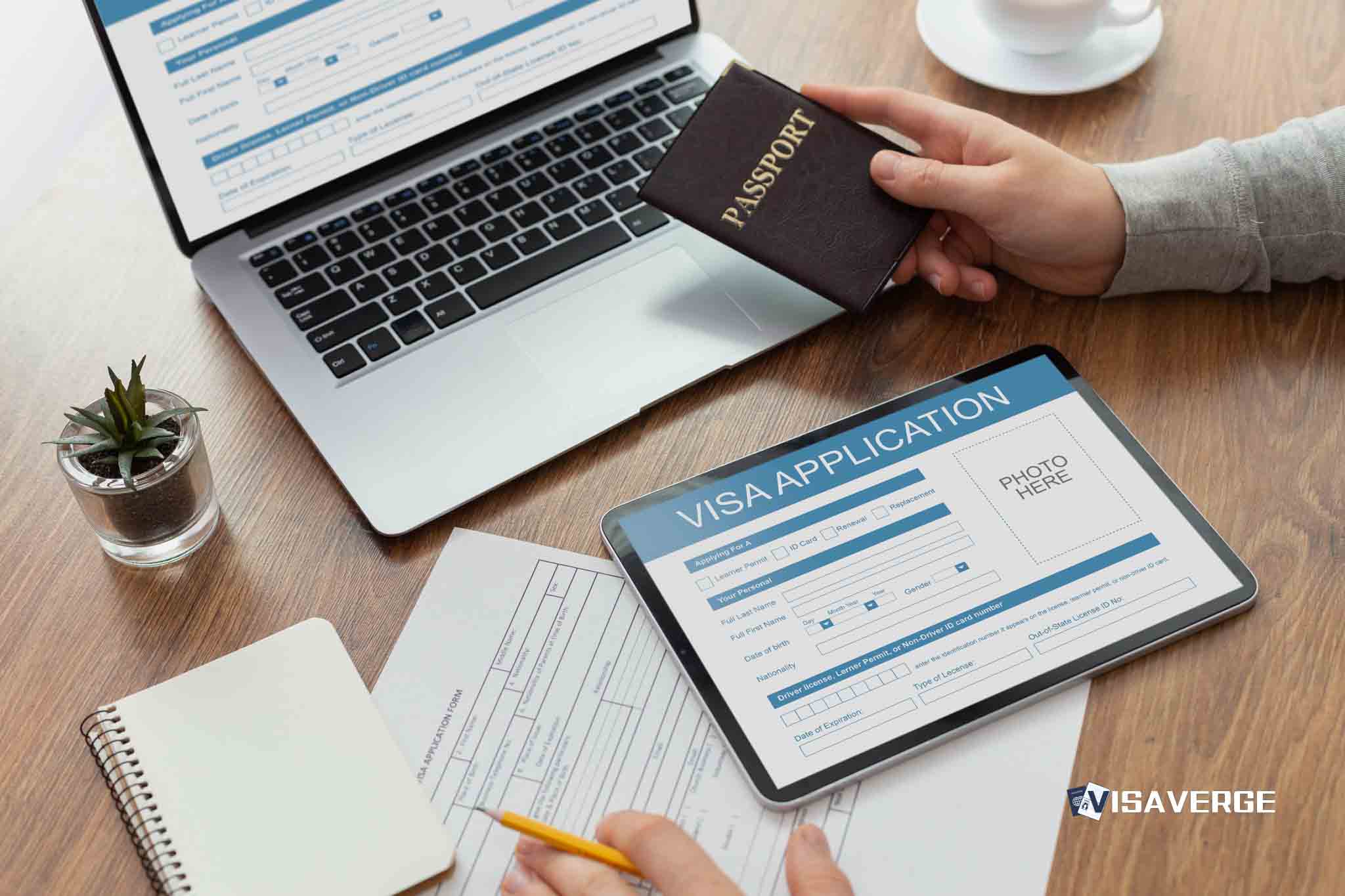
- The Philippines launched a Digital Nomad Visa offering up to one year of legal stay.
- The U.S. has suspended immigrant visas indefinitely for 75 countries, including Thailand and Cambodia.
- Regional travel remains accessible as Southeast Asia expands visa-free entry options for short-term visitors.
(UNITED STATES) — The Philippines’ new Digital Nomad Visa is the standout win for remote workers in Southeast Asia right now: up to one year of legal stay with a renewal option, a growing coworking scene in Manila and Cebu, and straightforward regional connectivity for side trips.
But January 2026 also brought a major curveball for nomads with long-term U.S. plans. The U.S. Department of State announced an indefinite suspension of immigrant visas for nationals of 75 countries, including Thailand, Cambodia, Myanmar (Burma), and Laos, effective Jan 21, 2026. That matters if your “Plan A” includes consular processing for a green card while you base yourself in Asia.
This guide breaks down what changed, who’s affected, and how to plan travel, visas, and taxes without getting stuck.
Philippines Digital Nomad Visa: the headline option for longer SEA stays
🌍 Visa Highlight: The Philippines Digital Nomad Visa is built for remote workers who want a longer base in Southeast Asia without constant border runs.
Unlike visa-free entry and short e-visas, a dedicated nomad visa usually gives you a cleaner story at immigration: you’re staying longer, you have funds, you have insurance, and you’re not “touristing” for months at a time.
Country profile (Philippines)
| Aspect | Details |
|---|---|
| Visa Name | Philippines Digital Nomad Visa |
| Duration | Up to 12 months (renewal pathway available) |
| Income Requirement | Varies by implementing rules; plan to evidence stable remote income (keep documents ready in PHP and USD equivalents) |
| Proof of Income | Typical: bank statements, employment/contractor agreement, client contracts, invoices, tax returns |
| Health Insurance | Common requirement for nomad visas; carry proof of coverage for the Philippines |
| Processing Time | Varies; expect several weeks once rules are fully operational |
| Application Fee | Varies by final implementing guidance |
| Tax Status | Not automatically tax-exempt; depends on days present and your facts |
| Path to Residency | Not designed as a direct PR route |
| Internet Speed | Strong in Manila/BGC and Cebu IT Park; uneven on smaller islands |
| Time Zone | UTC+8 |
| Cost of Living | Comfortable: $1,500–$2,800/month depending on city and housing |
📶 Internet Note: In the Philippines, your address matters. BGC (Metro Manila) and Cebu IT Park usually beat beach towns for stable video calls.
1) U.S. Immigrant Visa Suspension (Effective Jan 21, 2026)
The biggest policy shock this month is not a Southeast Asia visa rule. It’s the U.S. pause on immigrant visas—the visas that lead to permanent residency (a green card) through consular processing.
What the suspension is (and isn’t)
- It applies to immigrant visas. Think: family-sponsored and employment-based immigrant visas issued at U.S. embassies and consulates.
- It does not apply to nonimmigrant visas. Tourist (B1/B2), student (F-1), and other temporary categories are not included in the pause.
- Digital nomads feel it indirectly. Many nomads build long-term lives abroad while keeping U.S. immigration plans in motion for a spouse, parent, or employer sponsorship.
Who is impacted in Southeast Asia
The affected list includes 75 countries, with Southeast Asia specifically including:
- Thailand
- Cambodia
- Myanmar (Burma)
- Laos
If you are a national of one of these countries and you rely on consular processing for a green card, this can become a hard stop.
Practical implications for nomads and cross-border families
- Family-based green card routes that rely on embassy interviews can be delayed.
- Employment-based immigrant cases can be paused at the issuance stage, even if your employer did everything right.
- Pending cases are best thought of as “paused,” not automatically denied. The risk is timing and uncertainty, not a guaranteed permanent refusal.
- Expect more document pressure even on nonimmigrant travel. Border officers and consular staff have wide discretion. If immigrant pathways are tightening, temporary travel often gets more questions.
The stated rationale and what it means for your checklist
The State Department’s public messaging tied the pause to “public charge” concerns. Translation for travelers: be ready to prove you won’t become financially dependent.
For digital nomads, that typically means carrying:
- Recent bank statements showing a buffer
- Proof of remote income (contracts, pay slips, invoices)
- Proof of accommodation
- Proof of onward travel
- A clean explanation of what you do and where you’re paid
This is especially relevant if you’re moving around Southeast Asia and applying for U.S. visas while abroad.
2) Visa-free expansion within Southeast Asia (what it means for digital nomads)
Southeast Asia is moving in the opposite direction for short stays. Governments want visitors back, and many have widened visa-free entry or simplified e-visa processes.
The temptation is obvious: string together waivers and e-visas and call it a year in the tropics. It can work, but it’s also where nomads most often get flagged for “living on a tourist status.”
Regional trend: easier entry, but not always easier remote work
Tourism recovery policies usually target “visitors.” They often do not clearly authorize remote work, even if enforcement varies.
When you plan your route, evaluate:
- What activities are allowed on that status
- How extensions work in practice
- Whether repeated entries trigger questioning
- Local tax residency triggers if you stay long enough
Vietnam: streamlined access, still a short-stay mindset
Vietnam’s mix of visa-free entry for select passports and a modernized e-visa system makes it easy to add Vietnam to your loop. It’s great for a “one city, one month” sprint in Hanoi or Ho Chi Minh City.
But Vietnam can be strict about paper rules versus what travelers assume. Keep proof of onward travel, hotel booking for the first nights, and evidence of funds.
Thailand and Malaysia: waivers renewed for specific markets
Thailand and Malaysia renewed visa-waiver programs for Indian and Chinese travelers through the end of 2026. If you’re a China-based professional or you hold a Chinese passport, that’s a meaningful mobility boost for quick business trips.
It also shapes coworking hubs. When entry is easier, communities grow faster in places like Bangkok, Chiang Mai, Kuala Lumpur, and Penang.
⏰ Time Zone: Mainland Southeast Asia runs UTC+7. The Philippines and much of China run UTC+8. That single hour can decide your client-call sanity.
The Philippines’ Digital Nomad Visa stands out because it acknowledges a real pattern: people are not only visiting. They’re renting condos, joining coworking spaces, and staying put for quarters, not weeks.
When a dedicated visa exists, it often reduces friction:
- Fewer “why are you back again?” questions
- Easier leasing and banking conversations
- A cleaner paper trail for insurance and compliance
3) Key DHS and USCIS policy updates (January 2026) that can affect travel and status
Even if you never intend to live in the U.S., U.S. policy shifts can affect nomads who:
- Apply for U.S. visas abroad
- Transit frequently through the U.S.
- Have U.S. employers or clients
- Maintain pending immigration filings for family or work
January’s DHS posture signals more “operational” tightening. In practice, that can mean tougher screening, more requests for documents, and narrower discretion at interviews.
Religious Worker (R-1) rule change
DHS issued an interim final rule removing the one-year foreign residency requirement for R-1 religious workers. This helps qualifying organizations and workers move faster.
For travelers, the key point is unchanged: bring clean documentation. R-1 filings are document-heavy and still depend on credibility and consistent records.
TPS termination (Somalia)
DHS announced termination of Temporary Protected Status (TPS) for Somalia with an effective date in March 2026.
TPS is a humanitarian status that can include work authorization. Termination matters for work eligibility, driver’s licenses and banking continuity, and international travel planning and re-entry risks.
If TPS affects you or a family member, dates matter. Do not plan international trips on assumptions.
Visa bond program expansion: budgeting risk for some travelers
The U.S. expanded a visa bond requirement to more countries. A bond is a refundable deposit that can be required for certain visitor visa applicants.
For nomads, the practical impact is simple: it can add a large cash requirement to a U.S. trip, affect whether the U.S. is a realistic transit or client-meeting stop, and increase the value of keeping strong travel records and compliance history.
Where to track changes:
- The DHS newsroom
- USCIS policy and press pages
- travel.state.gov updates and embassy interview notes
📋 Pro Tip: Keep a “border folder” on your phone: employment letter or client contract, last 3 months of bank statements, insurance, accommodation, and onward ticket.
4) Impact and significance (what to watch next)
The immigrant visa pause could have real scale. Analysts at the Cato Institute estimate it may block roughly 315,000 legal immigrants over the next year. That affects families, employers, universities, and anyone waiting in a consular queue.
Diplomatic and compliance signals matter
Thailand’s government has pushed back publicly, citing an overstay rate of 2.91% (FY2024) and requesting clarification. That’s a reminder that overstays influence scrutiny, bilateral negotiations can change timelines, and “temporary” measures sometimes extend or unwind quickly.
Watchlist for nomads, families, and employers
The signals that change outcomes tend to be:
- New effective dates
- Embassy implementation notes (how officers are instructed to handle cases)
- USCIS policy manual updates
- Litigation that triggers injunctions or pauses
- Changes to public charge–style document expectations
Check official sources first: travel.state.gov, the USCIS newsroom, and the DHS newsroom. For visa processing, your specific U.S. embassy or consulate page matters too.
Application process: Philippines Digital Nomad Visa (step-by-step)
Implementing rules can evolve, but the process for nomad visas usually follows a familiar arc.
- Confirm eligibility and allowed activities. You must be working for a foreign employer or clients. Your income should be sourced outside the Philippines.
- Prepare proof of stable remote income. Bring both originals and PDFs: bank statements, contracts or employment letter, invoices and proof of payment, tax returns or official income summaries where available.
- Buy compliant health insurance. Carry a certificate showing coverage dates for your stay and emergency coverage in the Philippines.
- Submit application through the official channel. Follow the official Philippines immigration guidance and, if required, your nearest Philippine embassy or consulate.
- Plan your entry and first 30 days. Book initial accommodation, secure a reliable address for paperwork, and choose a coworking option for stable internet.
- Renewal planning. Start renewal prep early. Plan 60–90 days ahead because document gathering always takes longer abroad.
Cost of living in the Philippines (monthly)
| Expense | Budget | Comfortable | Premium |
|---|---|---|---|
| Rent (1BR) | $450 | $900 | $1,800 |
| Coworking | $60 | $150 | $300 |
| Food | $250 | $450 | $850 |
| Transport | $60 | $120 | $250 |
| Health Insurance | $60 | $120 | $250 |
| Entertainment | $100 | $250 | $600 |
| Total | $980 | $1,990 | $4,050 |
Costs vary hugely by city and lifestyle. Manila (especially BGC/Makati) is priced differently than Dumaguete or Siargao.
A practical pattern for many nomads: do “city months” in Manila or Cebu for productivity and “island weeks” for downtime, then return to strong internet.
Pros and cons (honest take)
Pros
- Longer legal stay than bouncing on short entries.
- Strong English usage and friendly social culture.
- Solid coworking growth in key districts.
- Great regional flight connectivity, including to hubs serving China.
Cons
- Internet can be inconsistent outside major hubs.
- Bureaucracy can be slow and document-driven.
- Hot, humid climate year-round in many areas.
- Taxes can get complicated if you stay long enough.
Taxes and compliance for digital nomads in Southeast Asia
⚠️ Tax Disclaimer: Tax obligations for digital nomads are complex and depend on your citizenship, tax residency, and the countries involved. This article provides general information only. Consult a qualified international tax professional before making decisions that affect your tax status.
⚠️ Tax Warning: Working remotely from another country creates complex tax obligations. A digital nomad visa does NOT automatically exempt you from taxes in your home country or host country. U.S. citizens are taxed on worldwide income regardless of where they live. Consult an international tax professional before relocating.
A few realities I’ve learned the hard way:
- Immigration status and tax status are separate systems. A visa is not a tax shield.
- The 183-day rule is a common trigger for tax residency, but it’s not universal.
- Repeated “visa-free entry” stays can create a record that looks like de facto residence.
If you’re staying in one place for most of the year, get professional advice before you cross residency thresholds.
Practical tips from the nomad community (Philippines + SEA)
- Pick your base around your calendar. If you have heavy calls, start in BGC, Makati, or Cebu IT Park.
- Keep an onward ticket, even if you plan to renew. It reduces friction on entry days.
- Use a two-SIM setup or pocket Wi‑Fi. One carrier always has a bad week.
- If you have U.S. immigration plans, separate your timelines. Southeast Asia mobility is improving, while U.S. immigrant processing is tightening.
Next steps (do these in the next 2–8 weeks)
- This week: Decide whether you need a long-stay solution or if visa-free entry is enough for your plan. If you expect 3+ months, lean toward a dedicated visa.
- Within 2 weeks: Prepare a “proof pack” PDF: passport scan, contracts, last 3 months bank statements, insurance certificate, and a simple one-page work summary.
- 30–60 days before moving: Track updates on the official Philippines immigration website and your local Philippine embassy/consulate page. Rules and document lists can change fast.
- If U.S. immigration is part of your life plan: Check travel.state.gov, the USCIS newsroom, and the DHS newsroom weekly through February. Pay attention to effective dates and implementation notes.
- Community intel: Join Manila and Cebu coworking groups and local expat forums for neighborhood-level advice on internet reliability, leasing, and which buildings actually have backup power.