- The U.S. is indefinitely pausing immigrant visas for 75 countries, including Thailand, starting January 21, 2026.
- The policy targets permanent residency to prevent new immigrants from becoming a public charge.
- Short-term travel like tourist and student visas remain unaffected despite the immigrant visa freeze.
Thailand’s Foreign Minister Sihasak Phuangketkeow sought clarification from the United States on Thursday after the U.S. Department of State announced an indefinite pause in the issuance of immigrant visas for nationals of 75 countries, including Thailand.
The State Department said on January 14, 2026 that the measure would take effect on January 21, 2026 and would apply only to immigrant visas, which are used for permanent residency, including family-sponsored and employment-based categories.
In a statement on X (formerly Twitter) on January 14, 2026, the State Department said: “The State Department will pause immigrant visa processing from 75 countries whose migrants take welfare from the American people at unacceptable rates. The freeze will remain active until the U.S. can ensure that new immigrants will not extract wealth from the American people.”
Tommy Pigott, a spokesperson, said on January 14, 2026: “The State Department will use its long-standing authority to deem ineligible potential immigrants who would become a public charge on the United States and exploit the generosity of the American people.”
The pause in the issuance of immigrant visas is framed as indefinite, with no guaranteed end date announced. That uncertainty matters for families and employers trying to plan travel and relocation around a fixed deadline.
How the pause is applied in Thailand
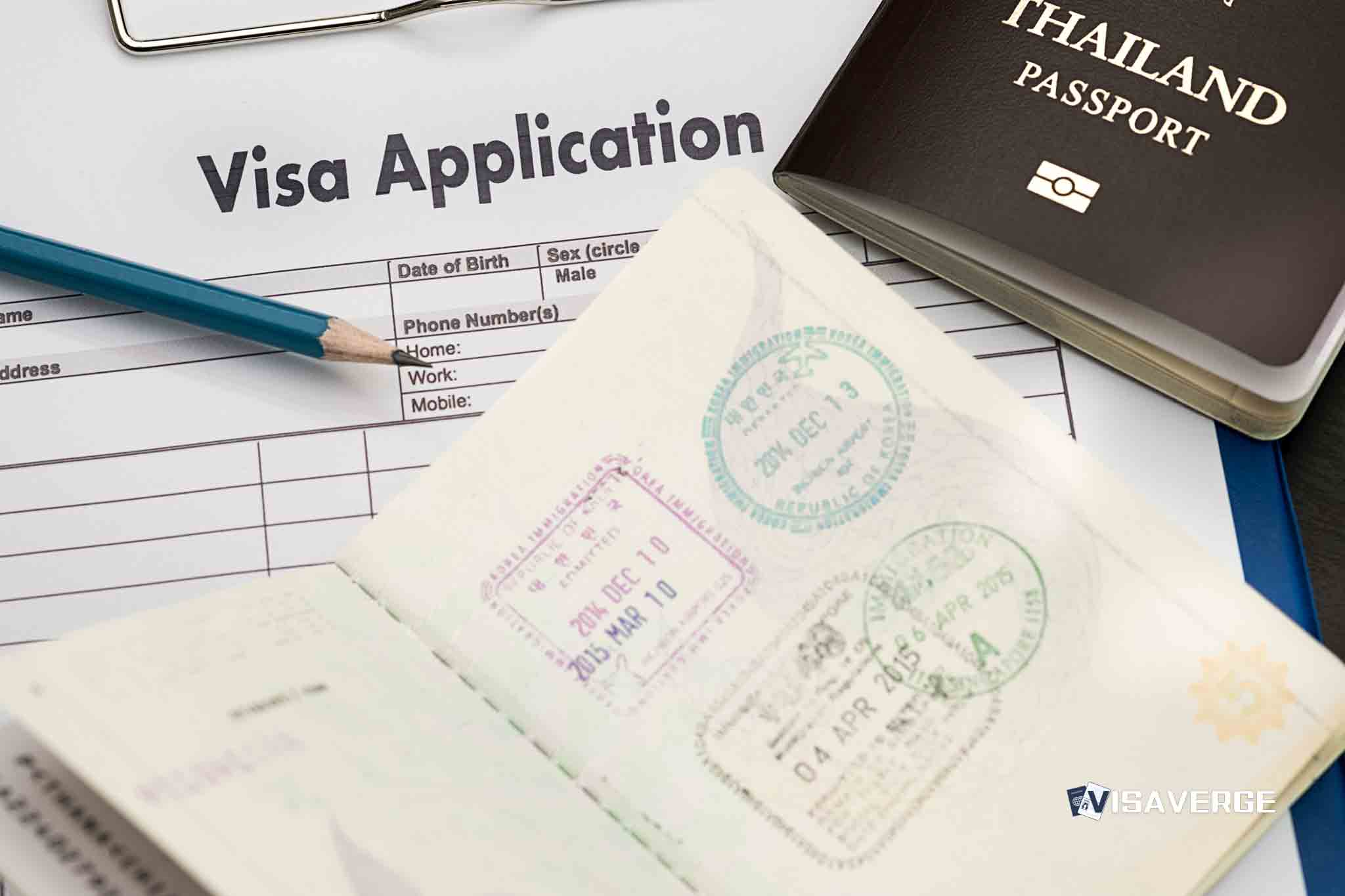
Consular work can still move forward in some respects, based on the State Department’s description of how the measure will be applied in Thailand. Applicants can still submit applications and attend scheduled interviews at the U.S. Embassy in Bangkok, but no immigrant visas will be issued until the review period ends.
The policy does not apply to non-immigrant visas for short-term travel, the State Department said. Tourist (B-2), business (B-1), or student (F, M, J) visas are unaffected by this specific 75-country pause, though such applicants face “heightened scrutiny” regarding their financial ties to Thailand.
For travelers, that distinction means the pause targets people seeking to move permanently, rather than people applying to visit, study, or take short trips. For intending immigrants, a case may continue through steps such as interviews, but the final visa issuance and stamping is frozen.
Nationality-based coverage and examples
Coverage hinges on nationality, rather than where a person currently lives, and Thailand is among the countries included in the 75-country list announced by the United States. That framing is especially important for families whose members hold different passports.
The State Department included examples of affected countries in its description of the measure, listing Thailand along with Brazil, Colombia, Egypt, Pakistan, Russia, Somalia, and Vietnam. The full list was described as covering 75 countries.
Thai government response and diplomatic outreach
The Thai government raised diplomatic concerns about how the policy was constructed. During a January 15, 2026 meeting with U.S. Chargé d’Affaires Elizabeth J. Konick, Sihasak sought a clearer explanation of the criteria behind grouping 75 diverse countries under a single action.
Thailand’s Foreign Ministry expressed concern that grouping 75 diverse countries without clear criteria could send a “negative signal” to long-standing allies, according to the account of the diplomatic inquiry.
Konick clarified that the measure is intended to reduce burdens on the U.S. welfare system and does not impact short-term travel, which remains vital as the U.S. prepares to host the 2026 FIFA World Cup, according to the same account.
Public Charge connection and regulatory context
The State Department tied the policy to a stricter approach to Public Charge, an immigration standard used to assess whether someone is likely to depend on government assistance. In practical terms, the State Department said it is focusing on welfare-system impacts while aiming to keep short-term travel channels open.
The State Department’s move sits alongside a broader regulatory effort. The Department of Homeland Security published a Notice of Proposed Rulemaking (NPRM) titled “Public Charge Ground of Inadmissibility” on November 19, 2025, under DHS Docket No. USCIS-2025-0304.
DHS said the NPRM seeks to rescind 2022 regulations and restore broader discretion for officers to deny visas to those deemed likely to depend on government assistance. Rulemaking is a separate track from immediate consular implementation, but the State Department described the visa issuance pause as part of a broader administrative effort.
Factors consular officers will consider
Under new guidance described in the policy details, consular officers are instructed to consider factors including age, health (including body mass index), English proficiency, and past use of government benefits when assessing Public Charge risk.
Applicants affected by the immigrant visa issuance pause may still find their cases moving through consular steps, while facing the possibility that a final decision cannot be implemented through visa issuance during the freeze.
Practical effects on applicants and families
Because the measure is described as a pause in issuance, not a halt to every step in the pipeline, applicants can still be asked to take actions that are time-sensitive. These include responding to document requests, attending interviews if scheduled, and following instructions tied to medical exams.
The State Department’s description for Thailand was that applicants can still submit applications and attend scheduled interviews in Bangkok, with issuance paused. In practice, petition approvals and case preparation may continue, but the final immigrant visa stamp does not arrive.
Families planning to relocate can face knock-on effects in work, school, leases, and travel arrangements when a departure date depends on visa issuance that no longer has a predictable timeline.
Over 5,000 immigrant visas were issued to Thai nationals in 2025, according to the policy impact summary, and those currently in the “pipeline” for Green Cards will face indefinite delays starting January 21.
Family reunification is among the most immediate pressure points. Thai citizens seeking to join family members in the U.S. will be unable to obtain their final visa stamp during this pause, even if earlier steps in the process have been completed.
The pause covers both family-sponsored and employment-based immigrant visas. That means delays can affect spouses and children waiting abroad, as well as employer-sponsored applicants who may have arranged start dates tied to their arrival.
Applicants may confront uncertainty in how consular posts handle cases after an interview when a visa cannot be issued. The State Department’s policy description for Thailand focuses on the bottom-line constraint—no immigrant visas will be issued—while still allowing submission and interviews.
Timeline and immediate scheduling implications
The Thai government’s outreach reflects how quickly the policy has moved on the calendar. The State Department announced the pause on January 14, 2026, Thailand sought clarification on January 15, 2026, and the effective date is January 21, 2026.
Those dates matter for people scheduled for interviews around the transition. An interview set before January 21 could still take place under the State Department’s description, but issuance would be governed by whether the pause is in effect when the case is ready to be finalized.
Non-immigrant travel and related concerns
The U.S. framing draws a line between immigrant and non-immigrant travel. By excluding B-1, B-2, and F, M, J visas from the 75-country pause, the State Department signaled that tourism, business visits, and student travel should continue.
At the same time, the State Department’s language on welfare use and Public Charge has raised questions among applicants about whether other categories could be affected indirectly. Separate explainers have examined questions such as whether workers on other visa tracks are swept in by the same approach, including in coverage of H-1B visa questions.
The 75-country move also follows earlier actions involving country-based limits discussed in other contexts, including a 39-country pause and reporting on how DHS implemented PM-602-0194.
Preparing for consular review during the pause
Public Charge is an assessment that can weigh multiple personal and financial factors rather than a single test. In the State Department’s presentation of the pause and the DHS NPRM, the central question is whether an applicant is viewed as likely to depend on government assistance.
Applicants seeking to reduce avoidable problems during consular review typically focus on clear documentation and consistency across forms and interviews. The guidance points to the importance of being prepared to address age and health factors, English proficiency, and any past use of government benefits, alongside broader financial ties and stability.
For people at different stages, the practical approach during an issuance freeze is largely procedural. Applicants who have not yet interviewed can keep collecting civil documents and following embassy instructions. Those with an interview scheduled can attend as directed. People who have already interviewed may need to monitor case status updates and respond promptly to any requests.
Communication channels matter because the pause is administered through consular processing. Applicants commonly rely on updates from the Consular Electronic Application Center and embassy communication, including email messages and document checklists, to understand next steps and whether any additional action is required while issuance is paused.
Monitoring formal announcements can also be relevant because the State Department described the measure as remaining active until the U.S. can ensure that new immigrants will not “extract wealth from the American people.” The department did not give an end date, making timing dependent on future updates.
Official resources and tracking
U.S. authorities have pointed to official channels where applicants can track developments. In Thailand, the U.S. Embassy’s visa page is available at U.S. Embassy in Thailand visa updates, and the State Department’s travel information is available at Travel.State.gov.
For the DHS NPRM, the Federal Register entry is available via Federal Register, and other related U.S. government actions referenced in the policy materials include White House presidential actions.
Core questions for applicants as the pause begins
Applicants and families trying to make decisions in real time are likely to focus on a few core questions as January 21 approaches: whether their nationality places them under the 75-country list, whether their case is an immigrant visa case rather than a non-immigrant travel application, and what steps they can still complete even if issuance is paused.
For Thai families separated across borders, the pause’s immediate consequence is straightforward: even with interviews and paperwork moving forward, the final immigrant visa stamp that allows travel for permanent residence will not be issued while the freeze remains in place.