Spanish
Official VisaVerge Logo Official VisaVerge Logo
Tuesday, Dec 16, 2025
  • Home
  • Airlines
  • H1B
  • Immigration
    • Knowledge
    • Questions
    • Documentation
  • News
  • Visa
    • Canada
    • F1Visa
    • Passport
    • Green Card
    • H1B
    • OPT
    • PERM
    • Travel
    • Travel Requirements
    • Visa Requirements
  • USCIS
  • Questions
    • Australia Immigration
    • Green Card
    • H1B
    • Immigration
    • Passport
    • PERM
    • UK Immigration
    • USCIS
    • Legal
    • India
    • NRI
  • Guides
    • Taxes
    • Legal
  • Tools
    • H-1B Maxout Calculator Online
    • REAL ID Requirements Checker tool
    • ROTH IRA Calculator Online
    • TSA Acceptable ID Checker Online Tool
    • H-1B Registration Checklist
    • Schengen Short-Stay Visa Calculator
    • H-1B Cost Calculator Online
    • USA Merit Based Points Calculator – Proposed
    • Canada Express Entry Points Calculator
    • New Zealand’s Skilled Migrant Points Calculator
    • Resources Hub
    • Visa Photo Requirements Checker Online
    • I-94 Expiration Calculator Online
    • CSPA Age-Out Calculator Online
    • OPT Timeline Calculator Online
    • B1/B2 Tourist Visa Stay Calculator online
  • Schengen
VisaVergeVisaVerge
Search
Follow US
  • Home
  • Airlines
  • H1B
  • Immigration
  • News
  • Visa
  • USCIS
  • Questions
  • Guides
  • Tools
  • Schengen
© 2025 VisaVerge Network. All Rights Reserved.
Interview Experiences

H-1B 221(g) Slips After Social Media Vetting: What It Means

Effective Dec. 15, 2025, U.S. consulates will routinely screen social media for all H‑1B and H‑4 applicants, leading to more 221(g) pauses. Applicants should verify public profiles match petition details, prepare supporting documents, inform employers and counsel promptly, and allow extra time for unpredictable administrative processing.

Last updated: December 16, 2025 3:51 pm
SHARE
📄Key takeawaysVisaVerge.com
  • U.S. consulates now use expanded social-media screening in H‑1B and H‑4 adjudications, raising 221(g) incidence.
  • The policy applies to all H‑1B/H‑4 applicants starting December 15, 2025, making online checks standard procedure.
  • Some posts have appointments pushed to March 2026 while they adjust workflows and process new reviews.

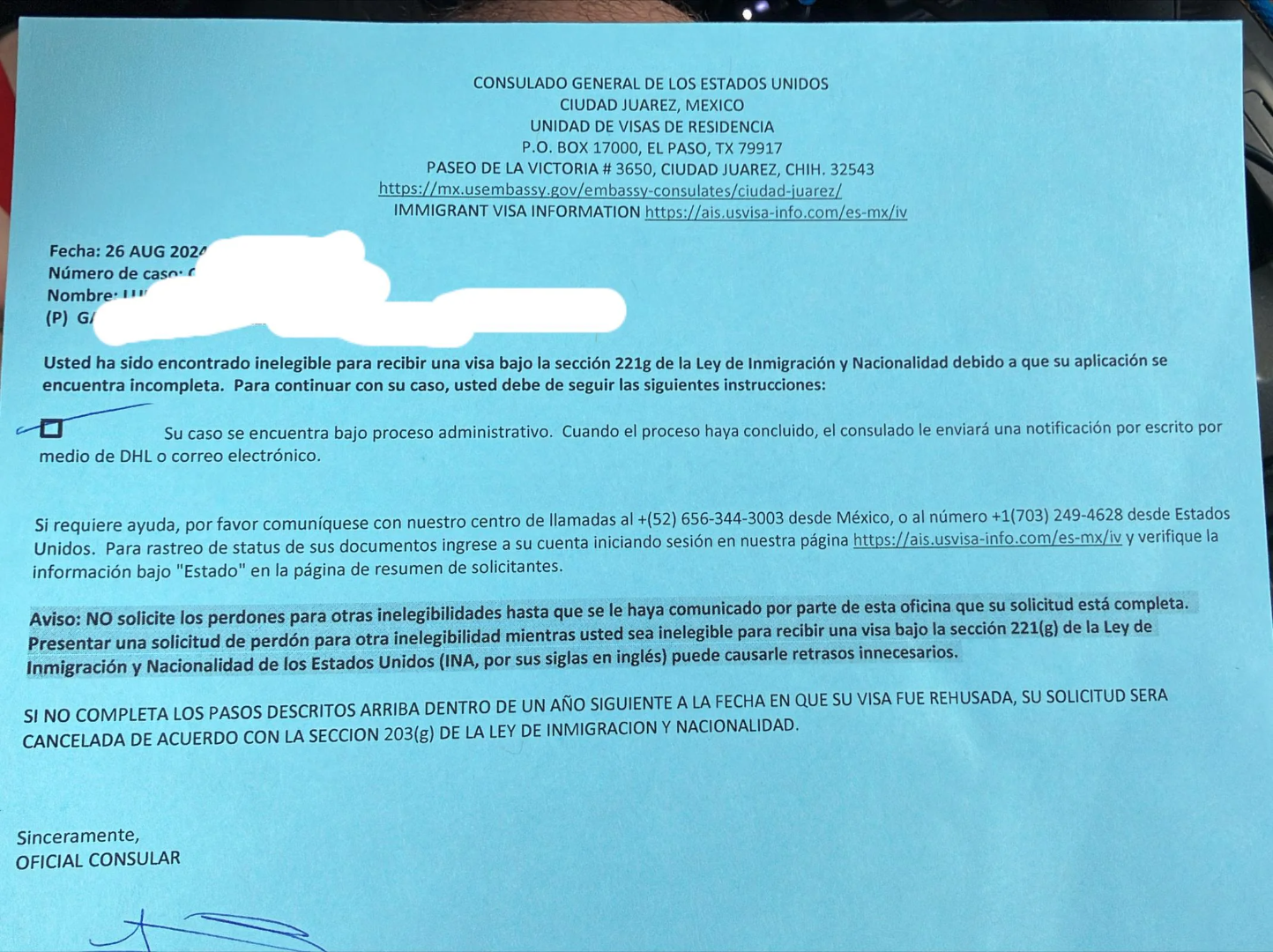
H‑1B and H‑4 visa applicants are seeing a sharp rise in 221(g) slips at interviews as the United States 🇺🇸 rolls out expanded social-media screening tied to a broader review of an applicant’s online presence. A 221(g) is a legal “pause,” not a final “no.” It means the consular officer can’t finish the decision at the window and is sending the case into extra review, often called administrative processing, while checks are completed or more information is reviewed.

This change is tied to a U.S. Department of State expansion that, effective December 15, 2025, makes online-presence review a standard step for all H‑1B specialty-occupation workers and their H‑4 dependents. Early reports show some posts issuing 221(g) widely while they work through the new workflow, with some applicants approved the same day and others waiting days, weeks, or longer.
H-1B 221(g) Slips After Social Media Vetting: What It Means

What the new screening means before you book travel

If you are planning visa stamping, build extra time into your trip. In some locations, applicants have reported appointments being rescheduled or deferred, and some posts have reportedly pushed availability out to March 2026 while they adjust.

Administrative processing is unpredictable. A 221(g) may clear quickly, or it may take longer if the post needs extra checks or document review. The U.S. government’s public description of administrative processing is available here: Administrative Processing (221(g)).

Step 1: Get ready for an interview where online presence is part of the file

Under the expanded process, applicants have been instructed to make certain social-media accounts public so officers can review them. That can feel invasive, but it’s being treated as part of standard adjudication for H‑1B/H‑4 in this rollout.

Before your appointment, do a simple consistency check between your petition materials and what is visible online. Confirm that public profiles match these petition elements:

  • Employer name, job title, and work dates
  • Education dates and degree names
  • General work history timeline (avoid unexplained gaps)
  • Any public posts or profiles that could be read as threats, violence, or other public-safety issues

Officers are reported to be looking for mismatches between the petition and what’s publicly visible, and for content that could trigger national-security or public-safety concerns.

Step 2: Attend the visa interview and know what a 221(g) slip usually signals

At the interview window, the officer may:

  • Approve the visa,
  • Refuse it, or
  • Issue a 221(g).

With the new social-media screening, many applicants are getting a 221(g) even when the core H‑1B petition appears fine.

A 221(g) under INA section 221(g) is temporary. It generally means one of two things:

  1. The officer wants more items (documents or clarifications), or
  2. The officer needs time for administrative processing, including online-presence review and other checks.

Some applicants report that the consulate keeps the passport while the case is pending. People often take that as a positive sign, but there is no uniform rule across posts, and it does not guarantee timing.

Step 3: Read the 221(g) sheet like a checklist, not a verdict

The most important practical step is to follow the instructions on the paper you receive. Some 221(g) sheets list specific documents to submit. Others simply state the case is under administrative processing with no document request.

If the sheet asks for documents, gather them right away and submit them exactly as the consulate directs. If the sheet does not ask for documents, your role is often to wait while staying reachable and ready in case the post asks later.

Keep a clear record of:

  • Date of the interview
  • Exact wording on the 221(g) notice
  • Any submission steps and deadlines listed
  • Whether your passport was kept or returned

Step 4: Make the requested social-media privacy change, then freeze major edits

Because posts have instructed applicants to set accounts to public for review, do that promptly if you were told to do so. After you switch settings, avoid major edits that can create new questions — for example, deleting large parts of a work history or rewriting job titles.

Immediate actions after a 221(g) (H‑1B / H‑4 social‑media screening)
Read the 221(g) sheet and follow its instructions
Treat the notice like a checklist — if it lists documents, submit exactly as the consulate directs; if not, stay reachable and wait.
Make requested social‑media changes and then freeze edits
Set accounts to public if instructed, then avoid major edits (don’t rewrite job history or delete large sections); if you must correct something, note what changed and why.
Prepare a document packet (ready even if not requested)
Have these ready for rapid submission: updated employment verification letter; recent pay stubs; employer contact details; educational credentials.
Record key details from the interview
Keep: date of interview; exact wording on the 221(g) notice; any submission steps and deadlines; whether your passport was kept or returned.
Inform your employer and immigration counsel immediately
Tell them right away so they can confirm role details, clarify wording mismatches, and be responsive if the consulate reaches out.

If something is truly incorrect, fix it carefully and keep a note of what changed and why. A good rule is: your public profiles should match the basics of the petition. You do not need to share private details, but you should not leave obvious contradictions in public view.

According to analysis by VisaVerge.com, the early wave of 221(g) issuance in H‑1B/H‑4 cases looks tied less to “missing papers” and more to posts slowing final decisions while they complete the new social-media screening step.

Step 5: Prepare a document packet even if the 221(g) does not ask for it

Even when the slip does not request documents, it helps to be ready. Collect proof that supports the H‑1B petition so you can respond quickly if the post asks.

A practical packet can include:

  • Updated employment verification letter (job title, duties, work location, salary basics)
  • Recent pay stubs, if available
  • Employer contact details for verification
  • Educational credentials that match the position requirements

If you are an H‑4 dependent, be ready with:

  • Proof of relationship, and
  • The principal applicant’s status details that tie back to the H‑1B case

(Consider storing these documents in an easy-to-access digital folder for rapid submission, per consulate instructions.)

Step 6: Set expectations for timing (and plan work and family life around it)

The hardest part of 221(g) is the open-ended timing. Reports show a wide range: some cases flip to “approved” the same day, while others remain pending for days or weeks — and advisories warn it can run longer.

Plan for real-life impacts:

  • You may need to extend lodging or change return flights
  • Your employer may need to shift start dates or project assignments
  • Families may face school or childcare disruptions if travel drags on

If your employer expects you back by a fixed date, tell them early that a 221(g) is possible under the new online-presence review. That allows more realistic scheduling.

Step 7: Communicate with your employer and immigration counsel right away

Once a 221(g) is issued, immediately inform your employer and your immigration lawyer (if you have one). Practitioner alerts stress building extra lead time and being ready to answer follow-up requests.

How your employer and counsel can help:

  • Confirm role details and be responsive if the consulate reaches out
  • Explain wording mismatches (job-title phrasing is a common issue)
  • Advise on how to present clarifications if asked

Step 8: Watch for follow-up, but don’t assume silence means refusal

Many 221(g) cases move without the applicant doing anything beyond waiting. Others move only after an extra document is sent. If the case stays unresolved for an extended period, consult an experienced immigration attorney about options and realistic next steps.

Some checks may involve interagency review that only the government can complete; in those cases, applicant action is limited.

Key takeaway: A 221(g) is a pause. With expanded social-media screening it is becoming a more common pause. Staying consistent, responsive, and patient gives you the best chance to get through the new process with fewer surprises.

If you’d like, I can:
– Help you prepare a checklist or template for the document packet, or
– Draft short notes you can give your employer or counsel explaining likely questions the consulate may ask.

❓ Frequently Asked Questions
Q1

What does receiving a 221(g) mean for my H‑1B or H‑4 visa application?
A 221(g) is a temporary administrative pause, not a denial. It means the consular officer needs more time or documents to complete review, often for online-presence checks. Follow any instructions on the 221(g) sheet, submit requested materials exactly as directed, notify your employer and attorney, and wait while the post completes processing. Timing varies widely—from same-day resolutions to several weeks or longer.
Q2

Should I make my social‑media accounts public before my visa interview?
If the consulate instructs you to make accounts public, do so promptly. The expanded process requires officers to review public profiles. Before the interview, ensure public information matches your petition—employer name, job title, education, and dates. Do not make major edits or deletions after making an account public unless correcting clear errors; if you do, document what changed and why.
Q3

What documents should I prepare in case a 221(g) requests additional evidence?
Prepare a packet including an updated employment verification letter (title, duties, work location), recent pay stubs, employer contact details, and matching educational credentials. H‑4 dependents should have proof of relationship and the principal’s H‑1B status details. Store these digitally and physically for quick submission per consulate instructions.
Q4

How should I handle travel and employer commitments given the new screening and possible delays?
Build extra time into travel plans and start dates. Inform your employer ASAP that 221(g) pauses are more common with the new screening, so they can plan staffing and start dates. Be prepared to extend lodging or change flights if processing is delayed. Maintain open communication with your employer and counsel so they can respond quickly to any consulate requests.

📖Learn today
221(g)
A consular notice that pauses a visa decision for further review or document requests; not a final refusal.
Administrative processing
Extra review steps after a 221(g) that can include checks on online presence and interagency verification.
H‑4 dependent
A family member (spouse or child) of an H‑1B visa holder seeking a derivative visa.
Online-presence review
Consular officers’ review of public social-media and internet content to verify application consistency and safety concerns.

📝This Article in a Nutshell

Starting December 15, 2025, the State Department requires online-presence screening for all H‑1B workers and H‑4 dependents. Consulates report higher rates of 221(g) administrative processing as officers review public social-media and other online content for consistency with petitions and safety concerns. Applicants should make public accounts available when instructed, confirm profiles match petition details, prepare a document packet, inform employers and counsel immediately, and build extra time into travel plans due to unpredictable processing durations.


Share This Article
Facebook Pinterest Whatsapp Whatsapp Reddit Email Copy Link Print
What do you think?
Happy0
Sad0
Angry0
Embarrass0
Surprise0
Oliver Mercer
ByOliver Mercer
Chief Editor
Follow:
As the Chief Editor at VisaVerge.com, Oliver Mercer is instrumental in steering the website's focus on immigration, visa, and travel news. His role encompasses curating and editing content, guiding a team of writers, and ensuring factual accuracy and relevance in every article. Under Oliver's leadership, VisaVerge.com has become a go-to source for clear, comprehensive, and up-to-date information, helping readers navigate the complexities of global immigration and travel with confidence and ease.
Subscribe
Login
Notify of
guest

guest

0 Comments
Inline Feedbacks
View all comments
January 2026 Visa Bulletin Predictions, Analysis and Understanding
USCIS

January 2026 Visa Bulletin Predictions, Analysis and Understanding

India 2026 official Holidays Complete List
Guides

India 2026 official Holidays Complete List

IRS 2025 vs 2024 Tax Brackets: Detailed Comparison and Changes
News

IRS 2025 vs 2024 Tax Brackets: Detailed Comparison and Changes

Ohio State Income Tax Rates and Brackets for 2025 Explained
Taxes

Ohio State Income Tax Rates and Brackets for 2025 Explained

Exclusive Citizenship Act of 2025 Explained: What It Means Now
Citizenship

Exclusive Citizenship Act of 2025 Explained: What It Means Now

United Arab Emirates Official Public Holidays List 2026
Guides

United Arab Emirates Official Public Holidays List 2026

2026 USA Federal Holidays List Complete Guide
Guides

2026 USA Federal Holidays List Complete Guide

Canada Statutory Holidays 2026 Complete List
Canada

Canada Statutory Holidays 2026 Complete List

You Might Also Like

US Imposes Visa Sanctions on Palestinian Authority and PLO Officials
Immigration

US Imposes Visa Sanctions on Palestinian Authority and PLO Officials

By Oliver Mercer
Can a Criminal Record from Your Country Affect Your Family Visa Eligibility?
Family Visas

Can a Criminal Record from Your Country Affect Your Family Visa Eligibility?

By Shashank Singh
August 2025 Visa Bulletin Predictions: Family and Employment Category Forecasts
Visa

August 2025 Visa Bulletin Predictions: Family and Employment Category Forecasts

By Robert Pyne
Project Firewall Intensifies H-1B Oversight: What Employers Should Know
Documentation

Project Firewall Intensifies H-1B Oversight: What Employers Should Know

By Sai Sankar
Show More
Official VisaVerge Logo Official VisaVerge Logo
Facebook Twitter Youtube Rss Instagram Android

About US


At VisaVerge, we understand that the journey of immigration and travel is more than just a process; it’s a deeply personal experience that shapes futures and fulfills dreams. Our mission is to demystify the intricacies of immigration laws, visa procedures, and travel information, making them accessible and understandable for everyone.

Trending
  • Canada
  • F1Visa
  • Guides
  • Legal
  • NRI
  • Questions
  • Situations
  • USCIS
Useful Links
  • History
  • USA 2026 Federal Holidays
  • UK Bank Holidays 2026
  • LinkInBio
  • My Saves
  • Resources Hub
  • Contact USCIS
web-app-manifest-512x512 web-app-manifest-512x512

2025 © VisaVerge. All Rights Reserved.

2025 All Rights Reserved by Marne Media LLP
  • About US
  • Community Guidelines
  • Contact US
  • Cookie Policy
  • Disclaimer
  • Ethics Statement
  • Privacy Policy
  • Terms and Conditions
wpDiscuz
Welcome Back!

Sign in to your account

Username or Email Address
Password

Lost your password?