Spanish
Official VisaVerge Logo Official VisaVerge Logo
  • Home
  • Airlines
  • H1B
  • Immigration
    • Knowledge
    • Questions
    • Documentation
  • News
  • Visa
    • Canada
    • F1Visa
    • Passport
    • Green Card
    • H1B
    • OPT
    • PERM
    • Travel
    • Travel Requirements
    • Visa Requirements
  • USCIS
  • Questions
    • Australia Immigration
    • Green Card
    • H1B
    • Immigration
    • Passport
    • PERM
    • UK Immigration
    • USCIS
    • Legal
    • India
    • NRI
  • Guides
    • Taxes
    • Legal
  • Tools
    • H-1B Maxout Calculator Online
    • REAL ID Requirements Checker tool
    • ROTH IRA Calculator Online
    • TSA Acceptable ID Checker Online Tool
    • H-1B Registration Checklist
    • Schengen Short-Stay Visa Calculator
    • H-1B Cost Calculator Online
    • USA Merit Based Points Calculator – Proposed
    • Canada Express Entry Points Calculator
    • New Zealand’s Skilled Migrant Points Calculator
    • Resources Hub
    • Visa Photo Requirements Checker Online
    • I-94 Expiration Calculator Online
    • CSPA Age-Out Calculator Online
    • OPT Timeline Calculator Online
    • B1/B2 Tourist Visa Stay Calculator online
  • Schengen
VisaVergeVisaVerge
Search
Follow US
  • Home
  • Airlines
  • H1B
  • Immigration
  • News
  • Visa
  • USCIS
  • Questions
  • Guides
  • Tools
  • Schengen
© 2025 VisaVerge Network. All Rights Reserved.
Questions

Converting from H-4 to H-1B Visa: Process & Requirements for Employment in U.S.

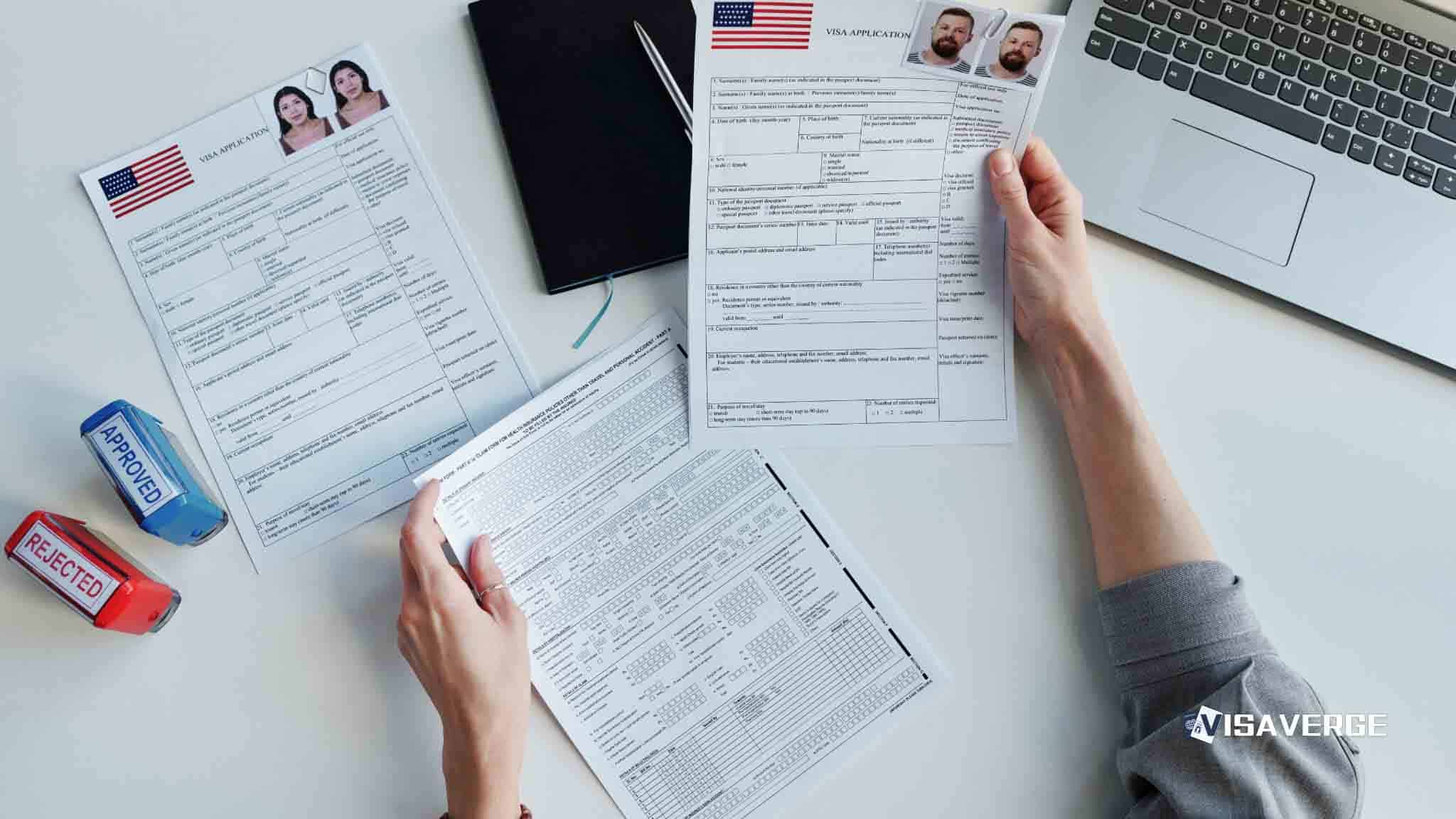
Converting from an H-4 to an H-1B visa in the U.S. requires finding employment and going through the visa application process. To do this, you'll need an employer willing to sponsor your H-1B visa and help with the application. Prepare the necessary documents, such as your job offer letter and educational qualifications, and consult with an immigration attorney for guidance.

Last updated: July 18, 2025 7:43 pm
SHARE
VisaVerge.com
Key takeaways

Transitioning from H-4 to H-1B visa status requires finding an employer sponsor and going through the petition process.
The H-1B visa allows for more professional opportunities and potential green card applications compared to the H-4 visa.
It’s important to understand the annual cap, potential for rejection, and job stability considerations when transitioning visas.

Transitioning From H-4 to H-1B Visa Status

Are you currently on an H-4 visa in the U.S. and have landed a job? You might be pondering how to switch to an H-1B work visa. This change can open up new professional opportunities, and it’s essential to understand the process. Let’s dive into the steps you need to take to make this transition successfully.

Understanding H-4 and H-1B Visas

Before we discuss the transition process, it’s important to understand what these visas are. The H-4 visa is a non-immigrant visa issued to immediate family members (spouse and children under 21) of H-1B visa holders.

On the other hand, the H-1B visa is for individuals employed in specialty occupations that require theoretical or technical expertise. It allows you to work in the U.S. legally and has more freedoms compared to the H-4 visa, including the possibility for visa holders to apply for a green card.

Step 1: Find an H-1B Sponsor

The first step in converting your status is to find an employer willing to sponsor your H-1B visa. Your employer must file an I-129 petition with the United States Citizenship and Immigration Services (USCIS). Remember, not all employers are willing to undergo this process, so it’s crucial to discuss it before you accept a job offer.

Converting from H-4 to H-1B Visa: Process & Requirements for Employment in U.S.

Step 2: Employer Submits Labor Condition Application

Your employer also needs to submit a Labor Condition Application (LCA) to the Department of Labor, confirming that they will pay you at least the prevailing wage for your job position and location.

Step 3: Cap-Subject or Cap-Exempt

Determine if your H-1B petition is subject to the annual cap. Most H-1B visas are cap-subject with a limit on how many can be issued each fiscal year. However, some organizations like universities and non-profit research institutions offer cap-exempt H-1B visas that aren’t subject to this annual limit.

Step 4: USCIS Petition and Lottery

If you’re subject to the annual cap, your employer must submit the H-1B petition in a timely manner, typically in April for the next fiscal year starting October 1. USCIS receives more applications than the cap allows, so they use a lottery system to select which petitions will be processed. If your application is cap-exempt, your employer can submit the petition at any time.

Step 5: Await Approval and Change of Status

After your employer submits the I-129 petition, you’ll need to wait for USCIS to process and approve it. This can take several months unless your employer opts for premium processing, which expedites the review period. If approved, USCIS will change your visa status from H-4 to H-1B.

Key Considerations During the Process

  • Ensure Timeliness: Delays in application submission can miss the filing window or delay your employment start date.
  • Status Maintenance: Keep your H-4 status valid throughout the H-1B application process.
  • Potential for Rejection: Be prepared for the possibility of the petition not being selected in the lottery.
  • Employment Stability: The H-1B is employer-specific, so job changes require a new H-1B petition.

Conclusion

Switching from an H-4 to an H-1B visa requires thorough preparation and a bit of patience. It’s a multi-step process that demands timely actions from both you and your employer. Keep in close communication with your employer and possibly seek legal advice to ensure you adhere to all the requirements and deadlines.

For more detailed information on the H-1B visa process and latest updates, visit the official USCIS H-1B page and consult with an immigration attorney or a reputable immigration services provider. Your dream job in the U.S. might just be a successful visa conversion away!

So there you have it—converting from an H-4 to an H-1B visa is like unlocking a new level in your professional journey. It takes a bit of effort and a sprinkle of luck, but the rewards are worth it. Remember, for all the nitty-gritty details and up-to-date info, check out visaverge.com. Good luck on your visa adventure!

FAQ’s to know:

FAQ 1: What is the difference between an H-4 visa and an H-1B visa?

The H-4 visa is a non-immigrant visa issued to immediate family members of H-1B visa holders, while the H-1B visa is for individuals employed in specialty occupations that require theoretical or technical expertise. The H-4 visa provides dependent family members with limited freedoms, whereas the H-1B visa allows the visa holder to work legally in the U.S. and offers more opportunities, including the possibility to apply for a green card.

FAQ 2: How can I transition from an H-4 visa to an H-1B visa?

To transition from an H-4 visa to an H-1B visa, you need to follow a few steps. First, find an employer who is willing to sponsor your H-1B visa and have them file an I-129 petition with the USCIS. Next, the employer must submit a Labor Condition Application (LCA) to the Department of Labor. Determine if your H-1B petition is subject to the annual cap or if it is cap-exempt. If subject to the annual cap, your employer must submit the H-1B petition in a timely manner and be selected through a lottery system. Finally, if your petition is approved, USCIS will change your visa status from H-4 to H-1B.

FAQ 3: What should I consider when transitioning from an H-4 to an H-1B visa?

When transitioning from an H-4 to an H-1B visa, there are several key considerations. First, ensure timeliness in the application process to avoid missing filing windows or delaying your employment start date. Additionally, maintain a valid H-4 status throughout the H-1B application process. Be prepared for the possibility that your H-1B petition may not be selected in the lottery. Lastly, remember that the H-1B visa is employer-specific, so if you change jobs, a new H-1B petition will be required.

What did you learn? Answer below to know:

  1. What is the purpose of an H-4 visa in the U.S.? a) It is issued to immediate family members of H-1B visa holders b) It allows individuals to work in specialty occupations c) It grants permanent residency status d) It provides access to green card applications
  1. What is the first step in transitioning from H-4 to H-1B visa status? a) Submitting a Labor Condition Application (LCA) b) Finding an employer willing to sponsor the H-1B visa c) Changing the visa status with the U.S. Department of Labor d) Filing an I-129 petition with the USCIS
  1. What is a key consideration during the H-1B visa process? a) Maintaining a valid H-1B visa throughout the application process b) Job changes requiring a new H-1B petition c) Applying for the H-1B visa in April for the next fiscal year d) Seeking legal advice only if the petition is rejected in the lottery

Share This Article
Facebook Pinterest Whatsapp Whatsapp Reddit Email Copy Link Print
What do you think?
Happy0
Sad0
Angry0
Embarrass0
Surprise0
Visa Verge
ByVisa Verge
Senior Editor
Follow:
VisaVerge.com is a premier online destination dedicated to providing the latest and most comprehensive news on immigration, visas, and global travel. Our platform is designed for individuals navigating the complexities of international travel and immigration processes. With a team of experienced journalists and industry experts, we deliver in-depth reporting, breaking news, and informative guides. Whether it's updates on visa policies, insights into travel trends, or tips for successful immigration, VisaVerge.com is committed to offering reliable, timely, and accurate information to our global audience. Our mission is to empower readers with knowledge, making international travel and relocation smoother and more accessible.
Subscribe
Login
Notify of
guest

guest

0 Comments
Inline Feedbacks
View all comments
H-1B Workforce Analysis Widget | VisaVerge
Data Analysis
U.S. Workforce Breakdown
0.44%
of U.S. jobs are H-1B

They're Taking Our Jobs?

Federal data reveals H-1B workers hold less than half a percent of American jobs. See the full breakdown.

164M Jobs 730K H-1B 91% Citizens
Read Analysis
H-1B Wage Reform: Weighted Selection Rules End Entry-Level Lottery
H1B

H-1B Wage Reform: Weighted Selection Rules End Entry-Level Lottery

2026 Child Tax Credit Rules: Eligibility, Amounts, and Claims
Taxes

2026 Child Tax Credit Rules: Eligibility, Amounts, and Claims

2026 HSA Contribution Limits: Self-Only ,400, Family ,750
Taxes

2026 HSA Contribution Limits: Self-Only $4,400, Family $8,750

ICE Leads Minnesota’s ‘Largest Immigration Operation Ever’ in Minneapolis
Immigration

ICE Leads Minnesota’s ‘Largest Immigration Operation Ever’ in Minneapolis

Canada Expands Visa-Free Entry to 13 Countries with eTA Policy
Canada

Canada Expands Visa-Free Entry to 13 Countries with eTA Policy

New Jersey 2025 State Income Tax: Rates, Thresholds, and Immigration
Taxes

New Jersey 2025 State Income Tax: Rates, Thresholds, and Immigration

California 2026 Income Tax Rates and Bracket Structure Explained
Taxes

California 2026 Income Tax Rates and Bracket Structure Explained

US Citizens Transiting Heathrow Airside Still Do Not Need an ETA
Travel

US Citizens Transiting Heathrow Airside Still Do Not Need an ETA

Year-End Financial Planning Widgets | VisaVerge
Tax Strategy Tool
Backdoor Roth IRA Calculator

High Earner? Use the Backdoor Strategy

Income too high for direct Roth contributions? Calculate your backdoor Roth IRA conversion and maximize tax-free retirement growth.

Contribute before Dec 31 for 2025 tax year
Calculate Now
Retirement Planning
Roth IRA Calculator

Plan Your Tax-Free Retirement

See how your Roth IRA contributions can grow tax-free over time and estimate your retirement savings.

  • 2025 contribution limits: $7,000 ($8,000 if 50+)
  • Tax-free qualified withdrawals
  • No required minimum distributions
Estimate Growth
For Immigrants & Expats
Global 401(k) Calculator

Compare US & International Retirement Systems

Working in the US on a visa? Compare your 401(k) savings with retirement systems in your home country.

India UK Canada Australia Germany +More
Compare Systems

You Might Also Like

Is My EAD Valid With Pending Asylum? Five-Year Validity & Renewals
Documentation

Is My EAD Valid With Pending Asylum? Five-Year Validity & Renewals

By Visa Verge
New York REAL ID for Visa Holders: Documents, Costs, and Steps
Documentation

New York REAL ID for Visa Holders: Documents, Costs, and Steps

By Oliver Mercer
Why Is Biometric Residence Permit on My UK Visa?
Questions

Why Is Biometric Residence Permit on My UK Visa?

By Oliver Mercer
The Easiest and Hardest European Countries for Citizenship: Revealed
Visa

The Easiest and Hardest European Countries for Citizenship: Revealed

By Visa Verge
Show More
Official VisaVerge Logo Official VisaVerge Logo
Facebook Twitter Youtube Rss Instagram Android

About US


At VisaVerge, we understand that the journey of immigration and travel is more than just a process; it’s a deeply personal experience that shapes futures and fulfills dreams. Our mission is to demystify the intricacies of immigration laws, visa procedures, and travel information, making them accessible and understandable for everyone.

Trending
  • Canada
  • F1Visa
  • Guides
  • Legal
  • NRI
  • Questions
  • Situations
  • USCIS
Useful Links
  • History
  • USA 2026 Federal Holidays
  • UK Bank Holidays 2026
  • LinkInBio
  • My Saves
  • Resources Hub
  • Contact USCIS
web-app-manifest-512x512 web-app-manifest-512x512

2026 © VisaVerge. All Rights Reserved.

2026 All Rights Reserved by Marne Media LLP
  • About US
  • Community Guidelines
  • Contact US
  • Cookie Policy
  • Disclaimer
  • Ethics Statement
  • Privacy Policy
  • Terms and Conditions
wpDiscuz
Welcome Back!

Sign in to your account

Username or Email Address
Password

Lost your password?