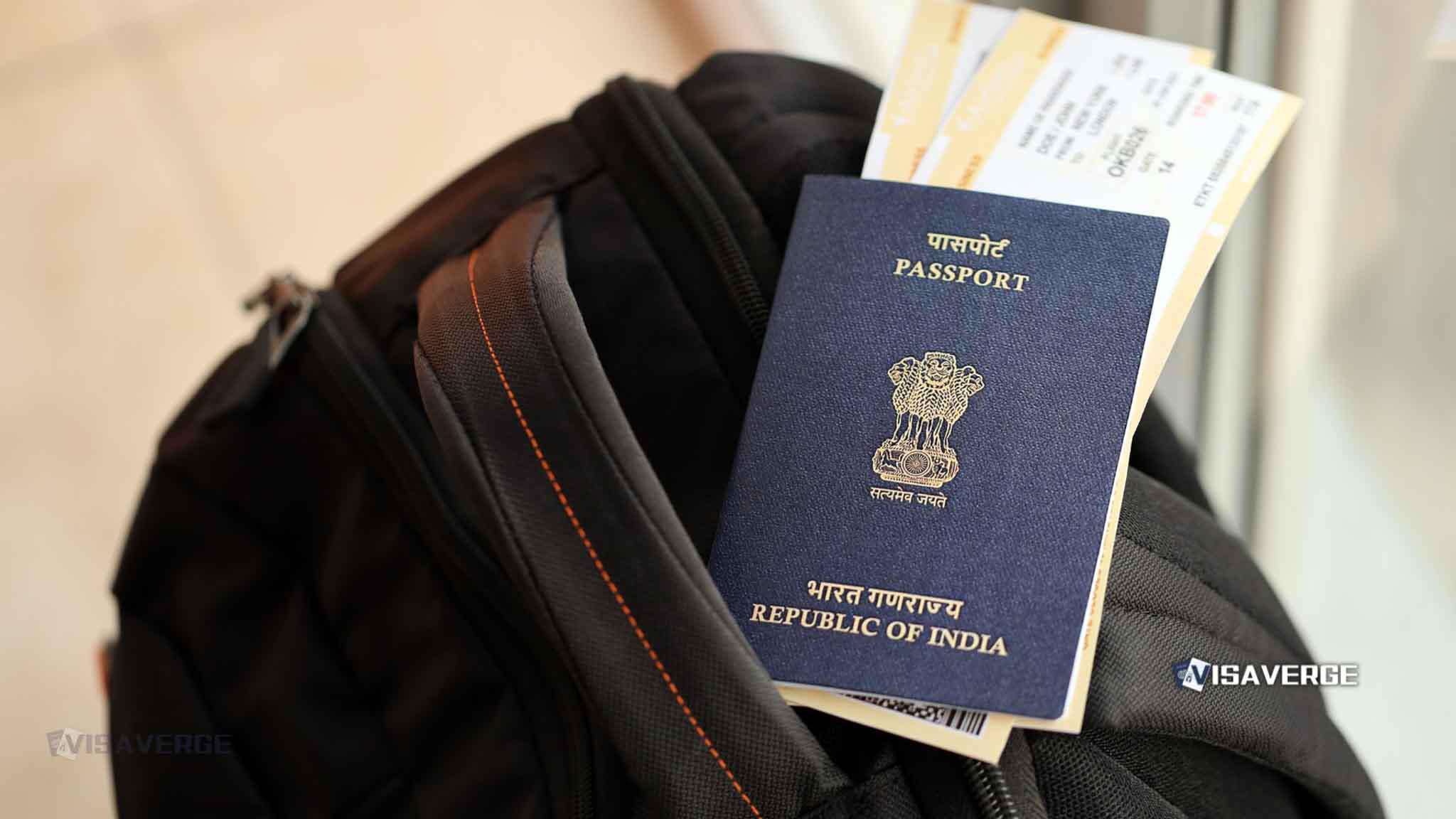
- Brazil and India have implemented a reciprocal 10-year visa agreement starting February 5, 2026.
- The new rules apply to tourism and business categories for ordinary passport holders from both nations.
- Travelers benefit from multiple-entry privileges with stays of up to 90 or 180 days per visit.
(NEW DELHI, INDIA) — Brazil and India implemented a reciprocal visa agreement on February 5, 2026, extending the maximum validity of visitor visas from five to 10 years for eligible travelers from both countries.
The change applies to tourism and business visa categories for ordinary passport holders, offering multiple-entry travel under a framework both governments described as a way to make long-term travel easier and reduce repeat applications.
India’s foreign ministry confirmed the arrangement on February 5, 2026, with a spokesperson calling it a step toward closer ties. “This 10-year visa arrangement represents a strategic commitment to deepening our economic and cultural ties. It eliminates the recurring hassle of visa renewals and supports long-term business planning and collaboration.” — Spokesperson, Ministry of External Affairs.
Brazil’s Ministry of Foreign Affairs, known as Itamaraty, confirmed the exchange of Verbal Note No. 164 on January 17, 2026, which formally brought the agreement into force.
Itamaraty officials said the measure aims to “reduce the administrative burden” for frequent travelers and the over 80 Brazilian firms currently operating in India.
The operational date for the updated rules is February 5, 2026, and consular fees remain unchanged, with standard processing fees continuing to apply.
Under the new terms, travelers receive a visa validity of 10 years, up from 5 years, and the visa allows multiple entries.
Tourism stays allow up to 90 days per visit, while business stays allow up to 180 days per visit. Both categories also carry an annual cumulative limit of 180 days per rolling 12-month period.
The agreement took shape during a state visit by Brazilian President Luiz Inácio Lula da Silva to New Delhi, and both sides framed it as a move to facilitate long-term travel, boost “South-South” economic cooperation, and align bilateral policies with international standards.
Bilateral trade between the two nations reached a record $17 billion in 2025, and the longer validity aims to support frequent travel linked to commercial ties.
Officials and policy watchers have pointed to the reduction of bureaucratic hurdles as a central aim, with travelers previously needing to renew on a shorter cycle. The new duration also aligns with standard 10-year passport renewal cycles referenced by mobility managers.
The travel industry anticipates the visa change will help generate demand data tied to a non-stop flight route between São Paulo (GRU) and Mumbai (BOM), a project under discussion for several years.
For individuals who travel often, the longer term can lower repeat paperwork and costs over time. Frequent flyers will see a 40% reduction in average re-application costs over a decade, the material accompanying the policy change said.
Existing visas do not change immediately. Current 5-year visas remain valid until their expiration date, and travelers are not required to upgrade right away, but will receive the 10-year validity upon their next renewal.
Authorities also emphasized enforcement boundaries. The 10 years of validity does not grant residency, and travelers must still comply with stay limits for each visit and over the rolling 12-month period.
Overstaying the 90/180-day limits results in fines of approximately BRL 100 per day in Brazil and potential entry bans, according to the information released alongside the agreement.
Because this is a bilateral deal between Brazil and India, U.S. agencies USCIS and DHS did not issue official statements on the arrangement, the material said. Analysts frequently cite the change as aligning the Brazil-India regime with the 10-year visitor visa standards already used by the U.S. State Department for these nationalities.
Travelers seeking official information can refer to the India Ministry of External Affairs at mea.gov.in and Brazil’s Ministry of Foreign Affairs at gov.br/mre.
Additional government points of contact include the Embassy of India in Brasília at eoibrasilia.gov.in and the Consulate General of Brazil in Mumbai at Consulate General of Brazil in Mumbai.