Official VisaVerge Logo Official VisaVerge Logo
  • Home
  • Airlines
  • H1B
  • Immigration
    • Knowledge
    • Questions
    • Documentation
  • News
  • Visa
    • Canada
    • F1Visa
    • Passport
    • Green Card
    • H1B
    • OPT
    • PERM
    • Travel
    • Travel Requirements
    • Visa Requirements
  • USCIS
  • Questions
    • Australia Immigration
    • Green Card
    • H1B
    • Immigration
    • Passport
    • PERM
    • UK Immigration
    • USCIS
    • Legal
    • India
    • NRI
  • Guides
    • Taxes
    • Legal
  • Tools
    • H-1B Maxout Calculator Online
    • REAL ID Requirements Checker tool
    • ROTH IRA Calculator Online
    • TSA Acceptable ID Checker Online Tool
    • H-1B Registration Checklist
    • Schengen Short-Stay Visa Calculator
    • H-1B Cost Calculator Online
    • USA Merit Based Points Calculator – Proposed
    • Canada Express Entry Points Calculator
    • New Zealand’s Skilled Migrant Points Calculator
    • Resources Hub
    • Visa Photo Requirements Checker Online
    • I-94 Expiration Calculator Online
    • CSPA Age-Out Calculator Online
    • OPT Timeline Calculator Online
    • B1/B2 Tourist Visa Stay Calculator online
  • Schengen
VisaVergeVisaVerge
Search
Follow US
  • Home
  • Airlines
  • H1B
  • Immigration
  • News
  • Visa
  • USCIS
  • Questions
  • Guides
  • Tools
  • Schengen
© 2025 VisaVerge Network. All Rights Reserved.
USA

SAVE America Act Links Voter ID Rules to REAL ID Act

The U.S. House has passed the SAVE America Act, a bill requiring voters to provide proof of citizenship to register and photo ID to vote in federal elections. While proponents seek to enhance election integrity, opponents fear the restrictive document requirements will disproportionately affect marginalized groups, including students, the elderly, and naturalized citizens.

Last updated: February 15, 2026 1:13 pm
SHARE
Key Takeaways
→The SAVE America Act requires proof of citizenship for federal voter registration across the United States.
→Voters must present specific photo identification at polling places to cast their federal ballots.
→The House passed the legislation on February 11, 2026, moving it to the next legislative phase.

(UNITED STATES) The SAVE America Act would require proof of U.S. citizenship to register for federal elections and a photo voter ID before casting a federal ballot. It has already cleared a major hurdle: the House passed it on February 11, 2026.

If you’re a U.S. citizen who votes, recently naturalized, or helps family members register, the bill matters because it ties federal voting access to documents many people don’t keep on hand. Election offices would also face new checks and new duties to remove non-citizens from voter rolls.
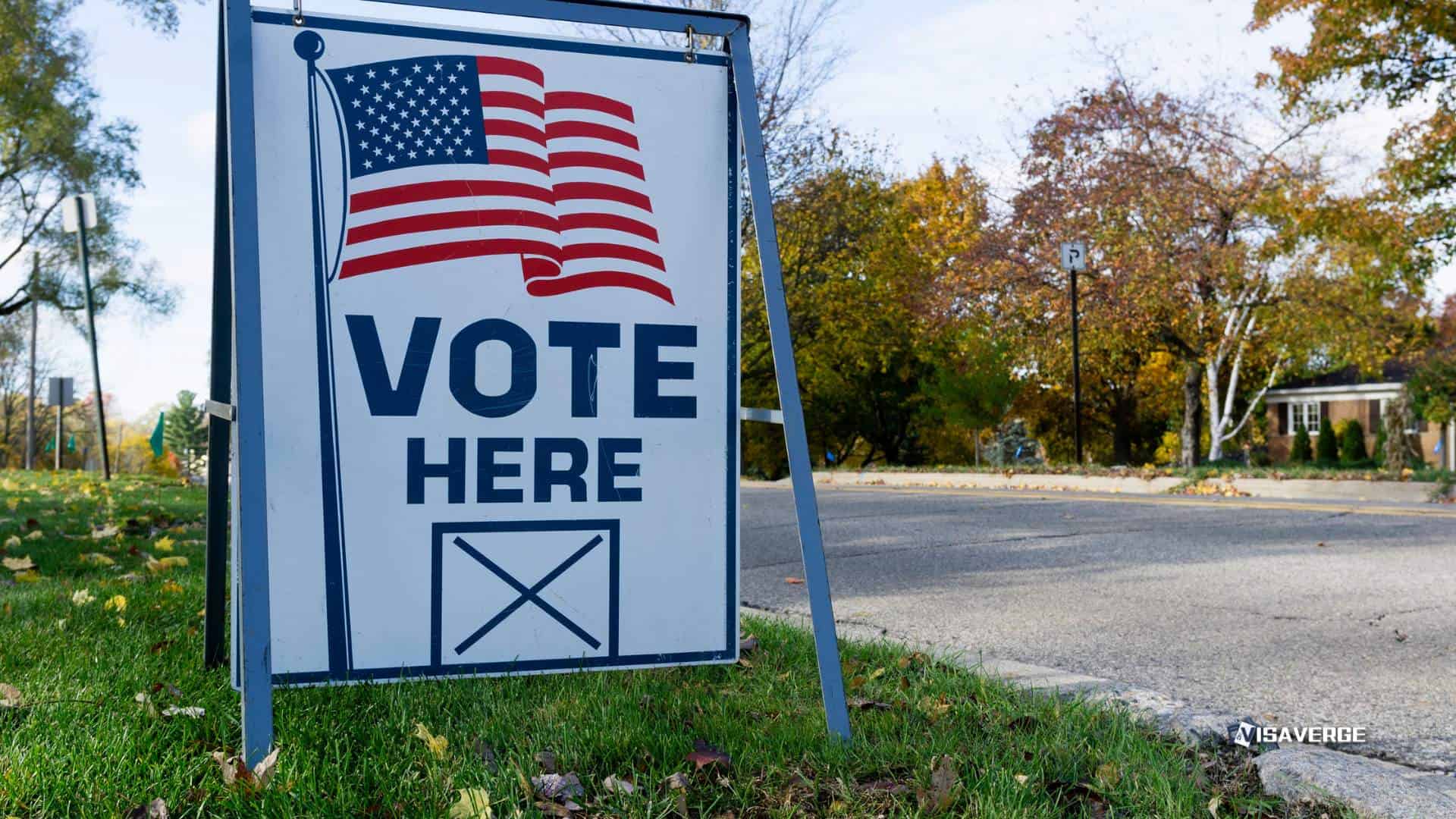
SAVE America Act Links Voter ID Rules to REAL ID Act

SAVE America Act: what it is and what it’s designed to change

The SAVE America Act is legislation introduced on February 2, 2026 by U.S. Senator John Cornyn (R-TX), Senator Mike Lee (R-UT), and Rep. Chip Roy (TX-21). The bill’s goal is direct: tighten federal election participation rules by requiring voters to show documents that prove citizenship at registration, and then show photo ID at voting.

Supporters frame it as a way to strengthen citizenship checks in federal voting systems. Administrators would still run elections under state rules, but the bill sets federal requirements for federal contests. That means states would need procedures that meet the bill’s standards for federal registration, federal voting, and federal roll maintenance.

According to analysis by VisaVerge.com, the bill’s practical effect is that voters would need to think about two separate moments of verification: paperwork at registration, and identity proof at the ballot.

SAVE America Act: key dates and legislative status (quick reference)
Introduced February 2, 2026
House Passed February 11, 2026 COMPLETED
Baseline Reference Earlier SAVE Act (January 2025)
→ Analyst Note
If you recently naturalized or updated your name, confirm your voter registration record matches your current legal identity and citizenship documentation. Fixing mismatches early (before deadlines) can prevent delays if stricter proof-of-citizenship checks are adopted.

The full compliance journey: registration, voting, and roll maintenance

Think of compliance as a three-part path. Each part asks something different of voters and of election officials.

1) Federal voter registration with proof of citizenship. The bill requires proof of citizenship when registering to vote in federal elections. Conceptually, this means applicants must present a document that shows they are a U.S. citizen, not just a state resident.

2) Photo voter ID at the point of voting. Before a person can cast a ballot in a federal election, the bill requires a photo identification check. The bill sets a baseline expectation of in-person ID verification, while day-to-day procedures would still run through state and local election systems.

→ Note
If your proof of citizenship shows a different name than your current ID (marriage/divorce, hyphenation, spelling changes), gather linking documents (marriage certificate, court order, amended records). Keep copies together so you can resolve questions quickly if asked to verify identity.

3) Voter roll maintenance focused on removing non-citizens. States would have to carry out “maintenance” aimed at removing non-citizens from existing voter rolls. In practice, roll maintenance usually means data matching against records, sending notices when there’s a question, and updating lists.

For voters, the timeline has two main pressure points: the moment you register, and the day you vote. For newly naturalized citizens, timing can feel tighter because registration and document collection often happen soon after the oath ceremony.

Do you need proof of citizenship, photo ID, or both? Scenario-based checklist
Scenario Question If Yes, Then… Action Items
Registering to vote in a federal election (new registration)? Plan to provide documentary proof of U.S. citizenship at registration. Use a passport, naturalization/citizenship certificate, or other qualifying proof; confirm your registration office’s submission method (in-person/mail/online).
Voting in person in a federal election? Plan to present an acceptable photo ID before receiving/casting a ballot. Verify your ID is current and meets the bill’s standards (e.g., not a student ID; tribal ID may need an expiration date).
Already registered but your record may not reflect citizenship proof? Expect potential requests to re-verify or update documentation if the law is implemented. Check your voter file; be ready to submit qualifying proof if contacted.
Your ID name differs from your registration record? Bring linking documents to connect identities. Collect marriage certificate, court order, or amended records; update the voter record where permitted.

Photo voter ID standards: what counts, what doesn’t, and why it matters

The bill’s voter ID standard is described as more restrictive than most state voter ID laws. That matters because many people assume a student card or a local ID will work everywhere, but this proposal sets narrower categories.

Acceptable forms listed in the bill include:

→ Recommended Action
Before each election, verify your registration status and your polling place rules, then do a quick “day-of” check: bring an acceptable photo ID, plus any supporting documents if your name or details have changed. Small prep steps reduce the chance of ballot issues.
  • Photo identification that complies with the REAL ID Act of 2005
  • A valid U.S. passport
  • A military identification card with a military service record
  • A government-issued photo ID showing place of birth

The exclusions are just as important. The bill bars student IDs, including IDs from state universities. It also limits tribal IDs to those that include an expiration date.

These details hit real-life situations. Students often live away from home and rely on campus IDs. Tribal citizens may hold IDs that meet community needs but do not always match state-style formatting. Military families may move often and juggle changing addresses and renewal deadlines.

If you need a refresher on the federal REAL ID framework that many states use for driver’s licenses and identification cards, the Department of Homeland Security explains it here: REAL ID.

Proof of citizenship for registration: documents people actually have, and common snags

For federal registration, the bill lists several forms of documentary proof of citizenship:

  • Valid U.S. passport
  • Certificate of Naturalization or Certificate of Citizenship
  • American Indian Card issued by the Department of Homeland Security
  • Certain government-issued identification indicating citizenship and place of birth

A key restriction is that states could not accept a driver’s license alone as proof of citizenship, because most licenses do not state citizenship.

This is where many eligible voters can get stuck. Lots of U.S.-born citizens do not hold a current passport. Naturalized citizens may store their certificate in a safe place and rarely carry it. People who changed their names after marriage may find that one document shows a prior name while another shows a current one.

Replacement can also take time. A lost naturalization certificate is not like replacing a library card. It often requires formal requests, patience, and careful identity checks, which can feel stressful when an election date is approaching.

How it builds on the earlier SAVE Act: the added voting-day checkpoint

The SAVE America Act builds on the earlier SAVE Act—the Safeguard American Voter Eligibility Act—introduced in January 2025. The earlier version focused on a single gate: documentary proof of citizenship at registration.

The “America” version adds another gate: photo ID at the point of voting in federal elections. That shift matters because it changes what voters must do to stay ready.

Under a registration-only system, a voter who proved citizenship once might not need to think about documents again for years. With a voting-day photo ID rule, the voter has an ongoing duty to keep an acceptable ID current, unexpired, and accessible on Election Day.

Operationally, that also changes what election workers check and when they check it. It moves part of the burden from front-end registration desks to busy polling places, where lines, time limits, and on-the-spot problem solving can shape whether people finish the process.

Where the bill stands now, and what “passed the House” means

The bill reached a major procedural milestone when the House passed it on February 11, 2026. House passage signals that the proposal has cleared one chamber of Congress, but it does not make the requirements law on its own.

Next, the bill would need to move through the remaining federal steps that apply to major legislation. That usually includes Senate consideration and a final step for enactment.

Even when Congress sets federal election rules, states still run election systems. That means implementation often turns on state election calendars, training plans for poll workers, database updates for voter registration, and public education on what documents count.

Opposition and access concerns: the document gap at the center of the debate

Civil rights organizations argue the bill risks blocking eligible voters who lack paperwork or face barriers getting it quickly. The NAACP Legal Defense and Educational Fund and the Leadership Conference on Civil and Human Rights, which represents 130+ organizations, have warned that eligible voters could be disenfranchised.

Research cited in the debate says more than 21 million Americans lack ready access to the required documents. Critics say the impact would fall hardest on voters of color, younger voters, elderly voters, and married women whose names differ across documents.

The access issue is not abstract. People who work hourly jobs may struggle to travel to offices during business hours. Some voters live far from issuing agencies. Others carry outdated documents because replacing them costs time and money.

Supporters and opponents agree on one fact: if the bill becomes law, the people most affected will be ordinary eligible voters who must prove, with paperwork and photo ID, that they can take part in federal elections.

Learn Today
SAVE America Act
A legislative proposal requiring proof of citizenship and photo ID for federal elections.
REAL ID Act
A 2005 federal law establishing specific security standards for state-issued driver’s licenses.
Naturalization Certificate
An official document proving U.S. citizenship for those born outside the United States.
Voter Roll Maintenance
The process of updating voter lists to remove ineligible or non-citizen individuals.
VisaVerge.com
Share This Article
Facebook Pinterest Whatsapp Whatsapp Reddit Email Copy Link Print
What do you think?
Happy0
Sad0
Angry0
Embarrass0
Surprise0
Jim Grey
ByJim Grey
Content Analyst
Follow:
Jim Grey serves as the Senior Editor at VisaVerge.com, where his expertise in editorial strategy and content management shines. With a keen eye for detail and a profound understanding of the immigration and travel sectors, Jim plays a pivotal role in refining and enhancing the website's content. His guidance ensures that each piece is informative, engaging, and aligns with the highest journalistic standards.
Subscribe
Login
Notify of
guest

guest

0 Comments
Inline Feedbacks
View all comments
H-1B Workforce Analysis Widget | VisaVerge
Data Analysis
U.S. Workforce Breakdown
0.44%
of U.S. jobs are H-1B

They're Taking Our Jobs?

Federal data reveals H-1B workers hold less than half a percent of American jobs. See the full breakdown.

164M Jobs 730K H-1B 91% Citizens
Read Analysis
Dutch Tax Unrealized Gains Box 3 Actual Return Tax Law January 1, 2028
Digital Nomads

Dutch Tax Unrealized Gains Box 3 Actual Return Tax Law January 1, 2028

March 2026 Visa Bulletin Predictions: What you need to know
USCIS

March 2026 Visa Bulletin Predictions: What you need to know

Heathrow Slot Values Hit Record  Million Amid Persistent Congestion
Airlines

Heathrow Slot Values Hit Record $75 Million Amid Persistent Congestion

IRS 2025 vs 2024 Tax Brackets: Detailed Comparison and Changes
News

IRS 2025 vs 2024 Tax Brackets: Detailed Comparison and Changes

Guide to Reaching Air Canada Customer Service with Ease
Airlines

Guide to Reaching Air Canada Customer Service with Ease

India Implements E-Arrival Card Within 72 Hours Before Arrival During Six-Month Transition Period
India

India Implements E-Arrival Card Within 72 Hours Before Arrival During Six-Month Transition Period

Georgia to Introduce Mandatory Work Permit System from March 1, 2026
Immigration

Georgia to Introduce Mandatory Work Permit System from March 1, 2026

REAL ID: What Documents Count as Proof of Identity
Airlines

REAL ID: What Documents Count as Proof of Identity

Year-End Financial Planning Widgets | VisaVerge
Tax Strategy Tool
Backdoor Roth IRA Calculator

High Earner? Use the Backdoor Strategy

Income too high for direct Roth contributions? Calculate your backdoor Roth IRA conversion and maximize tax-free retirement growth.

Contribute before Dec 31 for 2025 tax year
Calculate Now
Retirement Planning
Roth IRA Calculator

Plan Your Tax-Free Retirement

See how your Roth IRA contributions can grow tax-free over time and estimate your retirement savings.

  • 2025 contribution limits: $7,000 ($8,000 if 50+)
  • Tax-free qualified withdrawals
  • No required minimum distributions
Estimate Growth
For Immigrants & Expats
Global 401(k) Calculator

Compare US & International Retirement Systems

Working in the US on a visa? Compare your 401(k) savings with retirement systems in your home country.

India UK Canada Australia Germany +More
Compare Systems

You Might Also Like

2026 USCIS Fees & Processing Times: What Immigrants Should Plan
Documentation

2026 USCIS Fees & Processing Times: What Immigrants Should Plan

By
Sai Sankar
9 AM Login, 11 AM Layoff: Migrant Tech Workers Abruptly Fired
Digital Nomads

9 AM Login, 11 AM Layoff: Migrant Tech Workers Abruptly Fired

By
Sai Sankar
USCIS Sets ,000 Parole Fee Starting October 16, 2025
Documentation

USCIS Sets $1,000 Parole Fee Starting October 16, 2025

By
Sai Sankar
Judge Drops Case Against TikTok Streamer Shot by Immigration Agents
Immigration

Judge Drops Case Against TikTok Streamer Shot by Immigration Agents

By
Robert Pyne
Show More
Official VisaVerge Logo Official VisaVerge Logo
Facebook Twitter Youtube Rss Instagram Android

About US


At VisaVerge, we understand that the journey of immigration and travel is more than just a process; it’s a deeply personal experience that shapes futures and fulfills dreams. Our mission is to demystify the intricacies of immigration laws, visa procedures, and travel information, making them accessible and understandable for everyone.

Trending
  • Canada
  • F1Visa
  • Guides
  • Legal
  • NRI
  • Questions
  • Situations
  • USCIS
Useful Links
  • History
  • USA 2026 Federal Holidays
  • UK Bank Holidays 2026
  • LinkInBio
  • My Saves
  • Resources Hub
  • Contact USCIS
web-app-manifest-512x512 web-app-manifest-512x512

2026 © VisaVerge. All Rights Reserved.

2026 All Rights Reserved by Marne Media LLP
  • About US
  • Community Guidelines
  • Contact US
  • Cookie Policy
  • Disclaimer
  • Ethics Statement
  • Privacy Policy
  • Terms and Conditions
wpDiscuz
Welcome Back!

Sign in to your account

Username or Email Address
Password

Lost your password?