- Virginia’s House subcommittee advanced bills limiting ICE civil arrests near state courthouses without judicial warrants.
- The Matter of Barcenas precedent requires credible, detailed evidence for noncitizens to successfully challenge unlawful arrests.
- Governor Spanberger’s Executive Order terminated 287(g) agreements, ending certain state-federal immigration enforcement partnerships.
Holding and practical impact: Matter of Barcenas and why it matters to courthouse-arrest fights
As Virginia lawmakers debate how far the Commonwealth should go in limiting ICE activity in and around courthouses, one existing immigration-court precedent already shapes what happens after an arrest: who must prove what when a noncitizen seeks to suppress evidence obtained through an allegedly unlawful stop or arrest.
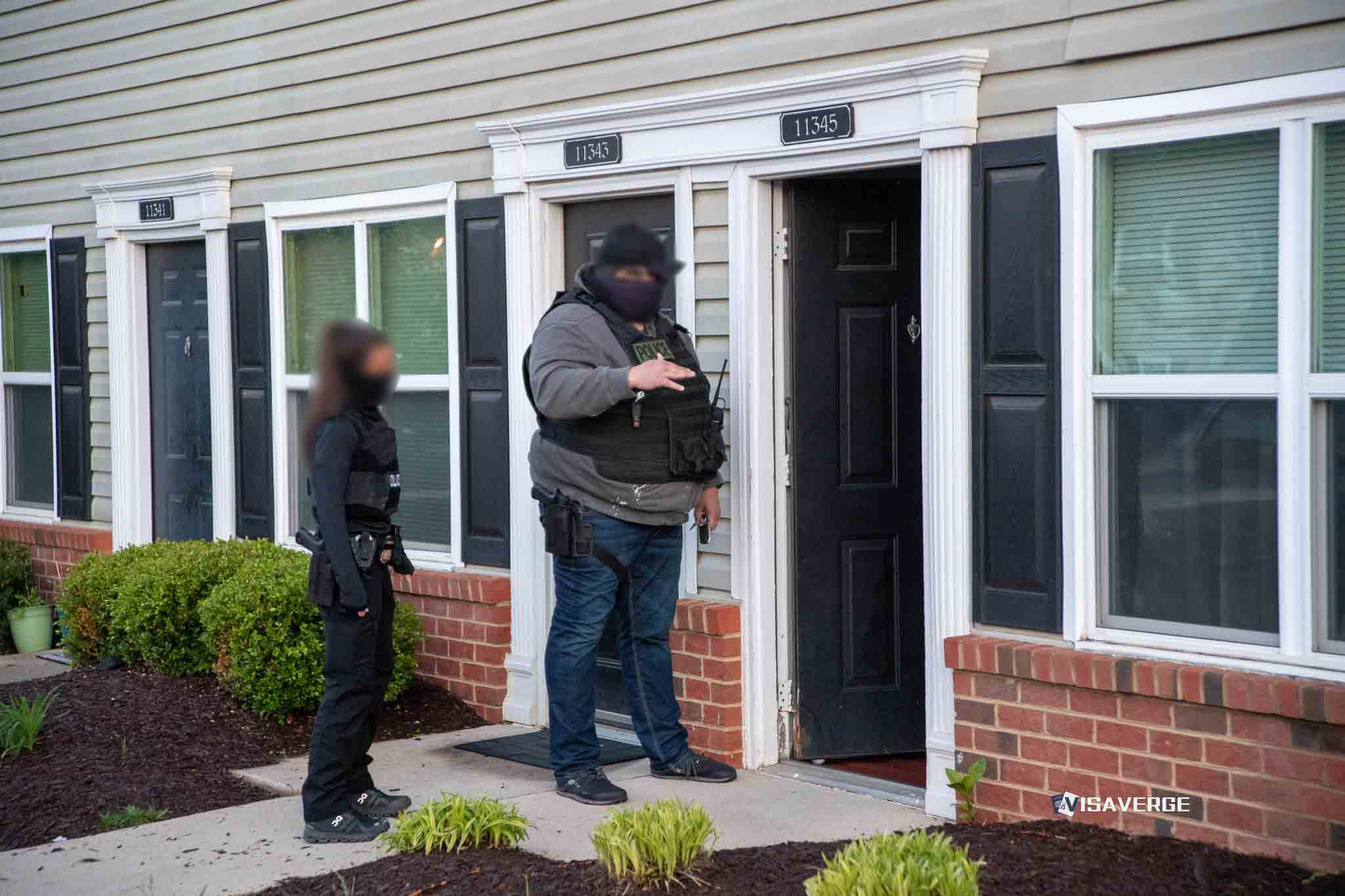
In Matter of Barcenas, 19 I&N Dec. 609 (BIA 1988), the Board of Immigration Appeals held that a respondent who seeks to suppress evidence in removal proceedings must first make a prima facie showing that the evidence was unlawfully obtained; only then does the burden shift to the government to justify the manner in which it obtained the evidence. In practical terms, this means that documentation and credible, detailed facts about an ICE encounter—such as whether officers identified themselves, whether they used deception, and whether they had any warrant—can be decisive in litigation.
That holding provides an important lens for the current House panel debate in Virginia: even if new state protections do not directly bind federal officers, they may create clearer factual records (and sometimes state-court findings) that later support suppression arguments, bond arguments, or termination motions in immigration court.
Warning: Suppression is not automatic in immigration court. Many circuits require an “egregious” constitutional violation or widespread pattern of violations before suppression is available, and standards vary by jurisdiction.
1) Overview: House subcommittee advances bills limiting ICE activity in Virginia
A Democratic-led Virginia House subcommittee advanced several bills that would restrict civil immigration arrest practices near courthouses and narrow state and local cooperation with federal immigration enforcement. Procedurally, “advanced” means the bills cleared a first hurdle and now head to the full House Public Safety Committee for further consideration before any possible House floor vote.
“limiting ICE activity” in this context generally refers to proposals that would:
- restrict civil immigration arrests at or near courthouses unless certain warrant conditions are met;
- limit when state and local officers may assist with detainers, transfers, or information sharing; and
- require clearer identification by officers, addressing complaints about masked operations and alleged impersonation.
These are proposals, not statewide enforceable rules yet. Even if enacted, they would likely operate by regulating state and local conduct and courthouse policies, rather than “commanding” federal agents to act or not act.
2) Key bills advanced: what they would restrict, and how enforcement would work
HB650: civil-arrest limits at courthouses, plus identification expectations
The centerpiece proposal is HB650, which would generally prohibit civil immigration arrests in courthouses without a judicial warrant. The bill also aims to protect not just litigants, but also witnesses, family members, and companions traveling to and from court proceedings.
A notable feature is the enforcement framing: reported violations could be treated through a contempt-of-court framework. In addition, the proposal emphasizes visible identification and contemplates consequences for noncompliance, including potential criminal penalties and civil liability tied to identification failures.
Why this matters under Barcenas. If identification and warrant practices become more standardized in courthouse settings, a respondent may have a stronger factual platform to make the prima facie showing required by Matter of Barcenas—for example, by pointing to a lack of identification, conflicting statements about authority, or the absence of any judicial warrant.
Limits on state-local cooperation: detainers, holds, transfers, and information sharing
Another bill family would restrict when Virginia agencies may assist federal immigration enforcement without a judicial warrant. These proposals typically focus on the mechanics that create handoffs into ICE custody, such as:
- honoring detainer requests (often on Form I-247 series);
- holding someone past a release time;
- participating in transfers or extra detention time; and
- certain categories of information-sharing.
This is a legally important distinction: a civil immigration detainer is generally an administrative request, not a judge-signed criminal warrant. Many state and local restrictions nationally are written to treat this distinction as the trigger for when cooperation is permitted.
Ending 287(g): what it is, and what change looks like on the ground
The package also targets 287(g) agreements. Under INA § 287(g), state or local officers may be authorized—under federal supervision—to perform certain civil immigration enforcement functions. In practice, 287(g) arrangements can embed immigration screening into jail or policing workflows.
Ending or limiting 287(g) changes operational reality in day-to-day encounters. It can reduce routine immigration questioning by non-federal officers and may reduce the number of local-to-federal “handoffs” that originate in state custody settings.
Other related proposals: masks/ID, sensitive locations, impersonation, and scam authority
The subcommittee also advanced measures tied to:
- mask bans and identification requirements for law enforcement;
- restrictions near polling places and other “sensitive” locations;
- penalties for impersonating federal agents (including HB1492); and
- expanded Attorney General authority to address scams aimed at migrants.
These proposals share a common policy direction: make enforcement presence more legible and accountable, and reduce the fear that keeps immigrants and mixed-status families away from courts and public institutions.
The pathway ahead is standard: subcommittee → full committee → chamber votes → governor. Each stage can amend bills, combine them, or stop them.
Deadline watch: The most meaningful “deadlines” are committee cutoffs and crossover dates in the General Assembly calendar. Track the House Public Safety Committee agenda and each bill’s status page for fast changes.
3) Related state actions: Executive Order 12 and what it changes immediately
Governor Abigail Spanberger’s Executive Order 12 terminated specified 287(g) agreements involving statewide agencies, including law-enforcement and corrections-type components. The operational point is straightforward: it ends certain forms of deputization, where state officers perform civil immigration enforcement functions under federal supervision.
The governor framed the order as refocusing personnel on Virginia law and warrant-based actions, while arguing that federal tactics can erode trust and discourage reporting or cooperation. Opponents characterized the move as weakening public safety.
Limits matter. An executive order can redirect state executive agencies. It cannot automatically rewrite statutes. It also does not necessarily control independent local sheriffs or county jail policies unless those entities are covered by state directives or separate agreements. The order also does not, by itself, bar ICE from acting as a federal agency.
Warning: Even where a state limits cooperation, ICE may still arrest individuals under federal authority. The practical effect often depends on access points—jails, courthouses, and information channels—rather than a blanket prohibition.
4) Senate progress and legal context: SB783, anti-commandeering, and the “judicial warrant” divide
SB783: courthouse rules centered on identification and warrant concepts
The Virginia Senate passed SB783, a courthouse-focused bill that emphasizes officer identification, a stated purpose, and warrant-related requirements for civil arrest activity. It is now pending in the House, which creates timing uncertainty and the possibility of reconciliation with House bills.
Anti-commandeering: what it does (and does not) mean
A key legal concept behind these proposals is the Tenth Amendment’s anti-commandeering doctrine. In general terms, states are not required to use their resources to administer or enforce federal regulatory programs, including federal civil immigration enforcement.
That doctrine supports many “noncooperation” policies. But it does not necessarily allow a state to directly obstruct federal officers acting within federal authority. Put simply: states often can say, “we will not help,” but they are on shakier ground if they try to say, “federal agents cannot act at all.”
“Judicial warrant” vs. civil paperwork in courthouse encounters
In everyday courthouse disputes, the warrant distinction is often the crux. A judicial warrant is signed by a judge. In contrast, many civil immigration documents are issued within the executive branch. Examples include detainers and administrative warrants used in civil immigration enforcement.
That distinction matters to legislatures drafting rules for local officials and courthouse administrators. It also matters to litigation after arrests: it can affect arguments about reasonableness, coercion, or deception—facts that can help meet the prima facie showing required under Matter of Barcenas.
For background on removal proceedings and court process, readers can start with EOIR’s court information at justice.gov/eoir.
Circuit splits: suppression standards vary across the country
While Barcenas is a BIA baseline on burden-shifting, federal circuit courts differ on when suppression is available in removal proceedings. Many courts limit suppression to egregious Fourth Amendment violations or widespread patterns of misconduct, but they define those terms differently.
Examples frequently discussed by practitioners include:
- Lopez-Rodriguez v. Mukasey, 536 F.3d 1012 (9th Cir. 2008) (suppression in egregious circumstances; Ninth Circuit).
- Almeida-Amaral v. Gonzales, 461 F.3d 231 (2d Cir. 2006) (Second Circuit approach to egregiousness).
- Oliva-Ramos v. Attorney General, 694 F.3d 259 (3d Cir. 2012) (Third Circuit discussion of suppression and patterns).
Because Virginia is in the Fourth Circuit, litigants should evaluate Fourth Circuit precedent and local immigration court practice closely.
For statutory references, see INA provisions via Cornell’s Legal Information Institute: law.cornell.edu.
5) Broader Virginia ICE opposition and advocacy: facilities, fear, and how to monitor what happens next
The bills and executive order sit within broader Virginia debates over immigration enforcement footprint, including a congressional letter objecting to large proposed ICE facilities. Facility siting can matter to communities because it affects detention footprint, service demands, and the frequency of ICE movement through surrounding areas.
Advocates supporting courthouse and identification measures have argued that masked operations and impersonation incidents increase fear, discouraging people from appearing in court or accessing daily necessities. Those arguments connect directly to the bills’ focus on identification, impersonation penalties, and “sensitive location” concepts.
What is immediate vs. contingent. The executive order can have immediate operational effects for covered state agencies. The proposed legislation would matter only if enacted and implemented, and the details could shift through amendments.
To monitor next steps without relying on rumor, readers can use:
- Virginia General Assembly bill-status tools (official state sites),
- committee calendars and meeting agendas, and
- official press releases from state leadership and agencies.
Practical takeaways for immigrants, lawyers, and local officials
- Document encounters carefully. Under Matter of Barcenas, 19 I&N Dec. 609 (BIA 1988), detailed facts can be the difference between getting a suppression hearing and being denied one. Names, badge info, and witness accounts matter.
- Treat “judicial warrant” language as a major fault line. Many proposals hinge on whether a judge signed the authorization. That same distinction often drives litigation strategy.
- Expect jurisdiction-specific outcomes. Suppression and remedies vary by circuit. Virginia cases may follow Fourth Circuit standards, even if other circuits are more receptive in certain scenarios.
- Healthcare and “public spaces” reality check. Fear of enforcement can reduce clinic visits and court appearances. But eligibility for many immigration benefits also depends on consistent records and compliance. Discuss risk-reduction plans with counsel.
- UK immigration comparison (limited). The UK also ties immigration enforcement to access and identity checks in some contexts. But the U.S. courthouse-arrest debate is shaped by U.S. federalism and the anti-commandeering doctrine, which does not translate directly to UK law.
Given the stakes, anyone affected by courthouse enforcement, detainers, or suspected impersonation should speak with a qualified immigration attorney. This is especially important if you have an upcoming court date, a prior removal order, or a criminal history.
Resources (official and legal aid directories):
- EOIR Immigration Court info: justice.gov/eoir
- USCIS forms and case tools: uscis.gov
- INA text (Cornell LII): law.cornell.edu
- AILA Lawyer Referral: aila.org/find-a-lawyer
⚖️ Legal Disclaimer: This article provides general information about immigration law and is not legal advice. Immigration cases are highly fact-specific, and laws vary by jurisdiction. Consult a qualified immigration attorney for advice about your specific situation.