- Individuals can challenge government demands for account data, particularly administrative subpoenas not signed by judges.
- Non-content data like payment details can trigger immigration consequences including visa revocation and SEVIS actions.
- Advocates urge tech companies to require court approval before disclosing sensitive user information to DHS.
Your core right: You can challenge (and seek notice of) government demands for your account data—especially when the demand is not signed by a judge
If a U.S. agency seeks identifying or financial data from a tech provider, the demand is sometimes an administrative subpoena rather than a judge-signed warrant. In many cases, the most practical “right” is not a single constitutional rule. It is a bundle of protections you may be able to use: notice (when allowed), an opportunity to challenge, limits on what can be demanded, and due process in any later immigration case.
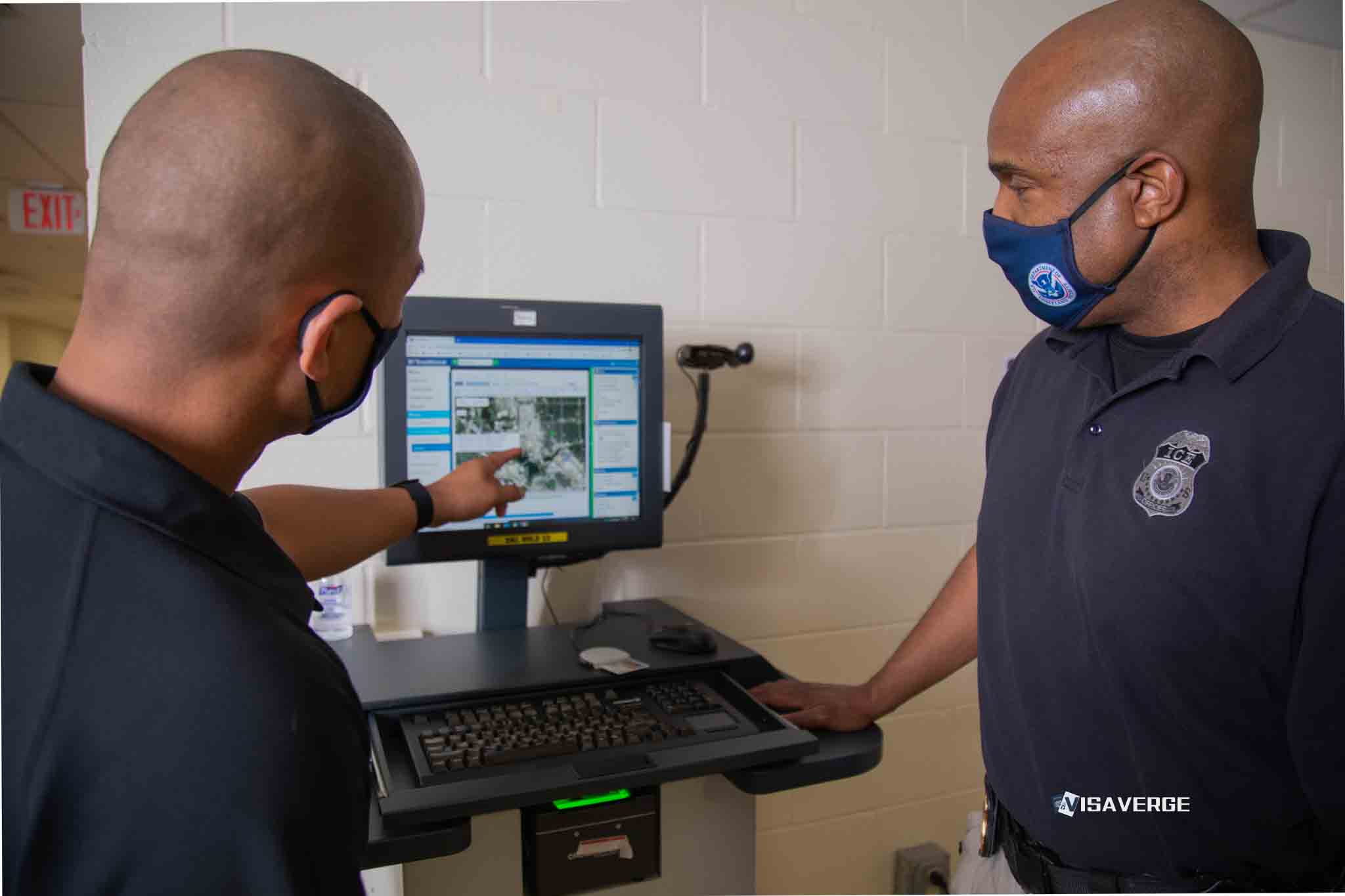
This matters for international students and other noncitizens because “non-content” data (like subscriber identifiers and payment details) can still tie an online account to a real person, location patterns, and associations. Those links can affect visa status, SEVIS actions, bond, and removability allegations, even when message content is not produced.
Legal basis (high level)
- Administrative subpoena authority (immigration context): INA § 235(d)(4) (8 U.S.C. § 1225(d)(4)) and related regulations, including 8 C.F.R. § 287.4 (DHS/ICE subpoena procedures).
- Tech disclosure framework: the federal Stored Communications Act (SCA), 18 U.S.C. § 2701 et seq., including 18 U.S.C. § 2703 (mechanisms for government demands).
- Constitutional backstops (case-specific): First Amendment (speech/association), Fourth Amendment (unreasonable searches), Fifth Amendment (due process). These protections apply to “persons” in the U.S., including many noncitizens, but how they apply to third-party-held data can be complex and fact-dependent.
For statutory text and explanatory notes, see 8 U.S.C. § 1225 and 8 C.F.R. § 287.4.
1) Incident overview: what was reported, and why it matters for immigration enforcement
Reporting described a case in which Google provided extensive personal and financial account data about Amandla Thomas-Johnson, a British student and journalist at Cornell University, to ICE. The disclosure was reportedly in response to an administrative subpoena—meaning the request was issued by the agency without prior judicial approval.
The request reportedly included a non-disclosure (gag) provision, limiting the company’s ability to tell the account holder. Even without message content, the categories of data at issue can be highly sensitive. Subscriber and account-linkage data can connect an account to a legal name, device identifiers, IP history, recovery phone numbers, and payment instruments. That can be enough to identify a user, map activity over time, and build investigative leads.
For international students, the stakes can be immediate. Visa revocation, SEVIS termination questions, and enforcement timelines can move quickly. That speed can make it harder to seek counsel and preserve records.
Warning: If you receive any notice that ICE or another agency sought your account data, treat it as time-sensitive. Deadlines to challenge may be short, and gag provisions can delay notice entirely.
2) What an administrative subpoena is—and how it differs from a warrant or court order
An administrative subpoena is a demand issued directly by an agency under statutory authority. It is generally not reviewed by a judge before it is issued. In immigration investigations, DHS components may use subpoena authority recognized in the INA and implementing regulations.
A warrant, by contrast, is typically signed by a judge upon a showing of probable cause. Court orders also involve judicial oversight, though the standards vary by statute and context.
“Content” vs. “non-content” in tech compliance
In common provider practice, “content” means the substance of communications, like email bodies or stored messages. “Non-content” can include subscriber identifiers, login history, IP address logs, device and account linkage, and certain transactional records.
Even if content is excluded, non-content data can still de-anonymize someone. IP logs can be correlated with residence, campus housing, or workplace networks. Recovery phone numbers and payment instruments can tie multiple accounts together.
Gag provisions and delayed notice
Administrative demands sometimes include non-disclosure language. When a provider is gagged, the target may not learn about the demand in time to contest it. In some cases, companies provide delayed notice when they believe it is legally permitted.
Practical takeaway: lack of content does not mean low risk. Identity and payment data can be enough to trigger immigration questioning, requests for documents, or allegations about status violations.
For an overview of immigration enforcement components, see ICE overview.
Deadline note: If you do receive provider notice, contact a lawyer immediately. Challenges often require quick action to preserve objections and seek narrowing or court review.
3) Legal and compliance context for tech companies: why “routine compliance” matters
Tech providers operate large compliance pipelines. They may receive high volumes of demands, and their response may be shaped by staffing, risk tolerance, and how they interpret statutory authority.
Importantly, an administrative subpoena is not always the same as a judge-signed warrant in its legal force or review posture. Depending on the jurisdiction and the demand’s wording, companies may have room to:
- ask the agency to narrow the request,
- object to overbreadth,
- seek clarification of authority,
- or challenge the subpoena in court.
Gag provisions are controversial because they can reduce transparency and make it harder for users to contest a demand. That accountability concern is amplified for immigrants and students, who may face fast-moving collateral consequences. Those consequences can include status disruption, discretionary denial issues, or enforcement attention based on associations.
None of this means a company will refuse. It means company choices can affect whether there is meaningful notice and an opportunity to contest.
4) Public and advocacy responses: what advocates are asking companies to change
Reporting also described an EFF-led coalition urging major tech companies to stop complying with DHS administrative subpoenas without court approval. The thrust of the advocacy is procedural: raise the threshold, push for judicial review, and provide users notice when legally allowed.
Advocates emphasize that notice can create a window—sometimes the only window—for a user to seek counsel and challenge an overbroad demand. They also frame the issue as implicating speech and association, especially where investigations touch protest activity.
One quoted concern was that companies may be “failing to challenge unlawful surveillance and defend user privacy and speech.” In practice, advocacy letters do not change the law by themselves. But they can influence corporate policy, transparency practices, and litigation decisions.
Warning: Advocacy positions are not legal defenses. In an immigration case, you still need a fact-based strategy that fits your circuit’s case law and the posture of your proceedings.
5) Statements and silence: how to interpret the lack of public comment
In the reported incident, neither ICE nor Google reportedly provided a substantive public explanation in response to inquiries. Non-comment is common. Agencies may cite ongoing matters, and companies may be constrained by legal process or policy.
Still, silence has consequences. It can:
- limit independent verification of scope and justification,
- reduce public accountability for gag provisions,
- and leave affected individuals to piece together what happened through notice letters, counsel communications, or later disclosures.
Thomas-Johnson’s public remarks framed the incident as part of broader concerns about surveillance and the power imbalance between individuals and institutions. Readers should treat that framing as perspective, not as adjudicated findings about the legality of any specific demand.
6) Timeline context: why speed matters for students, SEVIS, and status planning
The reported sequence included a visa revocation notice and then rapid issuance of the subpoena soon after. Timing is not a minor detail for students. It affects whether someone can:
- consult counsel before travel or status changes,
- coordinate with a school’s DSO on SEVIS records,
- preserve communications and account records,
- and seek court review before disclosure becomes irreversible.
Student-specific intersections to watch
- Visa revocation vs. lawful status: A revoked visa affects entry and reentry. It can also signal heightened scrutiny. Lawful presence and status questions can still require careful analysis.
- School processes: DSOs may be asked questions or may update SEVIS based on enrollment and compliance. Students should communicate carefully and keep records.
- Enforcement timelines: If ICE interest escalates, requests for documents, interviews, or even detention can occur quickly.
Tip for students: If you fear account targeting, preserve your own records in a lawful way. Keep copies of notices, letters, and communications. Avoid deleting data after learning of a demand.
For general EOIR information if proceedings begin, see EOIR guidance.
Who has these rights?
U.S. citizens: Full constitutional protections apply, but third-party data rules and statutory processes still matter.
Lawful permanent residents (LPRs): Generally protected by the Constitution while in the U.S. Immigration consequences can still be severe.
Visa holders (including F-1/J-1): Constitutional protections generally apply while in the U.S. Status is conditional and documentation expectations are higher.
Undocumented people: Constitutional protections often still apply in the U.S., but risk calculus is different. Contact counsel before taking steps that might draw attention.
Outside the U.S.: Protections may change at the border and in consular processing. Cross-border data requests can also implicate different legal regimes.
How to exercise the right in practice (real-world steps)
- If you receive provider notice, act quickly. Save the full notice, including headers and dates. Do not rely on screenshots alone.
- Retain an immigration attorney and, if possible, a privacy/criminal defense attorney. Data demands can implicate multiple legal domains. Coordination matters.
- Ask counsel about options to challenge or narrow. Depending on the posture, tools may include:
- moving to quash or modify,
- seeking a protective order,
- demanding statutory authority and scope,
- contesting overbreadth or relevance,
- and contesting nondisclosure where permitted.
- Plan for immigration “downstream” use. Even if you cannot stop disclosure, you may be able to limit how it is used in proceedings, or contextualize it with documentary evidence.
- Protect your student status on a parallel track. Work with your DSO carefully. Confirm enrollment, address reporting, and any authorized employment documentation.
Common ways people waive or lose protections
- Missing the challenge window after notice.
- Consenting in writing or in interviews without counsel.
- Voluntary disclosure beyond what was asked, including handing over devices or passwords.
- Deleting or altering data after learning of a demand, which can create separate legal exposure.
- Traveling while a status issue is unresolved, which can trigger intensified screening or denial at entry.
If you think your rights were violated
- Document everything: dates, names, notices, and what was disclosed.
- Seek counsel immediately: ask about litigation options, suppression arguments (where available), and how to address the issue in immigration court.
- Consider a FOIA request: FOIA may help obtain agency records, though exemptions are common in enforcement matters. Counsel can help craft requests. Start at FOIA.gov.
- If in proceedings: your attorney can evaluate motions practice, evidentiary objections, and due process arguments, which can vary by circuit.
Resources for legal help
- AILA Lawyer Referral: AILA Lawyer Referral
- Immigration Advocates Network: Immigration Advocates Network legal directory
- EOIR Immigration Court: EOIR Immigration Court
- ICE information: ICE information
⚖️ Legal Disclaimer: This article provides general information about immigration law and is not legal advice. Immigration cases are highly fact-specific, and laws vary by jurisdiction. Consult a qualified immigration attorney for advice about your specific situation.