- Lufthansa Group shifts to daytime-only operations for Tel Aviv and Amman between January 15 and 19.
- Travelers should verify departure and arrival times now to identify potential connection disruptions or cancellations.
- Choosing between automatic rebooking or alternative carriers depends on schedule flexibility and specific arrival deadlines.
(ISRAEL) — Lufthansa isn’t halting service to Israel, but it is restricting flights to daytime-only operations for several days, and that can quietly break your connections.
If you’re booked to Tel Aviv or Amman between Jan. 15 and Jan. 19, 2026, the smartest move is to check your exact departure and arrival times now and decide whether to stick with Lufthansa Group’s rebooking or switch to an alternative carrier that still runs late-night banks.
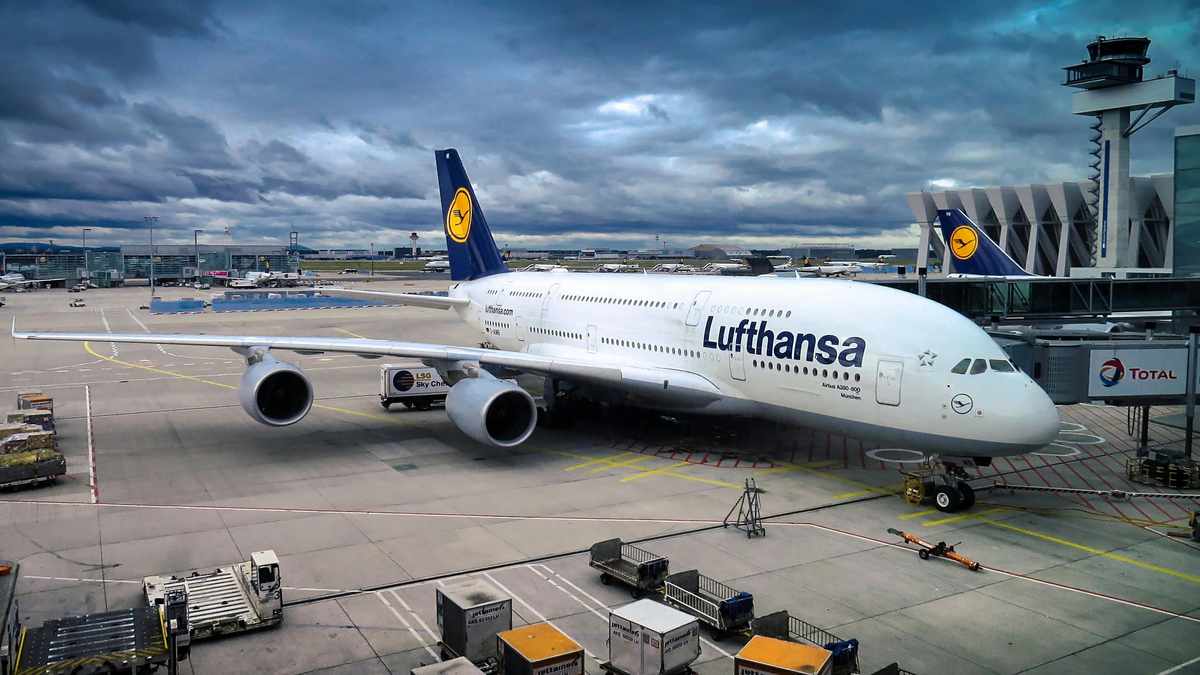
This guide compares those two paths—ride it out with Lufthansa Group vs. move to another airline—with a focus on cost, miles, comfort, and travel requirements, including Schengen transit considerations.
Quick recommendation: most travelers should keep their Lufthansa Group ticket—unless you have a tight connection or a must-arrive-by deadline
For most leisure trips, Lufthansa Group’s automatic rebooking is usually the least expensive option, and it keeps your fare rules and baggage intact.
It also protects your miles and status earning on the same ticket. But if you’re traveling for a wedding, a work start date, a medical appointment, or you’re connecting onward the same day, daytime-only schedules can force awkward layovers.
In those cases, paying more to switch carriers can be worth it.
Side-by-side comparison: Lufthansa Group rebooking vs switching airlines
| Factor | Stay with Lufthansa Group (daytime-only policy) | Switch to another airline (if available) |
|---|---|---|
| Schedule reliability (Jan 15–19) | Higher chance of time shifts and consolidations | Depends on carrier, but you may find more late-day arrivals |
| Rebooking flexibility | Often automatic, sometimes with waiver options | You’ll likely need to buy a new ticket or pay change fees |
| Cash cost | Usually the cheapest path if you keep the ticket | Often higher last-minute, especially on nonstop or one-stop options |
| Miles & elite credit | Keeps you in your original accrual lane (Miles & More, Star Alliance partners) | Could be better or worse, depending on fare class and program |
| Protection for missed connections | Strong when all flights stay on one Lufthansa Group ticket | Mixed, unless your entire trip is reissued on one ticket |
| Comfort and product | Familiar cabins on Lufthansa/SWISS/Austrian, but aircraft swaps can happen | Product varies widely, from excellent to tight regional configs |
| Schengen and transit requirements | Often routes via FRA/MUC/ZRH/VIE/BRU with Schengen-entry implications | You may avoid Schengen by routing via non-Schengen hubs, depending on itinerary |
| Best for | Flexible travelers, points collectors, anyone who wants simplicity | Time-sensitive travelers, complex itineraries, onward connections |
1) Policy: Lufthansa Group daytime flight operations to Tel Aviv and Amman (Jan. 15–19)
Lufthansa Group’s temporary policy is straightforward: only daytime flights will operate to and from Tel Aviv (TLV) and Amman (AMM) from Thursday, Jan. 15 through Monday, Jan. 19, 2026.
In practice, “daytime-only” usually means your flight may be moved to a different departure bank. It can also mean a same-day out-and-back pattern. That reduces the need for crew overnights.
The change is time-limited, tied to the “current situation in the Middle East” and heightened regional tensions. It is also paired with a warning that some flights may be canceled or consolidated.
Travelers most likely to feel pain include anyone booked on late-night departures or early-morning arrivals, anyone relying on tight same-day connections, and anyone whose itinerary depends on a specific arrival time for onward plans.
2) Operational implications for travelers: delays, cancellations, and what “automatic rebooking” really means
The operational driver matters because it explains the domino effects. If crews are no longer staying overnight, airlines have fewer scheduling options.
That can force flight time changes to keep crews within duty limits, consolidation of lightly booked flights into fewer departures, and short-notice cancellations when aircraft and crew rotations no longer line up.
“Automatic rebooking” typically means the airline will push you onto the next workable option. That may be a different flight number, a different hub, or even a different Lufthansa Group carrier.
Before you contact the airline, gather your booking reference (PNR), ticket number, your full itinerary including onward flights on separate tickets, your must-arrive-by constraints, and your preferred alternates including nearby airports if workable.
Compensation and refunds can get tricky: eligibility can hinge on where your ticket was issued, the operating carrier, and the reason for disruption. The compensation tool breaks down the thresholds and triggers by jurisdiction, which matters if your disrupted segments touch the EU or UK.
3) Which airlines are included in “Lufthansa Group,” and what routes are actually affected?
The reporting specifies these Lufthansa Group airlines:
- Lufthansa
- SWISS
- Austrian Airlines
- Brussels Airlines
- Eurowings
The scope is narrow: it applies to Tel Aviv (TLV) and Amman (AMM) operations during the stated window. It is not a blanket shutdown of each airline’s full network.
One detail that regularly confuses travelers is marketing vs. operating carrier. The marketing carrier is whose flight number you bought. The operating carrier is the airline actually flying the plane.
Codeshares matter because schedule change notifications can come from either side. Rebooking options can also differ depending on whose stock your ticket is on. If your confirmation says “operated by,” trust that line—the operating carrier controls day-of-departure decisions.
4) Why airlines do this: safety, routing, and why daytime flights are a middle ground
Daytime-only policies are a classic “middle ground.” They reduce exposure without fully suspending service.
Practical reasons airlines take this step include operational risk management during heightened tensions, crew duty-time and rest constraints, tightening insurance and corporate security requirements, and airspace and routing changes that add time and complexity.
Lufthansa Group also plans to bypass Iranian and Iraqi airspace indefinitely. When airlines avoid certain airspace, routings can get longer. Longer routings can disrupt carefully timed hub connections.
One important distinction: the confirmed policy is daytime operations plus possible cancellations. Broader claims about sweeping cancellations or staff movements can circulate quickly, but for booking decisions the operational policy is what changes your itinerary.
5) Recent history: why short-term Israel disruptions can come back fast
If this feels familiar, it is. Lufthansa Group previously suspended service through July 31, 2025, then resumed flights gradually from Aug. 1, 2025. That pattern is typical across the industry after major regional shocks.
Here’s how these disruptions often unfold: a full suspension, then a phased restart; reduced frequencies at first, then gradual restoration; schedule-bank changes to protect connections and crew plans; and conservative capacity until stability improves.
Signals that restrictions may extend include repeated cancellations on the same city pairs, new travel waivers and flexible rebooking policies, and schedule filings that pull down frequencies beyond the original end date.
Signals of normalization include the return of late-day arrival banks, more consistent aircraft assignments, and fewer same-week schedule changes.
6) Travel warnings and advisories: how to read them without guessing
Government advisories are not booking instructions, but they do affect real-world travel. In the U.S., advisories often emphasize awareness and practical constraints and may flag security conditions, border procedures, or disruption risk.
In the U.K., language like “avoid non-essential travel” can be a big deal. Employers may restrict business travel, and travel insurance may have exclusions if you travel against advice.
As of the latest reporting tied to this Lufthansa policy, there’s no confirmed extension beyond Jan. 19, 2026. Still, plan for volatility during the window.
7) Verification and source notes: what’s confirmed, and how to confirm your booking
The daytime-only limitation has been attributed in local reporting to The Times of Israel and The Jerusalem Post. Those reports align on the basic policy: daytime-only operations, with possible cancellations, during Jan. 15–19.
Other reporting, including claims aired on Israel’s Channel 12, has been less precise on operational scope. That doesn’t mean it is wrong. It does mean you should verify against airline-controlled channels.
A practical verification checklist includes Lufthansa Group travel alerts and operational updates, your Manage Booking page and email notifications, SMS and app push alerts if enabled, the operating carrier’s app (not only the marketing carrier’s app), and airport departure boards on the day if you’re already en route.
8) What this means for travelers: choose your path, protect your connections, and watch Jan. 15–19 closely
Start with one question: does your itinerary contain a late-night or early-morning TLV or AMM segment between Jan. 15 and Jan. 19?
Step-by-step action plan
- Confirm your flight falls inside the daytime-only window. Check both departure and arrival local times. Connections can flip from workable to impossible.
- Decide whether to accept the auto-rebook. If the new itinerary still meets your needs, taking it is usually simplest.
- If you must arrive by a fixed time, ask for alternatives fast. Request same-day options via different hubs. Ask about partner options when available.
- Protect anything you booked outside the airline. Reconfirm hotels, ground transfers, and meetings. Move them before penalties hit.
- If canceled, pick reroute vs refund with eyes open. A refund ends the airline’s obligation to get you there. A reroute keeps that protection.
- Document everything. Save screenshots of notifications and boarding passes. Keep receipts for eligible expenses.
Flight status tools can help you sanity-check the day-of situation. They’re especially useful if your aircraft is arriving from a disrupted rotation. Use them for trend-spotting, not just the final “cancelled” banner.
Miles and points: what frequent flyers should consider
If you care about earning: staying on the same ticket usually preserves Miles & More earning and any Star Alliance credit.
If you accept a reroute on a different Lufthansa Group carrier, your earning typically follows the operating flight and fare rules.
If you care about redeeming: award tickets can be easier to adjust during waivers, but inventory can vanish fast. If you booked via a partner program, changes may need to go through that program first.
When to choose which option
Choose Lufthansa Group if your plans can handle a few hours of shift, you want the lowest out-of-pocket cost, or you need through-ticket protection for connections.
Choose another airline if you have a same-day onward connection on a separate ticket, your arrival time is non-negotiable, or you want to avoid potential hub misconnects during compressed daytime banks.
One more travel requirement angle: reroutes through Schengen hubs can change your transit experience. Some travelers need a transit visa for certain Schengen routings, even when staying airside. If a rebook adds a new country, check entry and transit rules before you accept.
Lufthansa’s Israel daytime flights policy is short and specific: Jan. 15 through Jan. 19, 2026. If you’re traveling during that window, treat your itinerary as “in motion,” pick the option that matches your time sensitivity, and recheck your booking at least daily until your boarding pass is in hand.
Lufthansa Group is restricting flights to Tel Aviv and Amman to daytime hours between January 15 and 19, 2026. This move impacts Lufthansa, SWISS, Austrian, Brussels Airlines, and Eurowings. The policy aims to manage security risks and crew schedules. Travelers must decide between accepting automatic rebookings or purchasing new tickets on alternative carriers, especially if they have time-sensitive commitments or complex onward travel connections.