- Iran briefly closed its airspace on January 15, causing significant ripples in global airline operations.
- Airlines continue to avoid Iranian flight corridors despite the official reopening on January 16.
- Travelers should expect longer flight times and higher misconnection risks on Middle Eastern itineraries.
(IRAN) — Iran briefly shut its airspace on January 15, 2026, and even after reopening, your Middle East itinerary can still run longer, misconnect more often, and cost more in miles. If you’re flying between the USA and the UAE, build extra connection time and pick routings your airline is already operating reliably today.
Iran’s Civil Aviation Organization reopened flights the morning of January 16, 2026. Many international carriers still won’t cross Iranian airspace, though. That split reality matters because airlines plan schedules and connections days in advance, not hour by hour.
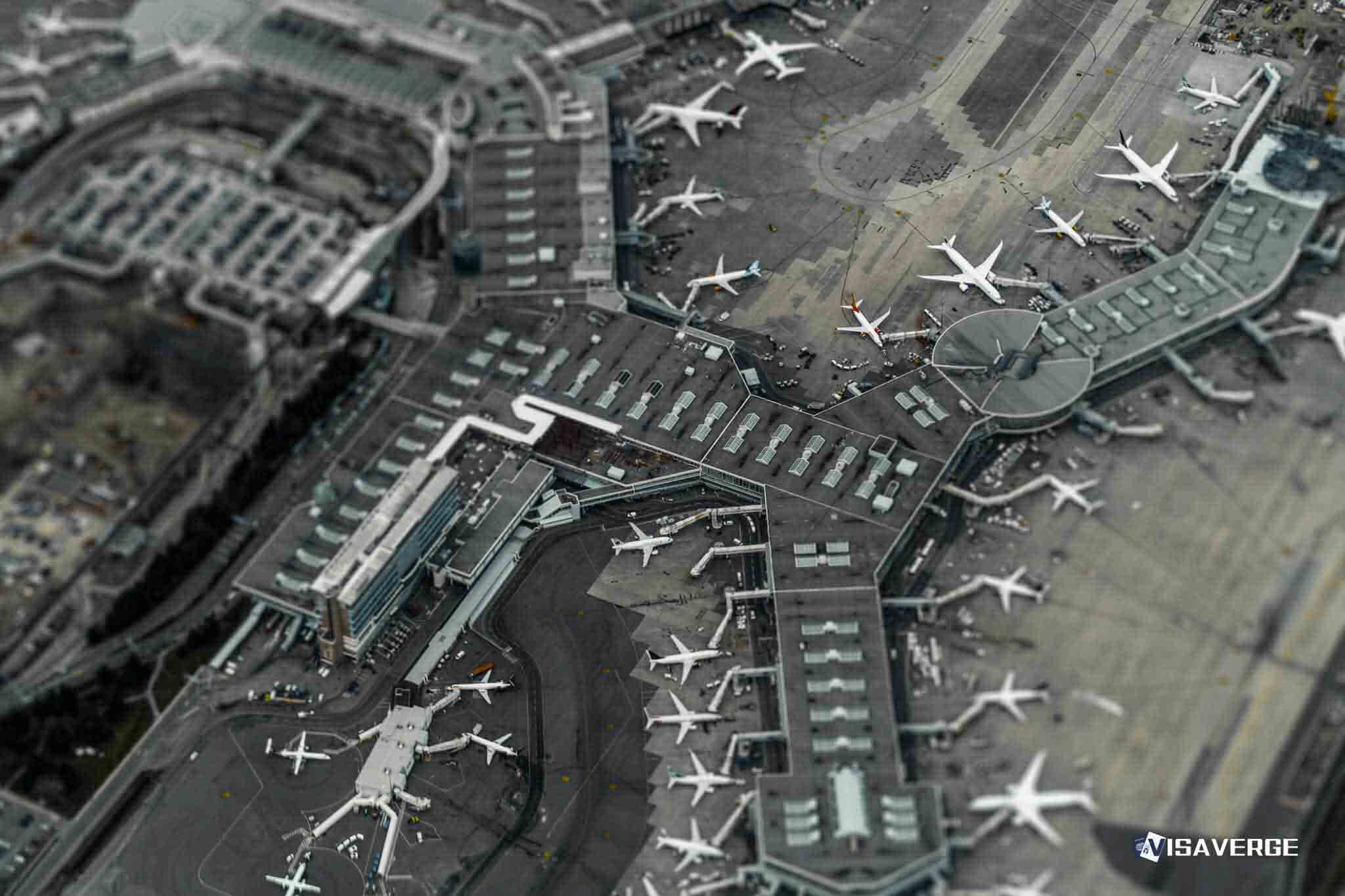
Incident overview: Iran airspace closure (January 15, 2026)
Iran issued an overnight closure via a NOTAM on January 15, 2026. The disruption window was about five hours. That may sound short, but in airline operations it’s enough to knock an entire day off-course.
A NOTAM (Notice to Air Missions) is the aviation industry’s operational trigger. It’s the message pilots, dispatchers, and air traffic controllers must follow. When a NOTAM closes airspace, airlines don’t “vote” on it. They reroute, divert, or cancel.
Even a brief closure ripples outward fast:
- Flights already airborne may divert to alternate airports.
- Departures may hold at the gate, then time out on crew duty limits.
- Aircraft end up in the wrong city, breaking later rotations.
- Connections fall apart at hubs, even outside the region.
This event fits the pattern of recent airspace closures that have been squeezing schedules across the Middle East and beyond. And it’s consistent with how India-based carriers reacted when the closure hit.
What changed for travelers: Before vs. after
The policy shift is simple: Iran went from “open” to “closed to most flights” on January 15, then “reopened” on January 16. The practical shift is bigger: many airlines are still flying around Iran.
| Before (typical operations) | After (post–January 15, 2026) | |
|---|---|---|
| Iran airspace status | Open for most international transits | Closed ~5 hours via NOTAM, then reopened |
| Overflight behavior | Many carriers used Iranian corridors on select routes | Many carriers continue to avoid Iranian airspace |
| Trip time | More direct routings on some city pairs | Longer routings, more schedule padding, occasional tech stops |
| Reliability | Connections planned around published block times | Higher misconnect risk and more rebookings during disruption waves |
| Pricing and awards | Normal inventory patterns | More last-seat sales, pricier rebooks, and tighter award space on “safe” routings |
📅 Key Date: January 15, 2026 was the overnight Iran airspace closure (about five hours). January 16, 2026 is when Iran said flights resumed.
Current status and risk assessment: “Open” isn’t “normal”
Flights resumed on January 16, 2026, per Iran’s Civil Aviation Organization. But reopening does not guarantee airlines return. Many carriers keep avoidance policies for weeks or months after a flash closure.
Operational “avoidance” usually means:
- Longer routings that bypass Iranian-controlled airspace
- Added fuel and time buffers in the schedule
- Higher odds your inbound arrives late, even without weather
- A greater chance you miss a tight connection at hubs like Dubai
Safe Airspace has rated the overall risk as “One — Do Not Fly.” In plain terms, it’s a top-level warning that civil aircraft face elevated risk in the region. The concern is misidentification by air defense systems during heightened tensions.
U.S. travelers should also know about a specific rule with a long tail. The U.S. maintains restrictions on U.S.-registered (“N-reg”) aircraft operating in the Tehran Flight Information Region (OIIX) through October 31, 2027. This can matter even when you aren’t flying a U.S. airline.
Why? Aircraft registration and leasing get complicated. A non-U.S. carrier may sometimes use U.S.-registered planes via leases or charters. It can also affect irregular operations recovery, when airlines scramble to sub in any available aircraft.
Reporting around reopening has been covered in updates on flight resumption and the reopening of transit airspace. The traveler lesson is the same: routes may remain detoured even after the map looks “green” again.
Who’s affected — and who isn’t
Most affected:
- USA–UAE itineraries with connections, especially same-day onward flights.
- Trips routed across the Middle East to South Asia and parts of Europe.
- Award tickets that depend on a specific partner routing.
- Business travelers who booked short connections to save time.
Somewhat affected:
- Nonstop USA–UAE flights, since they may still reroute and arrive later.
- Travelers checking bags, since misconnections increase mishandled baggage risk.
Less affected:
- Purely domestic U.S. travel.
- Routes that already use southern corridors and don’t rely on Iran overflights.
Broader context: why the risk can swing fast
Airspace risk can change in minutes when politics and internal stability shift. Protests that began in late December 2025 grew from economic anger into anti-government demonstrations. Conflicting reporting around casualties and detentions adds uncertainty.
Airlines and insurers don’t like uncertainty. Neither do regulators. When information is limited, carriers tend to choose conservative routings.
Internet shutdowns and conflicting reporting can also degrade real-time situational awareness. That matters for dispatch planning, overflight decisions, and crisis response.
Since 2024, many Middle East transits have already shifted south via Egypt and Saudi Arabia. That trend reduces exposure to some risk areas, but it can add flight time. It also packs more traffic into fewer corridors.
For a wider view on how geopolitics is reshaping airline decisions, see coverage of ops risk shifts and how reroutes create payment uncertainty.
Operational impact on aviation and routes: what you’ll feel as a passenger
NOTAM-based restrictions force re-routing, and rerouting breaks the math behind airline schedules. Aircraft rotations are tightly timed. When one flight goes long, the next one often goes late too.
Southern corridor routings can increase block time and shrink schedule recovery margins. That’s why you may see:
- Tighter connections suddenly become illegal connections.
- More gate changes as inbound aircraft arrive on different stands.
- Same-day rebookings that push you to later flights.
- Misconnected bags, especially on multi-airline itineraries.
Competitive context matters here. Gulf carriers often have more flexibility at their hubs and deeper rebooking options. Some U.S. and European carriers may have fewer daily frequencies, making re-accommodation slower.
What to do now: practical ways to reduce risk and protect your miles
⚠️ Heads Up: Reopening on January 16 doesn’t mean your airline will use Iranian airspace again. Expect detours and longer block times for now.
1) Book for reliability, not the shortest connection.
If you’re connecting in the UAE, avoid “barely legal” connections. Give yourself a buffer that can absorb a late inbound.
2) Choose routings your airline is already flying.
If one carrier is still avoiding Iranian airspace, trust their schedule planning more than a theoretical faster route.
3) Be careful with Basic Economy and restrictive fares.
During disruption waves, flexible tickets matter. A cheap fare can turn expensive if you can’t change easily.
4) Protect your points and elite goals.
Longer routings can help mileage runners if your program credits by distance. Many programs now credit by spend, though. If you’re chasing status, delays can also trigger missed segments. Build cushion days around elite-qualifying trips.
On the redemption side, expect tighter award space on “preferred” routings that avoid contested airspace. If saver awards disappear, consider booking a cash fare and saving points for calmer travel windows.
5) If you must travel soon, pick nonstop when you can.
For USA–UAE trips, a nonstop reduces misconnect risk even if the flight time grows.
If you’re flying to or through the UAE in the next week, recheck your flight status and routing daily, and avoid tight onward connections booked for the same day—especially on January 16–20, when aircraft and crews are still being repositioned.