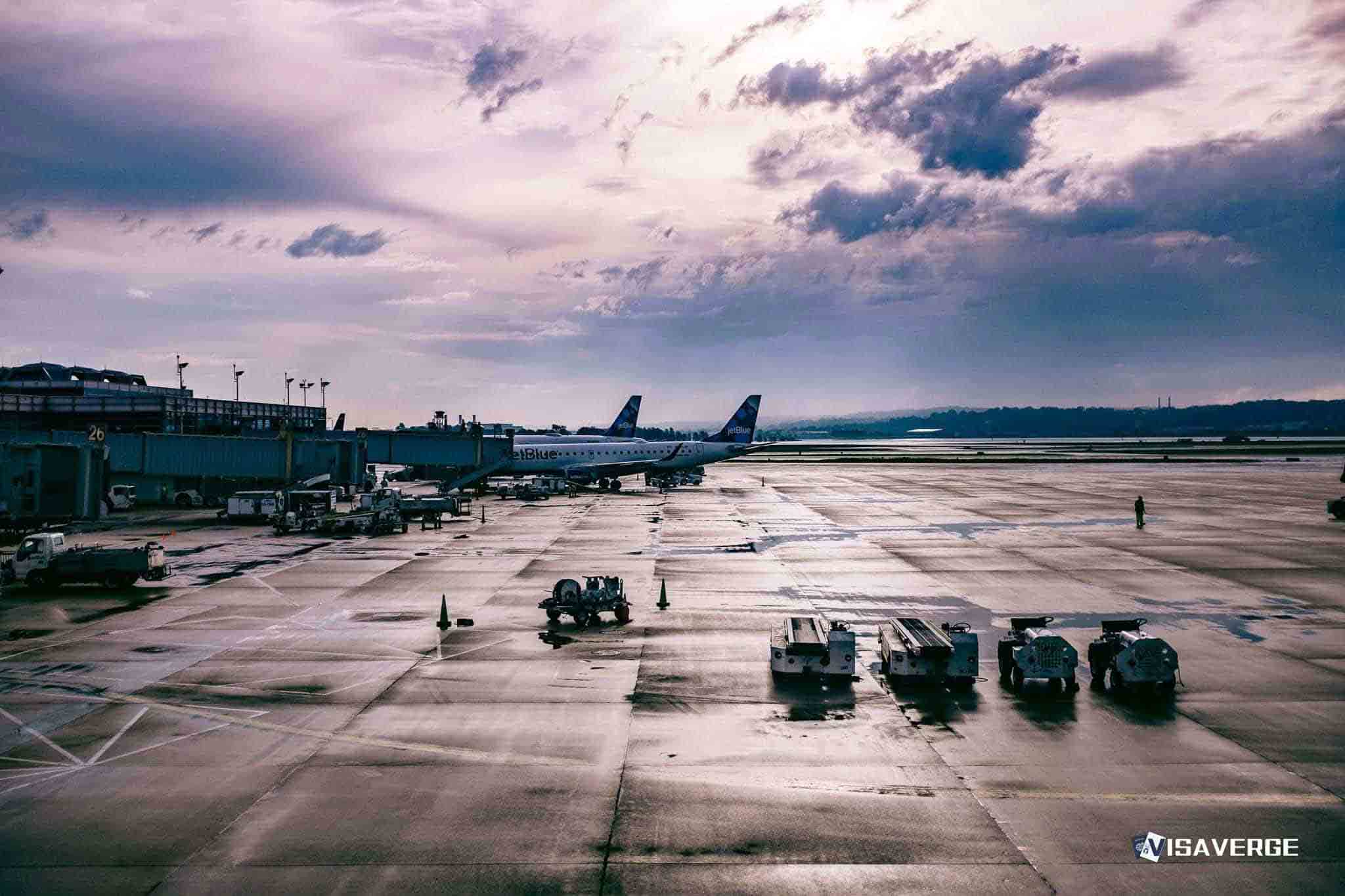
- Major European airlines continue avoiding Iranian-Iraqi airspace as of January 15, 2026, causing significant flight detours.
- Travelers face longer flight times and delays on routes between Europe, the Gulf, and South Asia.
- Experts recommend booking longer connection windows of at least three hours to mitigate rolling schedule disruptions.
(IRAN) — Major European carriers are still avoiding Iranian and Iraqi airspace after a January 15, 2026 disruption, which means longer flights, higher misconnection risk, and more last-minute schedule changes for trips between Europe, the Gulf, and Asia.
If you’re flying via Dubai, Abu Dhabi, Doha, or a European hub this weekend, plan for delays and pick flights with generous connection times.
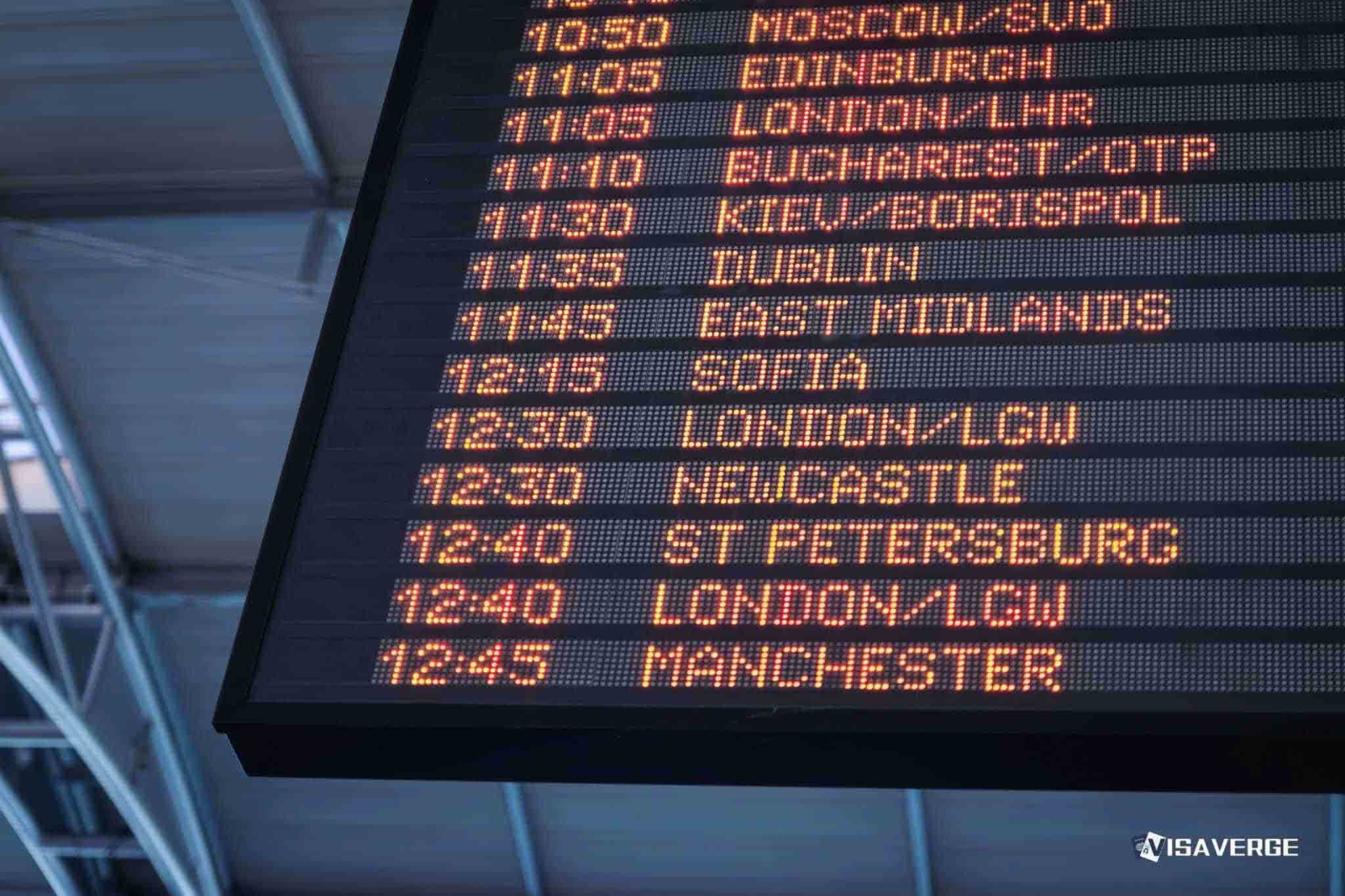
European airlines including Lufthansa, British Airways, KLM, Wizz Air, SWISS, Finnair, and Ryanair continued to route around Iranian and Iraqi airspace on January 15, 2026. That caution persisted even after Iran reopened its skies following a nearly five-hour closure the day before.
When a corridor that busy becomes unavailable, airlines don’t just “go around.” They rebuild flight plans, renegotiate routings, and absorb knock-on effects across entire fleets.
Practical impact for travelers
For travelers, the practical impact is straightforward: longer block times, more missed connections, and higher odds your aircraft and crew arrive late for the next flight.
This is especially true on flights that commonly overfly the region, including Europe–South Asia, Europe–Southeast Asia, and Gulf–Europe routes. It also hits anyone with tight onward connections in hubs like Frankfurt, London, Zürich, Amsterdam, Vienna, or Paris.
Airspace disruptions like this one also tend to hit Schengen-bound trips in a sneaky way. If you’re connecting into the Schengen Area from the UAE or elsewhere, a delay can turn a clean connection into a stressful passport-control sprint.
The ripple effects mirror other airspace closures that have forced carriers into long detours on short notice.
What’s changed: airlines are treating the route as restricted “until further notice”
Several groups moved beyond short-term avoidance and into open-ended caution.
Lufthansa Group (including SWISS) instructed airlines to bypass Iranian and Iraqi airspace “until further notice” as of January 15. Lufthansa also adjusted some Middle East flying, including suspending Tehran flights and restricting some operations to daylight hours, with cancellations possible.
British Airways canceled flights to Bahrain through January 16 while avoiding the airspace. Wizz Air rerouted certain westbound services from Dubai and Abu Dhabi, with the possibility of refueling and crew stops in Cyprus or Greece.
Even carriers that said they were minimally exposed still steered clear. KLM noted it rarely uses Iranian airspace, but still avoided it as a precaution. Finnair and Ryanair also opted for longer routings.
Before/After: what you’ll notice on your trip
| Before (typical routings) | After (post-January 15, 2026 avoidance) | |
|---|---|---|
| Flight path | More direct overflight across Iranian and Iraqi airspace on many city pairs | Detours via Afghanistan and Central Asia, or other alternate corridors |
| Time in the air | Scheduled block times built around normal routing | Longer block times and greater variance day-to-day |
| Connection reliability | Normal misconnect risk based on published schedules | Higher misconnect risk, especially on tight connections |
| Airport experience | More stable gates, boarding times, and aircraft assignments | More gate changes, aircraft swaps, and rolling delays |
| Baggage | Lower odds of misconnect on a protected itinerary | Higher misconnect risk when connections tighten or flights swap aircraft |
Who’s most affected — and who isn’t
This isn’t “every flight in Europe is delayed.” The pain is concentrated on routings that normally cross the region.
Most likely to be affected
- Europe ↔ Gulf flights, including UAE routes to hubs like London, Frankfurt, Zürich, and Amsterdam
- Europe ↔ South Asia and Southeast Asia flights that typically cross Iranian and Iraqi airspace
- Itineraries with tight connections at major hubs, especially on one ticket with checked bags
- Travelers on ultra-low-cost point-to-point carriers, where reaccommodation can be limited
Less likely to be affected
- Purely domestic European flights and short-haul intra-Europe flying
- Transatlantic flights between Europe and North America, which rarely need these corridors
- Trips that already route well north (some Scandinavia–Asia routings) or far south, depending on city pair
- Travelers with very long connection windows, who can absorb variability
How airlines respond in practice: reroutes, delays, cancellations
When airlines decide to avoid Iranian and Iraqi airspace, dispatchers and operations teams start solving a moving puzzle. First comes the route itself: detouring adds miles, which adds fuel burn, and it can add congestion because many airlines squeeze into fewer alternate corridors.
Overflight permissions can change quickly, and air traffic control flow restrictions can stack up. A long-haul aircraft arriving late can’t magically make up hours on the next segment, and crews face duty-time limits — that’s when cancellations that look “random” often happen to protect the broader network.
Passenger-facing outcomes are predictable: later departures and arrivals, aircraft swaps, missed onward flights and rebookings, baggage misconnects, and last-minute gate and terminal changes at large hubs.
Communication can also whiplash. Airline apps, SMS, and emails may update several times as routings and ATC slots move. Airport agents often see the same changing information you do, just in a different system.
Network carriers like Lufthansa, British Airways, and KLM can often reroute you via partners and alternate hubs. Low-cost carriers may have fewer same-day alternatives, especially if the flight operates only a few times per week.
For a helpful explainer on the operational logic, it’s worth reading how airlines decide cancellations when disruptions threaten long-haul rotations.
Points and miles: what changes when flights detour
Detours can be annoying, but they don’t always hurt your rewards strategy. On most programs, you’ll still earn based on the ticket price (revenue-based programs) or your booked fare class, not the route flown.
If your flight takes a longer path, you usually do not earn extra miles for the extra distance unless your program credits by distance and has specific rules.
- If your airline cancels and reroutes you onto a partner, earning can change by fare class and booking code.
- If you accept a different cabin or fare family, you might lose some earning, depending on program rules.
- If you’re chasing status, keep screenshots of original routing and rebooking details to help with missing credit requests.
Award tickets also face a tradeoff. Your miles cost usually stays the same, but availability can tighten fast when everyone is rebooking onto fewer viable corridors. If you have a miles booking via the Gulf to Europe, check alternate connections early, not at the airport.
Traveler playbook: how to protect your itinerary
Start with the booking you already have. Then decide how much risk you can tolerate.
- Prioritize protected routings. If you’re on one ticket, the airline generally has responsibility to reaccommodate you when they cause a misconnect. If you booked separate tickets, you’re exposed.
- Choose longer buffers. Two hours can be thin at mega-hubs during rolling delays. Three hours is safer, especially if you’ll clear passport control.
- Choose rebooking options that reduce risk. Prioritize nonstops over connections, earlier departures if disruption looks like it’s worsening, alternate hubs with more frequency, and same airline or alliance partners.
- Think carefully about UAE → Schengen connections. UAE hubs like Dubai and Abu Dhabi are popular but exposed to rolling reroutes. Leave enough time for passport control on arrival.
- Save receipts and documentation. Keep receipts for meals, hotels, and transport; ask for written confirmation of disruptions for insurers or credit card claims. See guidance on handling flight disruptions.
Key Date: January 15, 2026 is when many European carriers continued avoidance measures, even after the nearly five-hour closure the day prior.
British Airways cancellations to Bahrain run through January 16. If you’re booked, check your app before leaving for the airport.
For the next few days, book itineraries with wider connection windows, avoid self-transfers, and consider a nonstop even if it costs more.
If you’re flying to or from the UAE through January 16, open your airline app before you head to the airport, then again at check-in time, since gate and timing changes can stack up fast.