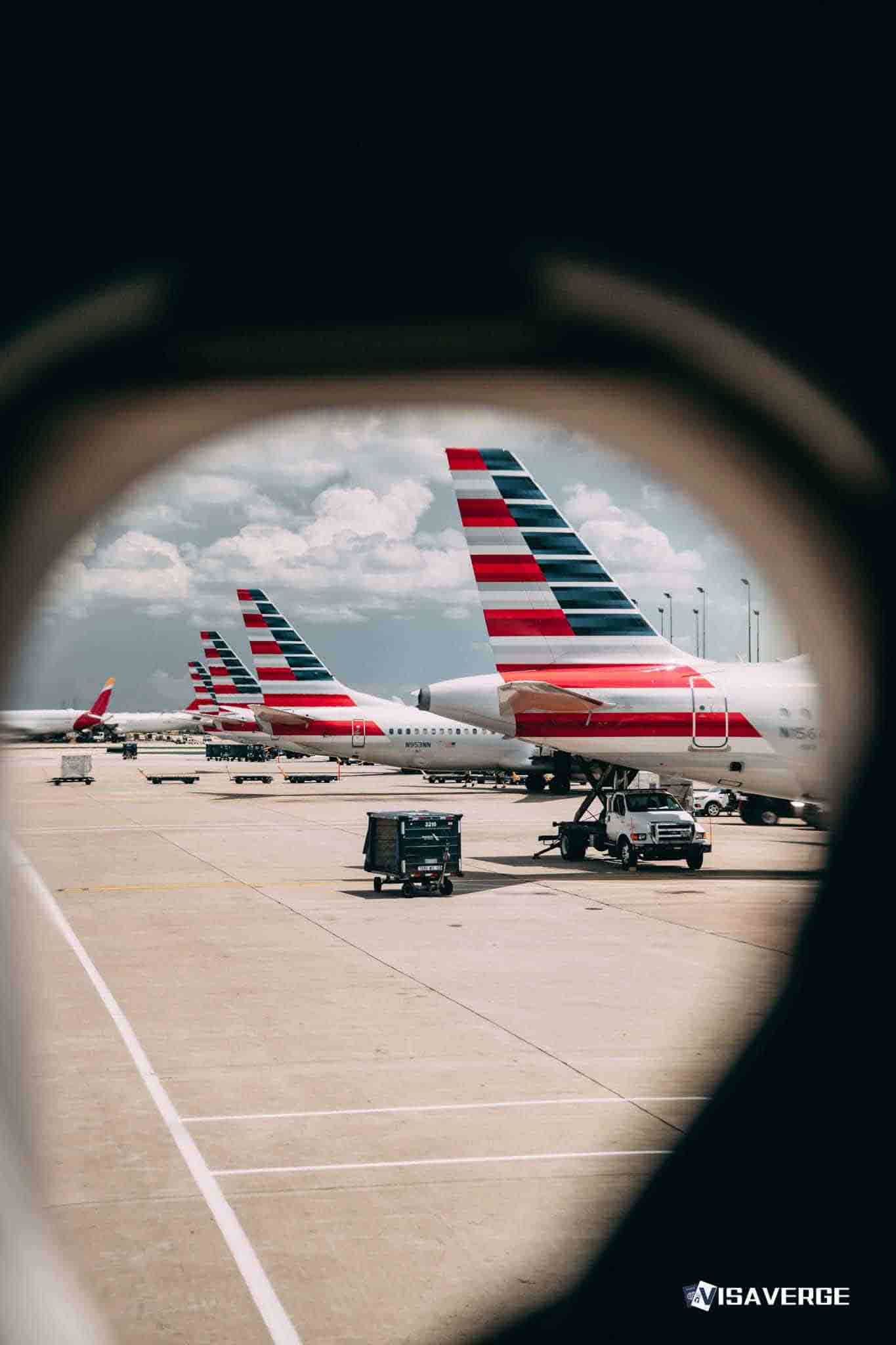
- A blue laser illuminated American Airlines Flight 3114 near Charlotte Douglas International Airport.
- The FAA and law enforcement are investigating the incident which occurred on January 29, 2026.
- Laser strikes carry severe federal penalties including heavy fines and potential prison time.
(CHARLOTTE, NORTH CAROLINA) — A blue laser aimed at an approaching American Airlines jet near Charlotte this week is a sharp reminder that one person on the ground can create a serious safety risk in seconds, and it can ripple into delays for travelers across the region.
American Airlines Flight 3114, a daily Charlotte-to-Charleston service, was illuminated by a Blue Laser Strike at about 7 a.m. Thursday, January 29, 2026, roughly 5 miles from Charlotte Douglas International Airport (CLT). The aircraft landed safely, and no injuries were reported.
Incident overview: what happened near CLT
Laser illumination events are most dangerous close to airports because crews are often at lower altitude and in high-workload phases of flight. Around approach and departure, pilots are managing checklists, radio calls, traffic separation, and landing configuration.
From initial reports, the following details are known about the event involving Flight 3114.
- Flight: American Airlines Flight 3114
- Route: Charlotte (CLT) → Charleston (CHS)
- Date / time: Thursday, Jan. 29, 2026, about 7 a.m.
- Location: About 5 miles from Charlotte Douglas International Airport
- Reported laser color: Blue
- Outcome: Landed safely; no injuries reported
What a “laser strike” means operationally
In airline operations, a “laser strike” usually refers to a cockpit being illuminated by a laser from the ground. Even brief exposure can cause glare, flash blindness, or distraction at exactly the wrong moment.
The FAA confirmed the crew reported being illuminated by a blue laser. The agency said it is investigating and is coordinating with local law enforcement.
In practice, the immediate response often follows a familiar chain:
- The flight crew reports the event to air traffic control.
- Controllers may ask for the direction, color, and intensity.
- Law enforcement may be notified to search the area.
- The crew assesses whether any additional medical or safety steps are needed.
Most flights continue safely, as Flight 3114 did. Still, the knock-on effects can be real. If a crew needs extra time to file reports, swap seats, or get checked out, departures can slip.
On a tightly scheduled morning bank at CLT, even small disruptions can cascade and create delays for other travelers across the region.
⚠️ Heads Up: If your flight is delayed after a safety incident, keep receipts. Save screenshots of delay notices in your airline app.
Legal framework: why the penalties are so steep
Shining a laser at an aircraft is treated as a serious safety offense in the U.S. It can trigger both civil enforcement and criminal prosecution, and it can also bring state or local charges.
The FAA can pursue civil penalties that are assessed per violation. In practical terms, that “per violation” language matters: one person can illuminate multiple aircraft, or repeatedly target a single aircraft, which may increase exposure and fines.
Criminal cases are separate from FAA civil actions. A criminal case depends on the investigation, evidence, and prosecutorial decisions, but the potential consequences are clear.
| Enforcement path | What it can mean |
|---|---|
| FAA civil penalties | Up to $32,000 per violation |
| Federal criminal penalties | Up to 5 years in prison and up to $250,000 in fines |
| State/local charges | May apply in parallel, depending on jurisdiction |
National context: laser reports remain high even with a dip
The FAA recorded 10,993 laser strike reports in 2025. That total was reported as about a 14% decrease from 2024, though some reports cite a 12% drop.
Both percentages can be true depending on when totals were pulled, how late reports were counted, and whether any figures were revised. A small change in the base number can shift the percentage after rounding.
Even with the decrease, the FAA and law enforcement have long argued the volume is still too high. “Reports” are not the same as confirmed offenders being caught; many incidents are never traced to a suspect. That gap is one reason officials emphasize real-time reporting.
Charlotte’s local history: why airports like CLT see repeat incidents
Charlotte Douglas International Airport has faced repeated laser incident reports over the years. That pattern is not unique to CLT, but the airport’s busy arrival and departure corridors make it a frequent target.
Areas under approach and departure paths are common locations for laser events for a simple reason: aircraft are lower, more visible, and often lined up in predictable directions. From the cockpit, that can turn a pinpoint beam into a blinding glare.
Investigation status and what travelers should do if they’re affected
As of Monday, February 2, 2026, no suspect details or arrests had been reported in connection with the Flight 3114 laser illumination.
The FAA urges witnesses to report laser strikes to the agency and to local police. For passengers, the more practical question is what happens if your trip is disrupted by a safety incident.
Airlines generally rebook you when a delay or cancellation is within their control. For events tied to safety or law enforcement activity, outcomes vary by carrier and situation. Either way, a few steps help protect your wallet:
- Confirm whether the airline is offering a refund versus a travel credit.
- Rebook in the app while you’re in line, since CLT queues can spike fast.
- Document meals, hotel, and ground transport costs if you’re stranded.
For frequent flyers, disruptions can also affect loyalty strategy. If you are rebooked onto a different airline due to irregular operations, your mileage and elite credit may change. If status credit matters, ask whether you can stay on American-marketed flights to help keep AAdvantage earning predictable.
If you’re traveling in the Carolinas this winter, build a little buffer into tight connections at Charlotte Douglas International Airport. And if you see someone aiming a laser near an approach corridor, report it immediately, because the next targeted aircraft could be far lower than Flight 3114 was.