January 3, 2026
- Revised title to a practical step-by-step guide format
- Added State Department endorsement requirement and Form I-566 step
- Included FY2025 statistics: 5,200 I-539 A-category approvals (up 12%)
- Added detailed timeline with median I-539 processing (8.5 months) and EAD averages (4.2 months)
- Updated filing specifics: I-539 online filing since March 2024 and $470 fee (FY2026)
- Added 2025–2026 planning notes including proposed DHS rule (Aug 28, 2025) impact
Switching from F-2 to A2 status inside the United States 🇺🇸 is a paper-driven process that starts with a State Department endorsement and ends with a USCIS change-of-status decision. For most families, the practical goal is simple: move from F-2 limits on work to A2 eligibility, including an Employment Authorization Document (EAD) through Form I-765.
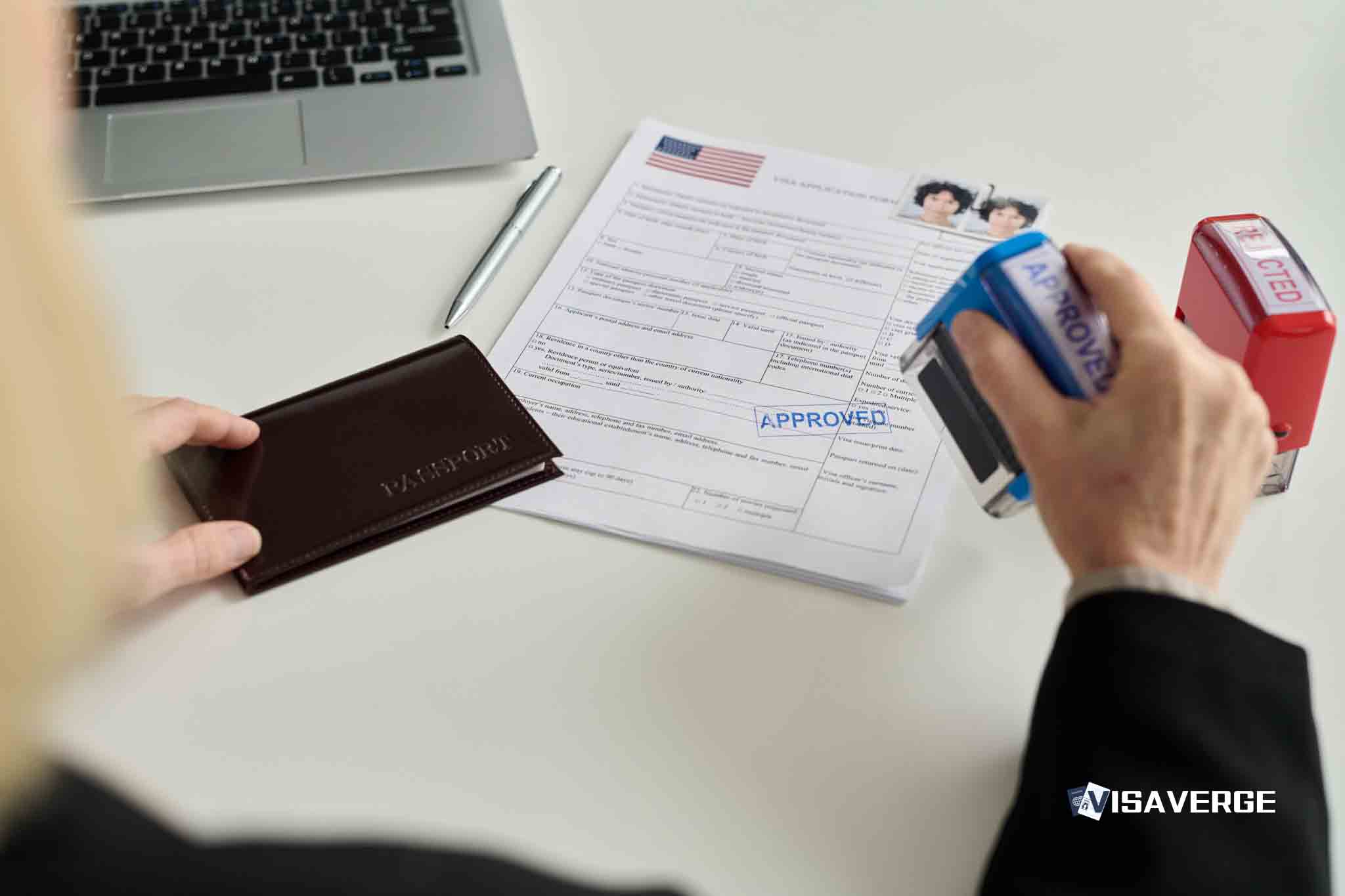
This change affects spouses and unmarried children under 21 who are in valid F-2 status and become immediate family members of a foreign government official in A-1 or A-2 status. Timing matters because the A2 request succeeds only when you keep lawful status through filing and USCIS review.
The basic rule: State Department endorsement first, USCIS filing second
An F-2 dependent doesn’t “convert” to A2 automatically when the principal starts official duties. The standard path is:
- Get Form I-566 endorsed through the Department of State process used by the mission or employing office.
- File a USCIS change of status request using Form I-539, with the endorsed I-566 and supporting records.
- After approval, apply for work permission, if eligible, using Form I-765.
According to analysis by VisaVerge.com, there were over 5,200 I-539 change-of-status approvals for A categories in FY2025, up 12% from 2024, reflecting higher diplomatic postings.
Eligibility checkpoints that decide most cases
USCIS and the State Department look for a clean match between the family relationship and the principal’s official assignment.
You qualify for the F-2 to A2 change of status when you are:
- The spouse or unmarried child under 21 of the principal.
- The dependent of someone in A-1 or A-2 status who is employed by a foreign government for official duties in the United States 🇺🇸.
- Documented as part of the official assignment, through the mission’s process and State Department review.
Work authorization later on can depend on whether the principal’s country has a bilateral agreement or a de facto reciprocal arrangement for dependent employment, as recognized through State Department protocol practice.
A realistic timeline, from endorsement to decision
Most families experience this as two queues: the State Department endorsement queue, then the USCIS queue.
Typical time pattern (late‑2025 / 2026 guidance and data points):
| Step | Typical timing |
|---|---|
| Form I-566 endorsement | 2–4 weeks on average after submission through the mission process |
| USCIS biometrics | Typically within 30 days after USCIS receives the I-539 |
| USCIS I-539 processing | 6–12 months at select service centers; median 8.5 months (Q4 2025) |
| Possible USCIS interview | Reported in about 15% of more complex cases |
| EAD processing after A2 approval | Average 4.2 months in 2025 for A-2 related EADs |
Premium processing is not available for this I-539 path. Plan around these timelines.
Step-by-step filing sequence (5 steps)
- Confirm the principal’s A assignment and collect relationship evidence
Gather passports, I-94 records, marriage or birth certificates, and proof that the principal holds A-1 or A-2 status for official duties. -
Route Form I-566 through the mission for State Department endorsement
This step is done through the principal’s employing mission or office and links the dependent to the official assignment. -
File the change of status package with USCIS using I-539
– USCIS has supported online filing for Form I-539 since March 2024, reducing paper submissions by 40%.
– The fee is $470 (as of FY2026).
– Attach the endorsed I-566, I-94, passport copies, and records showing the principal’s qualifying government assignment.
- Attend biometrics and respond quickly to any USCIS request
Most filers are scheduled for biometrics. Late‑2025 updates noted enhanced biometrics tied to I-566 endorsements for dependents. Respond to Requests for Evidence (RFEs) within deadlines. -
After approval, take the post-approval actions that match your goals
A2 status is typically granted effective from the filing date if F-2 status remained valid through filing. If employment is planned, prepare and file Form I-765 for an EAD after A2 approval.
What USCIS and the State Department look for in the file
Strong applications show consistency and current, official evidence.
Key items officers review:
- Proof the principal is actively serving in the official role tied to A status.
- Clear evidence the applicant is an immediate family member (spouse or unmarried child under 21).
- Copies of current immigration documents showing the dependent remained in valid F-2 status through filing.
Timing is crucial: filing while still in valid F-2 status protects the request from avoidable problems.
What A2 gives families that F-2 does not
A2 status can change daily life even when processing takes months.
Employment possibilities for dependents:
– F-2 status prohibits work. A2 dependents may qualify to work through bilateral agreements or de facto reciprocal arrangements, but must obtain prior approval and then an EAD using Form I-765.
– In FY2025, USCIS issued 2,800 A-2 EADs with a reported approval rate of 92%.
– For renewals, USCIS has allowed automatic EAD extensions up to 540 days (rules since 2022), though the first‑time EAD wait remains.
Stays that track the official assignment:
– A2 admission typically aligns with the principal’s tour.
– Initial periods can be up to 3 years, with extensions in 2‑year increments, tied to the principal’s duties.
Study without switching to F-1:
– A2 dependents may study in the U.S. without changing to F-1.
– K‑12 study is unrestricted; postsecondary study is allowed full‑time.
– NAFSA estimates this can save families about $500 in visa fees annually.
The trade-offs families often underestimate
Your status depends on the principal’s job:
– A2 is tied to the principal’s role. When that job ends, the dependent’s A2 status ends too.
– The State Department’s 9 FAM framework recognizes a “reasonable period,” commonly up to 30 days, to depart or file another change of status (e.g., another I-539).
Consequences of delay:
– In 2025, 15% of A‑2 terminations led to expedited removals for overstays.
Processing delays are normal:
– I-539 delays of 7–10 months were reported at some service centers in late 2025, with additional EAD processing time.
– Families should avoid expecting a work start date that matches ideal timelines.
Travel risks during pending change of status:
– Travel abroad while an I-539 is pending can abandon the application if the case is denied while the applicant is outside the U.S.
– USCIS cautions: “No assurance of approval or readmission.”
Avoid traveling abroad while I-539 is pending. A trip could abandon the application or lead to denial, and readmission is not guaranteed even if you re-enter with a valid visa.
2026 planning points for families who need continuity
One pressure point is keeping lawful status from start to finish. A proposed DHS rule published in the Federal Register on August 28, 2025, would replace “duration of status” for F-1/F-2 with fixed admission periods. For families moving to A2, that proposal increases urgency to file on time and track status dates.
Cost and error control matter:
– Average attorney fees are $2,500.
– There was an 8% denial rate in 2025.
– Many families seek legal review when diplomatic documentation, reciprocity, or timing issues are involved.
The strongest cases tell one consistent story:
– A valid F-2 dependent,
– A verified official posting,
– A clean Form I-566 endorsement,
– A complete I-539 package that stays consistent from the first page to the last.
This guide details the process of changing from F-2 to A2 status for diplomatic dependents. It emphasizes the mandatory State Department endorsement and the subsequent USCIS filing. Key benefits include work eligibility and study privileges, while risks involve long processing times and status dependency on the principal official’s role. Current 2025-2026 data highlights increased approval trends and specific biometrics requirements for applicants.