Understanding the Visa Transfer from J1 to H2B
For many individuals on a J1 visa, the opportunity to extend their stay in the United States for work purposes can be quite appealing. The H2B visa is an option that allows for such an extension, offering unique advantages to J1 visa holders looking to continue their experience in the U.S. workforce. In this post, we’ll delve into the process of transferring from a J1 visa to an H2B visa, along with its potential benefits and drawbacks.
The J1 to H2B Visa Transfer Process
If you’re considering transitioning from a J1 to an H2B visa, it’s important to understand that this is not a direct ‘transfer’ but an application for a new visa type. Here’s what you need to know about the transition process:
- Determine Your Eligibility: Evaluate whether you meet the criteria for an H2B visa, which typically requires proof of an offer of temporary employment from a U.S. employer in a non-agricultural field.
- Find an Employer to Sponsor Your H2B Visa: H2B visas are employer-sponsored, meaning you must have a U.S. employer willing to file a petition on your behalf.
-
Labor Certification: Your employer must obtain a temporary labor certification from the Department of Labor (DOL) demonstrating that there are no willing, able, qualified, and available U.S. workers to fill the position being offered.
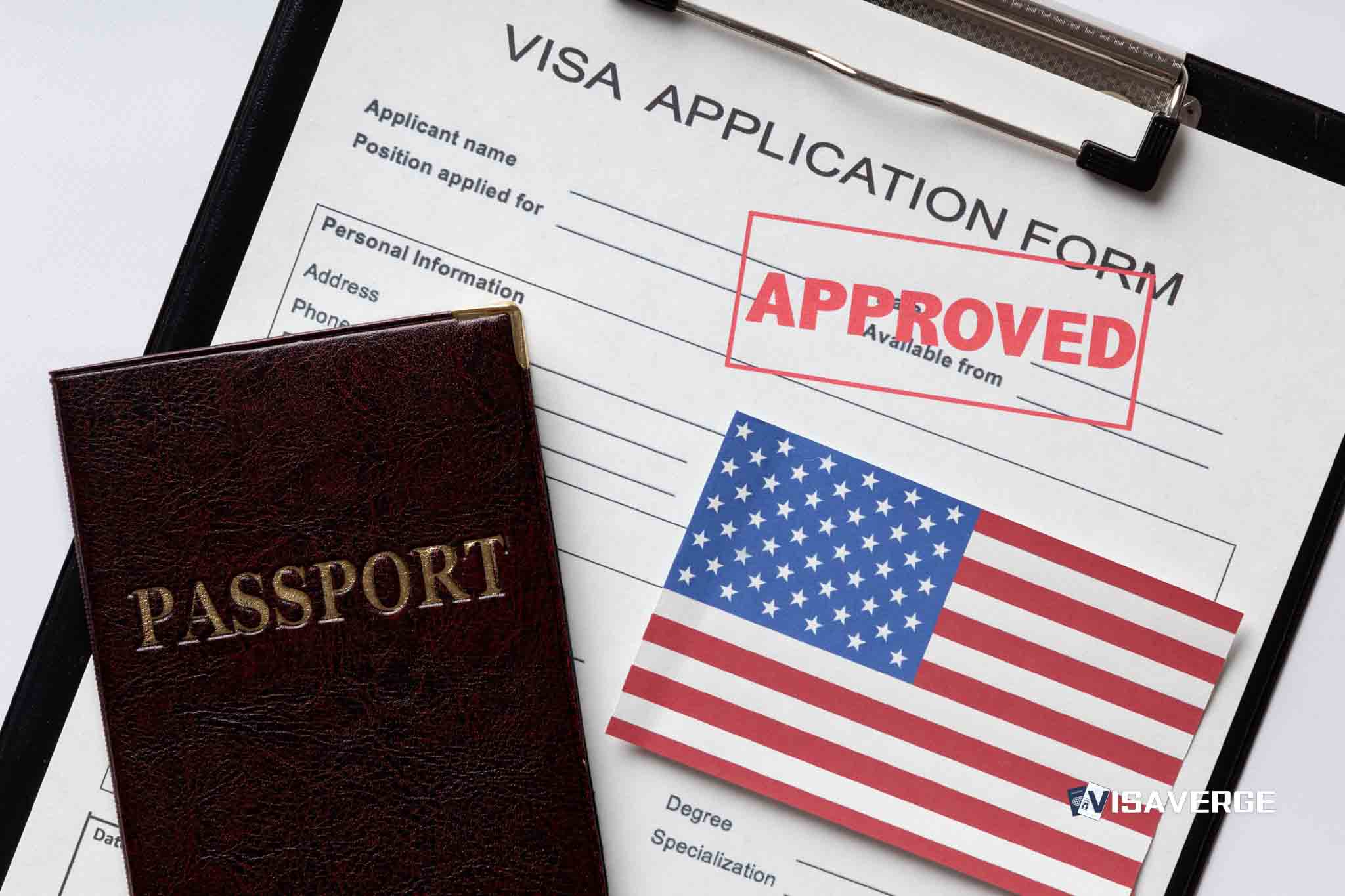
- Petition Filing: Once the labor certification is approved, your employer must submit the Form I-129, Petition for a Nonimmigrant Worker, to the United States Citizenship and Immigration Services (USCIS).
- Visa Application: After the I-129 petition is approved, you must apply for the H2B visa at a U.S. Embassy or Consulate in your home country.
-
Return to Your Home Country: Depending on your J1 visa program, you may be subject to the 2-year home residency requirement, which means you must return to your home country for two years before you can apply for an H2B visa. Waivers are available in some circumstances.
Advantages of Switching to an H2B Visa
Transitioning to an H2B visa comes with several perks:
- Job Flexibility: The H2B visa allows you to work in various non-agricultural sectors, often providing more job opportunities than the specialized fields of a J1 visa.
- Stay Extension: You can extend your stay in the U.S. to continue employment, with H2B status allowing you to remain for the duration of the job contract, up to a maximum of three years.
- Legal Working Status: Unlike the J1, which often has a specific end date tied to a program, the H2B visa grants a more traditional employment relationship with a U.S. company.
Disadvantages of the H2B Visa Route
However, there are also some potential downsides:
- Limited Numbers and Competition: The H2B program has an annual cap of 66,000 visas per year, which can make obtaining an H2B visa competitive and time-sensitive.
- No Dual Intent: The H2B visa is a nonimmigrant visa, which means you must have the intent to return to your home country upon completion of your temporary work in the U.S.
- Employer Dependency: Your visa status is tied to your employment, so if you lose your job, you may also lose your legal status in the U.S.
- Cost: There can be significant costs associated with obtaining H2B certification and filing for the visa, often borne by the employer.
It’s important to note that switching from a J1 to an H2B visa can be a complex process requiring careful planning and coordination with your prospective employer. Before embarking on this journey, you may want to consult with an immigration attorney or a trusted advisor who can help with the transition.
For further information and guidance on the visa transfer process, you can refer to the official USCIS website or the U.S. Department of State’s Bureau of Consular Affairs website.
In conclusion, while the process of transitioning from a J1 to an H2B visa may seem daunting, understanding the steps and requirements can help you navigate the path successfully. Weighing the advantages and disadvantages can also provide clarity on whether this is the right move for you. If you do decide to pursue an H2B visa, plan carefully, prepare thoroughly, and ensure you remain in compliance with all immigration laws and regulations.
Still Got Questions? Read Below to Know More:

How long does it usually take to transition from a J1 to an H2B visa, and when should I start the process
Transitioning from a J1 visa to an H2B visa involves a change of status process that can take several months. The exact timing varies depending on the workload of the United States Citizenship and Immigration Services (USCIS) and the specific details of your case. Generally, you should anticipate the process to take anywhere from 3 to 6 months. However, the processing times are subject to change and can be longer if there are any complications or additional requests for evidence.
Given the timeframes involved, it is advisable to start the process as early as possible, ideally at least 6 months before your current J1 visa status expires. This allows for any potential delays and the length of time it takes to gather all necessary documents and for your prospective employer to complete the required labor certification steps for an H2B visa.
When planning your transition, it’s important to keep an eye on the cap for H2B visas, as there is a yearly limit on the number issued. Also monitor the processing times on the USCIS website as these can give you a guide on current timeframes for change of status applications. Be sure to also check the H2B program’s eligibility and requirements on the Department of Labor’s website and USCIS’s H2B Visa page here.
What happens if I get an H2B visa but my job offer falls through; can I find another employer easily
If you have an H2B visa and your job offer falls through, it’s important to know that this visa is tied to the specific employer who petitioned for you. However, it is possible to change employers if you find yourself in this situation. Here’s what you need to understand:
- Notify USCIS and Find a New Job: Your first step should be to notify U.S. Citizenship and Immigration Services (USCIS) that your job offer has been rescinded or has ended. After that, you can search for a new employer willing to sponsor your H2B visa.
- New Employer Must File a Petition: The new employer must file a new Form I-129 (Petition for a Nonimmigrant Worker) on your behalf. You cannot legally begin working for the new employer until the petition has been approved.
-
Time Constraints: Keep in mind that there is a time constraint involved. You are only allowed to stay in the US for a short period between jobs. This period is often 60 days, but it’s best to confirm with USCIS or an immigration attorney, and to find new employment as quickly as possible.
For more details on Form I-129 application procedures, visit the official website of USCIS at www.uscis.gov.
Remember, you cannot start working for a new employer until the new petition is approved, but you can stay in the United States while the application is being processed, provided that you remain within the terms of your visa and follow all the necessary legal steps. Always consult with an immigration lawyer or a qualified advisor to guide you through this process and ensure that all actions you take are in accordance with immigration laws.
If I complete my J1 program and travel back home, is there a waiting period before I can apply for an H2B visa
If you complete your J1 program and return home, the need for a waiting period before applying for an H2B visa can depend on your situation. Some J1 visa holders are subject to a two-year home-country physical presence requirement (also known as the 212(e) requirement), which means you must return to your home country for two cumulative years at the end of your exchange visitor program. This requirement is based on the terms of your J1 visa and the type of program you participated in.
However, if your J1 visa is not subject to the 212(e) requirement, you typically do not need to have a waiting period before applying for an H2B visa. Here’s what you should know:
- If subject to 212(e), you must fulfill that requirement or obtain a waiver before you can change your status to H2B in the U.S. or receive an H2B visa for entry.
- If not subject to 212(e), you can apply for an H2B visa as soon as you find an employer willing to sponsor you and as long as H2B visas are available.
For official guidance, always refer to the U.S. Department of State website or the U.S. Citizenship and Immigration Services website:
U.S. Department of State – Exchange Visitor Visa: https://travel.state.gov/content/travel/en/us-visas/study/exchange.html
U.S. Citizenship and Immigration Services – H-2B Temporary Non-Agricultural Workers: https://www.uscis.gov/h-2b
Before applying for the H2B visa, make sure to check the latest cap count for H2B visas, as there is a statutory numerical limit, or “cap,” on the total number of foreign nationals who may be issued an H2B visa or otherwise granted H2B status during a fiscal year.
Can I look for a new job while on a J1 visa to qualify for an H2B, or do I need to return home first
The J1 visa and H2B visa are nonimmigrant visas for the United States that serve different purposes. While a J1 visa is meant for educational and cultural exchange programs, the H2B visa is for temporary non-agricultural workers. If you’re currently in the U.S. on a J1 visa and are considering changing to an H2B visa, there are important steps and regulations you need to be aware of.
Firstly, while you’re on a J1 visa, you’re expected to comply with the terms of your exchange program, and it is typically meant for a specific activity, such as studying or research. If you’re considering looking for a new job, you must ensure that it falls within the conditions of your J1 program or seek an appropriate change of status. To qualify for an H2B visa, you usually need to have a job offer from a U.S. employer who will file a petition on your behalf. Additionally, the employer must prove that there are not enough U.S. workers able, willing, qualified, and available to do the temporary work.
You may change status from a J1 to an H2B visa while in the U.S. if you meet certain conditions, such as having no home-country physical presence requirement, but this can be a complex process. It’s commonly advised to return to your home country and undergo the H2B visa process there, to ensure adherence to immigration laws and avoid any issues with changing status. Always refer to the U.S. Citizenship and Immigration Services (USCIS) and the U.S. Department of State for the most current and accurate information.
For more detailed information on changing from a J1 to an H2B visa, please visit:
– USCIS: Change My Nonimmigrant Status
– U.S. Department of State J1 Visa Basics: Exchange Visitor Visa
– U.S. Department of Labor H2B Visa Program: H-2B Temporary Non-Agricultural Workers
Are there special considerations for J1 visa holders who have dependents when switching to H2B status
J-1 visa holders with dependents who are considering switching to H-2B status should be aware of several key considerations:
- Dependent Status Change: If you are on a J-1 visa and have dependents in the U.S. on J-2 visas, they must also change their status to match your H-2B status. In this case, your dependents would need to change to H-4 status, which is for dependents of H visa holders. Unlike J-2 visa holders, who may have permission to work, H-4 dependents may not always be eligible for work authorization. Employment is possible only in certain circumstances, such as when the primary H visa holder is on the path to a green card and meets other specific requirements.
- Timing and Process: The timing is crucial. Both the J-1 visa holder and their dependents need to apply for a change of status before the J-1 visa expires. This process typically involves filing a Form I-539, “Application to Change Nonimmigrant Status,” for the dependents and Form I-129, “Petition for a Nonimmigrant Worker,” for the principal applicant. One must carefully track the processing times and plan accordingly to maintain legal status during this transitional period.
-
Two-Year Home-Country Physical Presence Requirement: Some J-1 visa holders are subject to the two-year home-country physical presence requirement, where they must return to their home country for at least two years at the end of their exchange visitor program. Having dependents does not exempt one from this requirement. If you are subject to this rule, you may need to apply for a waiver before you can change your status to H-2B.
For authoritative information and updates, always refer to the official U.S. Department of State J-1 Visa Exchange Visitor Program website here and the U.S. Citizenship and Immigration Services’ (USCIS) page for Changing to a Nonimmigrant H or L Status here.
Before making any changes to your visa status, it’s recommended to consult with an immigration attorney or a legal expert to ensure a smooth transition for you and your dependents.
Learn today
Glossary or Definitions:
- Visa Transfer: The process of transitioning from one type of visa to another. In the context of immigration, it refers to changing from a J1 visa to an H2B visa.
- J1 Visa: A nonimmigrant visa issued by the United States to individuals participating in approved exchange visitor programs for the purpose of studying, teaching, conducting research, or receiving training in various fields.
-
H2B Visa: A nonimmigrant visa that allows foreign workers to work in the United States temporarily in non-agricultural sectors, typically for jobs that are seasonal, intermittent, or one-time occurrences.
-
Labor Certification: A process conducted by the Department of Labor (DOL) to determine whether there are qualified U.S. workers available for a specific job opportunity. In the context of the J1 to H2B visa transfer, it is required by the employer to demonstrate that there are no willing, able, qualified, and available U.S. workers to fill the position being offered.
-
Form I-129: Also known as the “Petition for a Nonimmigrant Worker,” it is the form that U.S. employers must submit to the United States Citizenship and Immigration Services (USCIS) to sponsor a nonimmigrant worker for an H2B visa.
-
United States Citizenship and Immigration Services (USCIS): The government agency responsible for overseeing lawful immigration to the United States. It is under the Department of Homeland Security (DHS).
-
U.S. Embassy or Consulate: Diplomatic mission or outpost of the United States government located in foreign countries. It is responsible for issuing visas to foreign nationals who wish to travel to the United States.
-
2-Year Home Residency Requirement: A requirement imposed on J1 visa holders who have received funding from the U.S. government or whose skills are deemed to be of national interest. It stipulates that they must return to their home country for a period of two years before they can change their status or obtain certain visas, including the H2B visa.
-
Waivers: In immigration, a waiver refers to an exemption from a particular requirement or restriction. In the context of the 2-year home residency requirement, waivers may be available for individuals who meet certain criteria and can demonstrate that the application of the requirement would impose exceptional hardship.
-
Job Flexibility: The ability to work in various non-agricultural sectors under the H2B visa, providing more job opportunities compared to the specialized fields of the J1 visa.
-
Stay Extension: The H2B visa allows individuals to extend their stay in the United States to continue employment. The duration of the stay is dependent on the job contract, with a maximum of three years.
-
Legal Working Status: The H2B visa grants a more traditional employment relationship with a U.S. company, allowing individuals to have legal authorization to work in the United States.
-
Annual Cap: The maximum number of visas that can be issued in a specific visa category each fiscal year. In the case of the H2B visa, the annual cap is set at 66,000 visas.
-
Nonimmigrant Visa: A temporary visa granted to individuals who intend to enter the United States for a specific purpose and a temporary period without the intention of becoming permanent residents. The H2B visa is a nonimmigrant visa.
-
Dual Intent: The concept that an individual may simultaneously have the intent to enter the United States temporarily for a specific purpose (such as work) and also have the long-term intent to seek permanent residency. The H2B visa does not allow dual intent, meaning the intention to return to the home country should be demonstrated upon completion of the temporary work.
-
Employer Dependency: The status of an individual’s visa is tied to their employment. In the case of the H2B visa, if an individual loses their job, they may also lose their legal status in the United States.
-
Immigration Attorney: A legal professional specialized in immigration law who can provide guidance and assistance in navigating the immigration process, including visa applications and visa transfers.
USCIS: United States Citizenship and Immigration Services
DOL: Department of Labor
H2B: Temporary Non-Agricultural Worker Visa
J1: Exchange Visitor Visa
So there you have it, the ins and outs of transferring from a J1 to an H2B visa. It may seem like a complex process, but with the right guidance and knowledge, you can successfully navigate the path to extend your stay and continue working in the U.S. If you’re hungry for more information or need additional guidance, be sure to check out visaverge.com for a wealth of resources and expert advice. Happy exploring!