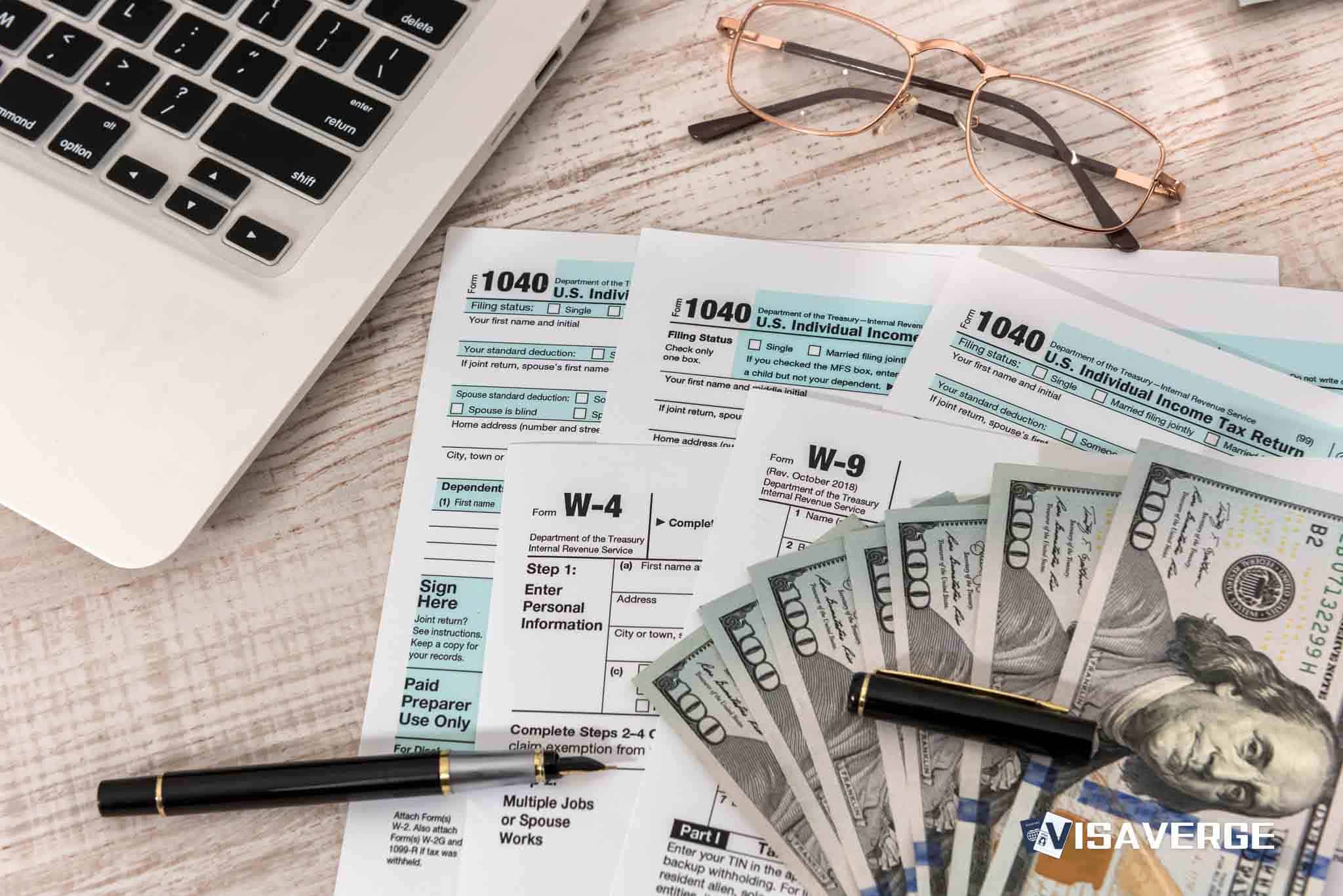
(WEST VIRGINIA) If you’ve moved to West Virginia for work, school, or a new start, one of the first “settling in” tasks is getting your pay and tax paperwork right. For many immigrants—H-1B professionals, international students on OPT, refugees, and new permanent residents—state income tax rules can feel like a second system on top of federal taxes. The good news is that West Virginia’s most recent changes are clear for the 2025 tax year, even though 2026 rates are still pending.
Current status of West Virginia rates (as of December 19, 2025)
As of December 19, 2025, West Virginia’s state income tax rates for the 2026 tax year (income earned in 2026, reported on returns filed in 2027) have not been finalized, according to state materials. The state says future cuts depend on statutory triggers reviewed by the Tax Commissioner in August 2025, with a possible January 1, 2027 effective date for any further reductions.
Until new rates are set, the most recent enacted schedule is for the 2025 tax year, reduced by Senate Bill 2033, signed by Governor Jim Justice and effective January 1, 2025. That law lowered the prior range from 2.36%–5.12% to 2.22%–4.82%, while keeping the same bracket structure.
Step 1: Confirm which “tax year” applies to your move
Timing is the first, and often most important, step. In the United States, your tax year usually matches the calendar year.
- Income earned January 1–December 31, 2025 is reported on a return you file in 2026.
- Income earned in 2026 is reported on a return you file in 2027, but West Virginia says the 2026 rate schedule is still TBD.
If you arrived mid-year, you may file as a part-year resident for West Virginia purposes. Keep a simple list of:
- your move date
- your first day of paid work in the state
- any days you worked outside the state
Those facts often determine how wages are taxed.
Step 2: Set up correct withholding on day one
For employees, most tax outcomes are decided before you file: through withholding. Employers use West Virginia withholding tables that were updated for the 2025 cuts. If your withholding is off, you might owe money at filing or get a larger refund than expected.
Actions to take:
- Complete your federal withholding form Form W-4 using the IRS instructions at IRS Form W-4.
- Ask payroll which state form or setup they use for West Virginia withholding, and confirm they are using the 2025 rates tied to Senate Bill 2033.
If you don’t yet have a Social Security number, you can still start many jobs, but your tax filing may require an ITIN (Individual Taxpayer Identification Number). The IRS uses Form W-7, available at IRS Form W-7.
Step 3: Map your taxable income to the 2025 brackets
West Virginia uses graduated brackets. For 2025 (unless future reductions apply), the brackets are:
- 2.22% on $0–$10,000 (single, married filing jointly, head of household), or $0–$5,000 (married filing separately)
- 2.96% on the next bracket
- 3.33% on the next bracket
- 4.44% on the next bracket
- 4.82% at the top
The state’s published examples show how marginal tax works. For example, a single filer with $25,000 in taxable income pays $619.50 total: $222 on the first $10,000 plus $397.50 on the next $15,000.
This is important for immigrants who change jobs or start work late in the year. If your income crosses a bracket, only the dollars above the cutoff face the higher rate, not your entire income.
Step 4: Track state adjustments from federal income
West Virginia taxable income starts from your federal adjusted gross income (AGI), then the state applies additions and subtractions through its adjustment schedule (often called Schedule M). If you have foreign income questions, treaty issues, or scholarship income, you may need help sorting what is included federally before West Virginia begins its calculation.
To avoid surprises, keep copies of:
- drafts of your federal return
- your W-2 or 1099 forms
- any immigration documents that affect work eligibility dates (offer letters, EAD start dates, I-94 entry record)
VisaVerge.com reports that new arrivals often overlook state adjustments and only focus on the federal return, which can lead to letters from state tax agencies later.
Step 5: File your federal return first, then West Virginia
Although many people submit federal and state returns together, the order matters for calculations. Prepare the federal return first, then carry the relevant figures into the West Virginia return.
Common federal filing forms include Form 1040, posted at IRS Form 1040. If you’re a nonresident for federal tax purposes, you may file a different federal form, but West Virginia’s starting point still ties back to federal income concepts.
For West Virginia forms and official updates, consult:
- West Virginia Tax Division — Personal Income Tax: https://tax.wv.gov/Individuals/Pages/PersonalIncomeTax.aspx
- West Virginia Tax Forms library: https://tax.wv.gov/Documents/TaxForms/Pages/TaxForms.aspx
Step 6: Watch the August trigger review and plan for change
The key uncertainty for 2026 planning is that the rate table is not final. West Virginia Code §11-21-4h requires the Tax Commissioner to review revenue conditions in August 2025. If the statutory conditions are met, rates could drop again with an effective date of January 1, 2027, affecting later tax years even if some discussions label it “2026+.”
Practical steps now:
- Keep your pay stubs so you can check withholding against the bracket range 2.22%–4.82%.
- If your household budget is tight, do not count on future cuts until they are enacted and published.
- If you’re renewing a visa, changing status, or applying for permanent residence, save proof you filed and paid taxes — tax compliance often appears in immigration screenings and background checks.
West Virginia leaders have also discussed other options, including Attorney General Patrick Morrisey’s late-2025 proposal for a 3.88% flat rate, but no change had been enacted as of the date in the state materials.
Important: If you overpaid, state refunds can take time. Keep a West Virginia bank account open and watch the mail for any verification request notice.
Quick checklist for new arrivals
- Confirm which tax year applies to your move and whether you’re a part-year resident.
- Complete Form W-4 and confirm your employer is using 2025 West Virginia withholding rates. (IRS Form W-4)
- Apply for an ITIN if needed using Form W-7. (IRS Form W-7)
- Keep copies of federal drafts, W-2/1099s, and immigration/work start documents.
- File federal return first (Form 1040: IRS Form 1040), then West Virginia forms.
- Monitor state updates after the August 2025 review and do not rely on unapproved rate changes.
If you want, I can convert the bracket details into a compact table or draft a one-page checklist you can print and keep in your files.
West Virginia’s income tax landscape is changing, with 2025 rates reduced to between 2.22% and 4.82% under Senate Bill 2033. New residents, including visa holders and permanent residents, must ensure their employers use updated withholding tables. While 2026 rates are pending an August 2025 review, taxpayers should focus on filing federal returns first and maintaining accurate records of their move dates to ensure state tax compliance.