- Singapore will introduce the world’s first mandatory SAF levy for all departing flights starting October 2026.
- The charge varies based on distance and cabin class, ranging from S$1.00 to over S$40.00.
- Proceeds are managed by a dedicated statutory fund to procure sustainable fuel and reduce aviation emissions.
(SINGAPORE) — Singapore has introduced the world’s first SAF levy for departures, effective October 1, 2026, with tickets issued from April 1, 2026 subject to the levy.
Section 1: Overview: Singapore’s SAF levy introduction
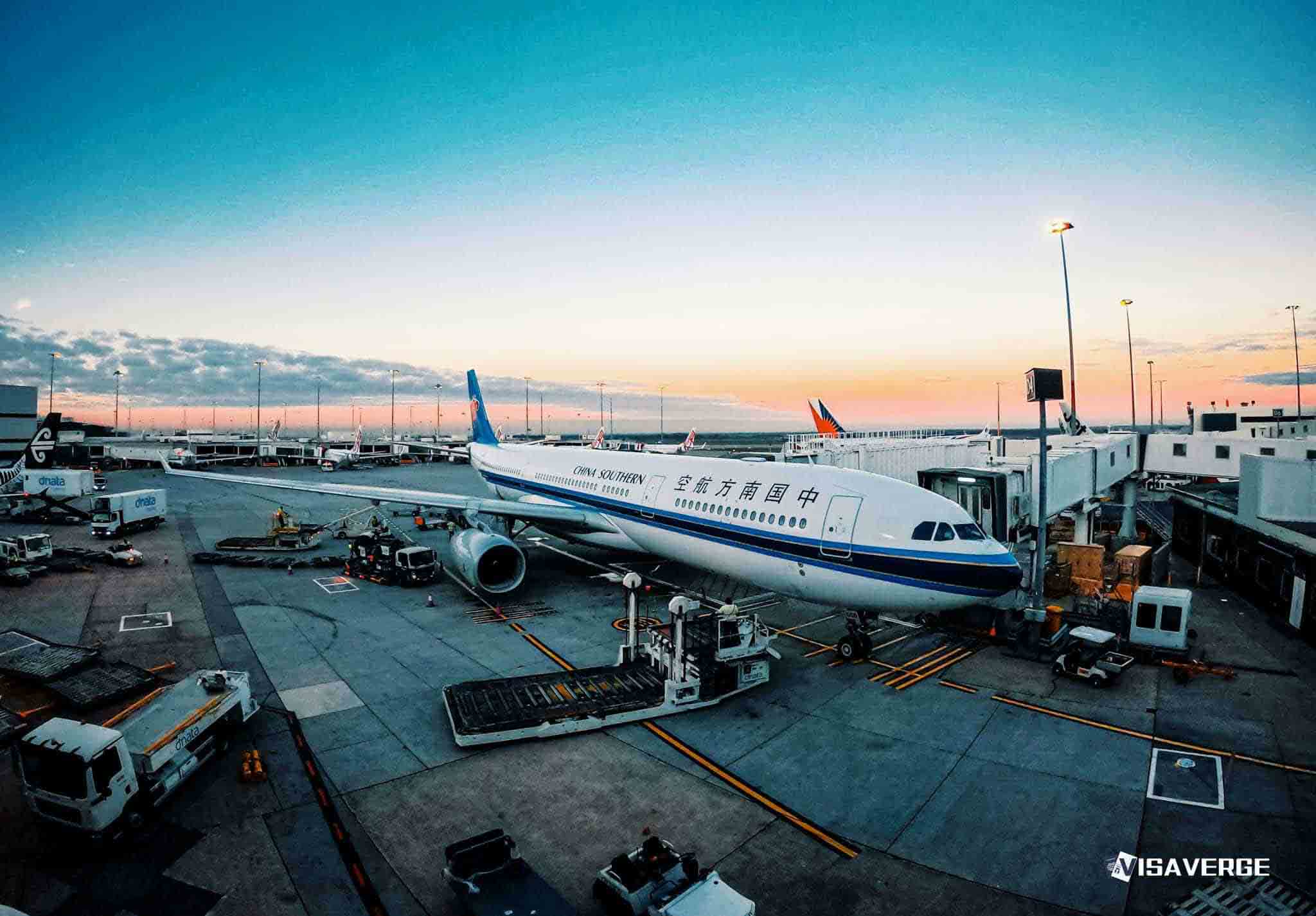
Singapore’s new sustainable aviation fuel levy is a mandatory charge tied to flights and shipments leaving Singapore. You may see it as a separate line item in a passenger ticket, a cargo airway bill, or an operator invoice. The basic idea is simple: every covered departure helps pay for a defined amount of sustainable aviation fuel (SAF) to be used for flights from Singapore.
Coverage is broad at a high level. The levy applies to:
- Origin-Destination (OD) passengers departing Singapore
- cargo shipments departing Singapore
- general and business aviation departures from Singapore
An SAF levy is not the same as a voluntary carbon offset. Offsets are typically optional add-ons that fund projects outside aviation, such as forestry. An SAF levy is different because it is a government-mandated aviation charge designed to fund SAF supply for aviation itself. It also differs from an airline-imposed surcharge because the framework is national and the proceeds flow into a statutory fund for SAF-related spending.
Section 2: When it starts and who pays: tickets, departures, and “Origin-Destination”
Two dates control how this levy reaches travelers and shippers. One date is about when you buy. The other is about when you fly or ship.
First, the levy is tied to departures from Singapore. That means it is charged on the outbound sector leaving Singapore, not on the inbound arrival into Singapore. A round-trip itinerary may only have the levy once, on the Singapore-originating leg, assuming it qualifies as OD travel.
Second, OD matters because it separates people who start their trip in Singapore from people who are only passing through. OD passengers are those whose journey begins in Singapore for that ticketed itinerary. Common patterns include:
- One-way: Singapore to another city. The outbound departure is in scope.
- Round-trip: Singapore out, then later back to Singapore. Only the outbound departure from Singapore is in scope.
- Open-jaw: Fly out of Singapore to one city, return to Singapore from a different city. The sector leaving Singapore is the one that matters.
Cargo and non-airline operators fall into the same “departure-based” concept. For cargo shipments, the levy may appear in all-in quotes and invoices for export uplift from Singapore. For general and business aviation, the charge may show up through operator billing tied to the departing flight.
“The introduction of the SAF Levy marks a major step forward in Singapore’s effort to build a more sustainable and competitive air hub. It provides a mechanism for all aviation users to do their part to contribute to sustainability at a cost which is manageable for the air hub,” said Han Kok Juan, Director-General of CAAS.
[information] Start dates to watch: Tickets issued from April 1, 2026 are subject to the levy; departures from Singapore on/after October 1, 2026 incur the levy.
Section 3: Levy amount and structure: what drives the final charge
The levy is not a flat fee. It varies based on two main levers you can see on an itinerary: flight distance band and cabin class. A third driver sits behind the scenes: the volume of SAF needed to meet Singapore’s initial 1% SAF target in 2026.
Distance matters because longer flights generally burn more fuel. Cabin class matters because premium cabins take more space and weight per passenger, so their share of the SAF cost is higher. As a result, business class typically pays about four times the economy charge on the same distance band. The total range runs from a very small add-on for short-haul economy to a much larger amount for long-haul premium cabins.
Cabin class is also where travelers can get surprised. Ticket displays often show a marketed cabin (“Economy,” “Premium Economy,” “Business,” “First”), while back-end pricing uses booking codes. Upgrades and reissues can change what appears on the receipt. In many cases, what you pay tracks the cabin shown on the ticketed segment at issuance or reissue, not what you originally searched.
A practical check before paying: look at the cabin on the Singapore-departing sector and confirm whether an upgrade cleared before ticketing or after. That timing can affect how the charge is listed.
Table 1: SAF levy examples by distance band and cabin class
| Distance band | Cabin class | Levy (SGD) |
|---|---|---|
| Short-range | Economy | S$1.00 |
| Americas-bound | Business | S$41.60 |
| All covered departures (overall range) | Varies by cabin and distance | S$1.00 to S$41.60 |
Section 4: Where the money goes: SAF Fund, CAAS oversight, and SAFCo’s role
Proceeds do not go into an airline’s general revenue. Collected levies are paid into a statutory SAF Fund managed by the Civil Aviation Authority of Singapore (CAAS). That fund structure is meant to separate the levy from unrelated spending.
A second entity handles the fuel-side work. Singapore Sustainable Aviation Fuel Company Ltd. (SAFCo) was set up to manage SAF procurement, allocation, and administration. That includes handling SAF-related environmental attributes associated with the fuel.
Ring-fencing is a key part of the design. Funds are to be used only for:
- purchases of SAF
- SAF-related environmental attributes
- associated administrative costs tied to running the SAF program
For travelers and shippers, the main takeaway is that the levy is built to pay for SAF supply and program administration, rather than acting like a general tax. It is also an aviation levy tied to SAF, not an immigration tax and not a form of income tax.
Section 5: Policy context and goals: SAF targets, emissions roadmap, and the fixed-rate period
The levy sits inside Singapore’s longer aviation decarbonization plan. The first milestone is the 1% SAF uplift target in 2026. Singapore then plans to increase SAF uplift to 3-5% by 2030.
Beyond fuel uplift, the Singapore Sustainable Air Hub Blueprint sets wider goals for the sector. One stated target is a 20% reduction in domestic airport operations emissions by 2030, relative to a 2019 baseline. The long-range ambition is net-zero aviation emissions by 2050.
Pricing predictability is another design feature. Singapore intends to keep a fixed-rate SAF levy from 2026–2028, even if global SAF or jet fuel prices change. That fixed-rate window may help airlines, corporate travel teams, and shippers forecast costs. It also means you generally should not assume the charge will track daily oil prices during that initial period.
Section 6: Exemptions and edge cases: transit/transfer, humanitarian flights, and mixed itineraries
Two exemptions are explicit.
Transit and transfer passengers are exempt. In airline terms, that usually means you arrive in Singapore and continue onward without starting your trip there. Airlines often label these as “transit” or “transfer” based on ticketing and minimum connection rules, not just the time spent in the terminal.
Flights made for charitable or humanitarian purposes are also exempt at a high level. In practice, documentation and operator classification may matter, especially for non-scheduled activity.
Mixed itineraries are where confusion can start:
- Separate-ticket self-transfers: A traveler might fly into Singapore on one ticket, then depart Singapore on a separate ticket. Even if the airport experience feels like a “connection,” the second ticket can look like OD travel from Singapore and may be charged.
- Stopovers vs connections: A long stop in Singapore, or leaving the airport, can shift a trip from transfer to OD in airline systems.
- Upgrades and reissues: If a ticket is reissued after an upgrade clears, the levy line item may change because cabin class can change.
- Corporate invoicing: Some travel programs see charges in back-office invoices rather than at purchase, depending on agency and settlement setup.
[action] For corporate travel managers: Verify OD patterns and how mixed itineraries may affect levy application on quotes and invoices, especially when travelers self-transfer on separate tickets.
The date pair still matters in edge cases. Ticket issuance timing can be just as decisive as the departure date, particularly when changes trigger re-ticketing.
The article discusses a government levy and provides general information. Readers should consult official CAAS guidance for current rules and exemptions.
This is not legal or tax advice; applicability may vary by itinerary and ticketing rules.