O-1 visa holders must file a U.S. tax return when they meet IRS filing thresholds or have U.S.-source income, and the single most important early step is deciding whether the IRS treats you as a resident or nonresident for tax purposes. That residency call controls whether you file Form 1040 or Form 1040‑NR, what income you must report, and what treaty rules and attachments apply.
For many O-1 workers, the confusing part is that immigration status and tax status are not the same thing. The IRS decides tax residency using the Substantial Presence Test, not your visa category. VisaVerge.com reports that this mismatch is one of the most common reasons internationally mobile professionals file the wrong return, miss an extra form, or mis-handle treaty claims.
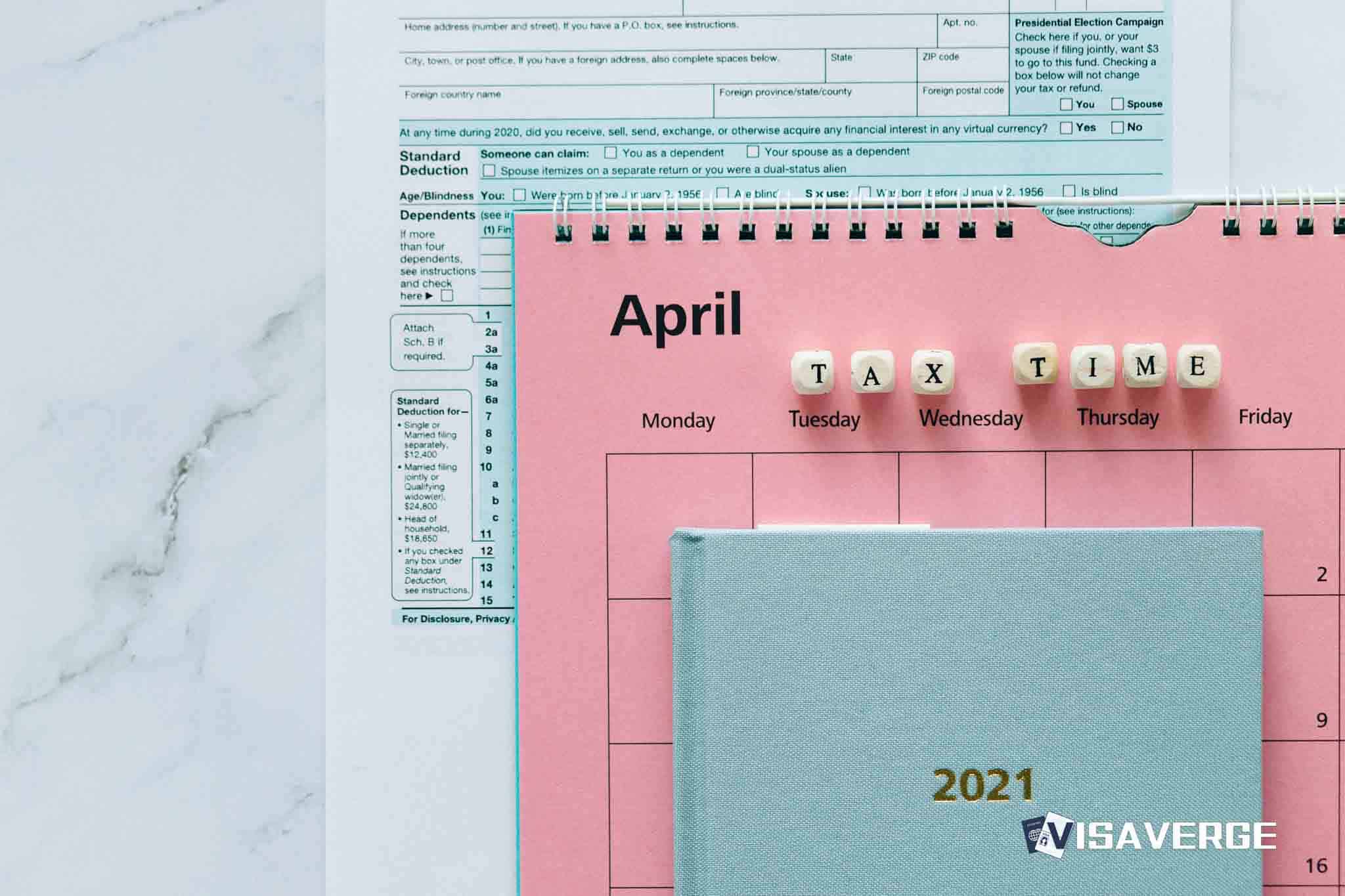
Filing season at a glance (January to October)
A clean tax season for an O-1 visa holder follows a predictable rhythm. Knowing the sequence matters, because one missing document can stall the rest.
- Late January: Employers typically issue wage statements, including Form W‑2, by January 31 for the prior calendar year.
- February to March: You collect all income statements and build your day-count history for the Substantial Presence Test.
- March to mid‑April: Prepare and file your federal return (and any state return), and pay any balance due.
- Mid‑April to October (if needed): File an extension and finish a complete return by the extended due date, while keeping payment rules straight.
This guide focuses on a 2026 filing season for the prior tax year. The exact April due date can shift when weekends or holidays intervene, so watch the IRS calendar and your state’s revenue department notices.
Step 1 — Decide your IRS tax residency (first and most important)
Before you choose software, hire an accountant, or even pick a tax form, run the IRS residency rules. The IRS explains the residency tests, including worked examples, in IRS Publication 519, U.S. Tax Guide for Aliens.
Two pathways decide your status:
- Green card test: If you are a lawful permanent resident during the year, you generally file as a resident for tax purposes.
- Substantial Presence Test (SPT): If you meet the day-count formula, you generally become a resident for tax purposes, even while still on an O-1 visa.
How the Substantial Presence Test works in real life
The SPT counts days you are physically present in the United States across three calendar years. The formula looks at the current year and the two prior years, with partial weighting for older days.
To do this correctly, most O-1 holders need a paper trail, not memory. Collect entry and exit records, then tally days carefully. The most useful documents are your passport stamps and your Form I‑94 travel history.
Remember: an extension to file does not extend the tax payment deadline. If you owe, estimate and pay by the April deadline to avoid interest, then file by the extended date if applicable.
- If you meet the SPT → you usually file Form 1040 as a resident alien for tax purposes.
- If you do not meet the SPT and are not a green card holder → you generally file Form 1040‑NR as a nonresident alien.
Step 2 — Match residency to the correct federal return (and required add-ons)
Once you know your IRS residency status, the form choice becomes straightforward.
If you are a resident alien for tax purposes
You generally file Form 1040, U.S. Individual Income Tax Return. Resident filing typically means broader income reporting expectations, because U.S. resident tax rules reach more categories of income.
Resident filing is common for O-1 professionals who spend most of the year in the United States.
If you are a nonresident alien for tax purposes
You generally file Form 1040‑NR, U.S. Nonresident Alien Income Tax Return. Nonresident filing focuses on U.S.-source income and specific IRS rules for how that income is taxed.
Many O-1 holders start as nonresidents in an early year of U.S. work, then shift into resident tax status once they meet the SPT day-count threshold.
The extra form many people miss: Form 8843
Some nonresidents must file Form 8843, Statement for Exempt Individuals and Individuals With a Medical Condition, even when they have no U.S. income. That requirement is separate from whether you owe tax.
Form 8843 is time sensitive. Treat it as part of your base compliance package when it applies, not as an optional attachment.
Step 3 — Build your document folder before you prepare the return
Tax prep goes faster when you treat it like a documentation project. For O-1 holders, the documentation list is also the audit-defense list. Collect it once, store it safely, and you avoid panic later.
Identity and travel records (for the SPT)
- Passport biographic page and visa page
- Entry and exit stamps, boarding passes when helpful
- Form I‑94 record and any related immigration paperwork
- A simple day-count spreadsheet for the current year and prior two years
These records support your Substantial Presence Test calculation and your position if the IRS ever questions your residency determination.
Income statements you might receive
- Form W‑2 for employee wages
- Form 1099 series for contractor or other payments
- Form 1042‑S for treaty-exempt or other special categories of income
Employers should provide W‑2 forms on schedule, but 1099 and 1042‑S statements can arrive on different timelines. Track what you expect and follow up early.
Taxpayer identification number: SSN or ITIN
If you do not have a Social Security number, you may need an ITIN. The application is Form W‑7, Application for IRS Individual Taxpayer Identification Number. ITIN processing delays can disrupt filing plans, so handle this early.
Step 4 — Withholding, payroll taxes, and the “employee vs contractor” trap
Most O-1 visa holders work as employees, with taxes withheld from each paycheck. That withholding is your first line of defense against an unexpected tax bill in April.
If you are on payroll
Your employer typically withholds:
- Federal income tax
- Social Security and Medicare taxes (FICA)
Review your Form W‑4 settings during the year, especially after life changes like marriage, a second job, or large freelance income. Correct withholding reduces the chance you must scramble to pay a large balance at filing time.
Some visa categories have FICA exceptions in specific circumstances. O-1 holders often do not fit those exceptions once standard payroll rules apply, so confirm your treatment with payroll and a qualified tax professional.
If you receive non-wage income, plan for estimated tax
O-1 professionals sometimes earn royalties, speaking fees, consulting income, or other payments that arrive without withholding. If that income is substantial, quarterly estimated taxes may apply.
- Residents often use Form 1040‑ES, Estimated Tax for Individuals as the payment framework.
- Nonresidents follow the 1040‑NR instructions and related IRS guidance.
Missing estimated payments can trigger penalties and interest. The fix is rarely complicated, but it requires early attention.
Misclassifying residency can trigger the wrong return (1040 vs 1040-NR) and missing Form 8843. Verify your status first, especially if you’re near SPT thresholds or changed work patterns mid-year.
Step 5 — Check treaty benefits and foreign tax credits with care
Tax treaty benefits can reduce or eliminate U.S. tax on certain income types, but treaty claims are technical. They usually depend on:
- The treaty article
- The nature of the income
- Your residency position under the treaty’s definitions
When a treaty position changes your federal tax treatment, you may need to attach Form 8833, Treaty-Based Return Position Disclosure. Publication 519 discusses treaty positions and when disclosure is required.
Treaty claims require clean documentation. Keep pay statements, contracts, and any correspondence that supports why a treaty benefit applies to your specific income.
If you paid foreign tax on the same income, you may qualify for a foreign tax credit when filing as a resident. The credit is often claimed on Form 1116, Foreign Tax Credit. This step is common for internationally active artists, researchers, founders, and athletes whose income crosses borders.
Filing deadlines, extensions, and payment expectations
For calendar-year taxpayers, the standard federal filing deadline usually falls in mid‑April. The exact date can move slightly due to weekends and holidays. People living abroad may receive an automatic two-month extension to June 15 to file, but payment rules remain tied to the April deadline, and interest accrues on unpaid amounts.
Important: An extension to file is not an extension to pay. Pay what you reasonably expect to owe by the regular deadline to avoid interest and penalties.
Extension mechanics O-1 holders commonly use
- Residents: file Form 4868, Application for Automatic Extension of Time To File U.S. Individual Income Tax Return to generally extend filing to October 15.
- Nonresidents: follow Form 1040‑NR instructions and Publication 519 guidance for extension rules.
Treat nonresident extension rules as their own system — they often differ in small but expensive ways.
State and local tax filing — the second return many O-1 holders forget
Federal filing is only half the picture. Many O-1 visa holders also owe state income tax, based on where they lived, worked, or maintained ties during the year.
State rules differ sharply on:
- What counts as a resident for state tax
- What income is taxable by the state
- Filing thresholds and due dates
- Credits for taxes paid to other states
Check the state revenue department guidance for each state where you lived or earned income. Keep copies of state returns with your federal return — many immigration and mortgage processes later ask for complete tax history.
Complex work patterns: multiple employers, self-employment, and owning a U.S. company
O-1 work can involve multiple engagements across a year. That is legal on the immigration side only when structured correctly, but it also creates tax complexity.
Multiple employers in one year
Multiple W‑2s are common for O-1 holders who change employers or have concurrent authorized employment. The main tax effect is often withholding imbalance, because each employer withholds without seeing your other wages.
Collect every W‑2 and reconcile totals carefully. Missing one form is a classic reason for an IRS notice.
Self-employment or contractor income
Self-employment income can trigger self-employment tax, require specific schedules, and often require estimated payments. This area surprises many O-1 holders because the tax bill can rise quickly when withholding is absent.
Beneficiary-owned company and sponsorship structures
Some O-1 workers operate through a U.S. entity that employs them. In those cases, the company has separate duties, including payroll withholding and employer tax filings, separate from your personal return.
Corporations may have separate federal filing requirements (for example, Form 1120 for C-corporations). Treat the business and personal sides as linked but not interchangeable.
A practical 5-step checklist you can follow each year
- Count your U.S. days for the current year and prior two years, using passport records and Form I‑94 history.
- Run the Substantial Presence Test using Publication 519, then decide whether you file Form 1040 or Form 1040‑NR.
- Collect every income statement (W‑2, 1099, 1042‑S) plus bank, brokerage, and foreign income records.
- Apply treaty and credit rules carefully, including Form 8833 for treaty disclosures and Form 1116 where relevant.
- File on time or extend properly, pay any tax due by the regular deadline, then store returns and backup documents for at least three years.
Common filing mistakes that create IRS letters and delays
Mistakes happen most often at the boundaries, where immigration life meets tax categories:
- Assuming an O-1 visa automatically means nonresident filing, without running the SPT.
- Filing Form 1040 when you should have filed Form 1040‑NR, or vice versa.
- Forgetting Form 8843 when required for a nonresident position.
- Claiming treaty benefits without required disclosure, including Form 8833 where applicable.
- Ignoring state filing duties after a move, short-term project, or remote work arrangement.
- Missing estimated tax obligations on royalties, consulting income, or other non‑wage payments.
Many of these errors are fixable, but fixes take time and can delay refunds or create penalties.
Quick takeaway: Run the Substantial Presence Test early, gather your documents, and treat treaty claims and extension payments as active tasks — not optional extras.
Where to verify rules quickly using official IRS guidance
When you need a primary reference, start with the IRS materials that speak directly to noncitizens and residency rules. Publication 519 remains the central guide and ties together the Substantial Presence Test, filing statuses, and treaty references.
For a broader official overview of how the IRS thinks about visa categories and tax, the IRS also maintains a visa-related page, but the working rule stays the same: tax residency is decided under tax law, not immigration classification.
This guide outlines the tax obligations for O-1 visa holders, emphasizing that tax residency is distinct from immigration status. By using the Substantial Presence Test, professionals must determine whether to file as residents or nonresidents. The process involves tracking travel history via I-94 records, gathering income statements like W-2s, and applying for treaty benefits or foreign tax credits while ensuring state-level compliance.