- India jumped 10 places to rank 75th in the 2026 Henley Passport Index.
- Indian passport holders now enjoy access to 56 destinations via visa-free or e-visa entry.
- Singapore leads the global ranking with 192 visa-free destinations in 2026.
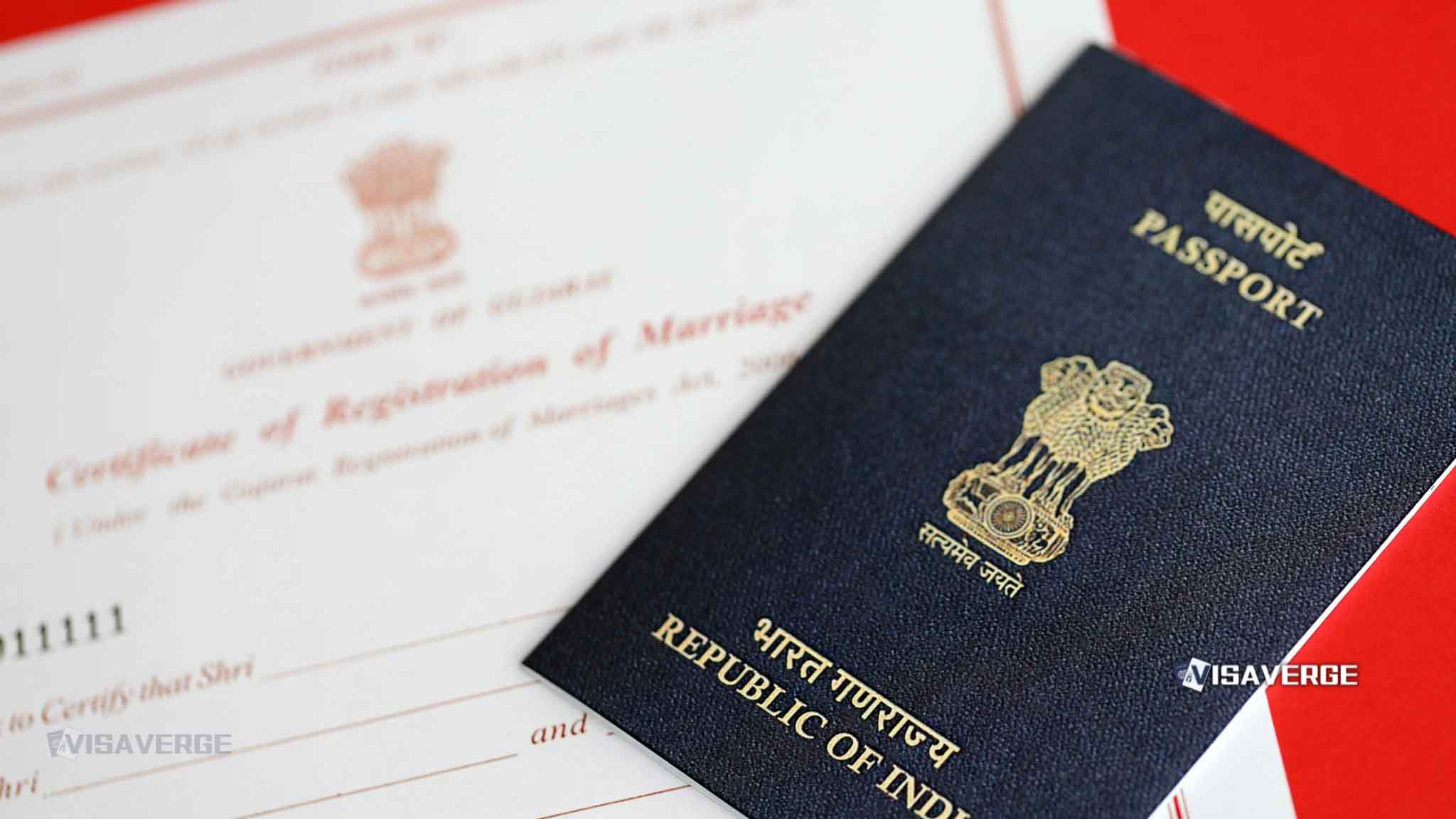
India ranks 75th in the 2026 Henley Passport Index, up 10 places from 85th in 2025, and the Indian passport now offers visa-free access, visa-on-arrival, or e-visa entry to 56 destinations. For many Indian travellers, that means fewer consulate appointments and more last-minute trip options, especially across Asia, Africa, the Caribbean, and Oceania.
Henley & Partners’ February 2026 update uses International Air Transport Association (IATA) travel rules to count how many places a passport holder can enter without getting a traditional visa in advance. The index focuses on short-stay entry rules for ordinary passport holders, not residency rights or work permission. According to analysis by VisaVerge.com, the jump reflects a longer-term trend where bilateral deals and streamlined e-visas matter as much as classic “visa-free” waivers.
India’s 56 destinations, grouped by entry type
Henley counts 56 total accessible destinations for Indian citizens, combining visa-free entry, visa-on-arrival (VOA) systems, and e-visas.
Visa-free destinations listed for Indian passport holders include: Angola, Barbados, Bhutan, Dominica, Fiji, Grenada, Guinea-Bissau, Haiti, Indonesia, Kazakhstan, Kiribati, Macao (SAR China), Malaysia, Micronesia, Moldova, Mongolia, Montserrat, Myanmar, Nepal, Niue, Qatar, Russian Federation, Rwanda, Samoa, Senegal, Sierra Leone, Singapore, St. Kitts and Nevis (ETA), St. Lucia, St. Vincent and the Grenadines, Suriname, Tanzania, Thailand, Timor-Leste, Tuvalu, Uganda, Vanuatu, Zambia, Zimbabwe.
Visa-on-arrival (VOA) destinations listed include: Burundi, Cambodia, Cape Verde Islands, Comoro Islands, Djibouti, Ethiopia, Jordan, Kenya (ETA), Laos, Madagascar, Maldives, Marshall Islands, Mauritius, Mozambique, Palau Islands, Seychelles (ETA), Somalia, South Sudan, St. Helena, Trinidad and Tobago, Türkiye.
e-visa destinations listed include: Albania, Antigua and Barbuda, Armenia, Azerbaijan, Bahrain, Benin, Bolivia, Botswana, British Virgin Islands, Burkina Faso, Cameroon, Colombia, Congo (Dem. Rep.), Cook Islands, Côte d’Ivoire, Cuba, Equatorial Guinea, Gabon, Georgia, Jamaica, Kyrgyzstan, Mauritania, Morocco, Namibia, Nigeria, Oman, Philippines, São Tomé and Príncipe, South Africa, Sri Lanka, Syria, Tajikistan, The Bahamas, Togo, Ukraine, Uzbekistan, Vietnam.
What changed from 2025 to 2026, and why the number still slipped
The headline improvement is the ranking jump, but the total access count fell from 57 in 2025 to 56 in 2026 after Iran and Bolivia revoked visa-free entry for Indians. Even so, India’s 2026 position improved because other countries shifted too, and because India’s access rose from 55 in January 2026 to 56 later in the year.
Historically, the Indian passport’s best recent performance in this index was 71st in 2006. The low point cited was 85th in 2025. That context matters because passport power changes with geopolitics, overstay rates, security screening systems, and reciprocity talks, not just tourism demand.
Regional comparisons around India
India shares 75th place with Côte d’Ivoire, Gabon, Madagascar, and Mauritania. In South Asia, India outranks Pakistan (97th), Sri Lanka (91st), Bangladesh (93rd), Nepal (95th), Bhutan (83rd), and Afghanistan (101st). Rankings do not change anyone’s legal rights by themselves, but they shape how airlines screen passengers and how border officers expect travellers to document their trips.
How Henley’s “top 10” works in 2026
The Henley Passport Index ranks passports by the number of destinations reachable without a prior visa. Each rank below lists the access count reported for 2026. Think of these as travel convenience indicators, not immigration pathways to residence.
1) Singapore — 192 destinations
Singapore leads the 2026 Henley Passport Index with 192 destinations. That level of visa-free access usually means Singapore citizens can plan business trips with minimal lead time. For Indian families comparing passports, Singapore sits at the far end of global mobility. It also shows what strong consular trust and low overstay rates produce in practice. Naturalisation rules, however, are separate from travel access.
2) Japan and South Korea — 187 destinations
Japan and South Korea share rank two with 187 destinations each. Both passports benefit from long-running reciprocal waivers and dense airline networks that reduce “documentation friction.” For Indian travellers, these examples underline a key point: a powerful passport is built over decades through stable governance and tight identity systems. Visa-free access at this level also reduces costs tied to repeated visa applications.
3) Sweden and the United Arab Emirates — 186 destinations
Sweden and the United Arab Emirates share rank three with 186 destinations. Sweden reflects a traditional high-mobility European profile built on broad reciprocal access. The UAE’s presence near the top shows how quickly mobility can rise when a state signs targeted waivers and strengthens screening and issuance controls. For Indian professionals in the Gulf, the UAE example often feels closest to home in terms of regional ties.
4) Belgium, Denmark, Finland, France, Germany, Ireland, Italy, Luxembourg, Netherlands, Norway, Spain, Switzerland — 185 destinations
This group shares rank four with 185 destinations. While each country has its own passport and nationality law, their travel access clusters tightly due to Europe-wide cooperation and global reciprocity patterns. For Indian passport holders, this rank illustrates why Schengen-area and closely aligned European states often move as a bloc. It also shows the difference between short-stay travel and long-term residence, which still requires national permits.
5) Austria, Greece, Malta, Portugal — 184 destinations
Rank five passports offer 184 destinations: Austria, Greece, Malta, and Portugal. These are smaller European states with strong outbound mobility. For Indian readers, they often come up in conversations about second citizenship because some countries historically offered investor routes, although travel access alone does not describe eligibility. What the index captures is the end result: broad visa-free access built on reciprocity and trusted documentation.
6) Hungary, Malaysia, New Zealand, Poland, Slovakia, Slovenia — 183 destinations
Rank six sits at 183 destinations and includes Hungary, Malaysia, New Zealand, Poland, Slovakia, and Slovenia. Malaysia’s inclusion is notable in an Asia-focused comparison because it shares space with several European Union passports and a Pacific partner. For Indian travellers, Malaysia’s position contrasts sharply with the Indian passport’s current 56 destinations, even though Indians often travel to similar regions. The gap highlights how visa policy is as political as it is economic.
7) Australia, Croatia, Czechia, Estonia, Latvia, United Kingdom — 182 destinations
Rank seven includes Australia, Croatia, Czechia, Estonia, Latvia, and the United Kingdom, each with 182 destinations. These passports combine strong identity vetting with long-standing travel agreements. For Indian students and skilled workers, the United Kingdom remains a major destination, but its passport strength here relates to outbound travel, not inbound visa rules. Australia’s place reflects deep ties across the Asia-Pacific and the Americas.
8) Canada 🇨🇦, Liechtenstein, Lithuania — 181 destinations
Rank eight covers Canada 🇨🇦, Liechtenstein, and Lithuania with 181 destinations. Canada 🇨🇦’s passport strength is shaped by broad global reciprocity and close alignment with U.S. and European screening standards. For Indians with family links in Canada 🇨🇦, the ranking often reinforces a lived reality: Canadian citizens usually face fewer documentary hurdles for short trips. Liechtenstein’s and Lithuania’s counts show how smaller states can still achieve wide travel access.
9) Iceland — 180 destinations
Iceland ranks ninth with 180 destinations. Its passport power tracks with European cooperation and a strong global reputation for documentation integrity. For Indian travellers, Iceland’s position is a reminder that population size does not decide mobility. Instead, consistent governance and reciprocal travel waivers do. Iceland also appears frequently in Schengen travel planning because it participates in Europe’s shared short-stay regime.
10) United States 🇺🇸 — 179 destinations
The United States 🇺🇸 rounds out the top 10 with 179 destinations. Even at tenth place, the U.S. passport remains among the world’s most mobile. For Indian families familiar with long U.S. visa waits, it helps to separate two ideas: how hard it is to enter the U.S., and how easily Americans can enter other countries. Those are different policy questions, and Henley measures the second.
Other rankings that Indians often see online
Henley is not the only list. Passport Index ranks India 70th with a mobility score of 72, described as 25 visa-free, 43 visa-on-arrival, 65 e-visa, and 4 ETA. Wikipedia also reports a similar breakdown and places India at 68th in its presentation.
Some Indian travellers also get extra entry options if they hold valid multiple-entry visas for the United States 🇺🇸, the UK, Schengen, or the EU. That can open additional visa-free or VOA access for select countries, which is one reason two Indians may experience travel very differently.
Verifying rules before you book, and choosing what fits your life
Entry policies change fast, and airlines enforce them strictly at check-in. Before committing money to flights and hotels, confirm the latest requirements through an official government channel. India’s passport issuance and status services are available through Passport Seva (Government of India), which also links to related public guidance.
When weighing travel options, compare three things : your destination list, your time to prepare, and your tolerance for uncertainty at borders. The Indian passport’s 56-destination footprint supports flexible regional travel, while the top 10 Henley Passport Index countries show what near-frictionless mobility looks like.