(CANADA) — The UK Home Office tightened entry rules for Canadian travellers who also hold British citizenship, requiring them to show a valid British passport or a Certificate of Entitlement to enter the UK from February 25, 2026.
Dual British-Canadian citizens can no longer rely on presenting only a Canadian passport to travel to the UK, as transitional arrangements end and carriers face stricter expectations to confirm British status before boarding.
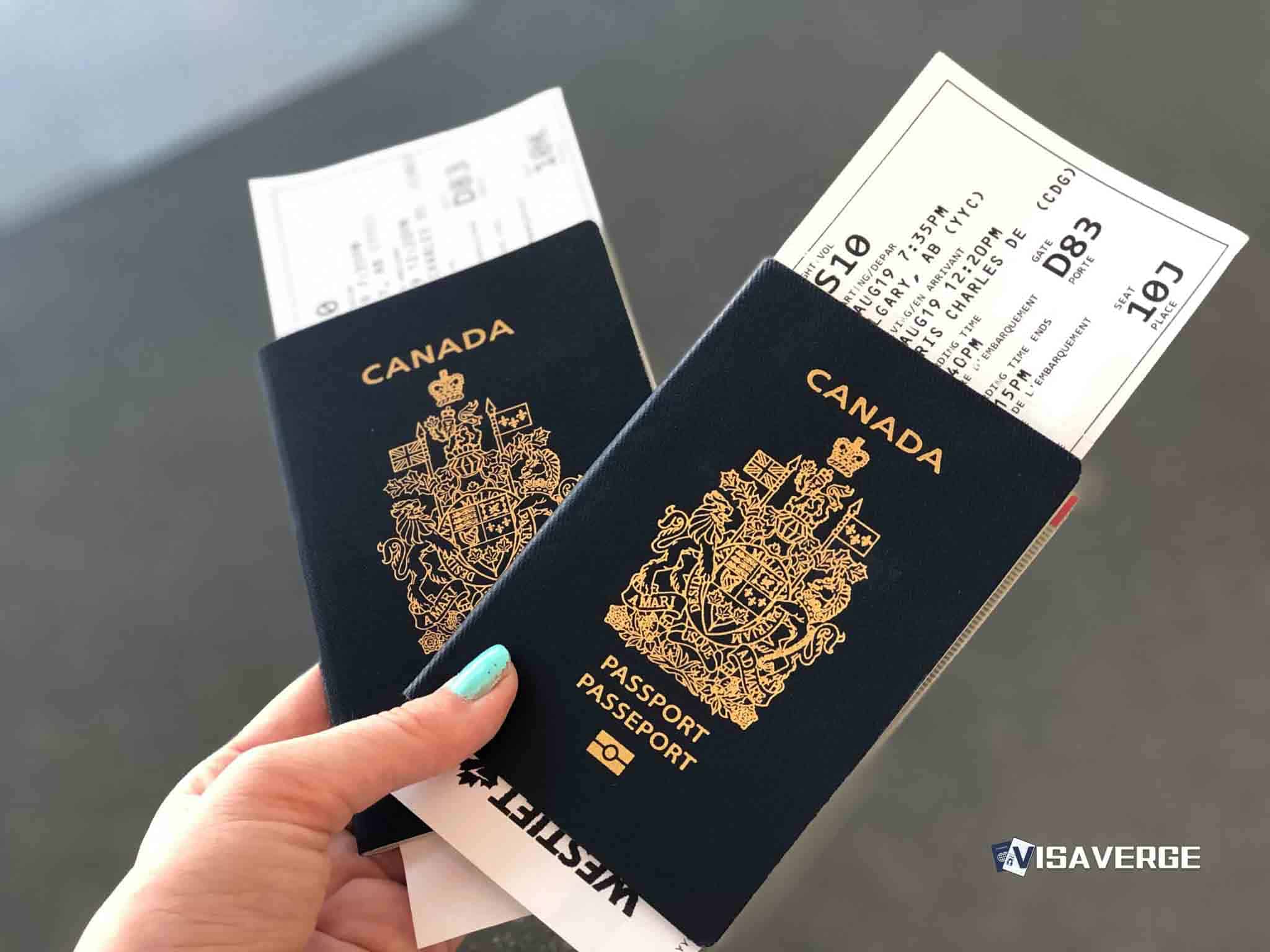
The change affects dual citizens worldwide and includes Canadians who hold UK citizenship by birth, descent, registration, or naturalisation. UK authorities estimate the affected population at over 1.2 million people.
Airlines, ferry operators and train companies must check that British citizens carry UK-issued proof of their status before departure. Travellers who cannot produce the required evidence risk being denied boarding, and UK Border Force may still conduct further checks on arrival.
The cutoff turns on the date of travel, not the date a ticket was booked. A traveller leaving on February 24, 2026 can still travel under the old transitional approach, while a traveller departing on February 25, 2026 must meet the new requirement.
That distinction matters at the airport check-in desk and at the boarding gate, where carriers apply document rules based on departure date. It also matters for travellers crossing by rail or sea, where staff may apply the same proof standards before permitting travel.
UK authorities framed the move as part of a broader push to align document checks with British citizens’ legal status at the border. The UK Home Office has advised dual citizens about the change since October 2024 through GOV.UK guidance, matching practices in the US, Australia, and Canada.
For affected travellers, the practical shift is that British citizenship must be demonstrated through UK-issued evidence. A Canadian passport remains a valid travel document for Canadian nationality, but it no longer suffices on its own for a traveller who is also British and seeks entry as a British citizen.
In practice, UK authorities set out two accepted routes for boarding and entry: a valid British passport, or a Certificate of Entitlement to Right of Abode placed in a non-UK passport. The goal is to give carriers a clear, checkable basis to confirm that a passenger has the right to enter without a visa or permission.
Many of the problems arise in edge cases that airlines and travellers handle differently at the counter. An expired British passport, a first-time passport applicant, or a traveller whose Canadian and British documents show different names can all face delays while staff decide whether proof is adequate.
Name differences can surface after marriage or when one passport was issued in a different name format. In those cases, travellers typically need to assemble supporting evidence that connects identities across documents, because a carrier’s staff must make a pre-boarding decision on the spot.
Children and teens can face additional friction, especially when a minor holds a Canadian passport but has a claim to British citizenship through a parent. When one parent travels with a child, questions can also arise at check-in and on arrival, because border officers and carriers may look for clarity on the child’s status and documentation.
Irish passport holders remain exempt from the new requirement and “can enter freely,” UK authorities said. That exemption rests on a separate legal basis and does not extend to other nationalities, even when travellers have close ties to the UK.
For Canadians trying to choose the best route, cost and processing times push many toward renewing or applying for a British passport well ahead of travel. The British passport fee is £94.50 (~$165 CAD), and overseas applications can take up to 6 weeks to process.
The Certificate of Entitlement route costs more and can take longer, but it can serve travellers who want proof of Right of Abode in an existing passport. The Certificate of Entitlement fee is £589 (~$1,030 CAD), with processing that can take up to 8 weeks.
UK authorities also signalled a digital shift in how that proof can be held and checked. Digital versions of Certificates of Entitlement start February 26, 2026, and the Home Office said applicants will use UKVI accounts starting February 26, 2026 for that process.
That digital move links to how carriers verify status before travel and how border checks work on arrival. When proof is unclear at check-in, denied boarding risk increases because carriers face responsibility for carrying properly documented passengers.
Travellers who arrive without clear proof can also face questions at the UK border. UK Border Force may conduct further checks on arrival, even when a passenger boards successfully, as part of routine efforts to confirm a person’s right to enter.
For urgent situations, the Home Office lists an Emergency Travel Document as an option, at a cost of £125 (~$220 CAD). UK authorities did not describe it as a universal fix for routine travel, and travellers may still need to satisfy carriers’ proof expectations before boarding.
Because processing times can stretch, missing or inconsistent paperwork can cause delays. Photo issues, identity checks, or incomplete supporting documents can slow an application, particularly when a traveller applies from overseas and must coordinate document submission and delivery.
UK officials tied the rule change to the full rollout of the Electronic Travel Authorisation system for non-British visitors. British citizens, including dual nationals, remain exempt from the Electronic Travel Authorisation requirement, but they must prove their British citizenship to carriers before they board flights, ferries, or trains.
That interaction has already produced a common misunderstanding among dual nationals: applying for an Electronic Travel Authorisation as if they were travelling only as Canadians. UK authorities warned that an Electronic Travel Authorisation does not replace the need for a British citizen to show UK-issued proof of status, and a Canadian passport plus an authorisation does not resolve a carrier’s question about British right of entry.
Canadian travellers who are unsure of their citizenship status, or who cannot obtain proof in time for a planned trip, face practical decisions rather than a last-minute workaround. UK authorities pointed travellers toward official guidance and preparation ahead of departure, and some travellers may need to rebook if they cannot meet boarding requirements by their travel date.
The Home Office urged travellers to start with a British passport renewal or application through GOV.UK, a route that typically involves an online form, identity and photo steps, supporting documents, and delivery. For a Certificate of Entitlement, the government said applicants will use UKVI accounts starting February 26, 2026, as part of a shift toward digital immigration status.
Travellers weighing the two paths often focus on how frequently they visit the UK and how soon they need to travel. A British passport can offer the simplest repeat solution for boarding and entry, while a Certificate of Entitlement can serve as a separate proof option for those who rely on another passport for travel.
UK authorities cast the tightening as a compliance move as much as a border policy shift, with carriers playing a larger role in pre-departure checks. For dual British-Canadian citizens, the message is straightforward: before heading to the airport, ferry terminal, or train station, make sure you can show a British passport or a Certificate of Entitlement, because a Canadian passport alone no longer clears the UK entry bar from February 25, 2026.