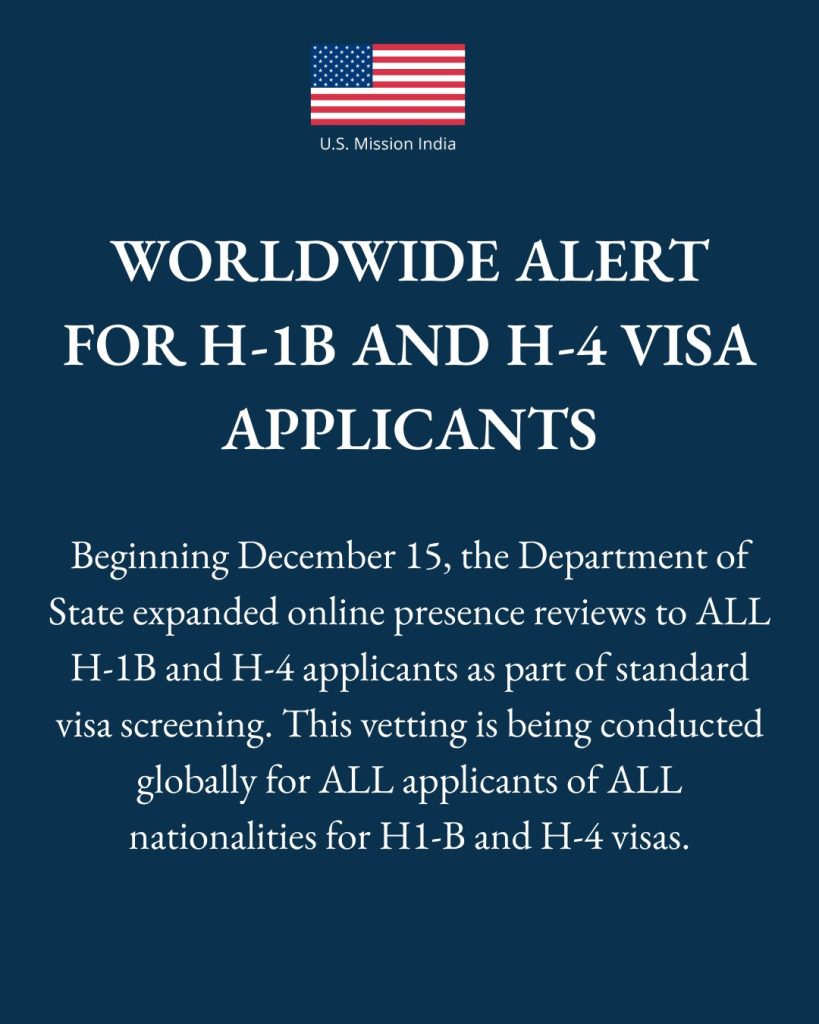
The U.S. Department of State said it will require expanded online presence reviews for every H-1B and H-4 visa applicant interviewed at U.S. embassies and consulates worldwide, a shift officials framed as part of standard screening and a wider push to deter fraud in the high-demand work visa program.
The rule takes effect December 15, 2025, after a Dec. 3, 2025 announcement, and it applies to applicants of all nationalities seeking visas abroad — not to employer petitions filed inside the United States. State Department guidance tells applicants to set social media accounts to public so consular officers can view publicly available information during adjudication. Officials said the new step will be used alongside interviews, document checks and databases, and they warned cases may take longer.
Who is covered and what officers will review
- Covered categories: H-1B specialty occupation workers and their H-4 dependents (spouses and children).
- What officers may review: posts, profile photos, usernames, work history, stated affiliations, and other publicly available online material.
- Purpose: compare online content against the information in the DS-160 visa application and supporting documents to look for inconsistencies, signs of fraud, or security risks.
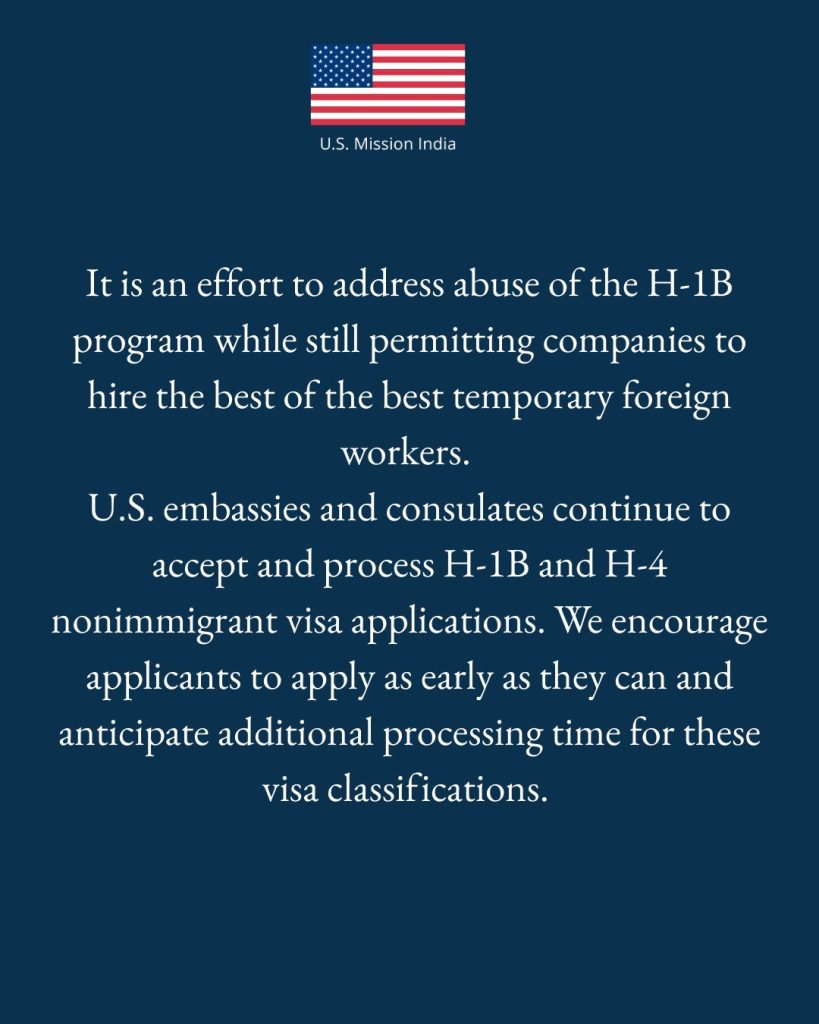
“Every visa is a national security decision,” the department said, explaining the change and noting that the extra checks are meant to protect the country while still allowing companies to hire “the best of the best.”
Officials said the approach extends screening already used for exchange categories (F, M, J) to H visas as well.
Practical steps applicants are asked to take
- Switch privacy settings to “public” for the period your visa is being processed so the consular officer can see what a member of the public would see.
- Ensure usernames, profile photos, names, dates, schools, and employers match the facts in the DS-160 and supporting documents.
- Avoid last-minute edits or deleting posts, which can look suspicious.
- If you share social media accounts with family members, consider creating separate profiles for clarity.
Legal advisers tracking consular practice say the safest approach is to make profiles consistent with application information. The Department emphasized officers may also review other open online material beyond social media.
Important dates, scope, and exceptions
| Item | Detail |
|---|---|
| Effective date | December 15, 2025 |
| Announcement date | Dec. 3, 2025 |
| Applies to | All nationalities applying for H-1B and H-4 visas abroad |
| Does NOT apply to | Employer petitions handled by U.S. Citizenship and Immigration Services (USCIS) inside the U.S. — i.e., petition approvals are separate from consular review |
The policy applies globally (e.g., applicants in Toronto or Tokyo should expect the same request).
Processing impact and timelines
- The Department of State stressed that embassies and consulates will continue accepting and processing H visas but urged applicants to file early and allow extra time.
- Consular staff will integrate these reviews into already heavy schedules, so expect more “administrative processing” (extra checks that can delay final issuance).
- The department directed applicants to the visa wait-time page: U.S. Visa Appointment Wait Times.
Early disruptions were reported soon after the announcement. Starting December 8, 2025, many interviews—particularly in India—were canceled or pushed back, with some rescheduled to mid-2026. The department has not specified how long reviews will add to processing times; applicants should assume potential delays.
Effects on travel, employers, and families
- For many workers, the hardest impact comes when they must travel home for visa stamping (after job changes, international trips, or emergencies).
- Because H-4 dependents are included, spouses and children traveling with the principal worker can be tied to the same longer queue.
- Employers relying on H-1B talent are adjusting calendars and asking for travel plans earlier to avoid project disruption.
Key business risks include:
– Not necessarily mass refusals, but a pile-up of cases that require extra review, delaying employees’ returns.
– Effects on project deadlines, housing leases, children’s school enrollment, and payroll planning.
– Managers cannot control past posts under old usernames, creating practical uncertainty.
What officials say about speech and content
- One sensitive area is how officers interpret online speech. The guidance warns that posts critical of U.S. policies or other issues may trigger denials, follow-up interviews, or further screening.
- The Department did not list specific kinds of speech that would be disqualifying, but said officers will look for consistency — particularly employment claims and affiliations that match visa paperwork.
- Civil liberties advocates warn broad social media screening can chill lawful expression; security officials argue open-source information helps detect fraud and hidden ties.
Warning: Deleting posts hurriedly or making sudden edits can itself raise red flags during adjudication.
Practical checklist for applicants
- Confirm that personal details on social profiles match identity documents and the DS-160 (names, dates of birth, schools, employers).
- Make profiles public during processing if asked.
- Avoid last-minute deletions or edits to old posts.
- Separate shared-family accounts if necessary to ensure officers can trace the applicant’s online footprint.
- Notify your employer of travel plans well in advance and anticipate delays for stamping trips.
Final context and intent
- The change is aimed at visa issuance abroad and does not change the underlying employment petition process handled by USCIS.
- State Department officials said the step builds on social media disclosure already used for student and exchange visitor categories, signaling that employment-based visitors will also be examined for the story their online footprint tells, not only their credentials.
- The department emphasized the policy’s aim is screening, not a shutdown, but acknowledged it will create extra time in limbo for some cases and additional stress for families and employers.
Key takeaway: Start planning now — make profiles consistent with your application, set public-facing content to be viewable during processing, and build buffer time into travel and work plans.
Beginning December 15, 2025, the U.S. State Department will implement expanded online presence reviews for H-1B and H-4 visa applicants worldwide. Consular officers will evaluate public social media content to ensure it matches the details in visa applications. This move, intended to prevent fraud and bolster national security, is expected to cause processing delays and has already resulted in interview cancellations in some regions.