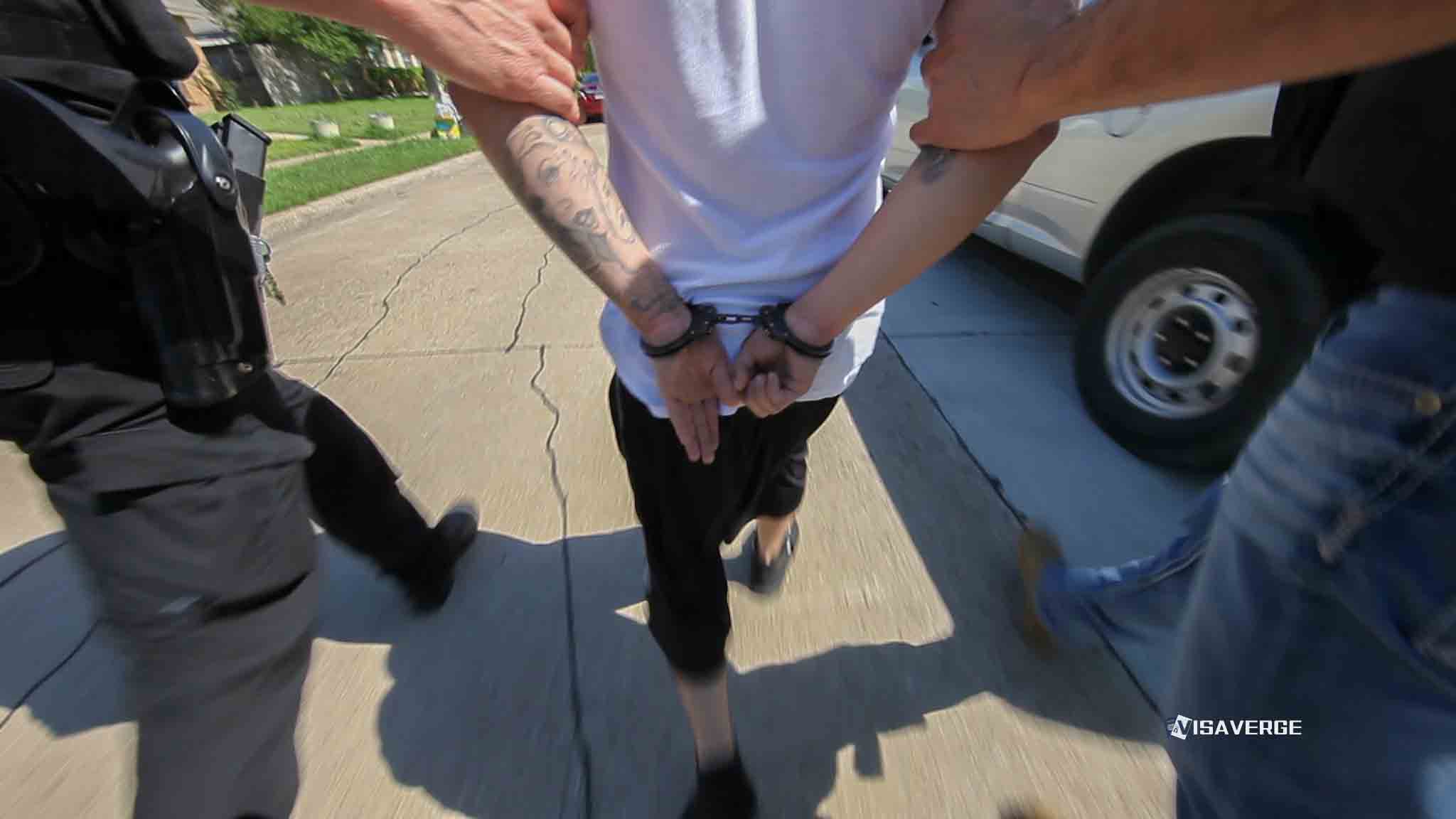
(HOUSTON, TEXAS) A federal lawsuit filed by Wilmer Chavarria, the Winooski superintendent in Vermont, is putting new attention on how DHS border officers treat U.S. residents and their electronic devices at airports. Chavarria says he was held for about five hours at a Houston airport on July 21, 2025, questioned about his travel, and pressed to hand over access to phones and other devices he carried back from a family visit to Nicaragua.
The lawsuit and the central claim
Chavarria’s complaint challenges what he describes as a warrantless search of his electronic devices. The suit names DHS and border and immigration officers, and alleges he was:

- unlawfully detained
- harassed
- denied a meaningful chance to contact counsel or family
According to reporting summarized by national outlets, Chavarria said agents told him he had “no Fourth Amendment rights at the border,” a phrase that sits at the center of his complaint.
What Chavarria says happened
In interviews and testimony described in the reporting:
- He was held in a secured area for about five hours.
- Officers repeatedly asked for access to phones and other devices he had brought from Nicaragua.
- He repeatedly asked to call the district lawyer and relatives; reporters say officers refused those requests.
- He says officers pressured him to consent to searches — a legally significant point because consent can change how courts view a search.
The reporting does not include the complaint’s full text, docket number, the court where it was filed, the attorneys’ names, or any response from DHS. None of the stories cited describe a judge’s early rulings or a hearing date.
Legal and policy context
This case taps into the long-running tension between privacy rights and border search powers, which has intensified as phones and laptops have become repositories for wallets, diaries, medical files, and workplaces.
- U.S. Customs and Border Protection (CBP), part of DHS, publishes guidance on its authority to search electronic devices at the border and ports of entry on its official page: “Border Search of Electronic Devices”.
- Courts have historically given border searches broader leeway than ordinary policing, but device searches are more intrusive than typical bag checks, raising evolving legal questions about warrants, probable cause, and consent.
Reason’s coverage highlights the Fourth Amendment angle directly, noting the claim that officers went beyond lawful bounds in how they searched, questioned, and held him.
Impact on the Winooski school community
Winooski is one of Vermont’s most diverse cities. The district includes Somali students — about 9% of the student body, according to the reported material — and earlier in the year the district adopted a “sanctuary schools” policy. That policy generally limits sharing student information or cooperating with immigration enforcement unless required by law.
- The district flew a Somali flag on Dec. 5, 2025, in solidarity after President Trump’s comments about Somali communities; following that, the district reportedly received racist threats.
- Chavarria has framed the Houston encounter as part of a broader climate of fear for families who already feel exposed.
In media interviews described by Education Week, he warned that device demands could expose information about students, including immigration-related details, home addresses, and family contacts — records schools guard to prevent targeting, bullying, or worse.
Why this matters for educators
Superintendents and principals are custodians of records protected by school rules and privacy laws, and many use personal or district-linked devices for:
- district email
- messaging
- file access and cloud accounts
Chavarria testified in Washington, D.C., emphasizing that when federal officers demand device access, they may in effect be demanding access to a school system. If devices are linked to cloud accounts, the reach of a search can extend far beyond what is physically stored on the device.
Missing facts and uncertainties
The reporting leaves several key questions unanswered:
- Why was Chavarria selected for extra screening?
- What specific suspicions or questions did officers have?
- Did officers claim he consented to any search, and if so, under what circumstances?
- Were devices copied, retained, or returned immediately?
- Was any data retained, copied, or shared, and did officers cite a national security concern?
These details matter because retention and copying of device data are treated differently from a quick inspection, and policies can change depending on an officer’s stated basis for the search.
Broader public debate
Supporters of robust border enforcement argue that the border is a special place warranting broad authority to check identities and stop threats. Civil liberties advocates counter that limits are still needed, especially when searches become deep dives into personal and work records.
Chavarria’s case turns that debate into a concrete scenario: a public school leader, a long wait in a secured area, repeated requests to call a lawyer, and officers insisting constitutional protections did not apply.
Media coverage has followed different angles:
- WBUR and the Los Angeles Times have covered the detention and community ripple effects.
- Reason has focused on the constitutional arguments.
- Education Week summarized his testimony and the worries about student data exposure.
Practical effects and reactions
Even without all facts, Chavarria’s stance has prompted reactions:
- Educators nationwide are noting how international travel can collide unpredictably with border inspections.
- Employers and districts often revisit travel guidance, device security, and what information staff should carry across borders after incidents like this.
- Analysis by VisaVerge.com suggests cases like this encourage organizations to tighten policies not because travel is unsafe, but because one inspection can expose records never intended to leave a protected system.
Current status and central claim
As the lawsuit moves forward, Chavarria’s central claim remains succinct:
- On July 21, 2025, at the Houston airport, Chavarria says DHS officers treated him as if rights and professional duties stopped at the border, and he asks a federal court to rule that they do not.
This matter is now tied to a national argument about privacy, immigration enforcement, and how border practices affect ordinary public jobs and community trust.
Wilmer Chavarria filed a federal lawsuit after his July 21, 2025, detention at Houston airport, alleging DHS officers detained him for about five hours, pressured him to unlock phones and other devices, and denied meaningful access to counsel or family. The complaint challenges alleged warrantless electronic searches, invoking Fourth Amendment concerns and highlighting risks to district data and student privacy. The case spotlights tensions between expanded border search authority and protections for personal and institutional digital information, prompting educators to reconsider travel and device policies.