Why Are US Legislators Calling for Stricter Visa Rules for Chinese Nationals?
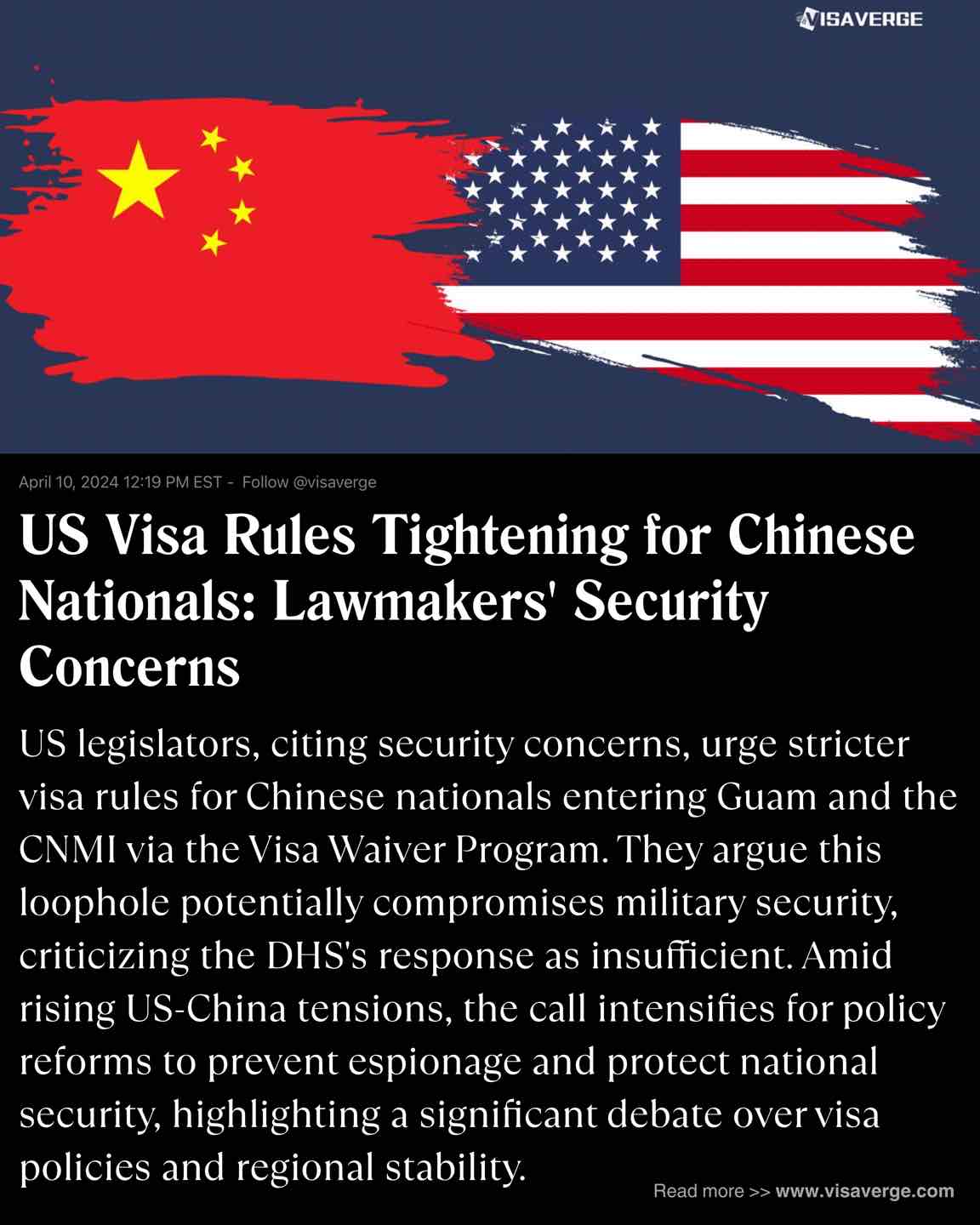
In recent times, a bipartisan group of US senators and representatives, including notable figures such as Iowa Senator Joni Ernst and Florida Representative Neal Dunn, have raised alarms over current visa regulations that facilitate Chinese nationals’ entry into Guam and the Commonwealth of the Northern Mariana Islands (CNMI). The primary concern? These existing policies might inadvertently compromise US military security.

The Visa Waiver Program: A Gateway or a Loophole?
At the heart of these apprehensions lies the Visa Waiver Program administered by US Customs and Border Protection. This program notably permits Chinese individuals to access Guam through CNMI, sidestepping the traditional B-1 (business) or B-2 (tourism) visa application process.
Herein lies the controversy: “The Chinese Communist Party (CCP) has already proven they will stop at nothing to infiltrate the United States, and that threat is increasing every day as Chinese nationals use a visa loophole to gain access to our critical military installations in Guam,” Senator Ernst articulated, voicing the urgency of the issue.
Government Response: Adequate or Insufficient?
After over four months of awaiting a definitive response, US lawmakers were met with an explanation from the Department of Homeland Security (DHS) that fell short of quelling their anxieties. The DHS referred to the Consolidated Natural Resources Act of 2008 (CNRA), which underscores the economic benefits of identifying countries that contribute significantly to CNMI’s tourism sector. Under this criterion, the People’s Republic of China was deemed suitable in 2009.
Despite the DHS’s reassurances about stringent screening and vetting measures, legislators like Representative Dunn critique the government’s stance as “willful ignorance,” pressing for stricter visa requirements, specifically tailored to thwart CCP’s aggressive maneuvers effectively.
An Escalating Concern Amid Rising Tensions
This legislative push gains additional traction in light of recent developments, such as the increase in flights between Hong Kong and Saipan, hinting at a possible surge in visitors from China to these regions. This aspect grows more concerning with reminders of prior security breaches, notably an incident where a Chinese national managed unauthorized entry onto the 29 Palms Marine Base in California.
The call for a more stringent US visa policy to prevent Chinese espionage aligns with broader national security imperatives, especially as US-China relations continue to be characterized by heightened tensions and mutual suspicion.
What’s Next for US Visa Policies?
As these discussions unfold, the demand for policy reforms that effectively close these visa loopholes and enhance the security of US military installations becomes increasingly critical. The debate over the implications of the visa waiver program on national security and regional stability is set to intensify, with lawmakers urging immediate action.
For those seeking further information on US immigration policies and visa requirements, the U.S. Department of State’s Bureau of Consular Affairs provides authoritative resources and updates, invaluable for understanding the intricacies of traveling to and from the United States.
In conclusion, the call for a strict visa policy to prevent Chinese espionage reflects a broader concern for national security, urging a reevaluation of current practices to ensure they serve the best interests of United States security and stability.
This Article In A Nutshell:
US legislators, led by figures like Senator Joni Ernst and Representative Neal Dunn, advocate for tighter visa rules for Chinese nationals entering US territories, citing potential national security threats. Concerns stem from loopholes allowing entry via Guam and CNMI. Calls for thorough screening intensify amid rising tensions. Policy reforms seem imminent.
— By VisaVerge.com
Read more
- Chinese Students and Professor Challenge Florida University’s Employment Law
- Exploring the Phenomenon of Self-Kidnapping Among Chinese Students Abroad
- Indian Students on the Rise: Possibly Outnumbering Chinese Peers at U.S. Universities Like Montclair State
- Valid U.S. Visa, But Deported: A Major Setback for Chinese Graduate Students
- Incident Report: Chinese Student Deported Amid US Visa Revocation and Border Control Enforcement