- Ukraine has confirmed 19,546 children were forcibly removed to Russian-controlled territories as of early 2026.
- The U.S. closed the Uniting for Ukraine program, leaving many families in significant legal uncertainty.
- International authorities have issued arrest warrants for Russian officials linked to these alleged war crimes.
(UKRAINE) — Ukrainian authorities identified 19,546 confirmed cases of children forcibly removed from Ukraine as of February 24, 2026, keeping the issue at the center of war-crimes accountability efforts and shifting immigration policy debates in the United States.
Ukraine has described the children as forcibly deported to Russia, Belarus, or Russian-occupied territories, while higher estimates from the Yale Humanitarian Research Lab and Ukrainian officials suggest the true number may exceed 35,000 to 200,000.
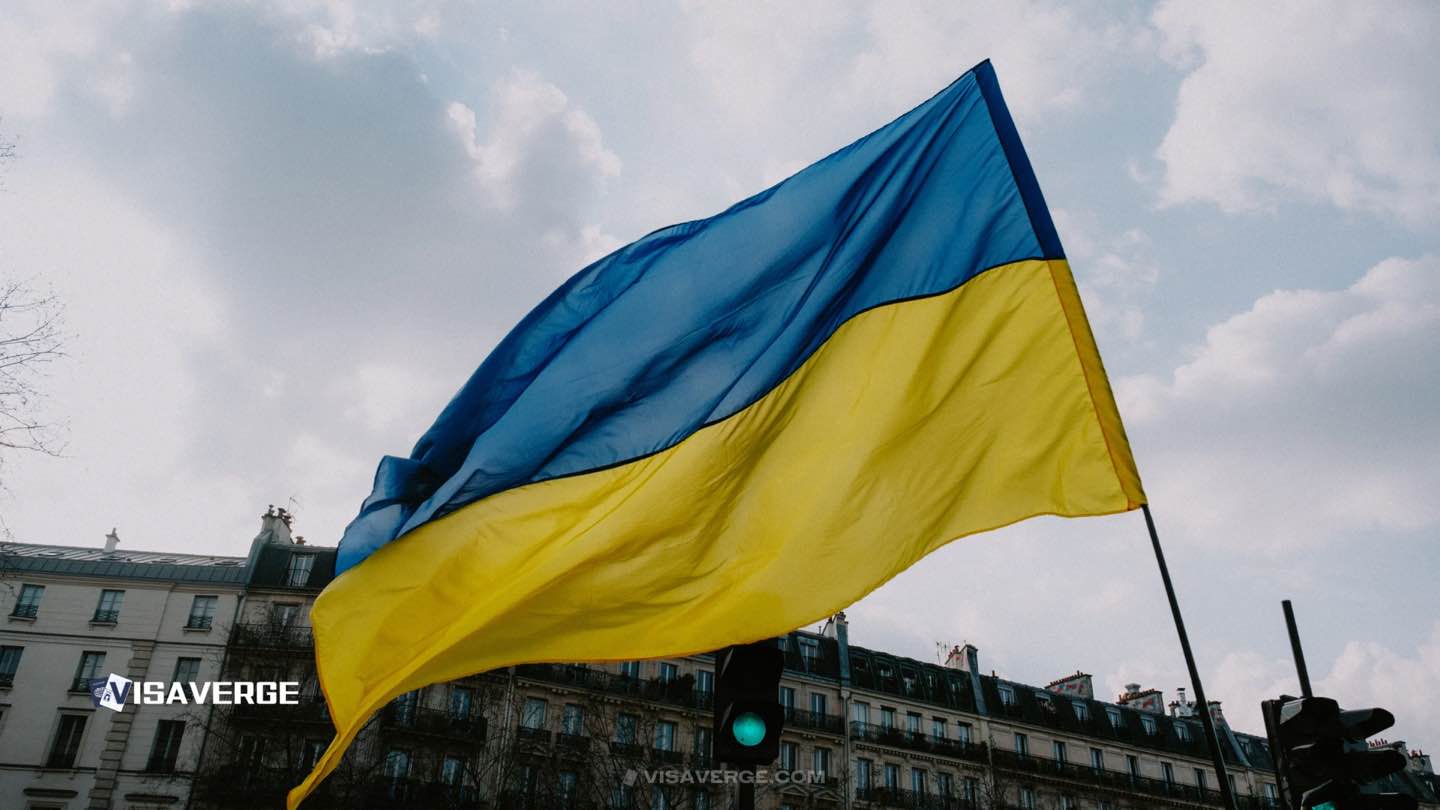
The scale and dispersal of the alleged transfers across multiple jurisdictions have made verification difficult, even as Ukrainian officials and international partners continue to build case files tied to the war.
For Ukraine, the cases carry an urgent humanitarian dimension because families remain separated, and return efforts require coordination across borders and authorities that Kyiv does not control.
For international law, the allegations connect directly to investigations of forced transfers and to evidence that could underpin future prosecutions and sanctions decisions.
In the United States, the issue has also intersected with reviews of protections for Ukrainians who fled after Russia’s full-scale invasion, including changes to a major parole pathway and new uncertainty for families trying to plan their lives.
Under Executive Order 14165 on January 20, 2025, the Department of Homeland Security was directed to scrutinize all categorical parole programs, and DHS closed the Uniting for Ukraine (U4U) program to new applicants and sponsors.
U4U served as a route for Ukrainians to enter the United States under parole, and its closure has narrowed options for those still seeking a way out of the war or family reunification.
USCIS also slowed processing for some Ukrainians already in the United States after an internal directive on January 23, 2025, paused re-parole applications and other benefit requests, including asylum and adjustment of status, for U4U parolees.
A federal court provided temporary relief on May 28, 2025, stopping the categorical suspension, but adjudication delays persist, leaving some families unsure how quickly their cases will move.
DHS has publicly framed removal operations as legally constrained, even as Ukrainians have watched enforcement news closely amid the broader review of parole programs.
In November 2025, a DHS spokesperson said regarding the removal of some Ukrainian nationals: “Due to operational security, ICE does not confirm future removal operations. every single detainee receives due process and has their claims heard.” (Source: Washington Post / DHS Newsroom, Nov 14, 2025).
Policy changes and enforcement messaging have landed against a backdrop of continued U.S. diplomatic pressure over the child transfer allegations, with sanctions and visa restrictions designed to target individuals and entities linked to the purported system.
On August 23, 2024, the State Department announced sanctions against 11 individuals and two entities involved in the forced transfer and deportation of children to “camps promoting indoctrination.”
The State Department also imposed additional visa restrictions on December 5, 2024, targeting Russian-installed officials for their role in the “forced deportation, transfer, and confinement” of Ukrainian minors.
Those measures have run alongside international legal actions, including the International Criminal Court’s arrest warrants, as investigators and governments seek to document chains of custody, locations, and administrative steps tied to the children’s movements.
The ICC maintains arrest warrants issued March 2023 for Vladimir Putin and Maria Lvova-Belova specifically for these war crimes.
Ukraine’s own accounting of cases has emphasized that the figures it provides reflect identified children rather than a comprehensive tally, a distinction that helps explain why totals vary so widely across public estimates.
Ukrainian authorities have identified approximately 20,000 children, with the source specifying 19,546 confirmed cases, while separate estimates suggest a much larger universe of affected minors.
Return efforts have also produced a smaller but concrete set of figures, offering one of the few numerical indicators of progress that officials can publicly track.
As of February 17, 2026, the “Bring Kids Back UA” initiative reported it had successfully repatriated 2,003 children.
The broader infrastructure alleged to support the transfers has become a key part of the documentation effort, because it can connect individual cases to specific institutions and recurring practices.
Russia has utilized at least 164 institutions, including the “Avangard” military camps, for the “military-patriotic” re-education and militarization of Ukrainian teens, according to the figures.
Public descriptions of how the system operates have centered on both physical relocation and administrative changes that can make later reunification harder, including altered identity records and new documents.
The United States and the International Coalition for the Return of Ukrainian Children have characterized the process as an effort to erase Ukrainian national identity, with accounts that children are given Russian names, issued Russian passports, and forbidden from speaking Ukrainian.
Such alleged changes can complicate later efforts to prove identity and family links, especially when families rely on Ukrainian records while children may be processed under new documentation.
They can also shape how investigators and prosecutors frame the cases, because identity alteration can show intent and pattern, and it can become part of the evidentiary record in war-crimes inquiries.
Separate claims focus on militarization, particularly for older children, which Ukraine and its partners say raises additional concerns about coercion, indoctrination, and future use in armed formations.
Older teenagers are described as being funneled into military-style camps, where they receive combat training and are indoctrinated to view Ukraine as an enemy, preparing them for future service in the Russian military.
Those allegations have helped keep attention on the issue beyond the immediate question of location and return, because they speak to long-term consequences for children’s identities and prospects.
They have also influenced how policymakers talk about accountability tools, including sanctions, visa bans, and investigations that seek to map out who administered the facilities, issued documents, and authorized transfers.
In Washington, lawmakers also moved in late 2025 to put resources behind tracking and recovery efforts linked to abducted children.
The Abducted Ukrainian Children Recovery and Accountability Act was signed into law in December 2025, providing resources to track abducted children and assist in their rehabilitation upon return.
That rehabilitation need has become a recurring theme in official and humanitarian descriptions of the children who do make it home, because return does not end the effects of separation and re-education.
Children who are returned home require extensive psychological support to address the “lost connection syndrome” caused by isolation and re-education.
Ukrainian families in the United States have followed both the recovery effort and U.S. policy shifts closely, as they weigh how to maintain stability while immigration pathways change around them.
The closure of U4U and the review of parole status have left many Ukrainian families in the U.S. in “legal limbo,” and some fear deportation back to a war zone where they face potential forced conscription.
That uncertainty can affect how families approach work plans, renewals, and longer-term decisions, particularly when adjudication delays persist even after court action halted a categorical suspension.
It can also intensify the need for reliable, current information, because eligibility and timelines can turn on program status, agency guidance, and case-specific facts that may shift over time.
At the same time, U.S. sanctions and visa restrictions linked to the children’s cases have signaled that Washington continues to treat the alleged transfers as a priority issue tied to accountability mechanisms.
The State Department’s sanctions announcement described “camps promoting indoctrination,” while the later visa restrictions targeted Russian-installed officials over the “forced deportation, transfer, and confinement” of Ukrainian minors.
Such actions do not by themselves return children, but they form part of the international pressure campaign that also includes criminal investigations and documentation work by Ukraine and its partners.
The ICC warrants for Vladimir Putin and Maria Lvova-Belova remain a central reference point for international accountability discussions, because they focus on the child transfers as distinct war-crimes allegations.
For Ukraine, each identified case also represents a separate family’s search, often complicated by children moving across borders or through institutions that are difficult to access and verify.
The disparity between 19,546 confirmed reports and estimates as high as 200,000 underscores the core challenge: confirmed documentation takes time, and some children may remain unaccounted for because contact is lost or records change.
Efforts to repatriate children have relied on tracking and reporting by Ukrainian initiatives, including the work of “Bring Kids Back UA,” which has published its own running figures.
Ukrainian officials and international partners have also pointed to the scale of the institutional network, citing at least 164 institutions, as part of the public picture of how the alleged system functions.
In the United States, official updates on immigration options and program status typically appear through DHS and USCIS postings, while sanctions and diplomatic steps come through State Department announcements.