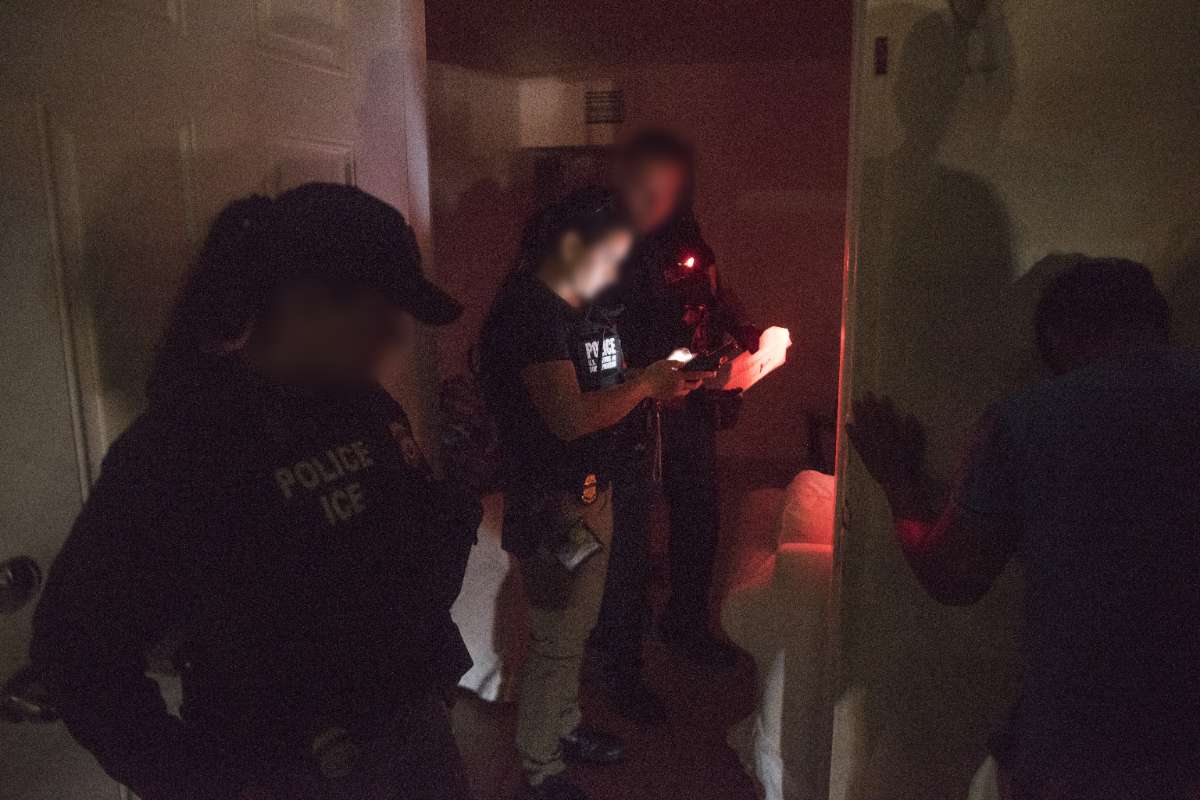
(AUSTRALIA) — Australia’s reported detention and planned removal of a United Kingdom national over alleged ties to the National Socialist Network (NSN) underscores how Australia’s Migration Act “character” powers can be used against non-citizens based on alleged association and risk, even without a criminal conviction—an enforcement posture that may influence how similarly situated visa holders assess exposure, evidence, and review options.
Case holding and why it matters (in plain terms)

The practical “holding” in this developing matter is administrative rather than judicial: the home affairs portfolio has publicly confirmed detention and an intent to deport after a visa cancellation under s 501 of the Migration Act 1958 (Cth) (“character grounds”).
If the reported posture holds through review channels, it signals that the government will treat alleged alignment with violent or hate-based extremist networks as a sufficient character concern to justify cancellation, detention, and removal.
For readers who follow U.S. immigration law, the closest analog is how U.S. authorities may use security-related inadmissibility and deportability grounds based on associations and support.
A frequently cited example of a strict, risk-focused approach is Matter of S-K-, 23 I&N Dec. 936 (BIA 2006), where the Board of immigration appeals read the “material support” bar broadly, leaving limited room for equities. That U.S. precedent is not binding in Australia, but it illustrates a shared theme: immigration law often empowers executive action where national security concerns are asserted.
Key facts that drove the government’s action (confirmed vs. alleged)
On January 8, 2026, the australian government publicly confirmed the detention and pending deportation of a United Kingdom national, reported as Ryan Turner. Reporting describes him as a British war veteran living in Perth on a bridging visa.
Authorities have alleged he was involved with the National Socialist Network, including an allegation that he served as a combat-style boxing coach connected to the group. Those allegations have been cited as the basis for cancellation under s 501 and for continued detention pending removal.
The NSN is widely described in public reporting as a neo-Nazi organization. It has also been linked in reporting to the name “White Australia,” including an attempted political-party registration in late 2025.
Officials appear to view the group as a national security and public order concern.
Warning: Public statements can confirm detention and policy intent, but they typically do not include the full evidentiary record. The legal basis, evidence, and procedural steps usually appear in departmental notices and tribunal or court filings.
Official statements and what they signal (but do not prove)
Public messaging has been unusually direct. On January 8, 2026, Home Affairs Minister Tony Burke was quoted as saying: “Our government has zero tolerance for bigotry and hate. If you don’t like Australia, you can leave.”
He also stated: “He came here to hate—he doesn’t get to stay.”
On January 12, 2026, Minister Burke, while announcing a proposed Combating Antisemitism, Hate and Extremism Bill, explicitly named the National Socialist Network and Hizb ut-Tahrir, describing groups that have remained “just below the legal threshold” while radicalizing others.
That framing matters because it connects immigration enforcement to a broader agenda of tightening criminal and regulatory tools.
Prime Minister Anthony Albanese, also on January 12, 2026, described a listing-style consequence: “Once an organisation is listed [as a prohibited hate group], it will be a criminal offence to be a member, to recruit for it, to donate or receive funds or support that group in any way.”
These remarks should be read as policy signals and as context for enforcement priorities. They are not, by themselves, proof of any particular individual’s conduct.
They also do not substitute for the statutory test under s 501, which is typically applied through written decisions and reviewable processes.
Transnational context: Five Eyes, U.S. reporting, and limits
This case sits in a broader Five Eyes environment in which allied governments share information about transnational violent extremism. Even when a case is domestic to Australia, security vetting and risk assessments can be informed by overseas intelligence holdings and patterns seen in other jurisdictions.
It is also important to separate U.S. sources from the Australian legal process. There has been no U.S. DHS or USCIS press release about this individual, as the matter is being handled under Australian immigration law.
Still, U.S. government reporting has described the environment in Australia. The U.S. Department of State’s 2023 Report on International Religious Freedom (Australia) noted that the NSN and the European Australian Movement had become “emboldened,” including public demonstrations and Nazi salutes.
That report can provide background, but it does not decide Australian legal outcomes.
From a U.S. immigration-law lens, the same national security theme appears in INA § 212(a)(3)(A) (security-related inadmissibility), INA § 212(a)(3)(B) (terrorism-related grounds), and INA § 237(a)(4) (security and related grounds of deportability).
Those provisions, like Australia’s s 501 in practice, can produce high-stakes consequences without a criminal conviction, depending on the evidence and procedures used.
The legal backbone: bridging visas, s 501, and “association” theories
A bridging visa typically allows a non-citizen to remain lawfully in Australia while another visa application, review, or status resolution is pending. Bridging status can be precarious.
Visa conditions, compliance checks, and adverse information can quickly change a person’s posture.
Section 501 of the Migration Act is a central “character” mechanism. In general terms, it permits cancellation (or refusal) where the decision-maker is not satisfied the person passes the character test, or where other character-related criteria are triggered.
While criminal history is often involved in s 501 cases, the tool is also used where the government asserts a person poses a risk to the community, to public order, or to social cohesion.
In cases framed around extremist activity, “association” matters because immigration systems often treat certain ties—training roles, recruitment support, public promotion, or facilitation—as indicative of risk even before a criminal court conviction.
That does not mean cancellation is automatic. The legal and factual questions typically include what the person did, what they knew, and how the risk assessment was made.
The reporting also references a prior removal, Matthew Gruter, described as a South African national deported in November 2025 for involvement in anti-Semitic rallies linked to the same network. That earlier action is not a binding precedent, but it may show an enforcement pattern and the kinds of facts officials view as significant.
Deadline Alert: In many cancellation matters, review rights and filing windows can be short and strictly enforced. Anyone served with a cancellation notice should seek legal help immediately to avoid missing review deadlines.
How this posture may affect future cases
Practically, this case suggests a lower operational threshold for action where the government alleges ideologically driven hate activity linked to organized networks. That is not necessarily a change in the statutory text.
It is an indication of how decision-makers may apply discretion and risk assessment.
- More s 501 scrutiny for non-citizens tied to extremist groups, including through training, “security,” propaganda, or event participation roles.
- Greater reliance on intelligence-informed allegations, which can be difficult to test without counsel experienced in sensitive evidence procedures.
- More detention pending removal, especially where the government asserts ongoing risk.
This also fits a broader allied-country pattern: immigration powers can be used to disrupt transnational networks that move people, tactics, and messaging across borders.
In the U.S., that logic often shows up in security inadmissibility assessments at consular posts and ports of entry, and in enforcement cases where DHS asserts security concerns.
Warning: Travel can become risky even before a final outcome. A person with a pending cancellation or adverse security assessment may face detention, removal, or refusal of boarding depending on status and carrier rules.
Are there “splits” or dissents to watch?
Australia does not have “circuit splits” in the U.S. sense, but outcomes can differ across tribunals and courts depending on the posture, the evidence, and the standard of review.
Readers should watch for any reported merits review, judicial review, or reasons that clarify how “association” evidence was treated.
In the U.S., courts have disagreed at times about the scope and proof standards for certain security-related grounds, and outcomes can vary by circuit. But because this is an Australian s 501 matter, U.S. circuit splits are only a comparative reference, not a controlling factor.
Practical takeaways for visa holders and counsel
- Treat extremist “association” as a serious immigration risk factor. Governments may view training, coaching, facilitation, or promotion as materially increasing risk.
- Document your status and compliance. For bridging visa holders, small compliance issues can compound when character issues arise.
- Assume public reporting will not contain the full case record. The decisive material is usually in departmental notices and review filings.
- Get counsel early. Strategy often turns on immediate steps: preserving evidence, responding to notices, and filing review applications on time.
Strong recommendation: Anyone facing visa cancellation, detention, or removal under s 501 should consult an experienced Australian immigration lawyer immediately. These matters can move quickly and can be difficult to reverse once removal occurs.
⚖️ Legal Disclaimer: This article provides general information about immigration law and is not legal advice. Immigration cases are highly fact-specific, and laws vary by jurisdiction. Consult a qualified immigration attorney for advice about your specific situation.
Australia’s detention of a UK national for alleged neo-Nazi ties highlights the aggressive use of ‘character’ powers under Section 501. The government asserts that association with extremist groups like the National Socialist Network justifies removal even without criminal convictions. This stance signals a lower operational threshold for deportation in cases involving hate-based activity and aligns with broader Five Eyes security coordination to disrupt transnational extremist networks.