The Transportation Security Administration has announced that air travelers who arrive at airport checkpoints without a REAL ID or another acceptable form of identification will have to pay a $45 fee to verify their identity before being allowed through security. The new charge, which the agency describes as the next step in the federal REAL ID rollout, is set to begin on February 1, 2026, and will apply across airports where TSA officers screen passengers in the United States 🇺🇸.
What happens at the checkpoint
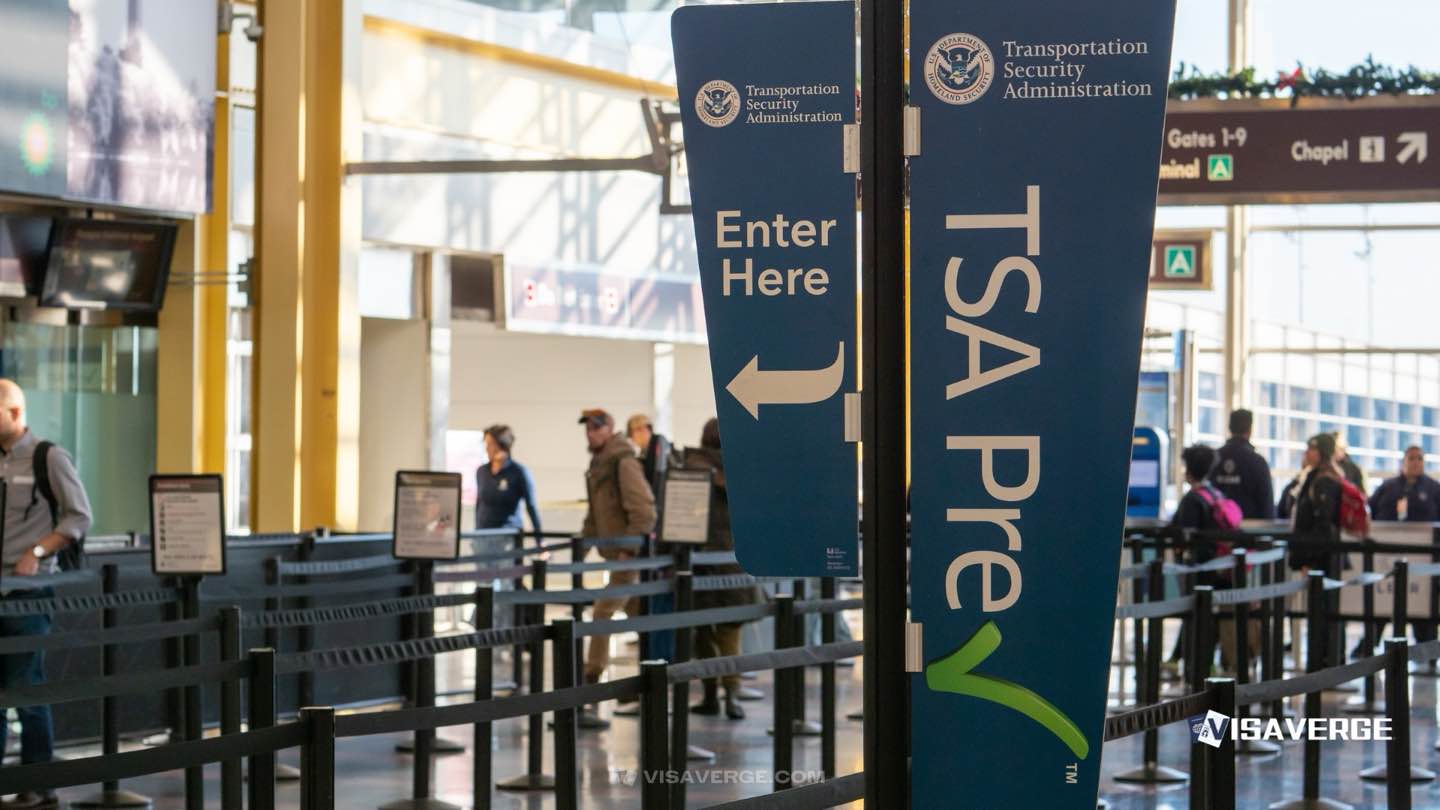
Under the policy, people who forget their wallet at home, lose their wallet at the airport, or show up with an ID that does not meet REAL ID standards will no longer just answer questions at the podium and hope to be cleared. Instead, they will be sent out of the regular line and told to complete an identity check through a new biometric or biographic system before they can continue to the security lanes.
The fee is fixed at $45 per verification and will be required even if a traveler is eventually turned away.
How the verification process works
TSA says the money will pay for the “administrative and IT costs” of building and running this expanded identity system so that, in the agency’s view, the expense falls on travelers, not on taxpayers as a whole.
The process is designed to work through an online platform, accessed at TSA.gov, where travelers will:
- follow step‑by‑step instructions,
- confirm personal details,
- pay the fee by card or another accepted method,
- then receive an email that can be shown to TSA officers as proof that the verification steps were completed.
TSA estimates the check normally takes 10 to 15 minutes, though in some cases it “could take up to 30 minutes or longer.” The agency also notes that paying the $45 does not guarantee clearance to fly. Even if the system confirms details, “there is no guarantee that individuals will be cleared to pass through the checkpoint,” leaving final discretion with TSA.
Important: The fee is required even if a traveler is ultimately denied permission to pass through the checkpoint.
Coverage and duration
- The $45 payment grants access through TSA checkpoints for up to ten days.
- That window is intended to cover short round trips (e.g., a Friday outbound and Sunday return).
- After the ten‑day period expires, travelers who again lack acceptable ID must repeat the online process and pay again.
Scope and expected impact
The new rule is part of the broader REAL ID program, which sets higher security standards for state‑issued driver’s licenses and identification cards used for federal purposes such as boarding commercial flights.
- TSA says about 94% of travelers already show either a REAL ID‑compliant card or another acceptable document (for example, a valid passport).
- The policy therefore targets the roughly 6% of passengers who arrive at security without proper documents.
- Even 6% can equal large numbers when considering millions of travelers per week, which means many people could face added costs and delays.
Operational changes at checkpoints
The physical flow at many checkpoints will change:
- Travelers lacking acceptable ID will be directed out of the line.
- They will be asked to complete verification steps via phone, tablet, or an airport kiosk.
- They must pay the $45 fee, wait for the confirmation email, then rejoin the security process.
For travelers who are not comfortable with online forms, lack a payment method, or face connectivity problems, this added process could be stressful—especially if boarding time is near.
Who is affected
The rule applies to more than forgetfulness. For example:
- Travelers who discover their REAL ID or passport is lost or stolen at the airport will face the same verification system and the same $45 fee if they want any chance to continue their trip.
- Families may be particularly affected because each person without acceptable ID would owe a separate $45 fee.
- The ten‑day coverage helps short return trips but offers no relief for recurring travel beyond that window.
Fee history and rationale
- An earlier proposal listed an $18 fee in the Federal Register.
- TSA raised the amount to $45, saying the higher fee is needed to “modernize the system and ensure its safety and efficiency.”
- The agency argues the new price reflects the cost of technology and staff required for real‑time identity checks, secure data systems, and support operations nationwide.
Analysis by VisaVerge.com characterizes the change from $18 → $45 as shifting more of the REAL ID rollout costs onto travelers who arrive without proper documents.
Practical advice from TSA
TSA is urging travelers to:
- check the list of acceptable documents and REAL ID requirements before heading to the airport,
- carry a REAL ID‑compliant license or a valid passport to avoid the fee and delays.
Before you travel, verify your ID is REAL ID–compliant or carry a valid passport. This simple check can save you the $45 verification fee and the risk of delays at the checkpoint.
Official guidance on approved IDs and REAL ID standards is available through TSA’s own website at TSA.gov, where travelers can also find the portal for the new verification program once it goes live. TSA says people with questions can contact the agency directly for help.
Broader implications and reactions
- The rollout is framed as a security upgrade, but it also adds another cost layer to air travel already affected by rising fares and ancillary fees.
- Families and frequent travelers who repeatedly forget compliant ID may see meaningful new expenses.
- Advocates for clear travel rules say this announcement underscores the need for ongoing reminders from states, airlines, and federal agencies about REAL ID deadlines and standards.
TSA stresses most travelers already have the right documents and describes the $45 charge as a last‑resort option for the minority who do not. The significant increase from the previously proposed fee signals how seriously TSA is treating the cost of its identity systems and its intent to encourage full REAL ID compliance.
Key takeaway
To avoid paying $45 and risking last‑minute stress at the airport, arrive with a REAL ID‑compliant license or a valid passport. Beginning February 1, 2026, travelers without acceptable ID will be forced to either pay and undergo online verification or forgo their trip.
Beginning February 1, 2026, TSA will charge a $45 fee for travelers lacking REAL ID‑compliant identification. Those travelers will be redirected to an online biometric or biographic verification on TSA.gov, expected to take 10–15 minutes, with possible delays up to 30 minutes. Payment grants access through checkpoints for up to ten days. TSA says the fee covers administrative and IT costs; about 94% of passengers already present acceptable ID.