(FAIRFAX COUNTY, VIRGINIA) — U.S. Immigration and Customs Enforcement announced a 120% increase in its workforce, a surge local advocates in Fairfax County say is deepening fear and weakening trust in police as federal arrests rise across Virginia.
Federal expansion and official statements

Assistant Secretary Tricia McLaughlin tied the expansion to legislation signed by President Trump:
“The good news is that thanks to the Big Beautiful Bill that President Trump signed, we have an additional 12,000 ICE officers and agents on the ground. Thousands of these newly hired officers and agents are already deployed nationwide and actively supporting enforcement operations.”
DHS has framed the increase as not only hiring but immediate deployment, portraying the additional agents as a force multiplier for operations nationwide.
Local tension: Trust Policy vs. federal enforcement
Fairfax County officials and community groups find themselves pulled between an “America First” federal enforcement model and the county’s Trust Policy, which limits voluntary cooperation with civil immigration enforcement and is meant to keep residents willing to call police.
The Department of Homeland Security intensified that tension in a December 19, 2025 press release that singled out Fairfax County, urging local leaders to help federal officers detain people for immigration enforcement. DHS stated:
“DHS calls on Fairfax County politicians to honor ICE detainers for criminal illegal aliens. [Policies limiting cooperation] are endangering Americans and our law enforcement.”
Fairfax County has publicly presented its approach as designed to keep local policing focused on public safety rather than immigration status. Board of Supervisors Chairman Jeff McKay framed a departmental policy revision as a legal safeguard:
“Immigration enforcement falls squarely within the authority of the federal government. Our police officers work tirelessly. Their success depends on building trust with all residents, regardless of immigration status.”
FCPD Chief Kevin Davis has emphasized that federal-local partnerships are “nothing new” and that local police work “hand-in-glove” with federal partners on serious criminal matters.
Policy change inside FCPD
At the center of the county’s debate is a departmental change. On February 21, 2025, the Fairfax County Police Department revised General Order 604 (Immigration Status, Citizenship, and National Origin).
Key aspects of the revision:
– Removed explicit prohibitions on sharing information with ICE.
– Directed officers to follow the broader County Trust Policy instead of specific guardrails.
Advocacy groups argue the revision weakened protections. Organizations including ACLU People Power Fairfax and Tenants and Workers United say the revised order removed specific “guardrails,” allowing officers to serve as de facto informants for ICE even while the Trust Policy remains in place.
High-profile enforcement actions and community impact
Advocates cite several enforcement actions as flashpoints that increased fear and anxiety:
- January 2025: Raid at Beacon Hill Apartments.
- November 2025: Arrests in Hybla Valley.
These incidents were described by advocates as causing “mental anguish” and spreading fear among residents, including those not targeted by federal enforcement.
Concerns highlighted by advocates:
– Federal agents identifying themselves simply as “police”, blurring distinctions between local and federal officers.
– Confusion making residents less likely to call FCPD during emergencies, report domestic violence, or cooperate as witnesses.
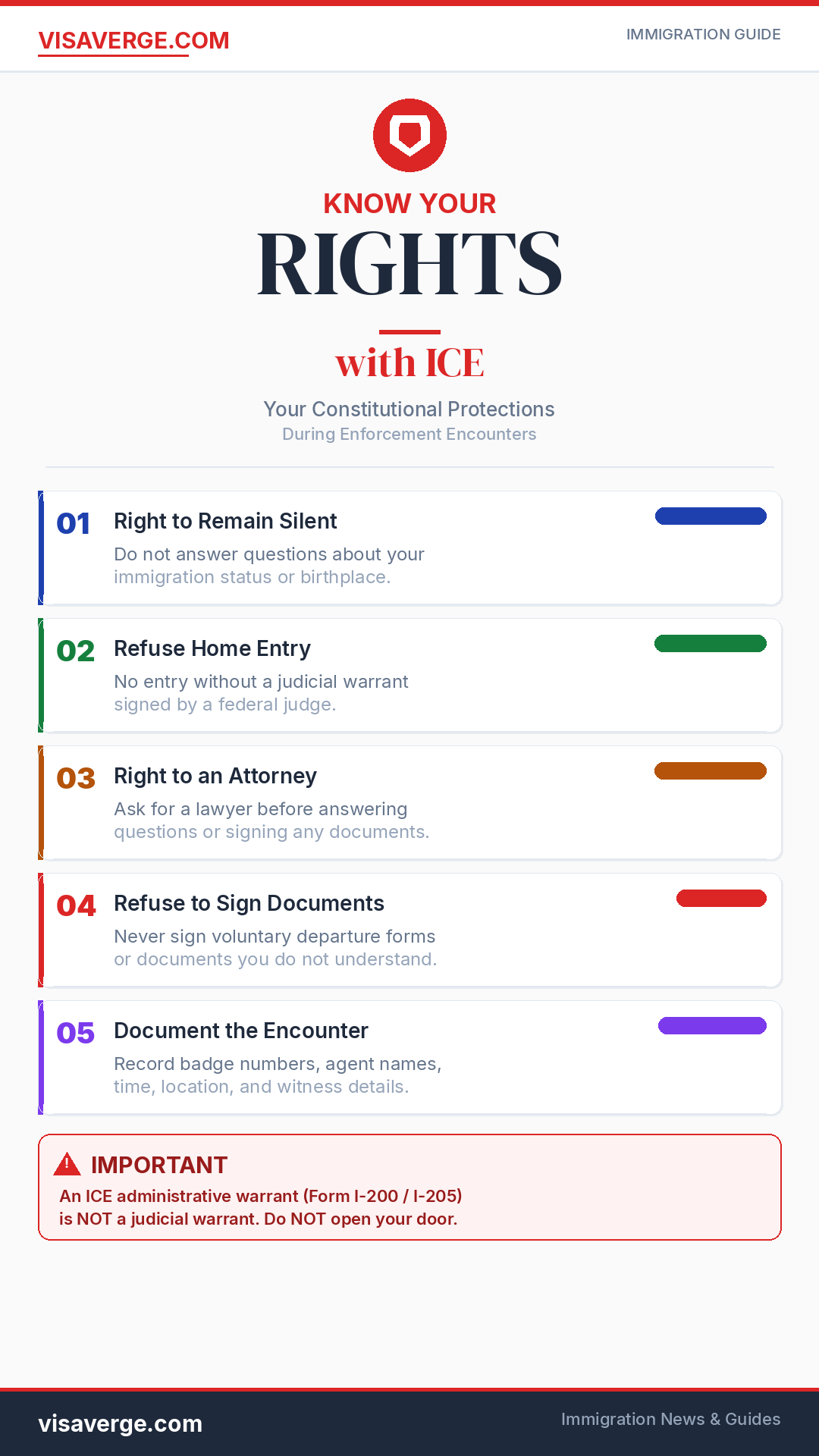
During any raid or contact, verify the presenting agency before engaging. If unsure, ask to confirm their agency, avoid sharing sensitive details, and contact official channels to confirm legitimacy.
Broader federal shifts affecting immigration and citizenship
Federal agencies have described their actions as part of a broader national shift toward an “America First” enforcement model. Notable federal actions include:
- USCIS memo (January 2, 2026): Paused all pending applications (visas, green cards, and asylum) from 39 countries. Director Joseph Edlow said:
“USCIS remains dedicated to ensuring aliens from high-risk countries of concern who have entered the United States do not pose risks to national security or public safety.”
- Denaturalization directive for FY2026: USCIS field offices instructed to identify 100–200 denaturalization cases per month to “restore integrity” to the system.
-
Since January 20, 2025, USCIS has referred over 14,400 individuals to ICE for “public safety and national security concerns.”
Advocates note these measures affect legal immigration and humanitarian pathways as well as enforcement, increasing uncertainty for immigrant communities that often rely on steady processing timelines.
Local effects and measurements of trust
The stepped-up enforcement has also been reflected in arrest data and local perception:
- Virginia saw a significant spike in immigration arrests in 2025.
- Fairfax County reportedly experienced nearly twice as many immigration arrests as any other locality in the state.
On public sentiment:
– General 2025 community surveys showed over 90% satisfaction with City of Fairfax services.
– Advocacy groups argue these broad surveys fail to capture qualitative feedback from immigrant communities, where trust in police among non-citizens is declining.
Advocates stress that fear is often underreported—residents may avoid speaking openly if they worry it could affect their families.
Operational overlap and public confusion
Fairfax officials maintain that immigration enforcement is a federal function while continuing cooperation with federal partners on serious crime. Chief Davis’ “hand-in-glove” phrasing reflects long-standing operational overlap.
Advocates counter:
– The distinction between criminal cooperation and civil immigration enforcement is difficult for residents to parse, especially during pre-dawn operations.
– When agents present themselves as “police” during raids, it becomes harder for residents to know which agency is at their door, increasing hesitancy to engage with any form of law enforcement.
Cumulative effects and community concerns
Advocates argue the cumulative effect of policy changes, high-profile raids, application pauses, denaturalization directives, and the ICE Manpower Surge is to widen the scope of enforcement and amplify fear.
They contend that these actions make immigrants more hesitant to:
– Call 911,
– Report crimes,
– Cooperate with police, or
– Engage with government institutions in general.
Sources and where to find policies or statements
Federal agencies publish statements and updates in their public press channels:
– DHS Press Room: https://www.dhs.gov/newsroom
– USCIS Newsroom: https://www.uscis.gov/newsroom
Local Fairfax resources:
– Fairfax County Trust Policy: https://www.fairfaxcounty.gov/topics/trust-policy
– FCPD General Orders: https://www.fairfaxcounty.gov/police/policies
Keep emergency plans ready: have a simple conversation plan for family safety, know local resources, and ensure you can reach your preferred non-emergency police contact if you need help.
Key timeline (concise)
| Date | Action / Event |
|---|---|
| January 20, 2025 | USCIS referrals to ICE begin aggregation (over 14,400 referrals since this date) |
| February 21, 2025 | FCPD revises General Order 604 (Immigration Status, Citizenship, and National Origin) |
| January 2025 | Raid at Beacon Hill Apartments (advocates cite as flashpoint) |
| November 2025 | Arrests in Hybla Valley (advocates cite as flashpoint) |
| December 19, 2025 | DHS press release urging Fairfax to honor ICE detainers |
| January 2, 2026 | USCIS memo pausing applications from 39 countries; denaturalization identification directive for FY2026 |
Final takeaway
Fairfax County’s predicament mirrors a broader national tug-of-war: federal authorities are urging tighter local cooperation under an “America First” framing, while local leaders and advocates stress that trust is the foundation of effective community policing.
For many residents weighing whether to dial 911, advocates say the concern is immediate and practical: the combined impact of raids, policy changes, and the ICE manpower surge has fostered a growing belief that any contact with “police” could carry federal immigration consequences.
Fairfax County faces a growing conflict between the federal government’s ‘America First’ immigration surge and local trust-building efforts. With 12,000 new ICE agents deployed and local police policies being revised, immigrant communities report rising fear. Advocates argue that removing cooperation barriers erodes the Trust Policy, making residents less likely to cooperate with law enforcement, even as federal officials demand more local assistance in detaining non-citizens.