- The Ninth Circuit Court upheld the indefinite suspension of the U.S. Refugee Admissions Program in March 2026.
- Refugee admissions for Fiscal Year 2026 remain capped at 7,500, the lowest in history.
- Policy shifts prioritize Afrikaners from South Africa while eliminating routine admissions and private sponsorship programs.
(UNITED STATES) — President Donald Trump’s administration has kept the U.S. Refugee Admissions Program under an indefinite suspension, with the Ninth Circuit Court of Appeals upholding the policy in March 2026 and leaving refugee admissions capped at 7,500 for Fiscal Year 2026.

The freeze, imposed under Executive Order 14163, has halted routine admissions since January 27, 2025, and narrowed access to case-by-case exceptions and a small court-protected group of refugees already deep in the vetting process.
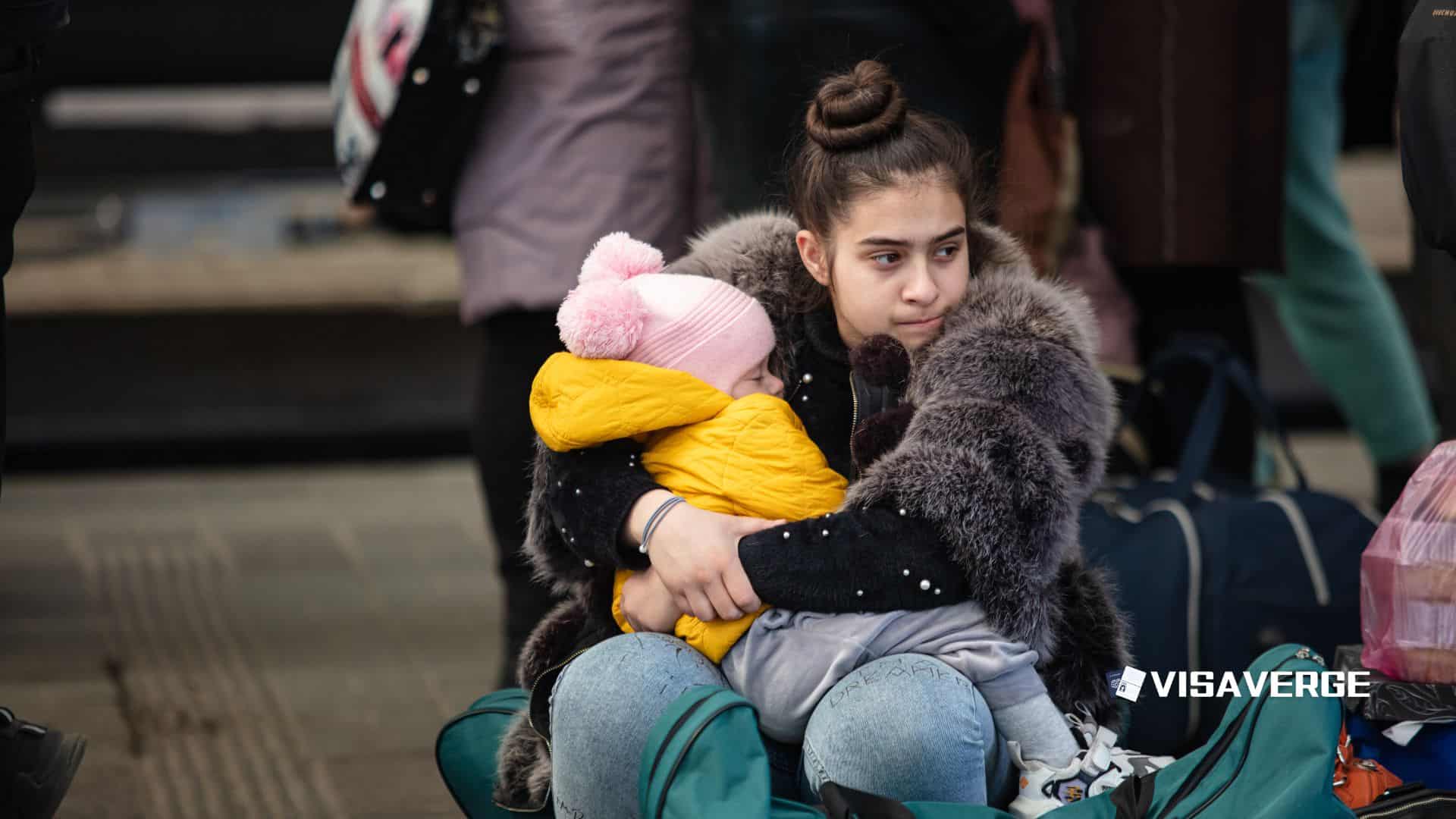
That has left tens of thousands of vetted refugees abroad in limbo, including people from Afghanistan, Venezuela and Sudan who had already sold belongings, vacated housing and quit jobs while preparing to travel to the United States.
Executive Order 14163, titled “Realigning the United States Refugee Program,” took effect after Trump signed it on January 20, 2025. The order suspended the U.S. Refugee Admissions Program indefinitely and replaced Executive Order 14013.
Administration officials framed the move around national security, public safety and refugee assimilation into American society. The order also ended all routine admissions and terminated the Welcome Corps private sponsorship program.
A second step followed on October 31, 2025, when the White House issued a Presidential Determination in the Federal Register setting the FY2026 refugee ceiling at 7,500. That total covers the period from October 1, 2025 to September 30, 2026.
The determination cited Executive Order 14204 and gave priority to Afrikaners from South Africa, along with “other victims of illegal or unjust discrimination” in their homelands. The cap marked the lowest refugee ceiling in U.S. history.
That approach broke from the program’s long-standing structure, which had relied on U.N. refugee referrals and humanitarian categories such as Priority 1 individual referrals, Priority 2 groups of special concern, Priority 3 family reunification and Priority 4 private sponsorships.
The State Department’s Refugee Processing Center reported minimal arrivals through February 28, 2026. Historical figures show near-zero monthly admissions since January 2025.
Departments of State and Homeland Security have continued 90-day reviews on whether to resume the program. Those reviews include input from state and local governments on whether refugee placement is feasible, but no broad reopening has followed.
Court fights began almost immediately after the order took effect. Plaintiffs argued the administration violated the Refugee Act of 1980, due process protections and consultation requirements with Congress.
The Ninth Circuit Court of Appeals delivered the most important ruling on March 5, 2026. It upheld the indefinite ban and said Congress had given the president a “sweeping grant of power” over refugee admissions.
That ruling allowed the suspension to remain in place even for vetted refugees. It also strengthened the administration’s position as litigation continues.
Relief now centers on a narrow subclass shaped by earlier court orders. A district court ordered the “immediate” resettlement of 160 “injunction-protected” refugees who had strong reliance interests before January 20, 2025.
For a broader class of 12,000 vetted plaintiffs, the courts left only case-by-case review under Ninth Circuit criteria. On May 15, 2025, the district court rescinded a wider compliance framework that had previously offered broader relief.
Those exceptions remain limited. The Secretaries of State and Homeland Security must certify that any admission poses no national security threat and aligns with U.S. interests, including assimilation potential.
No broad carve-out covers Priority 2 or Priority 3 cases. Afrikaner prioritization has continued on a separate track.
The policy shift has also hit refugee support systems inside the United States. Resettlement agencies such as Global Refuge have faced staff cuts, funding shortfalls and closures because their operations depend on steady arrivals.
State and local communities now play a bigger role in placement decisions, which could block arrivals in places that do not want to receive refugees. That added another layer to an already restricted system.
New federal policy changes have deepened the strain for those who do arrive. The One Big Beautiful Bill Act eliminated refugees’ access to SNAP, Medicaid and CHIP, and shortened cash and medical assistance periods.
DHS has also reinterpreted laws to impose longer detentions on legal refugees after arrival. Those changes have reduced the support available even to the limited number of people admitted.
For refugee families, the pause has frozen reunification pathways that once formed a core part of the U.S. Refugee Admissions Program. Previously approved cases in categories P-1 through P-4 remain paused unless they fit within the narrow exceptions.
The result is a bottleneck with human and operational costs. Families remain separated, and agencies built to receive and place refugees have had to pause or shrink their work.
The administration’s January 21, 2025 guidance gave an early sign of how sweeping the suspension would be. The State Department ordered agencies to cancel all incoming travel six days before the suspension formally began.
That order stopped arrivals already in motion. Since then, the government has emphasized the same benchmarks in its reviews: security, assimilation and local readiness.
The FY2026 ceiling has also redrawn who benefits from the program. Under the current system, Afrikaners from South Africa have priority even though they were not traditionally designated by UNHCR as refugees and do not fit standard USRAP priority status.
Critics have argued that this focus sidelines other people facing persecution and humanitarian emergencies. The legal and policy structure in place for FY2026 leaves little room for broader access.
For applicants waiting overseas, the practical outlook remains bleak. Refugees who had already completed vetting before 2025 may still seek inclusion in the protected subclass or a case-by-case exception, but the 160 immediate resettlement slots are already tied to that court-defined group.
New applicants face even steeper odds. With the cap fixed at 7,500 and priorities narrowed, standard P-1 through P-4 pathways remain unlikely for most cases.
The suspension fits into a broader immigration agenda pursued in 2025 and 2026. That agenda included the reinstatement of the Migrant Protection Protocols, asylum restrictions and tighter visa rules, all aimed at reducing humanitarian inflows while emphasizing border security.
The U.S. once resettled more than 80,000 refugees a year. Under the current ceiling, it has moved to a far more restrictive model at a time when global displacement exceeds 100 million.
That shift carries effects well beyond U.S. borders. Fewer U.S. slots mean fewer third-country resettlement options for displaced people and more pressure on host countries and international agencies already handling record need.
The next formal opening for change comes with the FY2027 Presidential Determination, due in September 2026. Until then, the Ninth Circuit Court of Appeals ruling leaves the administration with wide latitude to keep Executive Order 14163 in place.
For now, the U.S. Refugee Admissions Program remains defined by suspension, a historic low cap and narrow exceptions. Refugees and resettlement groups are left waiting through what the policy has already begun to shape as a “new era” of minimal, targeted admissions.