- President Trump has implemented a $100,000 fee for new H-1B petitions for workers located outside the United States.
- The policy targets IT outsourcing firms and aims to prevent the displacement of American staff through wage suppression.
- Exemptions are available for existing H-1B holders, renewals, and petitions approved before the September 21, 2025 deadline.
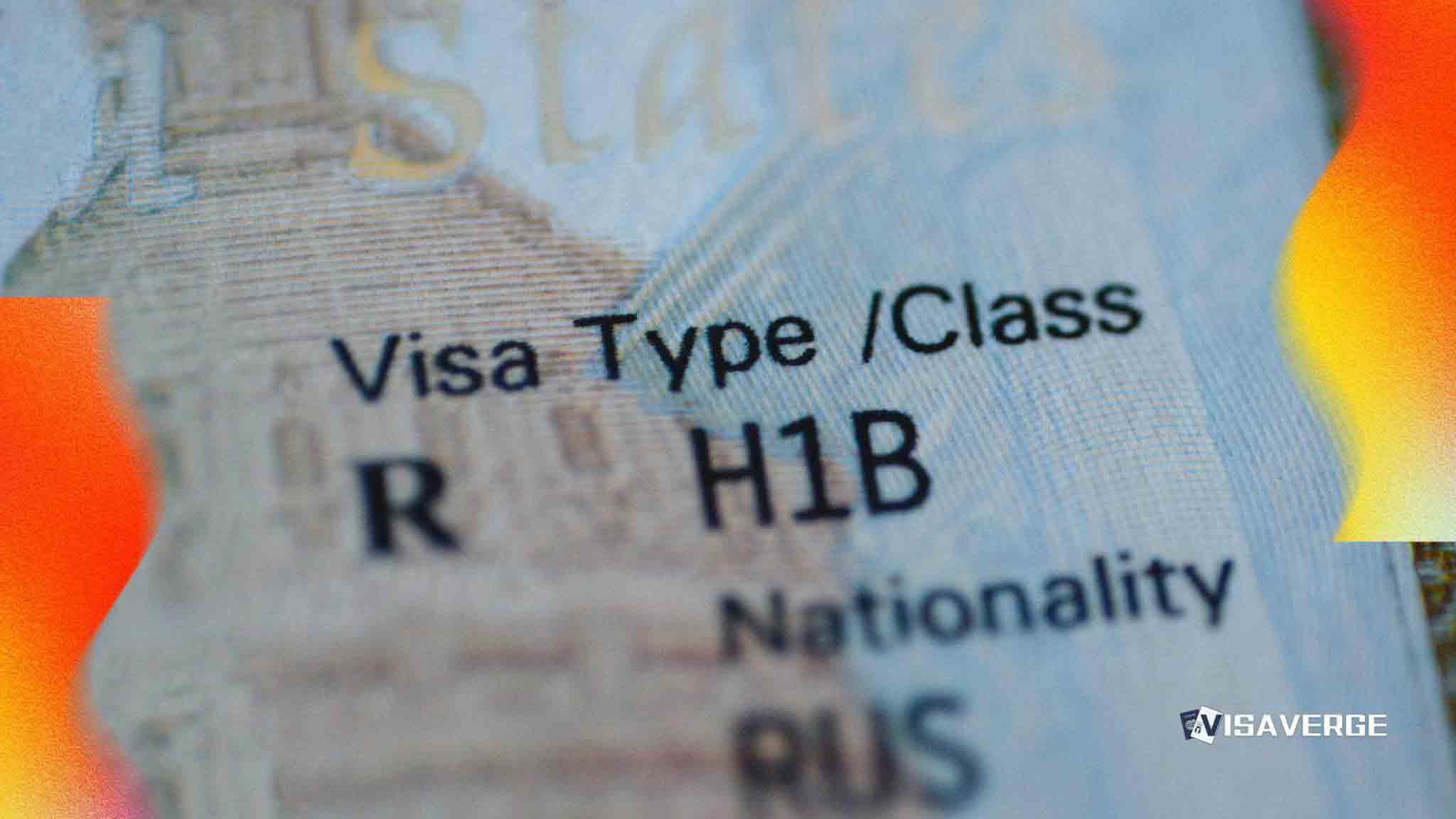
(UNITED STATES) — President Trump imposed a $100,000 fee on employers filing most new H-1B petitions for workers outside the United States, a change that took effect for petitions filed on or after 12:01 a.m. EDT on September 21, 2025, and raised costs sharply for companies using the H-1B visa program.
The September 19, 2025 proclamation, titled “Restriction on Entry of Certain Nonimmigrant Workers,” ties the payment to multiple stages of the process. It restricts entry, USCIS petition decisions, and visa stamping unless U.S. Customs and Border Protection, USCIS, or the Department of State verifies that the fee has been paid.

Employers must obtain and retain documentation proving payment before filing. The proclamation also directs the Secretary of State to confirm receipt during visa processes.
The new requirement falls most heavily on companies filing fresh cases for workers abroad rather than on people already in the system. Current H-1B holders, petitions approved before September 21, 2025, validly issued visas, and renewals are exempt.
A CBP memorandum on September 20, 2025 confirmed the rule applies prospectively only. That means workers with existing approvals or visas were spared the new charge.
The measure targets a part of the market the White House described as linked to outsourcing and wage suppression. It points to companies that outsource IT, close divisions, and displace American staff.
Those companies include IT outsourcing firms that rely on lower-cost labor. For smaller employers, the $100,000 fee can act as a direct barrier to filing altogether.
That places one of the administration’s clearest immigration labor restrictions inside the H-1B visa program itself. Instead of changing eligibility alone, the proclamation adds a price point that can shut some employers out before a petition moves forward.
The White House tied the move to what it described as abuse by prolific H-1B users. It cited IT firms offering 36% discounts on entry-level tech roles compared to U.S. workers.
That rationale reaches beyond outsourcing companies. The policy also touches STEM fields and college graduates, areas the administration identified as being affected by displacement concerns.
Health care employers may also feel the effects. Cleveland Clinic, St. Jude Children’s Research Hospital, and Memorial Sloan Kettering were identified as top H-1B health care employers facing potential shortages.
Rural communities may carry a heavier burden than urban ones. The data cited with the policy showed rural areas rely more on these workers, at 1.6% versus 1.0% in urban areas.
The proclamation leaves an opening for exceptions, but it gives agencies wide discretion. The Secretary of Homeland Security may waive the fee for roles, companies, or industries deemed in the national interest without threatening U.S. security or welfare.
No criteria, process, or timeline was specified for those waivers. Any request is likely to require case-specific evidence similar to COVID-era national interest exceptions.
That uncertainty matters for employers weighing whether to proceed with hiring plans. A waiver could ease the burden for some positions or sectors, but the absence of a set framework means companies cannot rely on a standard path.
The administration paired the new filing charge with a broader effort to reshape how H-1B visas are allocated. The proclamation directs the Department of Homeland Security to reform the H-1B lottery for high-skilled, high-paid workers.
It also orders the Department of Labor to raise prevailing wages through rulemaking. That would increase costs for future petitions, including extensions.
Together, those changes point to a more expensive and selective system. The immediate fee applies to most new overseas cases, while the wage directive could raise the baseline for a wider range of employers later.
The proclamation also blocks B-1/B-2 visas for approved H-1B beneficiaries to prevent fee avoidance. That closes off a route the administration viewed as a way around the new payment requirement.
For employers, the practical demands begin before any petition reaches USCIS. They must secure proof that the fee has been paid and keep that documentation in place before filing.
That paperwork will matter at more than one stage. Petition adjudications and visa processing both depend on verification, creating a chain in which a missing payment record can stop a case from moving forward.
The timing also matters. Because the rule applies to petitions filed on or after 12:01 a.m. EDT on September 21, 2025, employers with approvals or visas already in hand before that point remain outside the new requirement, while companies planning later overseas hires face the new threshold.
The fee expires after 12 months absent an extension, on September 21, 2026. Until then, the administration’s order stands as a temporary but far-reaching restriction on new foreign hiring through the H-1B visa program.
Litigation is already underway. Legal challenges from 20 states allege violations of the Administrative Procedure Act.
Those cases add another layer of uncertainty for employers, workers, and schools watching the program. Agency guidance on payments and exceptions also remains pending, leaving companies to prepare for compliance while courts review the policy.
The new structure may redraw which employers can compete for H-1B talent. Large institutions with deeper budgets may absorb the fee more easily, while smaller firms and IT outsourcing firms face a hurdle that can outweigh the economics of a hire.
That shift could reverberate in sectors beyond technology. Health systems that rely on foreign professionals, especially in places with thinner labor pools, may confront new recruiting constraints if a petition begins with a $100,000 fee.
The administration’s stated goal is to curb practices it says undercut U.S. workers. By tying payment verification to entry, petition decisions, and visa stamping, it built the fee into each stage that matters for getting a worker to the job.
The practical result is not limited to a higher filing cost. The measure can prevent a petition from being approved, stop a visa from being issued, or block entry if the government does not verify payment.
That gives agencies a direct enforcement mechanism. CBP, USCIS, and the Department of State each play a role in checking compliance, making the fee a gate at multiple points rather than a single transaction.
For current H-1B workers, the exemptions narrow the immediate reach of the proclamation. Renewals are excluded, as are workers with validly issued visas and petitions approved before September 21, 2025.
For employers planning to bring in someone from abroad for the first time, the calculation is different. A single new case now carries a six-figure charge before the usual questions of wages, timing, or visa availability come into play.
The White House framed that as a response to business models built around cheaper imported labor. Critics, meanwhile, expect discretionary exemptions could favor administration allies, while health groups are tracking how the policy could affect shortages.
Those competing pressures now sit inside a system already set for further change. If DHS rewrites the lottery around high-skilled, high-paid workers and DOL raises prevailing wages, the cost of participating in the H-1B visa program may rise even for employers untouched by the first wave of the new fee.
Until agencies publish more guidance, companies seeking overseas talent must work case by case. They will need to document payment, assess whether an exemption applies, and follow the court fights and agency actions that could reshape the rule before its September 21, 2026 expiration.